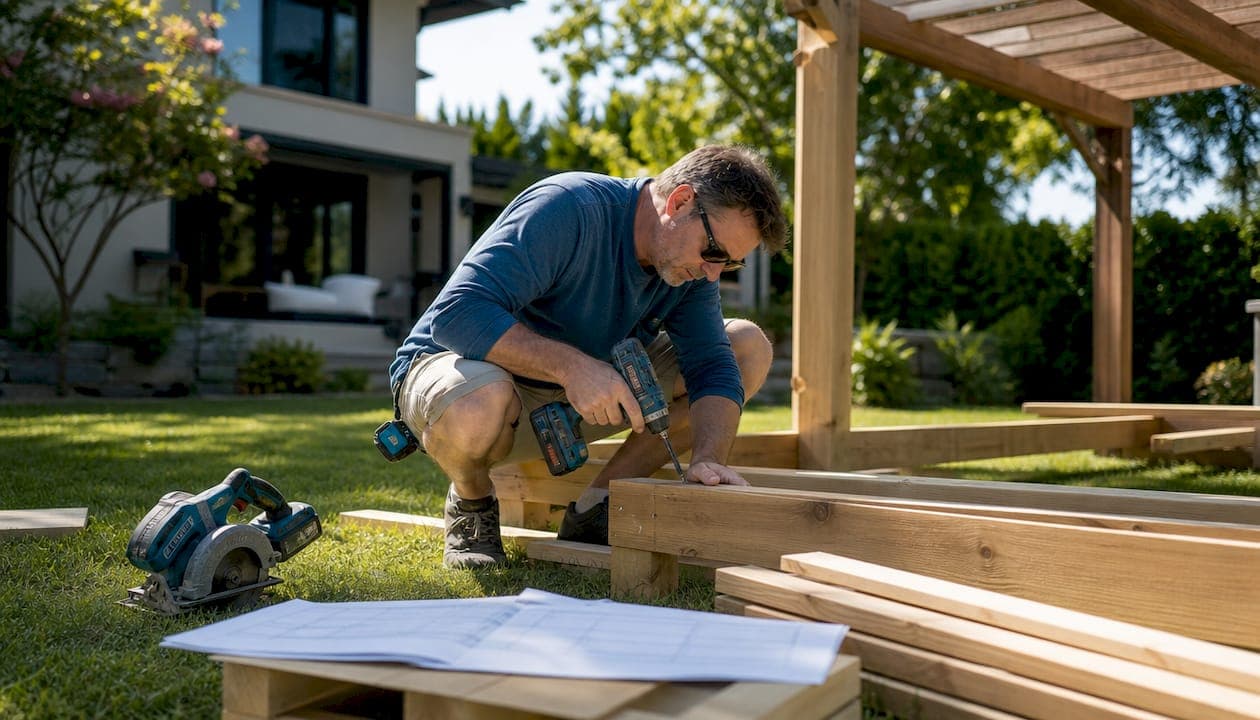
The cost to build a pergola ranges from $500 for a basic DIY kit to more than $50,000 for a custom motorized installation. The national average for a professionally installed pergola sits around $4,200, with most homeowners spending between $2,100 and $6,400. That wide range exists because five factors drive the final number: size, material, labor, permits, and added features. Understanding each one lets you build a realistic budget before you spend a dollar.
What are the typical material options and how do they affect pergola cost?
Material choice is the single biggest lever on your total spend. Each option carries a different upfront cost, maintenance schedule, and expected lifespan, so the cheapest material at purchase is rarely the cheapest over time.
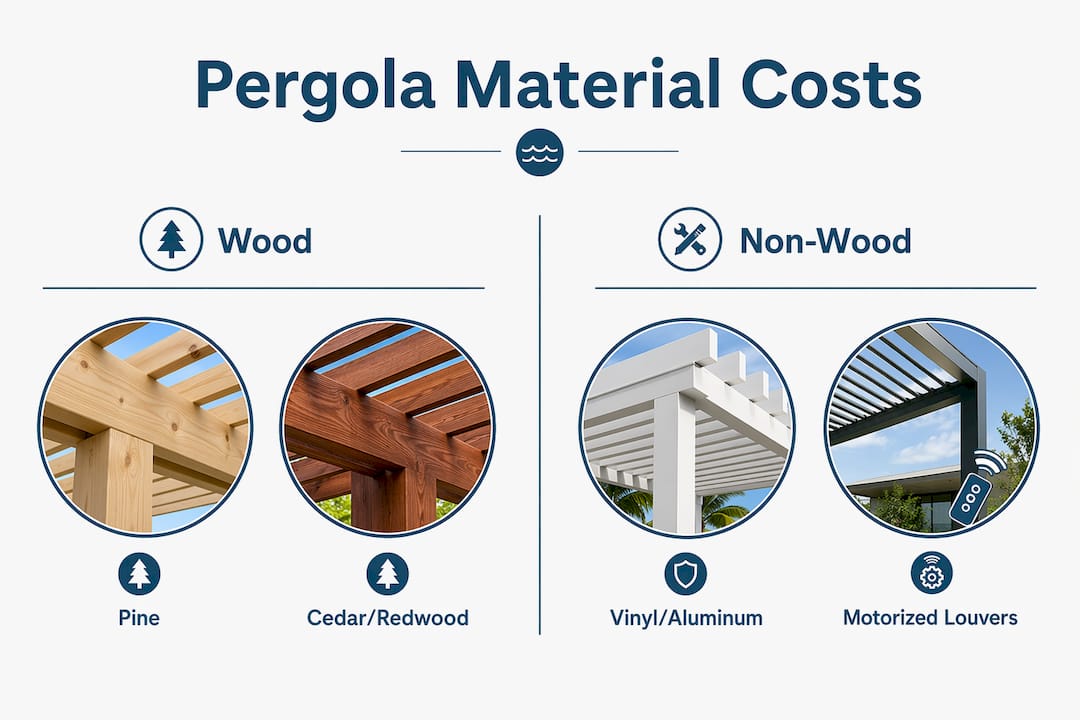
Pressure-treated pine
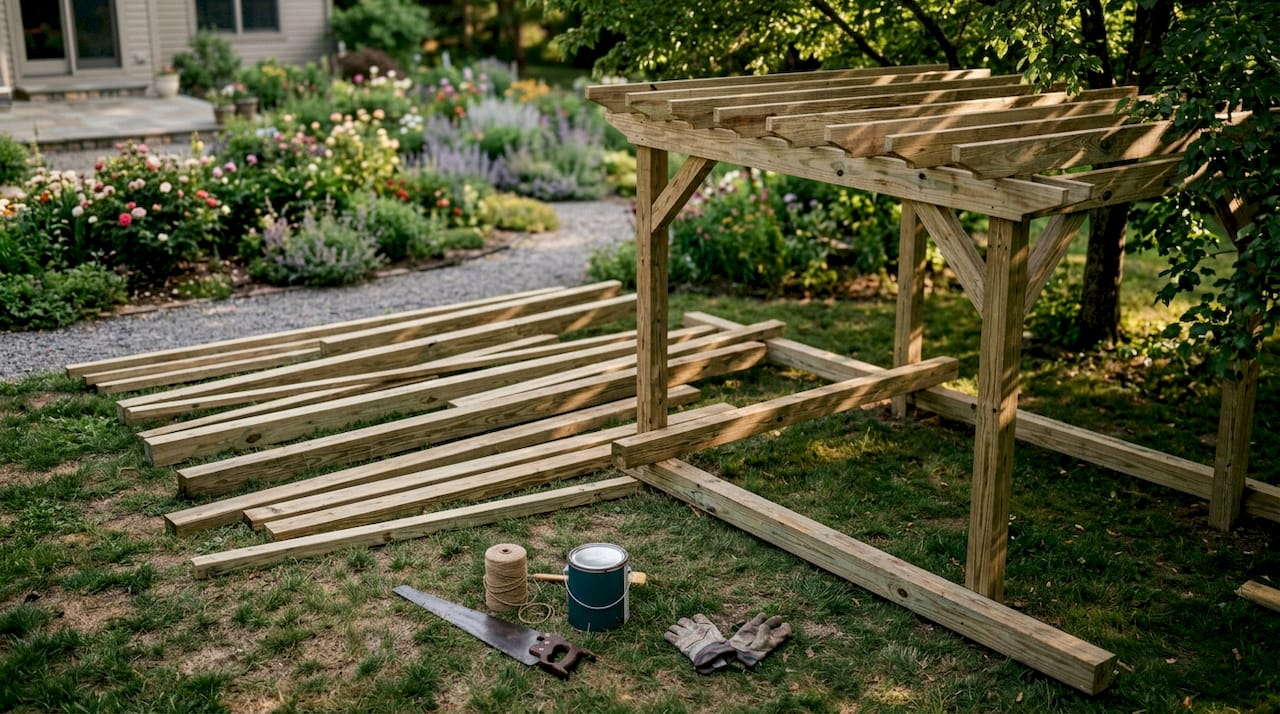
Pressure-treated pine is the most affordable starting point. Installed costs run $25–$40 per square foot, and the material handles moisture better than untreated lumber. The trade-off is a lifespan of 15–20 years and a requirement to stain or seal every few years to prevent cracking and graying.
Cedar and redwood
Cedar and redwood cost more upfront, typically $35–$55 per square foot installed. Both species contain natural oils that resist rot and insects without chemical treatment. With proper maintenance, cedar and redwood pergolas last significantly longer than pine, making them a strong mid-range value.
Vinyl and aluminum
Vinyl and powder-coated aluminum fall in the $30–$60 per square foot range installed. They require almost no maintenance beyond occasional cleaning. Aluminum in particular carries a lifespan of 30–50 years, which means the higher upfront cost often pays for itself over the life of the structure.
Motorized louvered systems
Motorized louvered pergolas represent the premium tier, with installed costs reaching $60–$200 per square foot. These systems let you adjust roof angle with a remote or app, adding weather protection and year-round usability. The added mechanical complexity also means higher repair costs if components fail.
| Material | Installed cost per sq ft | Lifespan | Maintenance |
|---|---|---|---|
| Pressure-treated pine | $25–$40 | 15–20 years | Stain every 2–3 years |
| Cedar or redwood | $35–$55 | 25–40 years | Seal periodically |
| Vinyl or aluminum | $30–$60 | 30–50+ years | Minimal cleaning |
| Motorized louvers | $60–$200 | 20–30+ years | Annual mechanical check |
Pro Tip: Choose aluminum or vinyl if you want to minimize ongoing maintenance costs. The higher purchase price typically offsets itself within 10 years compared to wood that needs regular staining and sealing.
How does size and design complexity influence the cost of building a pergola?
Size and design complexity affect both the total price and the cost per square foot. Larger structures benefit from economies of scale because labor mobilization and setup costs spread across more square footage.
A 10x10 ft pergola costs $35–$55 per square foot, while a 16x20 ft structure drops to $28–$45 per square foot. That difference can translate to thousands of dollars in savings on a larger project even though the total bill is higher.
Common pergola sizes and approximate costs
| Size | Square footage | Estimated installed cost |
|---|---|---|
| 8x8 ft | 64 sq ft | $1,600–$3,500 |
| 10x10 ft | 100 sq ft | $3,500–$5,500 |
| 10x12 ft | 120 sq ft | $4,200–$6,600 |
| 12x16 ft | 192 sq ft | $5,400–$8,600 |
| 16x20 ft | 320 sq ft | $9,000–$14,400 |
Design features add cost on top of raw square footage. The most common upgrades and their impact include:
- Motorized louvers: Add $5,000–$15,000 depending on span and brand
- Built-in lighting: Add $500–$2,000 for wiring and fixtures
- Ceiling fans: Add $200–$600 per fan including installation
- Electrical outlets: Add $300–$800 per circuit depending on distance from panel
- Decorative columns or custom beams: Add $500–$3,000 depending on material and design
Planning size based on actual use produces better value than sizing purely by budget. A pergola that fits a dining table for six and a grill station serves a clear purpose. One that is too small forces you to work around the structure rather than enjoy it.
What are the cost differences between DIY and professional installation?
The gap between DIY and professional pergola costs is real, but it is smaller than most homeowners expect once you account for tools, time, and permits.
DIY material costs for a 10x12 ft wood pergola run $500–$1,500, saving $1,500–$5,000 compared to hiring a contractor. That saving assumes you already own the necessary tools and can complete the work in one to two weekends. Most first-time builders cannot.
- Assess your tool inventory. A pergola requires a post-hole auger, level, circular saw, drill, and concrete mixing equipment. Renting these tools adds $200–$500 to your budget.
- Calculate your time honestly. A 10x10 pergola takes an experienced builder one weekend. A first-time builder should plan for two to three weekends, including mistakes and corrections.
- Factor in permit fees. Permits typically add $50–$500 to the project cost. Professionals usually handle permit applications as part of their service fee.
- Evaluate structural complexity. Freestanding pergolas on flat ground are manageable DIY projects. Structures attached to your home or requiring electrical work carry code and safety requirements that professionals handle more reliably.
- Account for code compliance risk. DIY savings can be offset by tool rental costs and code compliance failures on complex projects. A failed inspection means rework, which erases your savings quickly.
Professional installation averages $2,000–$10,000 including labor, with labor representing 20–30% of the total project cost. That percentage means a $6,000 professionally installed pergola includes roughly $1,200–$1,800 in labor. The rest goes to materials, markup, and overhead.
Pro Tip: If you want to save money without taking on full DIY risk, consider modular bracket systems that simplify beam-to-post connections. These systems reduce complex joinery and lower the risk of structural failure at the most stress-prone connection points.
What additional costs should homeowners anticipate when planning a pergola?
The line-item budget for a pergola rarely ends with materials and labor. Several additional costs catch homeowners off guard, and planning for them upfront prevents budget overruns.
- Concrete footings: Adding proper footings costs $200–$600 depending on depth and number of posts. Many DIY builders underestimate frost line depth requirements, which leads to heaving posts and structural problems within a few years.
- Post-base hardware: Quality post bases and anchor hardware prevent wood rot at ground contact points. Skipping this step is one of the most common reasons pergolas fail prematurely.
- Permitting delays: Permit processes often require technical drawings and can extend project timelines by weeks. Non-compliance risks costly retrofits or, in extreme cases, demolition orders.
- Maintenance costs: Staining or sealing a wood pergola every 2–3 years extends its lifespan and preserves its appearance. Budget $200–$600 per maintenance cycle depending on size and product used.
- Site preparation: Uneven ground, tree roots, or existing hardscape may require grading or demolition before installation begins.
"Foundation adequacy is the main factor in pergola longevity. A beautiful pergola built on inadequate footings will fail years before a plain one built on solid concrete. Get the foundation right first, and the rest of the structure will take care of itself."
Optional enhancements like pool deck staining and outdoor lighting extend the value of your investment beyond the pergola itself. Coordinating these upgrades during the build phase saves money compared to adding them later.
Key Takeaways
The cost to build a pergola depends on material choice, size, installation method, and site conditions, with DIY projects starting near $500 and professional custom builds exceeding $50,000.
| Point | Details |
|---|---|
| National average cost | Professionally installed pergolas average $4,200, with most projects landing between $2,100 and $6,400. |
| Material drives lifespan | Aluminum and vinyl cost more upfront but last 30–50 years with minimal maintenance versus 15–20 years for pine. |
| Larger saves per square foot | A 16x20 ft pergola costs $28–$45 per sq ft versus $35–$55 for a 10x10, so sizing up often improves value. |
| DIY savings have real limits | Tool rental, permit fees, and code compliance risks can reduce DIY savings to $1,000 or less on complex projects. |
| Foundation is non-negotiable | Concrete footings and quality post hardware prevent premature failure and protect your total investment. |
What I've learned after watching hundreds of pergola projects succeed and fail
Most homeowners focus on the wrong thing when budgeting a pergola. They agonize over wood species and roof style while treating the foundation as an afterthought. That is backwards.
Every pergola failure I have seen traces back to one of two causes: inadequate footings or undersized posts. Neither is glamorous. Neither shows up in the design inspiration photos. But both determine whether your pergola stands for 30 years or starts leaning after the third winter.
My honest advice is to spend the first 20% of your budget on the foundation and hardware before you buy a single board. Concrete footings, galvanized post bases, and stainless steel fasteners are not optional upgrades. They are the structure. Everything else is finish work.
On the DIY versus professional question, I lean toward DIY for freestanding structures on flat ground with no electrical component. The moment you attach the pergola to your home or run a circuit to it, you are in permit and code territory that professionals navigate faster and more reliably than most homeowners. The savings rarely justify the risk.
Right-sizing matters more than most people realize. A 10x10 pergola that perfectly fits your outdoor dining set delivers more daily satisfaction than a 16x20 structure you built because the per-square-foot cost was lower. Build for how you actually live outside, not for how you imagine you might use the space someday.
— Michel
Mrpoolscreen can help you get more from your outdoor space
If you are investing in a pergola, your surrounding outdoor structures deserve the same attention. Mrpoolscreen specializes in restoring pool enclosures and screen structures across Central Florida, using industrial-grade water-based acrylic coatings and stainless steel fasteners that extend structure life without the cost of a full rebuild.
Clients save up to 60% compared to full replacement, which frees up budget for upgrades like pergolas, lighting, and deck finishes. You can view real before-and-after results in the project gallery or get a number for your specific situation through pool screen restoration services. Use the online pricing tool to start planning your outdoor budget today.
FAQ
How much does a pergola cost to build on average?
The national average for a professionally installed pergola is around $4,200, with most projects falling between $2,100 and $6,400 depending on size and materials.
What is the pergola DIY cost for a basic wood structure?
DIY material costs for a 10x12 ft wood pergola typically run $500–$1,500, saving $1,500–$5,000 compared to professional installation, though tool rental and permit fees reduce that gap.
Does building a pergola require a permit?
Attached pergolas and structures exceeding local size thresholds usually require permits, which add $50–$500 to the total cost and can extend the project timeline by several weeks.
What is the cheapest material for a pergola?
Pressure-treated pine is the lowest-cost option at $25–$40 per square foot installed, though it requires staining every 2–3 years and has a shorter lifespan of 15–20 years compared to aluminum or vinyl.
How long does a pergola last?
Lifespan depends on material. Pressure-treated pine lasts 15–20 years with maintenance, cedar and redwood last 25–40 years, and aluminum or vinyl structures can last 30–50 years or more with minimal upkeep.