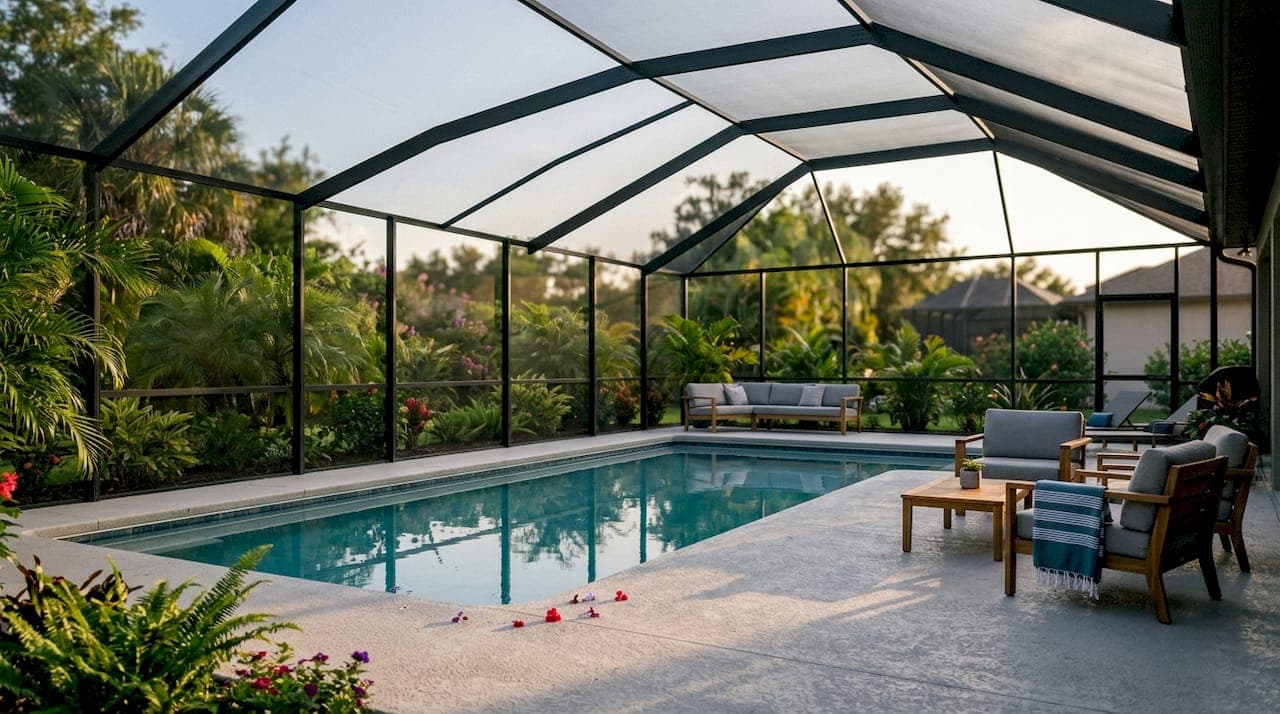
Pool and screen enclosures are permanent protective frameworks built around pool and patio areas to block insects, debris, and UV exposure while extending usable outdoor living space. Homeowners across Florida install these structures to improve safety, reduce cleaning time, and protect their investment from the elements. Whether you are weighing a new installation, planning a repair, or considering a full restoration, understanding your options saves money and prevents costly mistakes. This guide covers materials, maintenance, repair decisions, and real cost ranges for 2026.
What materials and designs work best for pool and screen enclosures?
Aluminum framing is the industry standard for pool and screen enclosures. It resists corrosion, handles Florida's humidity and wind loads, and requires less maintenance than wood or steel alternatives. Most residential enclosures use extruded aluminum in either mill finish or powder-coated colors.
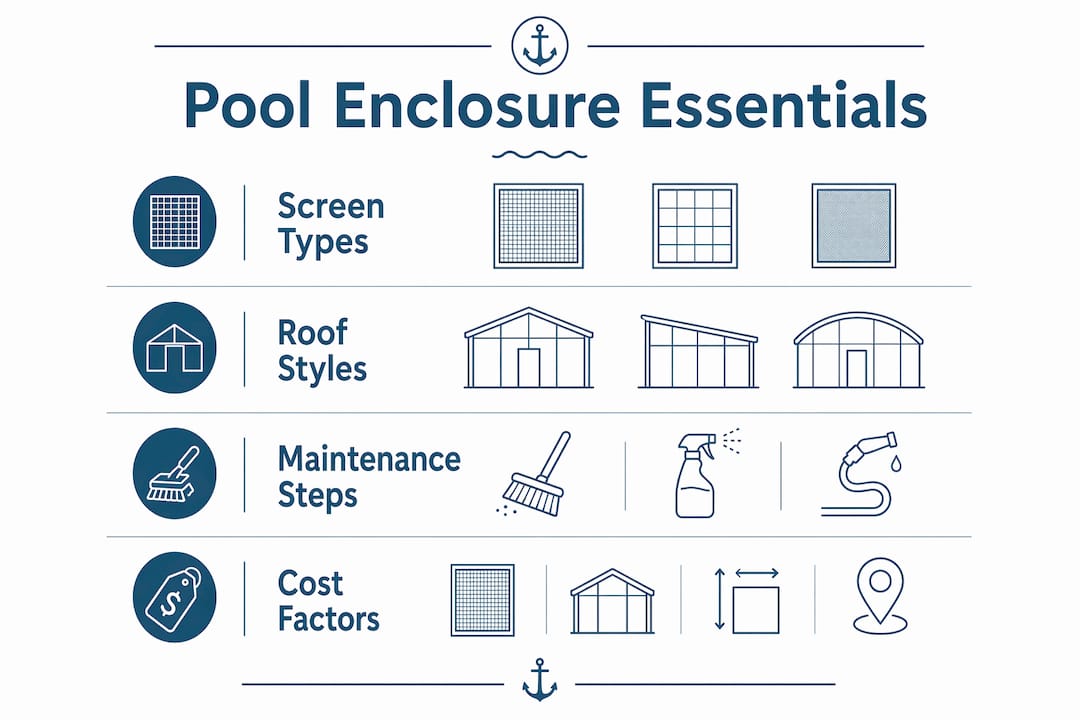
Screen mesh choice matters as much as the frame. The four most common options each serve a different purpose:
- Fiberglass mesh is the most affordable and widely used. It offers good airflow and insect protection but can sag over time in high-heat climates.
- Pet-resistant mesh uses a heavier weave that withstands scratching and punctures. It costs more per panel but lasts significantly longer in homes with dogs or cats.
- Solar screen mesh blocks 80–90% of UV rays and reduces heat buildup inside the enclosure. It trades some visibility for comfort.
- Panoramic or "no-see-um" mesh uses a tighter weave to block tiny insects like midges and sand flies. Airflow is reduced, so ventilation planning matters more.
| Screen type | Best use | Relative cost |
|---|---|---|
| Standard fiberglass | General insect control | Lowest |
| Pet-resistant | Homes with pets | Moderate |
| Solar screen | Sun-heavy exposures | Moderate |
| Panoramic/no-see-um | Coastal or wooded lots | Moderate to high |
Roof style affects both aesthetics and function. Gable roofs add headroom and a traditional look. Dome styles shed rain efficiently. Clear-span designs eliminate interior posts, which improves sightlines and pool access. Insulated panel roofs reduce heat gain but add significant cost and weight to the frame.
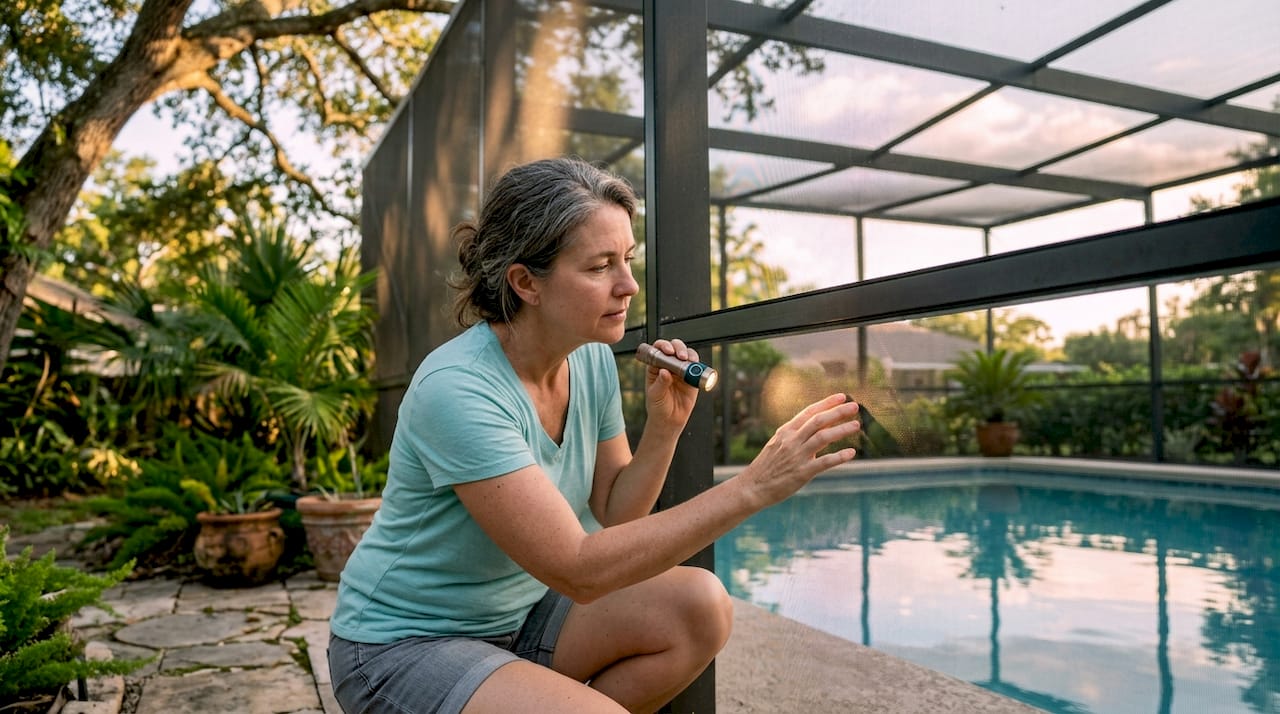
Pro Tip: Choose solar mesh on the west and south sides of your enclosure and standard fiberglass on the north and east sides. You get UV protection where you need it most without sacrificing airflow everywhere.
How often should you clean and maintain a pool screen enclosure?
Cleaning frequency is the single most underestimated factor in enclosure longevity. Monthly light rinsing removes organic debris before it colonizes the mesh. Skipping this step allows cyanobacteria and algae to take hold, which degrades screen fibers and stains the frame.
For a full cleaning schedule, follow these steps based on your environment:
- Monthly: Rinse screens with a garden hose using low pressure. Work from the top down to push debris out rather than into the mesh.
- Every 6–12 months: Deep clean the enclosure with a cleaning solution. Standard inland properties need this once or twice a year.
- Quarterly (coastal or wooded lots): Salt air and heavy vegetation accelerate algae and mildew growth. These properties need more frequent treatment cycles.
- After major storms: Inspect for torn panels, bent frame sections, and debris lodged in corners. Address damage within 30 days to prevent it from spreading.
- Annually: Check all fasteners for rust, inspect spline channels for cracking, and look for sagging panels that signal tension loss.
The right cleaning solution protects the mesh while removing biological growth. A vinegar-water mix of one part white vinegar to three parts water removes algae without damaging screen fibers. Avoid pressure washers above 1,200 PSI, as they force water behind splines and loosen the mesh from its channel.
Algae growth is caused more by poor airflow and high humidity than by pool water chemistry. Trimming vegetation at least three feet away from the enclosure improves air circulation and cuts algae risk significantly. Overhanging trees and dense shrubs create the microclimate conditions that algae thrive in.
Pro Tip: After cleaning, apply a diluted oxygen bleach solution to the frame and mesh, let it sit for five minutes, then rinse thoroughly. This kills spores that a vinegar rinse leaves behind.
Repair vs. restoration: when should you rescreen or replace components?
The decision between a targeted repair and a full restoration comes down to enclosure age and the extent of damage. Minor repairs make sense when damage is limited to one or two panels, the frame is structurally sound, and the installation is less than eight years old. Replacing a single torn panel costs a fraction of a full rescreen and restores function quickly.
Full rescreening becomes the better choice when multiple panels are sagging, brittle, or faded. Experts recommend restoration over incremental repairs for enclosures aged 10–15 years with widespread wear. Patching individual panels on an aging structure is like replacing one tire on a set of four that are all worn. The underlying problem remains.
Signs that point toward full restoration include:
- Mesh that crumbles or tears easily when touched
- Visible rust staining around screw heads or frame joints
- Multiple sagging panels across different sections
- Frame sections that flex or shift when pressed
- Faded or chalky coating on the aluminum frame
Hardware replacement is a critical part of any restoration. Standard steel screws cause rust expansion that cracks aluminum framing over time. Upgrading to ultra-coated stainless steel fasteners stops this cycle and preserves structural integrity for years. This detail gets overlooked in budget repairs, and it is usually why those repairs fail within two or three seasons.
Spline installation quality also determines how long a rescreen lasts. Achieving a "drum-tight" finish by tensioning opposing sides of the mesh balances forces across the panel and prevents premature sagging or wind damage. A loose spline installation looks fine on day one but fails within months in Florida's wind conditions.
Mrpoolscreen uses water-based acrylic coatings and stainless steel fasteners in its restoration process. The company reports that this approach can save homeowners up to 60% compared to a full structural rebuild, while restoring both appearance and structural performance.
What does a screened pool enclosure cost in 2026?
The cost of a screened pool enclosure varies widely based on size, materials, roof style, and whether you are building new or restoring an existing structure. New construction for a standard residential enclosure typically runs from several thousand dollars into the mid-five figures depending on square footage and design complexity. Restoration and rescreening cost significantly less.
Key factors that drive cost up or down:
- Enclosure size: Larger footprints require more material and labor. A 1,000-square-foot enclosure costs more than a 400-square-foot one.
- Screen mesh type: Solar and pet-resistant mesh cost more per panel than standard fiberglass.
- Roof style: Clear-span and insulated panel roofs add cost over standard gable or dome designs.
- Hardware grade: Stainless steel fasteners cost more upfront but reduce long-term repair frequency.
- Permitting: Florida requires permits for pool enclosures as permanent structures. Permit approval in jurisdictions like Tampa Bay typically takes around five business days. Professional contractors handle this process as part of the installation.
| Cost factor | Lower range | Higher range |
|---|---|---|
| Standard rescreening | Lower cost | Moderate cost |
| Full restoration | Moderate cost | Significant savings vs. rebuild |
| New enclosure construction | Mid-range | High-end |
| Hardware upgrade (fasteners) | Minimal add-on | Moderate add-on |
Professional installation matters beyond aesthetics. Code-compliant framing and proper anchoring protect the structure during high-wind events. An enclosure that fails a post-storm inspection can create insurance and liability complications. Getting online pricing from a licensed contractor before committing to any scope of work is the most reliable way to compare your options accurately.
Key Takeaways
Restoration is the most cost-effective path for aging pool enclosures, saving up to 60% over full rebuilds when paired with quality materials and proper maintenance.
| Point | Details |
|---|---|
| Clean monthly, deep clean twice yearly | Monthly rinsing prevents algae colonization; full cleaning every 6–12 months extends mesh life. |
| Choose mesh by exposure | Solar mesh cuts UV on sun-facing sides; standard fiberglass works well on shaded sides. |
| Replace hardware during any rescreen | Stainless steel fasteners prevent rust expansion that cracks aluminum frames over time. |
| Restore at 10–15 years, not before | Full rescreening beats incremental repairs once multiple panels show wear or brittleness. |
| Permit before you build or restore | Florida requires permits for enclosures; professional contractors handle approvals in about five business days. |
What I've learned after years of watching enclosures age
Most homeowners wait too long. I have seen enclosures that could have been restored for a reasonable cost turn into full replacement jobs because the owner patched one panel at a time for five years. Each patch bought a few months. The underlying mesh kept degrading. By the time they called for a real assessment, the frame had rust damage from failed fasteners and the cost had tripled.
The other mistake I see constantly is pressure washing. Homeowners assume more pressure means cleaner screens. What it actually does is force water behind the spline, loosen the mesh, and accelerate the very sagging they are trying to prevent. A garden hose and the right cleaning solution do the job without the damage.
Design trends are moving toward panoramic mesh and clear-span frames. Both choices improve the visual connection between the pool area and the yard. They also require more precise installation and better maintenance discipline. A panoramic mesh with poor airflow management turns green faster than standard fiberglass. The design upgrade only pays off when the maintenance follows.
My honest recommendation: schedule a professional inspection every two years, not just when something looks wrong. Catching a failing fastener or a loose spline channel early costs almost nothing to fix. Catching it after it has compromised three adjacent panels costs significantly more.
Mrpoolscreen's restoration services for Central Florida homeowners
Mrpoolscreen works with homeowners across Central Florida to restore aging pool enclosures without the cost of a full structural rebuild. The team handles everything from single-panel rescreening to complete frame restoration using water-based acrylic coatings and stainless steel fasteners built for Florida's climate.
If your enclosure is showing rust stains, sagging panels, or faded framing, a professional assessment is the right first step. Mrpoolscreen's pool screen restoration service addresses structural and cosmetic issues together, so the result lasts. You can also browse the project gallery to see before-and-after results from completed jobs. When you are ready to move forward, request a free estimate and get a clear picture of what your enclosure needs and what it will cost.
FAQ
What does pool cage rescreening mean?
Pool cage rescreening is the process of removing old, damaged screen mesh from an existing aluminum enclosure frame and installing new mesh with fresh spline. It restores insect protection, appearance, and structural tension without replacing the frame itself.
How much does a screened pool enclosure cost?
The cost of a screened pool enclosure depends on size, mesh type, roof design, and whether you are building new or restoring an existing structure. Restoration typically costs significantly less than new construction, with Mrpoolscreen reporting savings of up to 60% compared to a full rebuild.
How often should I clean my pool screen enclosure?
Clean your enclosure every 6–12 months for a standard inland property, and quarterly if you live near the coast or have heavy vegetation. Monthly light rinsing between deep cleans prevents algae from taking hold.
Why is my pool screen turning green?
Green discoloration on pool screens is caused by algae and cyanobacteria, which grow in humid, low-airflow conditions rather than from pool water chemistry. Trimming vegetation three feet away from the enclosure and improving air circulation reduces growth significantly.
Do I need a permit to install or restore a pool screen enclosure in Florida?
Florida classifies pool enclosures as permanent structures, so permits are required for new installation and major structural work. Permit approval in most Florida jurisdictions takes approximately five business days, and licensed contractors manage the process as part of the project scope.