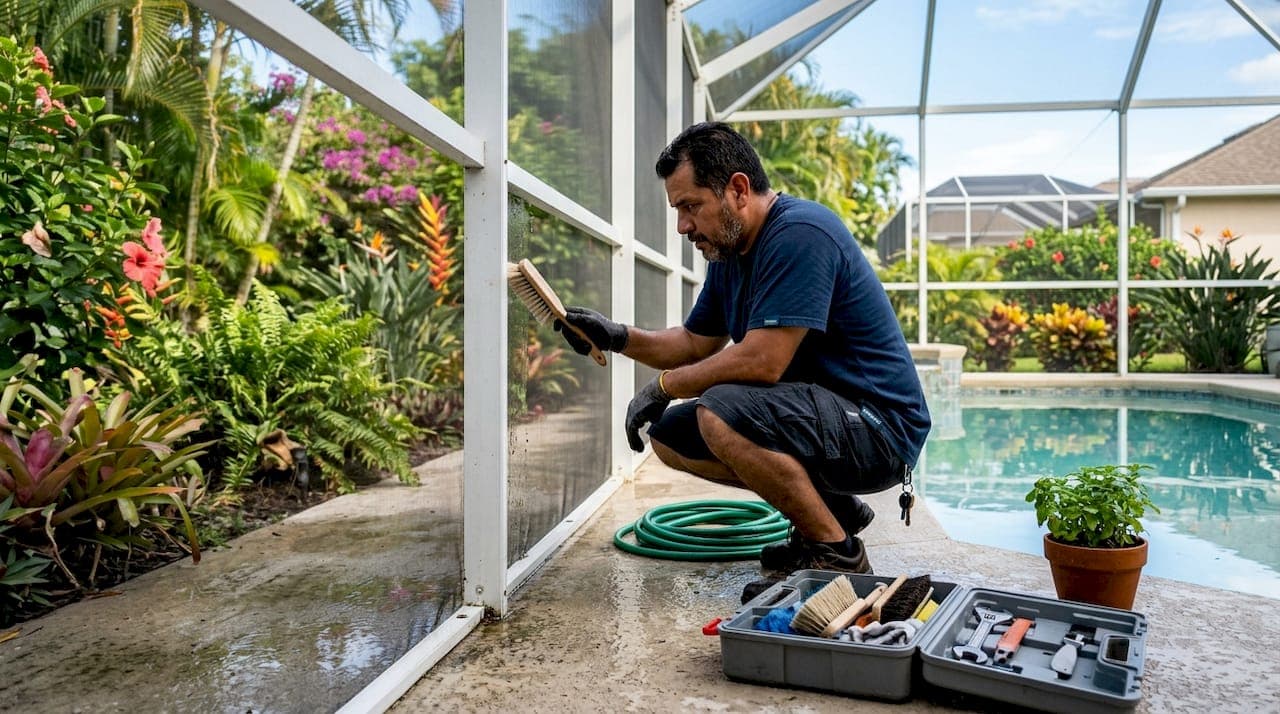
Pool cage maintenance is defined as routine cleaning, inspection, and minor upkeep that preserves a structurally sound enclosure, while repair addresses specific damage that impairs safety or function. Understanding pool cage maintenance vs repair explained correctly saves you money, keeps your family safe, and keeps your enclosure compliant with Florida building codes. The two processes have different goals, different costs, and different triggers. Confusing them is the most common reason homeowners end up paying for full replacements they could have avoided.
What does pool cage maintenance vs repair actually mean?
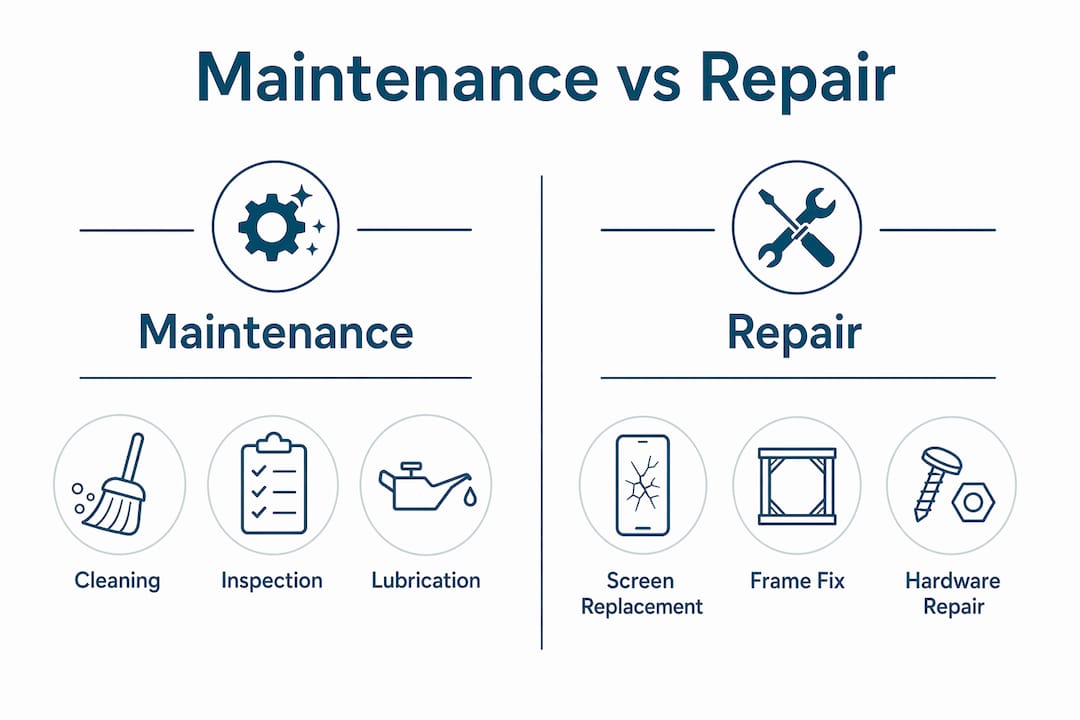
Maintenance preserves structural integrity through regular cleaning and minor fixes, while repair responds to compromised frame strength and safety hazards. That distinction matters because the two processes require different budgets, different contractors, and different timelines.
Maintenance is proactive. You schedule it before problems appear. Repair is reactive. You call a contractor because something has already failed or is failing. Treating a repair situation as a maintenance task is where most homeowners lose money.
Florida building codes add a regulatory layer that makes this distinction even more critical. Florida pool barriers must be at least 48 inches high, with openings no larger than 4 inches, and gates must be self-closing, self-latching, and open outward. Non-compliance triggers inspection failure and required remediation. A maintenance schedule that ignores code requirements is not a maintenance plan at all.
What does regular pool cage maintenance include?
Routine maintenance covers four core activities: cleaning screens and frames, inspecting hardware, lubricating moving parts, and tightening fasteners. Each one addresses a different failure mode.
Screen cleaning removes algae, mold, and mineral deposits that degrade mesh over time. A green pool enclosure is not just an eyesore. Algae buildup traps moisture against the frame, accelerating corrosion at the joints. A green pool enclosure maintenance workflow should include a low-pressure rinse with a mild detergent every three to six months, followed by a visual inspection of the mesh for micro-tears.
Frame inspections catch early-stage corrosion before it becomes structural. Run your hand along the bottom rails and corner joints after cleaning. Those are the first places water pools and oxidation starts.
Pro Tip: Schedule your pool cage safety inspection in march or october, before and after hurricane season. That timing catches storm damage early and gives you time to address repairs before the next season hits.
A complete pool cage annual maintenance checklist covers:
- Low-pressure screen cleaning every three to six months
- Full frame inspection for rust streaks, pitting, and loose joints
- Fastener tightening and hardware lubrication at every visit
- Gate function check for self-closing and self-latching compliance
- Mesh tension check for sagging or stress points near corners
Staying on this schedule extends enclosure life by years and keeps your insurance inspection results clean.
When does a pool cage need repair instead of maintenance?
Repair becomes necessary when damage has already compromised the enclosure's function or safety. The clearest signs are visible tears in the mesh, bent frame members, rusted hardware, and loose or missing fasteners. Each one signals a different level of urgency.
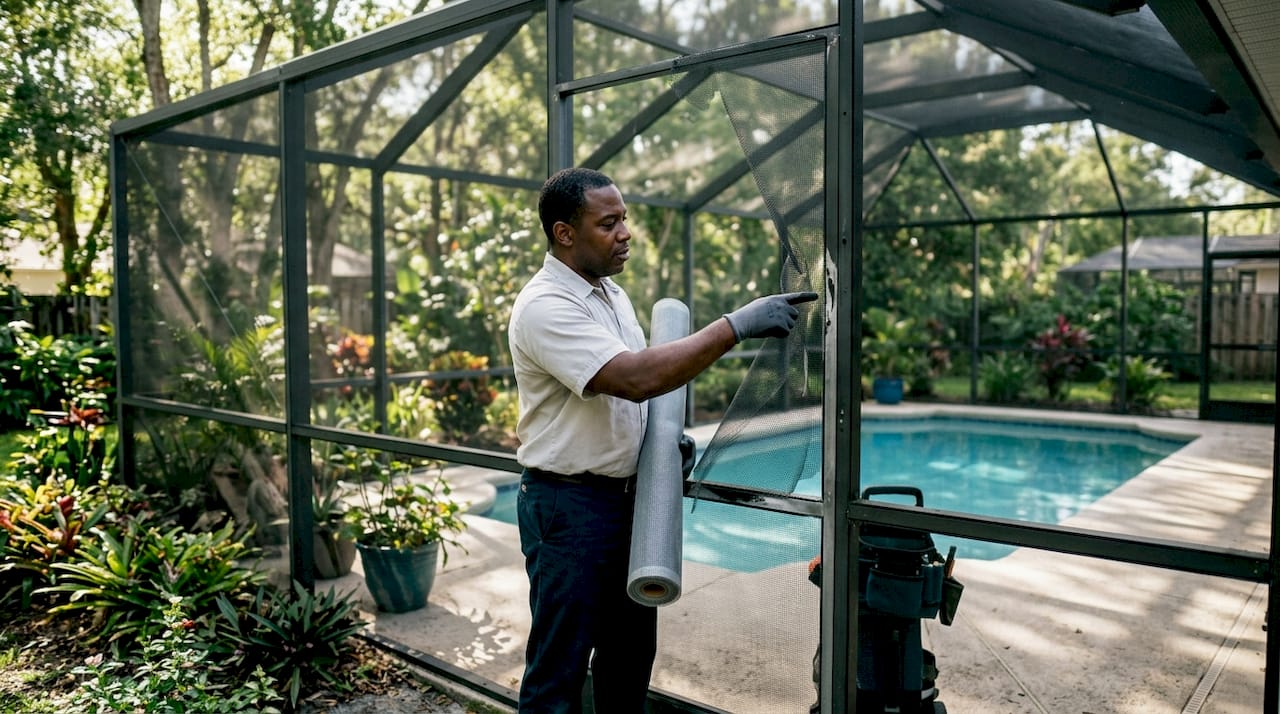
Screen tears are the most common repair trigger. A small tear grows quickly under Florida sun and wind. Screen replacement costs typically range from $100 to $400, making it one of the most affordable repairs you can make. Delaying it invites insects, debris, and moisture into the enclosure.
Frame repainting costs between $1,000 and $2,500, and hardware repairs run $200 to $800. Full replacement reaches $5,000 to $15,000 depending on size and complexity, with modern code-compliant structures costing $10 to $15 per square foot. That cost gap is the clearest argument for catching problems early.
Rusting fasteners often indicate internal structural decay not visible from the outside. Visible rust streaks on the frame surface suggest the problem is already worse than it looks. This is the most dangerous misconception in pool cage upkeep: homeowners see surface rust and assume it is cosmetic. It rarely is.
Pro Tip: Press firmly on any frame member showing rust streaks. If it flexes more than a quarter inch, the corrosion has already compromised the wall thickness. That member needs replacement, not paint.
Common repair tasks by urgency:
- Immediate: Torn screens near gates or high-traffic areas; missing fasteners on load-bearing joints
- Within 30 days: Bent frame members; sagging mesh panels; gate hardware failure
- Within 90 days: Surface rust on non-structural members; minor joint separation; faded or peeling paint on frames
Deferred repairs create compounding problems. A bent frame member shifts load to adjacent joints. Those joints fail faster. What started as a $300 repair becomes a $3,000 structural fix.
How do you decide between maintenance, repair, and full replacement?
The decision follows a three-step evaluation: assess structural integrity, calculate total cost, and check code compliance. Skipping any step leads to the wrong choice.
Structural integrity is the first filter. If the frame shows corrosion at multiple joints, bent members, or failing connections, repair addresses structural integrity threats that maintenance cannot resolve. A frame with widespread corrosion is not a maintenance candidate. It is a replacement candidate.
Cost comparison is the second filter. Maintenance runs a few hundred dollars per year. Targeted repairs run $100 to $2,500 depending on scope. Full replacement runs $5,000 to $15,000 and requires permitting. Full replacement takes one to three weeks, including demolition, permitting, and installation. That timeline means no pool access and potential HOA complications.
The third filter is insurance compliance. Insurance companies inspect for rusted fasteners and sagging mesh, and proactive retrofits improve inspection outcomes. An enclosure that fails an insurance inspection creates coverage gaps. That risk alone justifies spending on repairs before the inspection date.
One common mistake deserves direct attention. Painting a pool cage only addresses surface aesthetics and does not repair aluminum pitting or compromised joints. Paint can mask advanced corrosion, leading to sudden failure during storms. If a contractor recommends paint as the solution to rust at the joints, get a second opinion.
Pool enclosure maintenance plans compared across the three options:
| Option | Best for | Approximate cost | Timeline |
|---|---|---|---|
| Routine maintenance | Sound frames, minor wear | $200–$600 per year | Ongoing |
| Targeted repair | Specific damage, intact structure | $100–$2,500 per repair | Days |
| Full replacement | Widespread corrosion, code failure | $5,000–$15,000 | 1–3 weeks |
Practical tips for pool cage longevity and safety
The most effective pool cage upkeep solutions start with the right cleaning tools. Use a soft-bristle brush and a mild, pH-neutral detergent on screens. Avoid pressure washers above 1,200 PSI. High pressure tears mesh and forces water into frame joints.
For hardware, the material choice matters more than most homeowners realize. Replacing all fasteners with stainless steel during repairs prevents galvanic corrosion and extends repair lifespan. Mixing old aluminum fasteners with new stainless steel components accelerates deterioration at the contact point. When you repair, replace all fasteners in the affected section at the same time.
Hurricane preparation is a separate maintenance category. Before june, check every anchor point where the frame meets the concrete deck. Loose anchors are the leading cause of full enclosure loss during storms. Tighten or replace them before wind season, not after.
- Clean screens every three to six months with a soft brush and mild detergent
- Inspect all fasteners for rust streaks after every major rain event
- Lubricate gate hinges and latches twice per year with a silicone-based spray
- Check anchor points at the base of the frame before and after hurricane season
- Replace any fastener showing surface rust with a stainless steel equivalent immediately
Pro Tip: Take photos of your enclosure from the same four angles every six months. Side-by-side comparison reveals gradual changes in frame alignment and mesh tension that a single inspection misses.
For pool cage repair without full demolition, targeted section replacement is the standard approach. A licensed contractor can remove and replace individual frame members, re-screen specific panels, and upgrade fasteners without touching the rest of the structure. This approach keeps costs low and avoids the permitting process required for full replacement.
Key takeaways
Maintenance prevents damage; repair fixes it. Knowing which one your enclosure needs determines whether you spend hundreds or thousands of dollars.
| Point | Details |
|---|---|
| Maintenance vs repair distinction | Maintenance is proactive upkeep; repair addresses existing structural or safety damage. |
| Fastener material matters | Replace all fasteners with stainless steel during any repair to prevent galvanic corrosion. |
| Paint is not a structural fix | Painting masks corrosion but does not stop it; relying on paint alone risks sudden failure. |
| Cost gap is significant | Routine maintenance costs hundreds per year; full replacement costs $5,000–$15,000. |
| Insurance compliance is non-negotiable | Rusted fasteners and sagging mesh trigger insurance inspection failures with real coverage consequences. |
What I've learned from watching homeowners get this wrong
The most expensive mistake I see is treating every pool cage problem as a maintenance issue. Homeowners schedule a cleaning, get a coat of paint, and feel like they have handled it. Two years later, a storm takes the whole structure down because the joints were already failing underneath that fresh paint.
The second mistake is waiting for a visible problem before calling anyone. By the time you can see rust streaks running down the frame, the corrosion has been working inside the joint for months. A professional inspection catches that early. A visual check from the patio does not.
I have also seen the opposite error: homeowners who panic at the first sign of surface rust and immediately request full replacement quotes. That is often unnecessary. A targeted repair, done correctly with the right materials, restores full function at a fraction of the replacement cost. The key phrase is "done correctly." That means stainless steel fasteners throughout, not just in the repaired section. It means checking adjacent members for hidden weakness. It means verifying code compliance before signing off.
The homeowners who get the best long-term value are the ones who treat their pool cage like a car. They schedule regular checkups, fix small problems before they grow, and know the difference between an oil change and an engine rebuild. That mindset keeps costs predictable and keeps the structure standing through Florida's storm seasons.
— Michel
Mrpoolscreen restores aging pool enclosures across Central Florida
Central Florida's humidity, UV exposure, and hurricane seasons accelerate pool cage deterioration faster than most homeowners expect. Mrpoolscreen specializes in pool screen restoration for aging enclosures, using water-based acrylic coatings and stainless steel fasteners that address the root causes of weathering and rust. Restoration through Mrpoolscreen can save homeowners up to 60% compared to full rebuilds, without the permitting delays or extended downtime of a full replacement.
Mrpoolscreen's licensed and insured team handles everything from targeted frame repairs to full enclosure restoration, keeping your structure safe, code-compliant, and visually sharp. Get online pricing or schedule a free estimate to find out exactly what your enclosure needs.
FAQ
What is the difference between pool cage maintenance and repair?
Maintenance is routine upkeep, including cleaning, inspections, and minor fixes, performed on a structurally sound enclosure. Repair addresses specific damage, such as torn screens, bent frames, or corroded fasteners, that has already compromised safety or function.
How often should a pool cage be inspected?
A pool cage safety inspection should happen at least twice per year, ideally before and after hurricane season. Inspections after major storms should be added as needed.
Can painting a pool cage fix rust problems?
Painting only addresses surface appearance and does not stop corrosion at the joints or inside frame members. Relying on paint as a structural fix can mask advanced decay and lead to sudden failure during high winds.
When does a pool cage need full replacement instead of repair?
Full replacement is necessary when corrosion affects multiple frame joints, when members are bent or failing, or when the structure no longer meets Florida building code wind-load requirements. Targeted repair works when damage is isolated and the overall frame remains structurally sound.
Why do insurance companies care about pool cage condition?
Insurance inspectors flag rusted fasteners and sagging mesh as indicators of structural risk. An enclosure that fails inspection can result in coverage gaps or required remediation at the homeowner's expense. Upgrading to stainless steel fasteners and maintaining mesh tension are the two most effective steps for passing inspection.