Pool enclosure weather damage prevention is the practice of protecting aluminum screen cages from wind, rain, debris, and corrosion through scheduled inspections, targeted repairs, and pre-storm preparation. Standard aluminum-frame pool cages are engineered for 150 mph winds on paper, but real-world structural failure typically begins at 80–100 mph depending on age and hardware condition. That gap between rated capacity and actual performance is where most homeowners get caught off guard. A consistent maintenance routine, combined with smart landscaping and storm prep, closes that gap and keeps your enclosure standing season after season.
1. What are the most critical pool enclosure weather damage prevention tips?
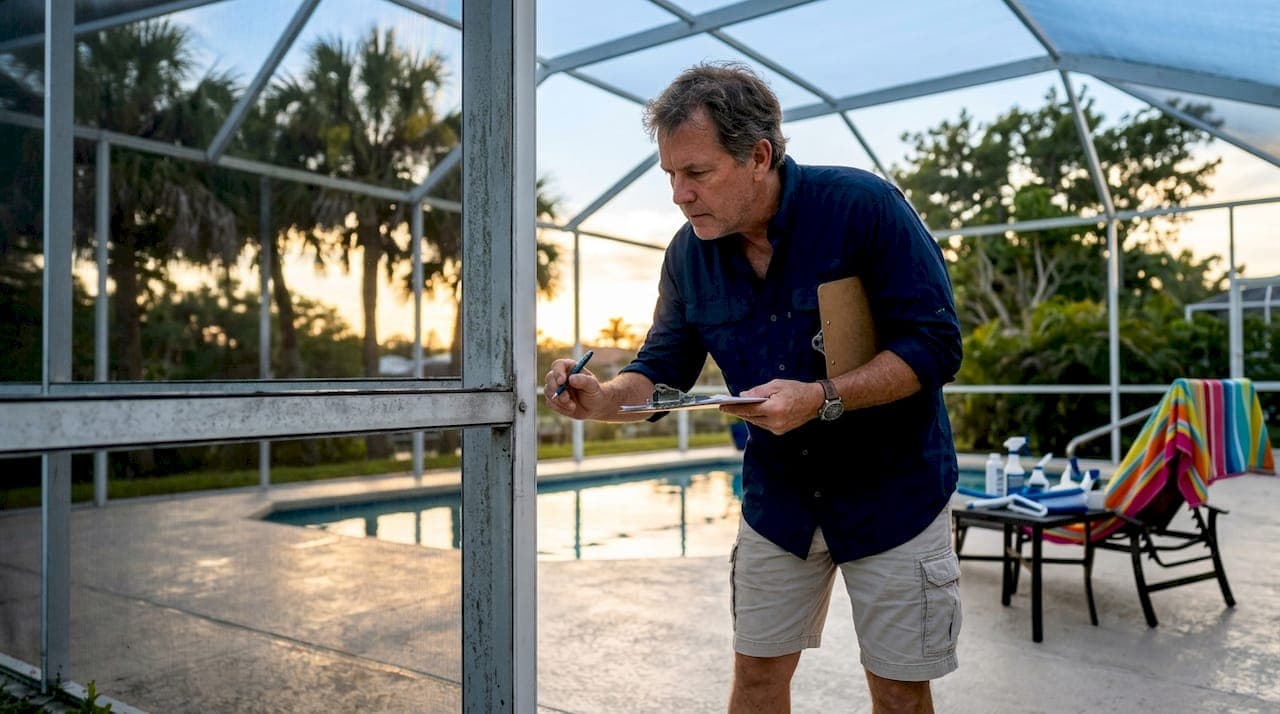
The single most effective practice is a scheduled inspection routine. Visual inspection every 3–4 months and a professional inspection once per year catches rust, corroded fasteners, and loose framing before they become structural failures. Skipping this step is the most common reason homeowners face full enclosure collapses after a storm that a neighbor's identical cage survived.
Focus each inspection on hardware integrity. Check hurricane ties, anchor bolts, and all visible screws for corrosion or looseness. Aluminum frames corrode from the inside out, so surface rust on a fastener often signals deeper deterioration underneath.
Repair small screen tears immediately. A 2-inch tear becomes a 2-foot tear after one windy afternoon. Prompt repairs also keep insects and debris out, which protects pool water chemistry and reduces cleaning costs.
Pro Tip: Photograph every inspection with date-stamped images and keep a written log. This record speeds up insurance claims and gives contractors a clear baseline when you call for service.
2. How to protect your pool enclosure from salt air and corrosion
Coastal and near-coastal homeowners face a threat that inland owners rarely consider: salt air corrosion. Salt particles accelerate oxidation on aluminum frames and steel fasteners, weakening structural connections faster than rain or UV exposure alone.
Rinse your screens and frame gently with a garden hose every month. Never use a pressure washer on screen panels. High-pressure water tears mesh fibers and forces moisture into frame joints, speeding up the corrosion it was meant to wash away.
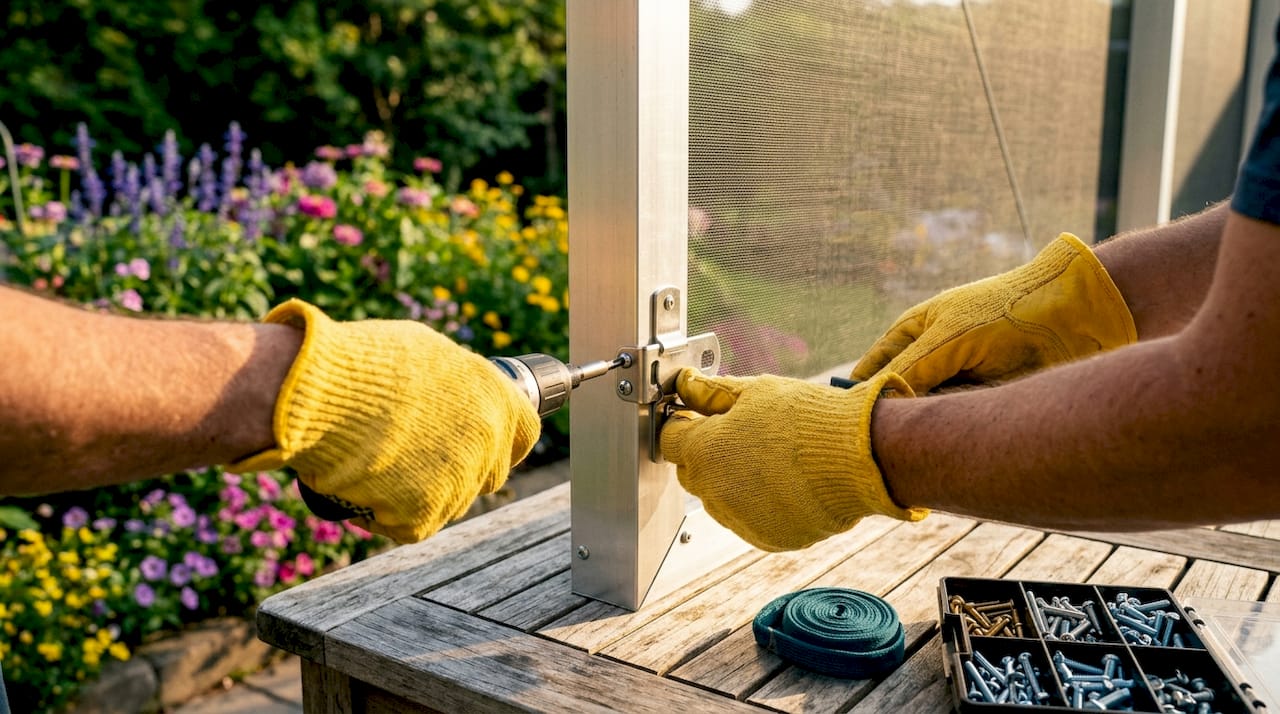
Mrpoolscreen uses stainless steel fasteners and water-based acrylic coatings specifically because standard hardware corrodes quickly in Florida's climate. Replacing corroded screws with stainless steel equivalents during routine maintenance extends the life of the entire frame by years, not just months.
Apply a UV-resistant aluminum coating to your frame every few years. This is a low-cost step that most homeowners skip, yet it dramatically slows oxidation and keeps the frame looking clean between professional restorations.
3. Preparing your enclosure and landscape before storm season
Landscaping is the most underestimated factor in pool enclosure hurricane damage risks. Trim overhanging tree limbs to the "9-and-3" position before hurricane season begins each year. Queen palms are particularly dangerous because their heavy fronds become airborne projectiles at relatively low wind speeds, punching through screen panels and denting aluminum frames.
Remove or secure every loose item inside and around the enclosure before a named storm arrives. Patio chairs, pool toys, and potted plants become high-speed projectiles inside a partially enclosed structure. A chair hitting a screen panel from the inside causes the same damage as one hitting it from outside.
Lower your pool water level by 12–18 inches before a hurricane, not more. This creates capacity for heavy rainfall without overflow, while keeping enough water weight in the shell to prevent hydrostatic displacement. A fully drained pool shell can literally pop out of the ground when surrounding soil becomes waterlogged.
Shut off pool equipment and cover pumps, filters, and heaters with breathable waterproof covers. Breathable materials prevent moisture buildup inside the covers, which causes its own corrosion problems.
Pro Tip: Check whether your enclosure is an engineered cage with written panel-removal instructions. Some designs require specific panels to be removed before high winds to allow controlled venting. Removing the wrong panels can void structural warranties.
4. What DIY reinforcements actually make damage worse
The instinct to board up or strap down your enclosure before a storm is understandable but counterproductive. DIY reinforcements such as boards or extra straps transfer wind forces rigidly through the frame instead of allowing natural venting, which increases the risk of catastrophic frame collapse.
Screen panels are intentionally designed as sacrificial elements. Panels blowing out is a designed safety feature, not a flaw. When a panel releases under wind pressure, it reduces the load on the frame and prevents the entire structure from acting like a sail. Blocking that release mechanism defeats the engineering.
Avoid zip-tying or wiring panels to the frame before a storm. These connections hold the panel in place long enough for wind pressure to build to frame-breaking levels. The repair cost for a bent or collapsed frame far exceeds the cost of replacing screen panels.
The correct pre-storm action is to verify that all fasteners are tight, all hurricane ties are secure, and all loose items are removed. Let the enclosure perform as its engineers intended.
5. Post-storm damage assessment: what to do first
Safety comes before cleanup. Walk the perimeter of your enclosure before entering it after a storm. Partial screen failure creates a "wind scoop" effect where remaining intact panels catch wind and transfer enormous force to the frame. A structure that looks mostly intact can still be structurally compromised.
Photograph all damage with date-stamped, wide-angle shots before moving or removing anything. Thorough documentation before cleanup is the single most important step for insurance claims. Adjusters need proof that damage occurred during the storm, not during cleanup.
Do not run your pool pump until you have cleared all debris from skimmers and drains. Running a pump through debris clogs the impeller and can burn out the motor, adding equipment repair costs to an already expensive recovery.
Contact a professional screen contractor for a free damage assessment before starting any repairs yourself. Contractors familiar with insurance claim processes can document structural damage in ways that support your claim and prevent underpayment.
6. Key structural facts every homeowner should understand
The engineering of your enclosure directly determines how you should maintain and prepare it. Aluminum-frame cages are rated for 150 mph but begin failing at 80–100 mph when hardware has corroded or loosened over years of exposure. Age and maintenance history matter more than the original rating.
Hurricane ties and anchor bolts are the most common failure points in aging enclosures. Tightening these connections before storm season is a 30-minute task that can prevent thousands of dollars in damage. A loose anchor bolt allows the entire frame to shift under wind load, which shears fasteners and buckles panels in sequence.
Equipment pad location has a dramatic effect on repair costs after enclosure failure. Damage with equipment outside the enclosure can cost up to $15,000 to repair, compared to roughly $1,500 when equipment sits protected inside the cage. If you are planning any pool area renovation, moving equipment inside the enclosure footprint is one of the highest-return decisions you can make.
Partial screen panel failure does not reduce storm risk. It increases it. A missing panel creates an opening that channels wind directly into the frame, building pressure that intact panels were never designed to handle alone. Full panel removal before a major storm is safer than partial failure during one.
Key Takeaways
Consistent inspection and targeted pre-storm preparation are the two practices that most reliably prevent pool enclosure weather damage and reduce long-term repair costs.
| Point | Details |
|---|---|
| Inspect on a schedule | Visual checks every 3–4 months and one professional inspection per year catch failures before storms expose them. |
| Tighten hardware before storm season | Hurricane ties and anchor bolts are the most common failure points; tightening them takes 30 minutes and prevents major damage. |
| Let sacrificial panels do their job | Screen panels are designed to release under wind pressure; blocking them with DIY reinforcements causes frame collapse. |
| Lower pool water, not fully | Drop water 12–18 inches before a hurricane to prevent overflow and avoid hydrostatic pool displacement. |
| Document damage before cleanup | Date-stamped photos taken before any debris removal are the foundation of a successful insurance claim. |
What I've learned about pool enclosures that most guides won't tell you
After years of working with Florida homeowners on enclosure restoration, the pattern I see most often is this: the homeowners who suffer the worst storm damage are not the ones with the oldest cages. They are the ones who did not know what their cage was designed to do.
Most people treat their pool enclosure like a solid structure, something to be reinforced and sealed against weather. The engineering reality is the opposite. A well-maintained enclosure is designed to flex, vent, and shed panels under extreme load. Fighting that design with boards, straps, or extra fasteners is the fastest way to turn a $2,000 screen replacement into a $20,000 frame rebuild.
The detail that surprises homeowners most is the equipment pad location. Moving pool equipment inside the enclosure footprint during a renovation feels like a minor decision. After a storm, that decision can mean the difference between a $1,500 repair and a $15,000 one. Landscaping choices carry similar weight. A Queen palm planted 10 feet from your enclosure is a slow-moving liability.
My honest recommendation: schedule a professional inspection before june each year, not after the first storm. Contractors can spot corroded anchor bolts and failing hurricane ties that look fine to an untrained eye. The inspection cost is trivial compared to what those small failures cost when a storm finds them first.
— Michel
Mrpoolscreen: professional restoration for Florida enclosures
Florida's climate tests pool enclosures harder than almost anywhere else in the country. Heat, humidity, salt air, and annual hurricane seasons create a compounding cycle of corrosion and structural wear that standard maintenance alone cannot fully address.
Mrpoolscreen specializes in pool screen restoration for Central Florida homeowners, using stainless steel fasteners and industrial-grade acrylic coatings that outlast standard hardware in Florida conditions. Their restoration process can save homeowners up to 60% compared to a full rebuild, addressing rust, corrosion, and structural wear before they become storm vulnerabilities. You can review completed projects in the restoration project gallery to see the quality of work firsthand. Get transparent pricing quickly through their online pricing tool or request a free estimate to plan your pre-season maintenance budget.
FAQ
How often should I inspect my pool enclosure?
Perform a visual inspection every 3–4 months and schedule a professional inspection once per year. Annual professional checks catch corroded fasteners and loose framing that visual checks miss.
Should I remove screen panels before a hurricane?
Only if your enclosure's engineering specifications require it. Screen panels are designed to release under wind pressure as a safety feature, so removing the wrong panels can create structural problems rather than prevent them.
How much water should I drain from my pool before a storm?
Lower the water level by 12–18 inches, not more. Fully draining a pool risks hydrostatic displacement, where saturated soil pressure pushes the empty shell out of the ground.
What is the biggest cost risk after enclosure storm damage?
Pool equipment located outside the enclosure footprint. Repair costs for exposed equipment after a cage failure can reach $15,000, compared to roughly $1,500 for equipment protected inside the enclosure.
Can DIY reinforcements protect my enclosure in a hurricane?
No. Boards, extra straps, or zip ties prevent screen panels from releasing under wind pressure, which transfers load directly to the frame and increases the risk of structural collapse.