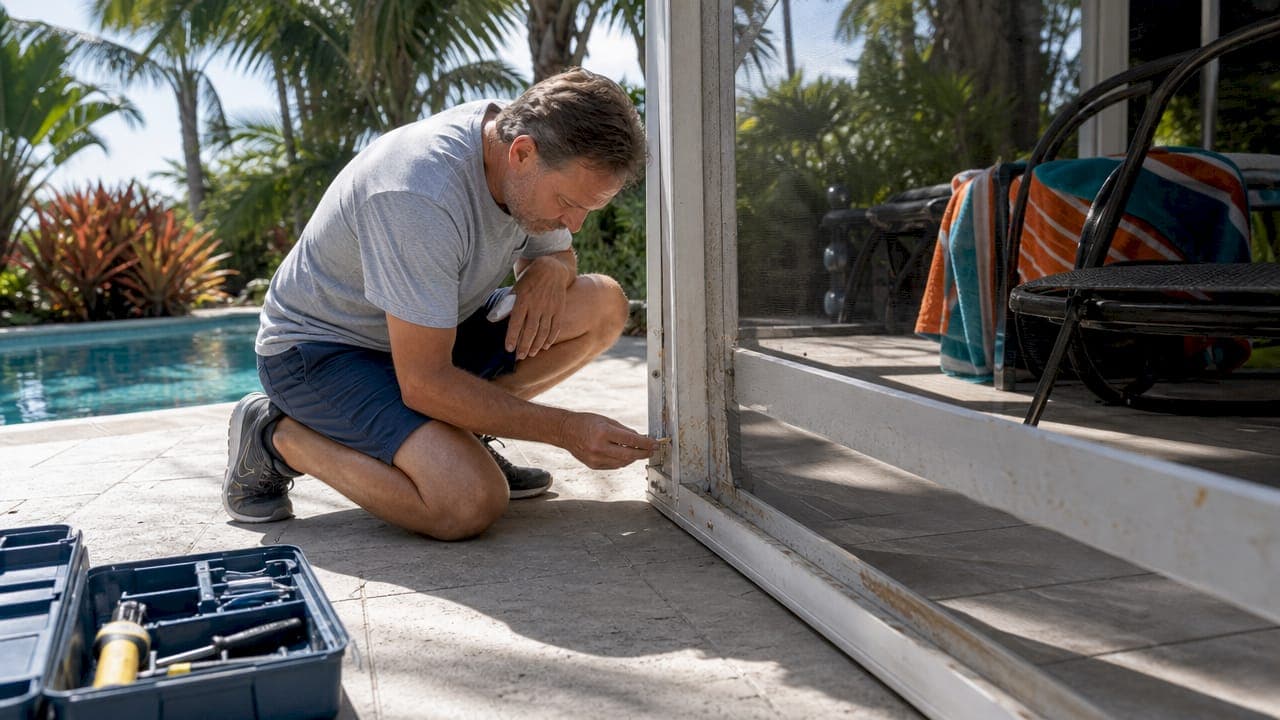
Pool screen frame corrosion is the chemical breakdown of aluminum frames caused by prolonged exposure to moisture, salt air, and oxygen, which degrades protective coatings and weakens the structure of your pool enclosure. The Aluminum Association classifies this process as oxidation, where the metal surface reacts with environmental elements to form aluminum oxide, a powdery white residue that signals active deterioration. Left untreated, corrosion compromises both the safety and appearance of your pool cage. Homeowners in Florida and similar coastal climates face accelerated deterioration due to the combination of high humidity, salt air, and intense UV exposure. Understanding what drives this damage is the first step toward protecting your investment.
What causes pool screen frame corrosion?
Aluminum frames corrode when their protective finish breaks down and bare metal contacts moisture, oxygen, and salt. The process starts at the surface but quickly moves deeper once the coating fails.
Several environmental factors drive this breakdown:
- Salt air and humidity. Salt particles settle on the frame and draw moisture into micro-cracks in the coating. Corrosion accelerates significantly when frames face salt air, pool chemicals, UV rays, and frequent storms, all of which are common in Florida.
- UV exposure. Sunlight degrades the protective finish over time, leaving the aluminum exposed. Once the coating fades, the frame has no barrier against moisture.
- Thermal cycling. Temperature swings cause frames to expand and contract daily. Micro-cracks in protective coatings form from this thermal cycling, allowing moisture to enter beneath the surface and start oxidation from the inside out.
- Fastener corrosion. Steel screws corrode faster than aluminum frames. Rusted fasteners weaken panel attachment, causing rattling and structural instability that accelerates frame damage around each screw hole.
- Pool chemical exposure. Chlorine and other pool chemicals become airborne and settle on frame surfaces. Over time, these chemicals strip protective coatings and speed up oxidation.
Pro Tip: Inspect the screws first when checking for early corrosion. Fastener rust almost always appears before visible frame damage, giving you a head start on repairs.
Florida's climate creates a perfect storm for pool screen deterioration. High humidity keeps frames wet for extended periods, salt air deposits corrosive particles daily, and the intense sun degrades coatings faster than in northern states. Homeowners in Central Florida typically see corrosion symptoms within five to ten years of installation without regular maintenance.
How do you identify signs of frame corrosion?
Early detection saves money. Catching corrosion before it spreads to the structural members of your pool cage means the difference between a simple fastener swap and a full frame replacement.
Visual signs to look for
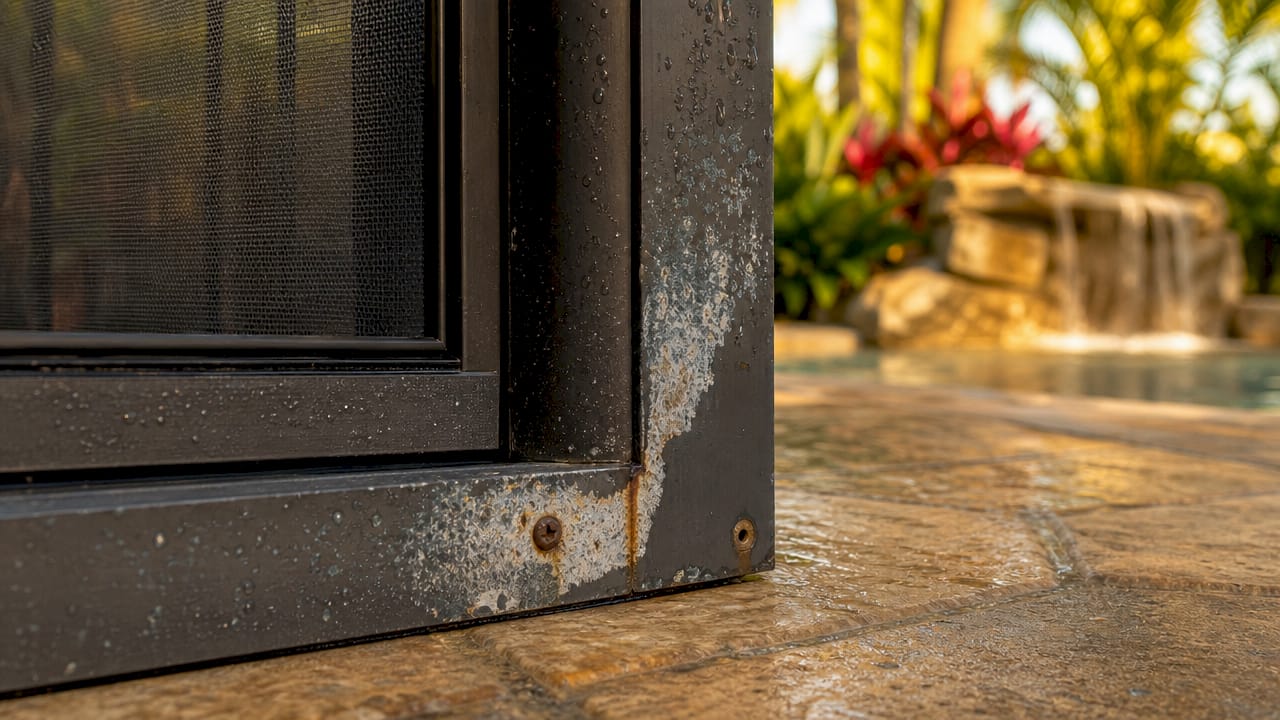
Pool screen frame corrosion shows as orange or white powdery residue, rust streaks running down from screws, and flaking or bubbling of the protective finish. White oxidation on the frame surface is aluminum reacting with oxygen. Orange streaking below screw holes means the fasteners have already begun to rust and are leaching iron oxide onto the frame.
- White powdery buildup on frame surfaces indicates active aluminum oxidation.
- Orange rust streaks below screw holes signal corroded steel fasteners.
- Bubbling or flaking paint means moisture has gotten beneath the coating.
- Pitting on the frame surface shows the corrosion has moved past the coating into the metal itself.
Physical and structural symptoms
Corrosion does not stay cosmetic for long. Once fasteners weaken, the physical structure of the enclosure begins to shift.
| Symptom | What it means |
|---|---|
| Rattling panels | Fasteners have loosened due to rust or material fatigue |
| Warped or bowed frame sections | Thermal cycling combined with corrosion has weakened the metal |
| Loose or missing screws | Screws loosen from temperature-induced frame movement and fastener corrosion |
| Sagging screen mesh | Frame sections have lost structural integrity at connection points |
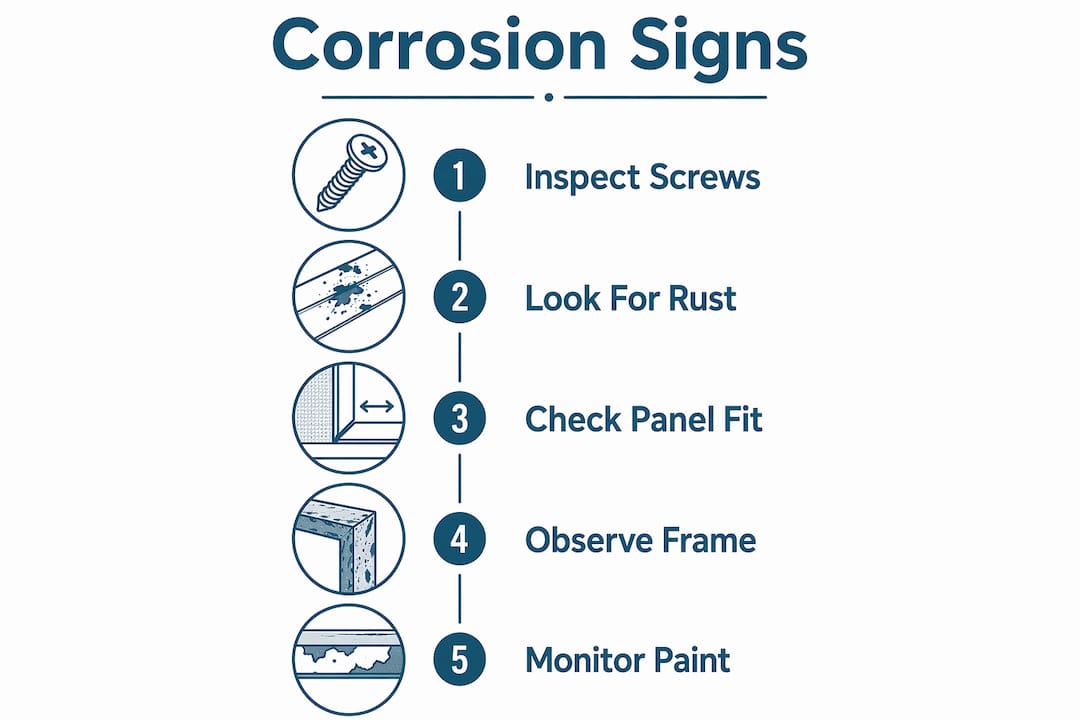
Corrosion typically starts at screw holes, base frames near the ground, and any area where water pools or splashes regularly. These spots stay wet the longest and receive the most chemical exposure from pool water.
Pro Tip: Walk the perimeter of your pool cage after a rainstorm. Wet frames make rust streaks and white oxidation far easier to spot than on dry surfaces.
Normal wear looks like faded color or minor surface scratches. Corrosion looks like active material loss, rust staining, or structural movement. If your frame rattles when you push it, corrosion has already reached the fasteners.
What maintenance practices slow pool screen frame corrosion?
Proactive maintenance costs a fraction of what full restoration or replacement does. The goal is to remove corrosive deposits before they penetrate the coating and to catch early damage before it spreads.
-
Rinse frames monthly with fresh water. Salt and chemical deposits build up on frame surfaces between rain events. Monthly rinsing with fresh water removes these deposits before they concentrate and attack the coating. Use a garden hose, not a pressure washer, to avoid forcing water into joints.
-
Replace rusted fasteners with corrosion-resistant alternatives. Steel screws corrode quickly in humid, salty environments. Switching to stainless steel or coated aluminum fasteners removes one of the primary corrosion triggers. Fasteners need periodic replacement due to humidity and salt air, even when the frame itself looks fine.
-
Schedule professional inspections every two years. A trained eye catches hidden corrosion at joints, base frames, and connection points that homeowners typically miss. Biennial inspections are the standard recommendation for pool enclosures in high-humidity climates.
-
Never paint over active corrosion without proper surface preparation. Painting over rust or oxidation traps moisture beneath the new coating and accelerates the damage underneath. Any corroded surface must be cleaned, treated, and primed before recoating.
-
Balance your pool water chemistry. Chlorine levels above the recommended range increase the concentration of airborne chemicals around the enclosure. Keeping pool water balanced reduces the chemical load on your frame surfaces.
-
Apply a protective coating to bare or faded frame sections. Water-based acrylic coatings designed for aluminum create a barrier against moisture and UV exposure. Reapplying protective coatings every few years extends the life of the underlying metal significantly.
Pro Tip: Pay extra attention to the base frame where it meets the concrete deck. This area stays wet the longest and corrodes faster than any other part of the enclosure.
Regular maintenance and early fastener replacement prevent costly full replacements and structural damage over time. Homeowners who rinse monthly and replace fasteners proactively can extend the functional life of their pool cage by years.
What are your options for repairing a corroded pool screen frame?
The right repair approach depends on how far the corrosion has progressed. Surface oxidation and minor fastener rust call for different solutions than structural frame damage.
Surface-level corrosion treatment
When corrosion is limited to the coating and has not penetrated the aluminum, cleaning and recoating the frame is the appropriate fix. This involves removing oxidation with a mild acid wash or aluminum cleaner, treating the surface, and applying a fresh protective coating. This approach works well for frames showing white oxidation or minor rust streaking but no structural movement.
Fastener replacement and partial frame repair
Professional repairs replace rusted frames and fasteners with powder-coated, corrosion-resistant aluminum to restore durability and improve appearance. Replacing all fasteners with stainless steel alternatives stops the primary source of ongoing corrosion at screw holes. Partial frame section replacement addresses localized damage without requiring a full rebuild.
- Surface cleaning and recoating: Best for early-stage oxidation with no structural damage.
- Fastener replacement: Addresses the most common cause of accelerating corrosion.
- Partial frame section replacement: Targets specific areas of structural damage.
- Full frame restoration: Required when corrosion has compromised multiple structural members.
Full replacement versus professional restoration
Full frame replacement means tearing out the existing structure and rebuilding from scratch. Mrpoolscreen's restoration approach addresses corrosion damage using industrial-grade water-based acrylic coatings and stainless steel fasteners, and can save homeowners up to 60% compared to a full rebuild. Restored frames with proper maintenance carry a service life comparable to new construction. The Florida Building Code requires pool enclosures to meet specific structural standards, so any repair or restoration work must account for code compliance. A qualified professional assesses the frame against these standards before recommending a repair path.
Pool enclosure mesh lasts 8–15 years under normal conditions, but aluminum frames last longer with proper care. Restoration extends that lifespan further while preserving the existing structure. Homeowners can view before-and-after restoration results to understand what professional corrosion repair looks like in practice.
Key Takeaways
Pool screen frame corrosion is a chemical process driven by moisture, salt air, and UV exposure that degrades protective coatings and weakens aluminum frames, requiring proactive maintenance and timely professional repair to prevent costly replacement.
| Point | Details |
|---|---|
| Corrosion starts at fasteners | Rust at screw holes is the earliest and most reliable sign of active frame corrosion. |
| Monthly rinsing is the top prevention step | Fresh water rinses remove salt and chemical deposits before they penetrate the frame coating. |
| Thermal cycling causes hidden damage | Temperature-driven expansion and contraction creates micro-cracks that allow moisture inside the frame. |
| Restoration saves up to 60% over replacement | Professional restoration with corrosion-resistant materials costs far less than a full rebuild. |
| Biennial inspections catch damage early | Professional inspections every two years identify corrosion at joints and base frames before it spreads. |
What I've learned about pool screen corrosion after years in the field
Most homeowners wait too long. By the time they notice orange rust streaks or rattling panels, the corrosion has already been working beneath the surface for months, sometimes years. The visible damage is almost never the full picture.
The biggest misconception I encounter is that corrosion is a storm problem. Homeowners assume their enclosure is fine between hurricane seasons because nothing looks broken. But thermal cycling, salt air, and pool chemicals work on the frame every single day, regardless of the weather. Maintenance is only necessary after storms is a belief that costs homeowners thousands in avoidable repairs.
Florida's climate is genuinely unforgiving for aluminum structures. The combination of high humidity, intense UV, and salt air creates conditions that accelerate corrosion faster than most homeowners expect. A frame installed without regular maintenance in Central Florida can show significant structural corrosion within a decade.
My practical advice: treat your pool cage the same way you treat your roof. You would not wait for a leak to inspect your shingles. Walk the perimeter of your enclosure every few months, look at the screws first, and rinse the frame after periods of heavy chemical use or salt wind. The homeowners who do this rarely face full replacement costs.
When selecting a restoration professional, ask specifically about the fasteners and coatings they use. Stainless steel fasteners and water-based acrylic coatings are the current standard for corrosion-resistant restoration. Any professional who proposes painting over existing rust without surface preparation is not following best practice.
— Michel
Mrpoolscreen's approach to pool enclosure restoration
Corrosion damage does not have to mean starting over from scratch.
Mrpoolscreen specializes in pool screen restoration for homeowners across Central Florida, addressing rust, oxidation, and structural deterioration using industrial-grade water-based acrylic coatings and stainless steel fasteners. The restoration process treats the frame at the surface level and replaces corroded fasteners throughout, delivering results that meet Florida Building Code standards at a fraction of full rebuild costs. Homeowners can get online pricing quickly to understand what restoration costs before committing to a consultation. If your pool cage is showing signs of corrosion, a professional assessment is the clearest path to an informed decision.
FAQ
What is pool screen frame corrosion exactly?
Pool screen frame corrosion is the chemical breakdown of aluminum caused by moisture, salt air, oxygen, and UV exposure degrading the frame's protective coating. Once the coating fails, the metal oxidizes and weakens structurally.
How do I know if my pool frame has corrosion?
Look for white powdery residue on frame surfaces, orange rust streaks below screw holes, bubbling or flaking paint, and rattling or loose panels. Fastener rust is typically the first visible sign.
How long do pool screen frames last before corrosion becomes a problem?
Pool enclosure mesh lasts 8–15 years under normal conditions, and aluminum frames last longer with proper maintenance. Without regular care in humid, salty climates, visible corrosion can appear within five to ten years.
Can I repair corrosion myself or do I need a professional?
Surface oxidation can be cleaned with aluminum-safe products, but structural corrosion, loose fasteners, and warped frame sections require professional assessment to meet Florida Building Code standards and ensure lasting repairs.
Does pool water chemistry affect frame corrosion?
Yes. Chlorine and other pool chemicals become airborne and settle on frame surfaces, stripping protective coatings over time. Keeping pool water properly balanced reduces the chemical load on your enclosure and slows coating degradation.