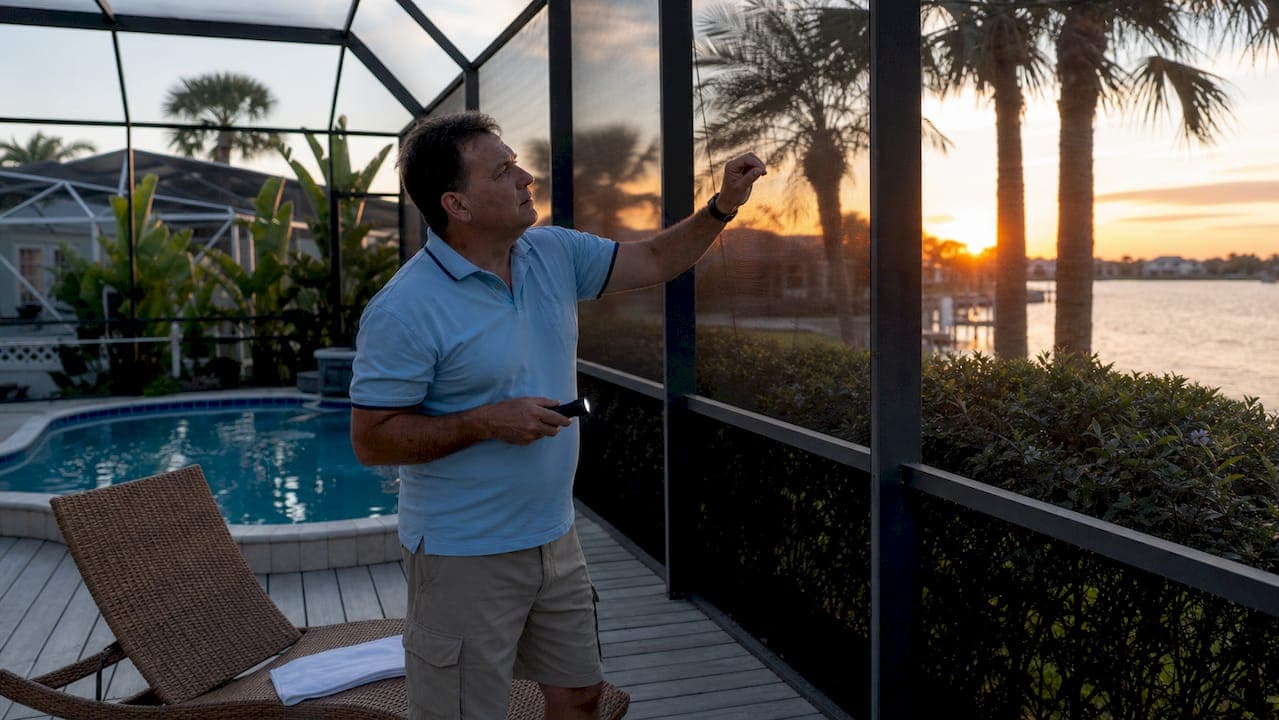
A pool screen safety inspection checklist is a structured set of criteria homeowners use to verify that their pool enclosure meets safety regulations and prevents accidents. The checklist covers screen mesh integrity, barrier gap measurements, gate hardware function, and frame condition. Standards like the 4-inch sphere test and self-closing gate requirements form the backbone of any thorough safety review. Mrpoolscreen works with Central Florida homeowners every day to catch the defects that put families at risk and drain budgets when left unaddressed.
1. How to inspect the physical integrity of pool screens and framing
Screen integrity is the foundation of any pool screen safety inspection checklist. A screen that looks intact from a distance can still fail under pressure from a child or a storm gust.
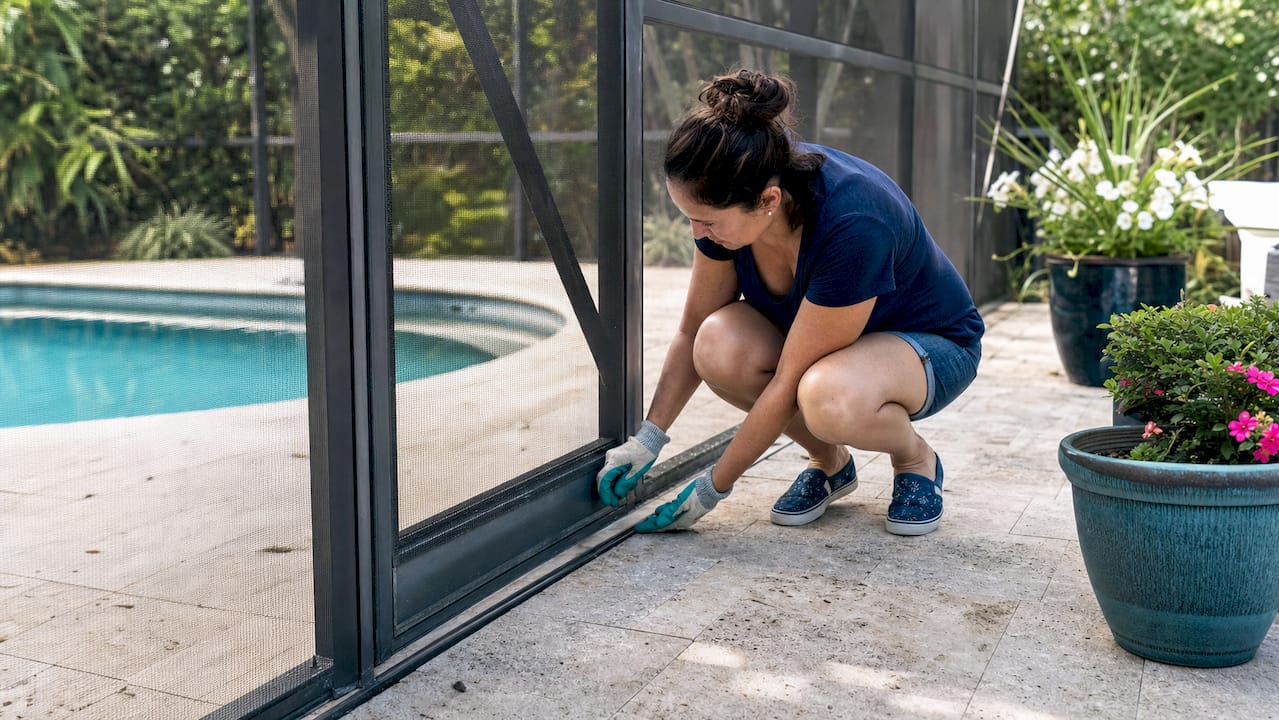
Start your inspection at the connection points where the frame meets the house and where it meets the footing. These junctions hide the most common structural problems, including rust, separation, and water intrusion. Work outward from there, checking every panel systematically.
Look for these specific defects in the mesh and framing:
- Tears and holes larger than 1 inch in any panel, especially near the base where children can push through
- Sagging mesh that has lost tension, which signals UV degradation or broken spline
- Brittleness in the screen fabric, detectable by pressing lightly with a finger. Brittle mesh crumbles rather than flexes.
- Loose or missing fasteners along the frame rails, which allow panels to separate under wind load
- Rust staining on aluminum framing, which indicates moisture penetration and weakening metal
- Painted-over labels or stamped ratings on frame members. Concealed damage is a red flag that a previous repair was done to hide rather than fix a problem.
Cosmetic wear, like surface oxidation or minor screen discoloration, does not compromise safety. Structural defects, like bent frame members, cracked corner connectors, or mesh that pulls free from the spline, require immediate repair.
Pro Tip: Run your hand along every spline channel at the base of the enclosure. If the spline pops out easily, the screen is no longer secured and will fail under any real load.
2. What safety barrier gap tests and measurements ensure compliance
Gap measurements determine whether your enclosure actually keeps children out. The 4-inch sphere test is the universal standard: no opening in the barrier should allow a 4-inch diameter sphere to pass through. This rule applies to mesh openings, gaps between the frame and ground, and spaces around gate hardware.
Most local codes also require pool barriers to stand at least 48 inches high with non-climbable surfaces. A non-climbable surface means no horizontal rails, decorative cutouts, or footholds within the lower 45 inches of the enclosure that a child could use to climb over.
| Measurement | Minimum Standard |
|---|---|
| Barrier height | 48 inches from grade |
| Maximum gap (mesh or frame) | Less than 4 inches |
| Ground clearance | Less than 4 inches |
| Gate gap at latch side | Less than 4 inches |
| Non-climbable zone | Bottom 45 inches of barrier |
Local jurisdictions sometimes set stricter rules than the International Building Code baseline. Always check your county or city code before signing off on any inspection.
Pro Tip: A standard tennis ball measures just under 2.7 inches in diameter. If a tennis ball passes through any gap in your enclosure, that gap fails the 4-inch sphere test with room to spare.
3. What to check about gates and door hardware in pool screen enclosures
Gate hardware is the single most commonly failed item in a pool safety inspection guide. A gate that sticks open, latches slowly, or swings inward instead of outward creates a direct path to the pool for unsupervised children.
Gates must be self-closing and self-latching, meaning they return to a closed and locked position without any manual assistance. Test every gate in your enclosure by pushing it fully open and stepping back. It must close and latch on its own within a few seconds.
Check these specific hardware points during your inspection:
- Gate swing direction: The gate must open outward, away from the pool. An inward-swinging gate can be pushed open by a child leaning against it.
- Latch placement: The latch must sit high enough that a child cannot reach it. Many codes require the latch to be at least 54 inches from the ground, or placed on the pool side of the gate.
- Spring tension: Test the closing spring by holding the gate at a 90-degree angle and releasing it. Weak springs that fail to pull the gate shut need immediate replacement.
- Latch alignment: A misaligned latch that catches only partially is not a self-latching gate. It will fail under any real test.
- Frame warping: A warped gate frame prevents proper closure. Check the gap between the gate and the post on all four sides.
Minor adjustments like tightening hinge screws or repositioning a latch strike plate are straightforward homeowner repairs. A gate that warps repeatedly or whose spring fails within months signals a deeper frame or installation problem.
4. How environmental exposure impacts pool screen safety
UV radiation and moisture are the two primary forces that degrade pool screens in Florida and other warm climates. UV exposure and storm damage accelerate screen brittleness and corrosion, shortening the safe service life of both the mesh and the aluminum framing.
Routine maintenance slows this deterioration significantly. Follow this sequence after every major storm and at least twice per year:
- Clear debris from the frame channels and gutters. Trapped organic matter holds moisture against the aluminum and accelerates corrosion.
- Inspect all screws and fasteners for rust or loosening. Routine fastener checks catch early corrosion before it spreads to the frame itself.
- Check screen tension across every panel. A screen that sags between fasteners has lost its structural integrity and will tear under wind pressure.
- Rinse the mesh with fresh water after saltwater exposure. Salt accelerates both mesh degradation and aluminum oxidation.
- Examine the frame finish for peeling or chalking. Bare aluminum oxidizes quickly and loses structural strength over time.
Cleaning agents matter too. Bleach-based cleaners degrade screen mesh fibers and should never be used directly on the fabric. A mild soap and low-pressure rinse preserve both the mesh and the frame coating.
5. Which common safety issues arise during pool screen inspections
The most frequently found defects in a safety checklist for pool enclosures fall into four categories: mesh failure, gap violations, gate malfunction, and improper prior repairs.
- Mesh failure includes tears, holes, and brittle panels that no longer meet the 4-inch sphere standard. Left unaddressed, a single torn panel creates a child-accessible opening.
- Gap violations appear most often at the base of the enclosure where the frame meets uneven ground, and around gate frames where hardware has shifted over time.
- Gate malfunction is the most dangerous defect because it is also the most invisible. A gate that appears closed but does not latch provides zero protection.
- Improper prior repairs are a red flag that basic home inspections often miss. Patch jobs using mismatched screen material, wrong-gauge fasteners, or non-rated frame sections create weak points that fail under stress.
Recurring repair needs signal deeper installation or material problems that require comprehensive restoration rather than another patch. Document every defect with photos and dates. This record protects you during resale and helps a professional assess whether restoration or targeted repair is the right call.
When to call a professional: if you find more than two structural defects, any gate that cannot be adjusted to self-close reliably, or evidence of concealed prior damage, a professional inspection is the right next step. Professional pool inspections typically take 1–2 hours and cost $125–$500 depending on scope and location. That cost is a fraction of what ignored defects can cost in liability or full enclosure replacement.
Key takeaways
A thorough pool screen safety inspection covers mesh integrity, gap measurements, gate hardware, and environmental wear. Skipping any one of these areas leaves a real gap in your family's protection.
| Point | Details |
|---|---|
| Start at connection points | Inspect where the frame meets the house and footing first, as these hide the most serious defects. |
| Apply the 4-inch sphere test | No gap in the enclosure, including at the ground and gate edges, should allow a 4-inch sphere to pass through. |
| Test every gate independently | Each gate must self-close and self-latch without assistance; partial latching provides no real protection. |
| Treat recurring repairs as warnings | Repeated patch jobs signal installation or material failure that requires full restoration, not another quick fix. |
| Document every inspection | Photos and dates protect you during resale and give professionals a baseline for future assessments. |
What I've learned from watching homeowners inspect their own pool screens
Most homeowners walk their enclosure once, look for obvious holes, and call it done. That approach misses the defects that actually hurt people.
The gate is the most overlooked component in any screen enclosure safety review. I have seen gates that appeared closed from across the yard but would not latch under any real pressure. A child leaning against that gate would walk straight through. Testing the gate by pushing it fully open and walking away is the single most important step in any inspection, and most homeowners skip it entirely.
The other mistake I see constantly is treating cosmetic wear as the whole story. Homeowners frequently misread surface oxidation as a serious problem while missing the bent corner connector that is actually compromising the frame. Clear inspection criteria, like the ones in this checklist, reduce that error significantly.
My honest recommendation: do a full checklist inspection twice per year, once in the spring before heavy use and once in the fall after storm season. Take photos every time. If you find anything structural, get a professional assessment before the next swim season. Pool inspections reveal expensive defects that untrained eyes miss, and catching them early is always cheaper than dealing with the consequences.
The homeowners who stay ahead of enclosure problems are the ones who treat inspection as a habit, not a reaction to something going wrong.
— Michel
Mrpoolscreen restores aging enclosures to meet safety standards
Aging pool screens develop the exact defects this checklist covers: brittle mesh, corroded fasteners, warped gates, and frame separation at the connection points. Mrpoolscreen specializes in pool screen restoration for Central Florida homeowners, using water-based acrylic coatings and stainless steel fasteners to address weathering, rust, and structural deterioration without a full rebuild.
Restoration through Mrpoolscreen can save homeowners up to 60% compared to full enclosure replacement, while bringing the structure back into compliance with current safety standards. Browse the project gallery to see real restoration outcomes, or get online pricing to understand what your enclosure needs and what it will cost.
FAQ
What is the 4-inch sphere test for pool enclosures?
The 4-inch sphere test requires that no opening in a pool barrier allow a 4-inch diameter sphere to pass through. This standard applies to mesh gaps, ground clearances, and spaces around gate hardware to prevent child access.
How often should homeowners inspect their pool screen enclosure?
A full safety inspection twice per year is the standard recommendation, with additional checks after any major storm. Consistent documentation with photos helps track deterioration over time.
When does a pool screen need professional restoration instead of a patch repair?
Recurring repairs or multiple structural defects found in a single inspection signal that the enclosure needs comprehensive restoration. Patch repairs on failing material create new weak points rather than solving the underlying problem.
What does a professional pool inspection cost?
Professional pool inspections typically cost $125–$500 and take 1–2 hours, depending on the scope and location. That investment identifies hidden defects that basic visual checks miss.
Do pool screen enclosure gates need to open outward?
Yes. Gates must open outward, away from the pool, and must be self-closing and self-latching. An inward-swinging gate or one that does not latch automatically fails standard pool safety requirements.