
Screen enclosure visual upgrade options are defined as targeted improvements to aging pool cage structures that boost aesthetics, safety, and outdoor comfort without requiring a full rebuild. Florida homeowners face a real choice: full replacement costs range from $5,000 to $45,000 depending on size and materials, while selective upgrades deliver a fraction of that price tag. Mrpoolscreen's restoration approach saves clients up to 60% compared to full rebuilds by focusing on high-impact changes like panoramic panels, mesh replacements, and frame refinishing. The upgrades covered here address the most common problems: rust stains, blocked views, worn screens, and dated frames.
1. Panoramic and mega-view panels: the top screen enclosure visual upgrade option
Panoramic and mega-view panel retrofits are the single most dramatic upgrade available for aging pool enclosures. This approach removes obstructive vertical posts and chair rails, replacing them with wide-span screen panels that open the entire wall to uninterrupted views of your yard and landscape. The result is a modern, resort-style aesthetic that adds real curb appeal and makes the pool area feel significantly larger.
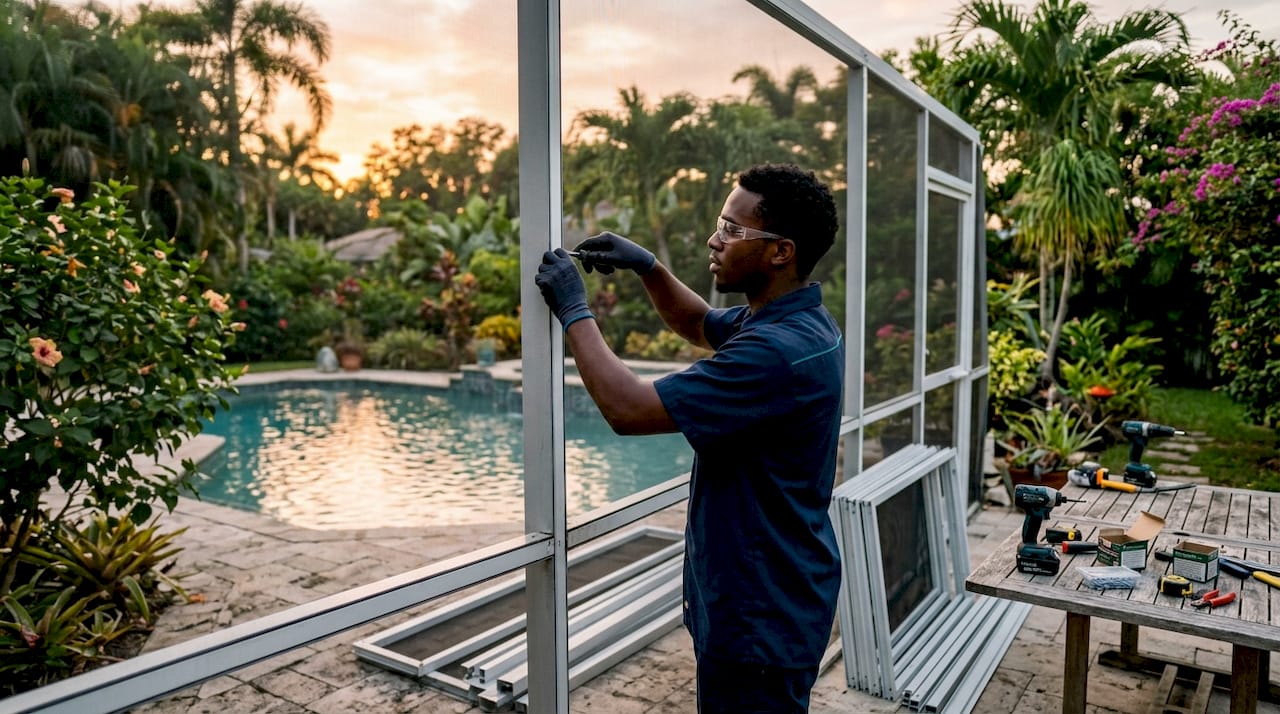
The structural change is not cosmetic. Removing frame posts requires engineered support to maintain safety and stability, which means this upgrade is not a DIY project. A licensed professional must assess load distribution and install proper replacement supports before any posts come out. The payoff is worth the planning: fresh screen tensioning and frame refinishing are included in a full panoramic retrofit, so the enclosure looks and performs like new.
Key benefits of panoramic retrofits:
- Eliminates vertical posts that block sightlines from inside and outside the enclosure
- Maximizes natural light entering the pool area
- Increases perceived square footage without adding physical space
- Adds a modern aesthetic that aligns with current screen enclosure design ideas
- Pairs well with frame repainting for a complete visual reset
Pro Tip: Ask your contractor for engineered drawings before any posts are removed. Proper documentation protects you during future home inspections and insurance reviews.
2. Screen mesh upgrades: clarity, durability, and protection
Screen mesh is the most visible material in any enclosure, and upgrading it changes both the look and the function of the space. Mesh materials vary in visibility, durability, and insect protection, which means the right choice depends on your priorities.
| Mesh Type | Visibility | Durability | Best For |
|---|---|---|---|
| Standard fiberglass | High | Moderate | Budget-conscious upgrades |
| Pet-resistant mesh | Moderate | Very high | Homes with dogs or cats |
| Solar/heat-blocking | Lower | High | Sun-facing enclosures |
| No-see-um mesh | Moderate | Moderate | Areas with small insects |
Solar screen mesh blocks UV rays and reduces heat buildup inside the enclosure. That matters in Central Florida, where afternoon sun can make an unshaded pool cage uncomfortable. Pet-resistant mesh uses a heavier weave that resists tearing from claws, which extends the time between rescreenings significantly.
Choosing the right mesh also affects how your enclosure looks from the street. Standard fiberglass offers the clearest view through the screen, which suits homeowners who want to show off landscaping or pool lighting. Solar mesh creates a slightly tinted appearance that reads as sleek and modern from the exterior.
3. Decorative trims, beams, and lighting for style without structural work
Decorative trims and beams add a personalized, finished look to screen enclosures without requiring any structural changes. Decorative beams and custom trims create an elegant appearance that makes a basic aluminum frame look intentional and designed rather than purely functional. Color-matched or contrasting trim pieces are one of the most affordable decorative screen enclosure options available.
Lighting is the upgrade that most homeowners underestimate. UL-rated outdoor lighting and ceiling fans improve both ambiance and usability, extending the hours you actually spend in the enclosure. Fixtures rated for damp or wet locations handle Florida humidity without corroding or failing prematurely.
Practical decorative upgrades to consider:
- Powder-coated aluminum trim in bronze, white, or black to match your home's exterior palette
- Recessed LED strips along the roofline for evening ambiance
- Ceiling fans with outdoor-rated motors for airflow and comfort
- Vertical garden panels or planter boxes attached to the frame interior
- Decorative column wraps to soften the industrial look of standard aluminum posts
Pro Tip: Choose a trim color that already appears on your home's shutters, front door, or roof fascia. That single decision makes the enclosure look like it was designed with the house rather than added as an afterthought.
4. Frame restoration: fastener replacement and repainting
Frame restoration is the most cost-effective way to reset the visual age of an enclosure. Rusty or corroded fasteners leave brown streaks down aluminum frames, and those stains signal neglect even when the structure itself is sound. Replacing rusty fasteners with stainless steel hardware eliminates the staining source and prevents recurrence for years.
Repainting or recoating the frame delivers an equally dramatic result. Mrpoolscreen uses water-based acrylic coatings that bond to aluminum and resist Florida's UV exposure and humidity. A freshly coated frame in a clean white or bronze finish reads as new from the street, even on a structure that is 15 or 20 years old.
The restoration sequence that delivers the best results:
- Remove all existing fasteners and inspect for corrosion damage in the frame itself
- Clean and prep the aluminum surface to remove oxidation and chalking
- Apply a water-based acrylic coating rated for outdoor aluminum
- Install stainless steel fasteners throughout to prevent future rust staining
- Inspect screen tension and replace any panels that show sagging or tears
This process costs a fraction of full replacement. Mrpoolscreen's restoration services save clients up to 60% compared to rebuilding, which makes frame restoration the logical first step before committing to larger structural changes.
5. Partial rescreening vs. full retrofit: choosing the right scope
The difference between rescreening and retrofitting determines your budget, timeline, and the final visual result. Rescreening replaces worn or torn screen panels within the existing frame. A full retrofit involves structural upgrades beyond simple panel replacement, including removing posts and chair rails for panoramic views.
Choosing the wrong scope wastes money. A homeowner with a structurally sound frame and only torn screens does not need a retrofit. A homeowner with a dated, post-heavy frame who wants a modern look will not be satisfied with rescreening alone.
Use this framework to decide:
- Choose partial rescreening when: the frame is structurally sound, rust is minimal, and the primary issue is torn or sagging screen panels
- Choose frame restoration when: the frame shows surface rust, staining, or faded coating but remains structurally intact
- Choose a full retrofit when: you want panoramic views, the frame design is visually outdated, or you are preparing the home for sale
Budget and timeline also factor in. Rescreening is typically the fastest option, often completed in one or two days. A full panoramic retrofit requires engineering review and more labor, so plan for a longer project window. Professional installation is recommended for all three approaches, since improper screen tension and fitting reduce the lifespan of any upgrade.
Pro Tip: Get a written assessment of your frame's structural condition before committing to any upgrade scope. That assessment tells you exactly what the frame can support and prevents costly surprises mid-project.
Key Takeaways
The most effective screen enclosure visual upgrade options combine high-impact structural changes like panoramic panels with targeted surface improvements like stainless steel fasteners and fresh frame coatings to deliver lasting results at a fraction of full replacement cost.
| Point | Details |
|---|---|
| Panoramic panels deliver the biggest visual change | Removing posts and chair rails opens views and modernizes the enclosure more than any other single upgrade. |
| Mesh choice affects both look and function | Solar, pet-resistant, and standard fiberglass meshes each serve different priorities for clarity, durability, and UV protection. |
| Frame restoration resets visual age affordably | Stainless steel fasteners and acrylic recoating eliminate rust stains and restore a like-new appearance without rebuilding. |
| Scope selection prevents wasted spending | Match the upgrade type to the frame's actual condition: rescreening, restoration, or full retrofit each suits a different situation. |
| Professional installation protects the investment | Improper screen tension and fitting reduce upgrade lifespan, making licensed installation the standard for all upgrade types. |
What I've learned about choosing enclosure upgrades that actually hold up
Most homeowners focus on the visual result and underestimate how much the material choices determine whether that result lasts two years or fifteen. I've seen beautifully rescreened enclosures develop rust streaks within a season because the contractor used standard steel fasteners instead of stainless. The screen looks great on day one and looks neglected by the following summer.
The upgrades that consistently deliver the best long-term value are the ones that integrate with the home's architecture rather than standing apart from it. A bronze-trimmed enclosure on a home with bronze window frames and shutters looks intentional. The same enclosure in white on a home with dark exterior accents looks like a mismatch, regardless of how well the work was done.
My honest recommendation: start with a frame assessment, not a wish list. Know what the structure can support before you decide on panoramic panels or decorative lighting. That sequence saves money and produces a result you will still be satisfied with five years from now. The project gallery at Mrpoolscreen shows what a well-sequenced restoration actually looks like in Central Florida conditions, which is a useful reference before you commit to a scope.
— Michel
Mrpoolscreen's restoration services for Central Florida homeowners
Mrpoolscreen handles the full range of pool screen enclosure upgrades for Central Florida homeowners, from targeted rescreening to complete frame restoration and panoramic retrofits.
Their pool screen restoration services use industrial-grade water-based acrylic coatings and stainless steel fasteners, the same materials that prevent the rust staining and coating failure that make aging enclosures look neglected. The team handles frame prep, fastener replacement, screen tensioning, and finish coatings as a complete process rather than piecemeal repairs. Homeowners who want to see pricing before committing can use the online pricing tool to get a clear budget estimate. For a full assessment of your enclosure's condition and upgrade options, a free estimate is available directly through Mrpoolscreen.
FAQ
What are the most affordable screen enclosure visual upgrades?
Frame restoration, including fastener replacement with stainless steel hardware and a fresh acrylic coating, delivers significant visual improvement at the lowest cost. Mrpoolscreen's restoration approach saves clients up to 60% compared to full enclosure replacement.
Do panoramic panel upgrades require a permit?
Panoramic retrofits involve removing structural frame elements, which typically requires a permit and engineered drawings in Florida. Always confirm local permitting requirements with your contractor before work begins.
How long does a screen enclosure restoration take?
A standard frame restoration and rescreening project typically completes in one to two days. A full panoramic retrofit takes longer due to engineering review and structural work, so timelines vary by project scope.
What mesh type is best for a Florida pool enclosure?
Solar screen mesh is the best choice for sun-facing enclosures in Florida because it blocks UV rays and reduces heat buildup. Pet-resistant mesh is the better option for homes with animals, given its heavier weave and resistance to tearing.
Can I upgrade my enclosure without replacing the entire frame?
Yes. Partial rescreening, fastener replacement, and frame recoating all improve the appearance and function of an existing enclosure without replacing the structure. A professional assessment determines which upgrades the current frame can support.