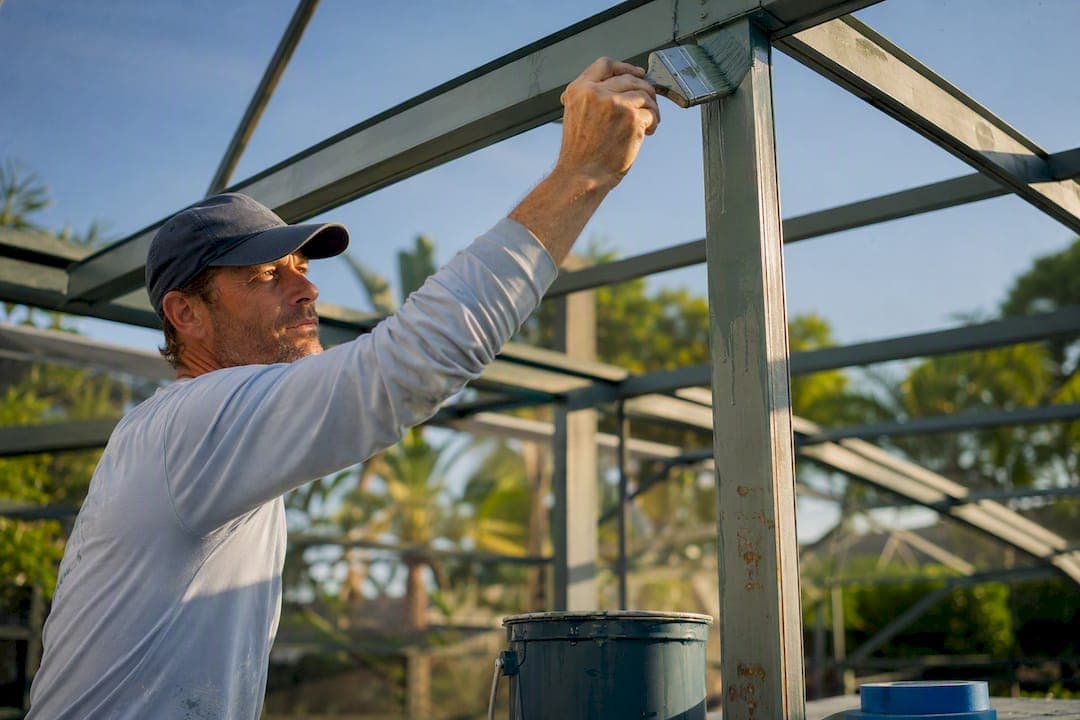
A well-built, well-maintained pool cage is one of the most effective eco-upgrades a homeowner can make: it cuts evaporation, stabilizes water chemistry, and reduces the runtime your heater needs to keep the pool comfortable. The science backs this up, and the payoff shows up on your water bill and chemical shelf alike.
Here's what to do next:
- Inspect first. Check screens, frame joints, and fasteners for rust or gaps before deciding on any fix.
- Consider restoration over rebuild. Rescreening and refinishing an existing cage often costs far less than tearing it out.
- Ask about materials. Water-based acrylic coatings, stainless fasteners, and solar-ready roof designs all extend eco benefits.
Restoration can save homeowners up to 60% compared to a full rebuild, according to Mr. Pool Screen, which makes it the cheapest entry point into a lower-impact pool setup.
Key Takeaways
A pool cage reduces evaporation, stabilizes chemical use, and cuts heater runtime, and restoring an existing frame typically delivers those benefits at a fraction of the cost and material impact of a full rebuild.
| Point | Details |
|---|---|
| Evaporation drives everything | Less water loss means fewer refills and less chemical dosing to rebalance the pool. |
| Restore before you replace | Surface rust and torn screens are usually fixable without touching a sound frame. |
| Choose durable materials | Stainless fasteners, water-based coatings, and UV-stable mesh cut long-term waste. |
| Solar-ready designs pay off twice | Enclosures built for photovoltaics or rainwater capture reduce both energy and water use. |
| Mr. Pool Screen restoration route | Offers rescreening, stainless fasteners, and acrylic coatings that can save up to 60% versus a rebuild. |
Where to read more
- Katchakid pool safety nets for ASTM-rated net options and pricing
- Green Side of Retractable Roofs for sustainable retractable roof design
- Helios Pool Enclosure for solar-integrated enclosure examples
Table of Contents
- What Makes a Pool Cage Eco-Friendly?
- Which Enclosure Types and Materials Are Most Sustainable?
- When Should You Restore Instead of Replace?
- What Do Eco-Upgrades Cost, and How Long Do They Last?
- How Do You Choose the Right Contractor for an Eco-Friendly Retrofit?
- A Restoration Example Worth Noting
- How Mr. Pool Screen Helps You Go Eco-First
- Sources
What Makes a Pool Cage Eco-Friendly?
A pool cage's environmental value comes down to three mechanisms: it blocks evaporation, stabilizes chemistry, and retains heat. Each one reduces a resource you'd otherwise burn through faster.
Evaporation is the biggest one. An uncovered pool loses water constantly to sun and wind, and every gallon you refill dilutes your chemical balance, forcing another round of dosing. A screen enclosure breaks that wind exposure and cuts the surface-level moisture loss, which means less tap water added and fewer chemicals needed to bring the pool back into range.
Chemical stability follows directly from that. Fewer refills mean fewer pH swings and less chlorine demand, so you're not shocking the pool as often. Enclosure manufacturers report that screened pools hold heat and chemical balance more consistently than open pools exposed to full sun and rain.
Energy is where the enclosure earns its keep on your utility bill. Shade and wind-blocking reduce the temperature swing your heater has to correct for, which cuts runtime. Pair that with a solar-ready roof design and the enclosure becomes part of your energy system rather than a bystander.
Debris and wildlife exclusion rounds it out. Fewer leaves and no wandering critters means your filter runs less and you're not dumping in algaecide after every storm.
- Less refill water needed after evaporation
- Fewer chemical shock treatments
- Reduced filtration and heater runtime
- Lower debris load on skimmers and filters
Pro Tip: Track your water top-off volume for two weeks before and after any enclosure upgrade. That simple before-and-after number tells you more about real savings than any manufacturer claim.
Which Enclosure Types and Materials Are Most Sustainable?
Not every cage style delivers the same environmental payoff, and the material choice often matters more than the shape.
Enclosure types:
- Low screen cages — the standard, budget-friendly option that blocks debris and cuts evaporation with minimal material use.
- Full glazed enclosures — better heat retention through glass or polycarbonate panels, suited to cooler climates or year-round swimmers.
- Retractable roofs — flexible sun exposure control, and increasingly built with recycled aluminum framing and solar-ready structures, according to industry trend reporting.
- Safety nets — a lighter-weight adjunct, not a full enclosure, but still reduces debris and meets ASTM F1346 safety standards at a typical cost around $2,600.
Material trade-offs matter for lifecycle impact. Recycled aluminum framing cuts the embedded carbon compared to virgin metal. Low-E glazing or UV-stable polycarbonate reduces heat loss in glazed panels, and durable, UV-stable mesh outlasts cheaper screen that tears and needs replacing within a couple of seasons.
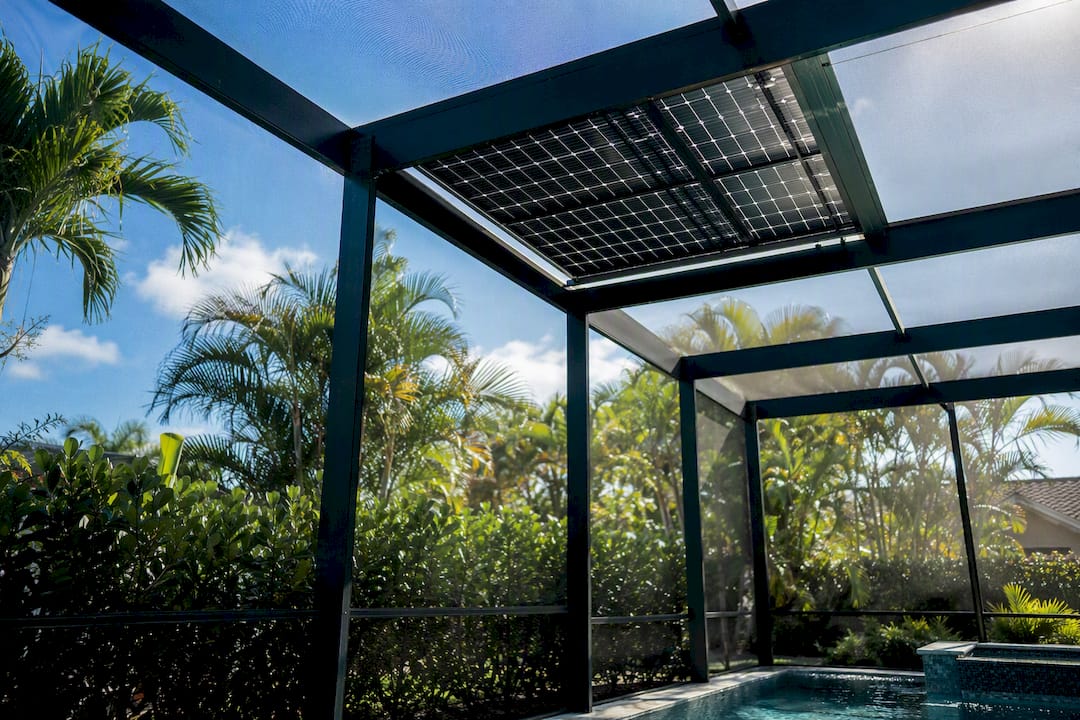
Some enclosures, like the Helios model, integrate photovoltaic panels and rainwater channeling directly into the structure, pairing well with a home already set up for solar or rain capture.
Pro Tip: Choose fasteners and mesh rated for a 10 to 15 year lifespan even if the upfront cost is higher. Replacing hardware every three years generates far more waste than paying once for stainless steel.
When Should You Restore Instead of Replace?
Most aging pool cages don't need a rebuild. They need targeted repair, and that choice is usually the greener one because it keeps existing aluminum framing in service instead of sending it to a landfill.
Restore when corrosion is surface-level, the frame is structurally sound, and the screen is torn but the skeleton is intact. Replace only when the frame itself is bent, rusted through at load-bearing joints, or failing inspection for safety reasons.
A practical retrofit sequence:
- Assess frame integrity and check every fastener for rust.
- Replace corroded hardware with stainless steel or Nylotech fasteners.
- Rescreen with durable, UV-stable recycled mesh.
- Apply a water-based acrylic coating to seal and protect the frame.
- Re-inspect seams and corners where wind stress concentrates.
- Schedule coating work during dry months to avoid weather delays
- Keep a written record of fastener type and screen mesh grade for future reference
- Ask your contractor for a lifespan estimate on each repair
Pro Tip: Late spring, before Florida's rainy season starts, is the best window for acrylic coating work. Humidity slows cure time and can shorten the finish's life.
What Do Eco-Upgrades Cost, and How Long Do They Last?
Restoration costs less than most homeowners expect, and it holds up longer than a patch job.
Typical ranges: rescreening a standard cage often runs a few hundred to a couple thousand dollars depending on size and mesh grade. Safety nets average around $2,600 installed. Water-based acrylic coatings and stainless fastener replacement are usually bundled into a restoration project rather than priced separately, since they're done together.
Lifespan expectations:
- Quality screen mesh: 8 to 12 years before replacement
- Stainless or Nylotech fasteners: 10 to 15 years
- Water-based acrylic coatings: 5 to 8 years before recoating
The environmental math favors restoration every time it's viable. Keeping the existing aluminum frame in service and only replacing the screen, hardware, and finish means far less raw material extraction and manufacturing energy than a full teardown. That's the logic behind Mr. Pool Screen's claim that restoration can save up to 60% compared to a full rebuild, a number that reflects both cost and material savings.
How Do You Choose the Right Contractor for an Eco-Friendly Retrofit?
Start with a condition assessment, not a sales pitch. A contractor should inspect your frame, fasteners, and screen before recommending anything.
Run through this checklist:
- What's the current condition of the frame and hardware?
- What material options fit my priorities, cost, and expected lifespan?
- Is there a warranty on coatings and rescreening work?
- Are they insured and licensed to work in your area?
Questions worth asking directly:
- What type of coating do you use, and is it water-based?
- What fastener material do you install, stainless or Nylotech?
- Do you have before-and-after photos from past projects?
- What happens to the old screen and hardware you remove?
Red flags: no warranty offered on coatings, vague answers about fastener material, or no interest in showing past work. A contractor who can't answer basic material questions probably isn't thinking about longevity or waste at all.
A Restoration Example Worth Noting
Aging cages with surface rust and torn screens are common candidates for restoration rather than replacement, and the pattern holds up across many Central Florida homes.
Restoration cost-savings of up to 60% versus full rebuilds are a recurring outcome, according to Mr. Pool Screen, when the frame itself is structurally sound.
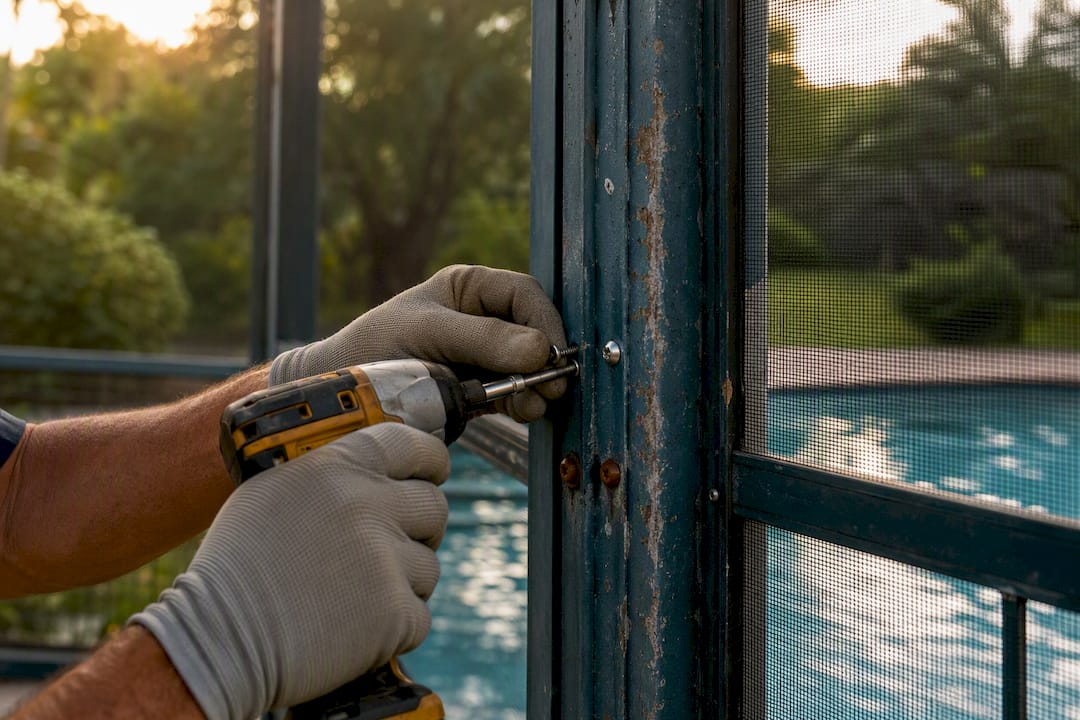
The typical fix: strip rusted fasteners and replace with stainless steel, rescreen with durable mesh, then seal the frame with a water-based acrylic coating. The frame keeps doing its job for another decade instead of heading to a scrap yard.
Browse the project gallery for before-and-after examples, or request an inspection to see what your own cage needs.
An installer's take on the upgrade homeowners skip
The upgrade people overlook isn't the screen, it's the fasteners. Rusted hardware fails quietly for years before anyone notices a sagging panel. Swap corroded screws for stainless steel and schedule coating work in the dry season, and you'll get a decade more life out of a frame most homeowners assume is done for.
How Mr. Pool Screen Helps You Go Eco-First
Mr. Pool Screen restores aging pool cages instead of tearing them out, which is the lower-waste, lower-cost path for most homeowners in Central Florida. The service covers rescreening with durable mesh, water-based acrylic coatings, stainless fastener replacement, and pool deck staining for concrete, wood, masonry, or stone.
Restoration keeps your existing frame in service and can save you up to 60% compared to a full rebuild, since you're paying for targeted repairs instead of new materials and demolition. If your screens are torn or your fasteners are showing rust, that's usually a sign your cage is a restoration candidate, not a replacement job.
Request a restoration estimate to get a straight answer on what your cage needs, or look through the project gallery first to see comparable before-and-after work.
Sources
- Pool Safety Net | The Original Katchakid Pool Net Cover
- Green Side of Retractable Roofs: Sustainability in Pool Enclosure Design
- Helios Pool Enclosure | Abrisol