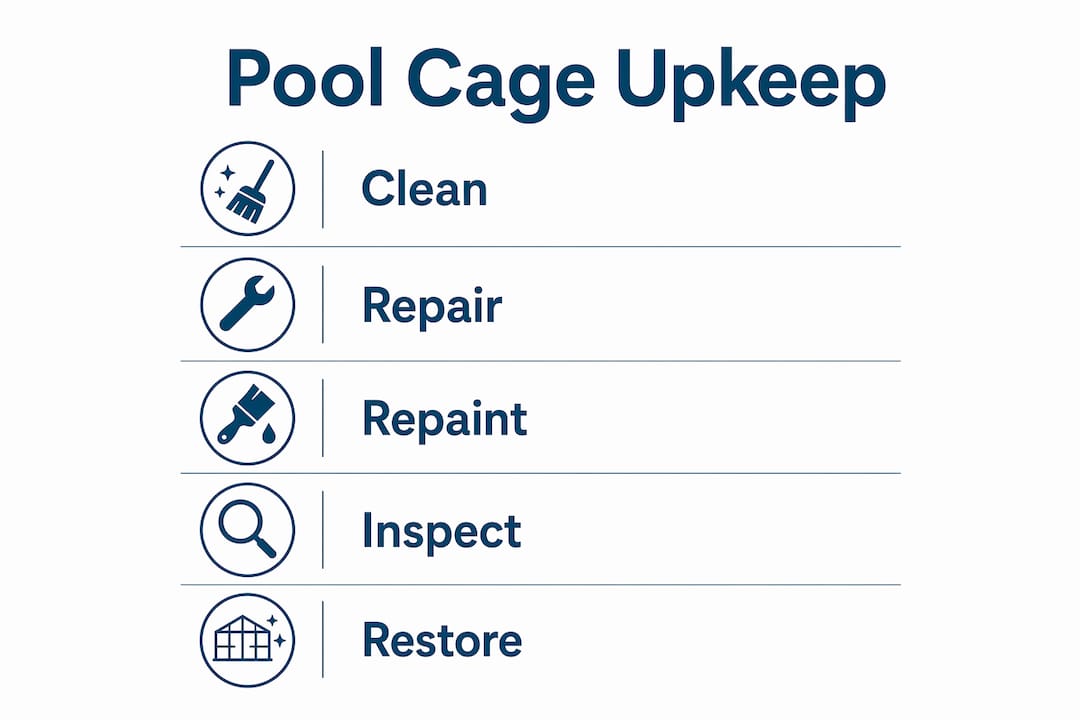
Pool cage upkeep covers everything from routine cleaning and hardware checks to screen repairs, frame repainting, and full restoration. For Central Florida homeowners, that list is not optional. Florida's combination of intense UV exposure, coastal salt air, high humidity, and hurricane season creates conditions that wear down aluminum and screen mesh faster than almost anywhere else in the country. Here is what the full maintenance picture looks like:
- Cleaning: Washing screens and frames with mild soap and eco-friendly detergents to remove algae, oxidation, and debris
- Routine maintenance: Inspecting fasteners, lubricating door hardware, and checking screen tension
- Minor repairs: Patching small screen tears, replacing door sweeps, tightening loose screws
- Repainting: Applying UV-resistant coatings every 5–7 years to protect aluminum from corrosion
- Restoration: Addressing rust, weathering, and structural wear through professional refinishing when repairs alone are not enough
Frequency matters too. Minimal-exposure cages need attention once a year; those near trees or water benefit from cleaning every six months. Seasonal adjustments before hurricane season are non-negotiable.
Table of Contents
- 1. How to clean your pool cage without damaging it
- 2. Routine maintenance tasks and minor repairs you can handle yourself
- 3. When and how to repaint your pool cage frame
- 4. Practical ways to extend your pool cage's lifespan
- 5. Why professional restoration often beats full replacement
- Key Takeaways
- Mrpoolscreen: restoration that saves you money without cutting corners
1. How to clean your pool cage without damaging it
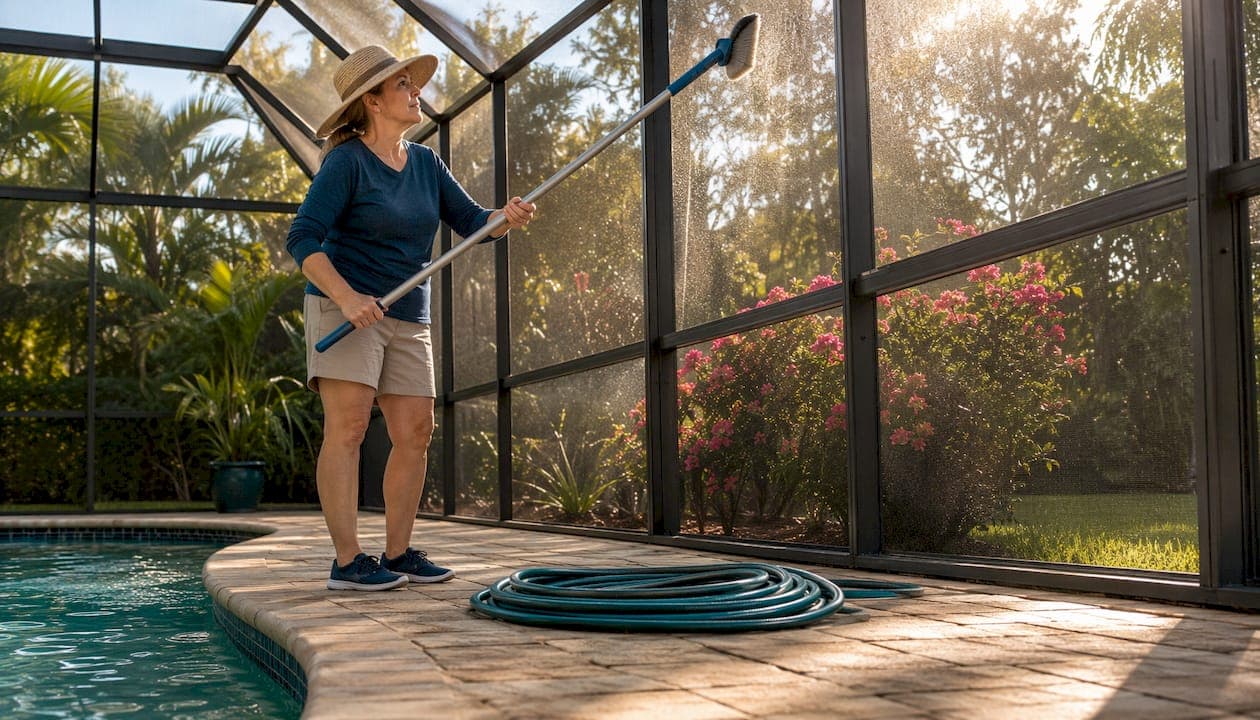
Cleaning frequency depends on exposure: low-traffic cages need yearly attention, moderate exposure requires cleaning roughly once a year, and cages near trees, ponds, or saltwater benefit from more frequent cleaning. The cleaning process itself is straightforward, but a few mistakes can tear screens or accelerate frame wear.
What you need:
- Mild dish soap or an eco-friendly detergent
- A soft-bristle brush (never steel wool or stiff-bristle brushes)
- A garden hose with a low-pressure nozzle
- White vinegar solution (1 cup per gallon of water) for algae on solid panels
The cleaning sequence:
- Start with a visual pre-inspection. Walk the perimeter and note any tears, sagging panels, or areas of white chalky oxidation before you wet anything.
- Rinse the screens and frame lightly with a garden hose to loosen surface debris.
- Apply mild soap solution with a soft brush, working from top to bottom on both screens and frame sections.
- For algae on solid roof panels, apply a diluted bleach solution (1:10 ratio) and let it sit for five minutes before rinsing.
- Rinse thoroughly with low pressure. Never use a pressure washer directly on screens — the force tears the mesh.
- Allow the frame to dry before applying any protective coating.
Pest control connects directly to cleaning. Spiders, wasps, and mud daubers build nests in corners and along the base rail. Clearing those during every wash prevents buildup that traps moisture against the aluminum.
Pro Tip: Mix 1 cup of white vinegar per gallon of water for a safe, effective algae treatment on solid panels. It works without bleaching the screen mesh or corroding the frame.
2. Routine maintenance tasks and minor repairs you can handle yourself
Most pool cage damage that turns into expensive structural work started as something small. A loose screw, a torn screen corner, a door that drags. Catching these early is the whole game.
Inspection checklist to run at least once a year:
- Check every fastener at base plates and beam connections. Tighten anything loose with a standard screwdriver or socket wrench.
- Test door hinges and latches. Lubricate with WD-40 or silicone spray if they stick or squeak.
- Confirm doors close fully and latch without force. Misalignment often signals frame shifting.
- Inspect screen door sweeps. Replace them if they drag, tear, or leave a gap at the bottom.
- Look for screen panels pulling away from the frame — that is spline failure, not just a loose screen.
- Check the concrete around base plates for rust stains or cracking. Galvanic corrosion at the slab connection is a licensed-contractor issue, not a DIY fix.
- Clear gutters and downspouts of leaves, algae, and debris. Standing water in gutters accelerates corrosion along the roof rail.
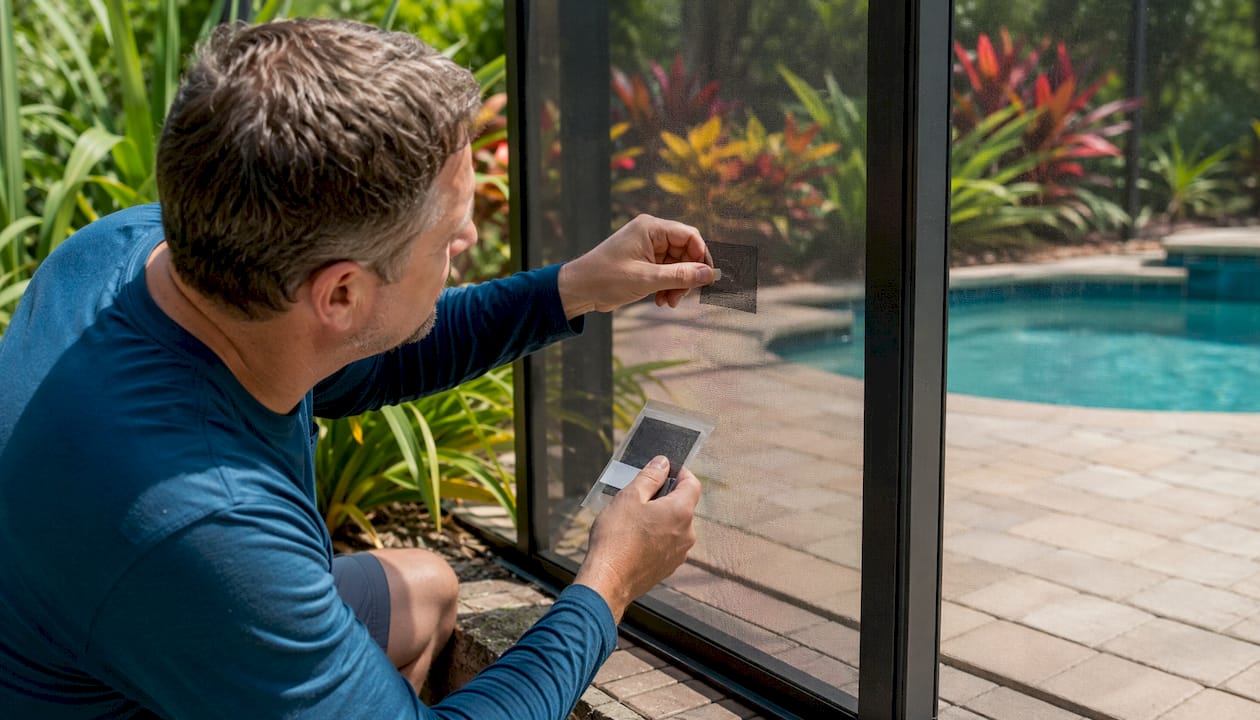
For small screen tears under 1/4 inch, a screen patch kit handles the job temporarily. If a large portion of your panels show damage, a full re-screen is generally more cost-effective than patching individual panels. Individual panel re-screening can be costly, and full re-screening involves higher upfront costs but offers better value for extensive damage.
Pro Tip: Spline condition tells you more than the screen does. If the frame has lost tension and screens sag even after the spline is replaced, that signals structural aging. Rescreening will not fix a frame that has shifted — that requires a professional assessment.
For a clear breakdown of when upkeep crosses into repair territory, the maintenance vs. repair guide from Mrpoolscreen lays out the decision points well.
3. When and how to repaint your pool cage frame
Aluminum frames do not rust the way steel does, but they oxidize. That white, chalky film you see on aging frames is aluminum oxide — and once the protective coating fails, corrosion accelerates fast in Florida's humid climate. Repainting regularly with UV-resistant coatings is recommended to maintain frame integrity and protect against corrosion.
What the repainting process involves:
- Surface prep: Cleaning the frame thoroughly and removing all oxidation with an aluminum brightener. Skipping prep is the most common reason paint fails within a year.
- Priming: Applying a bonding primer suited for aluminum. This step is what separates a two-year paint job from a seven-year one.
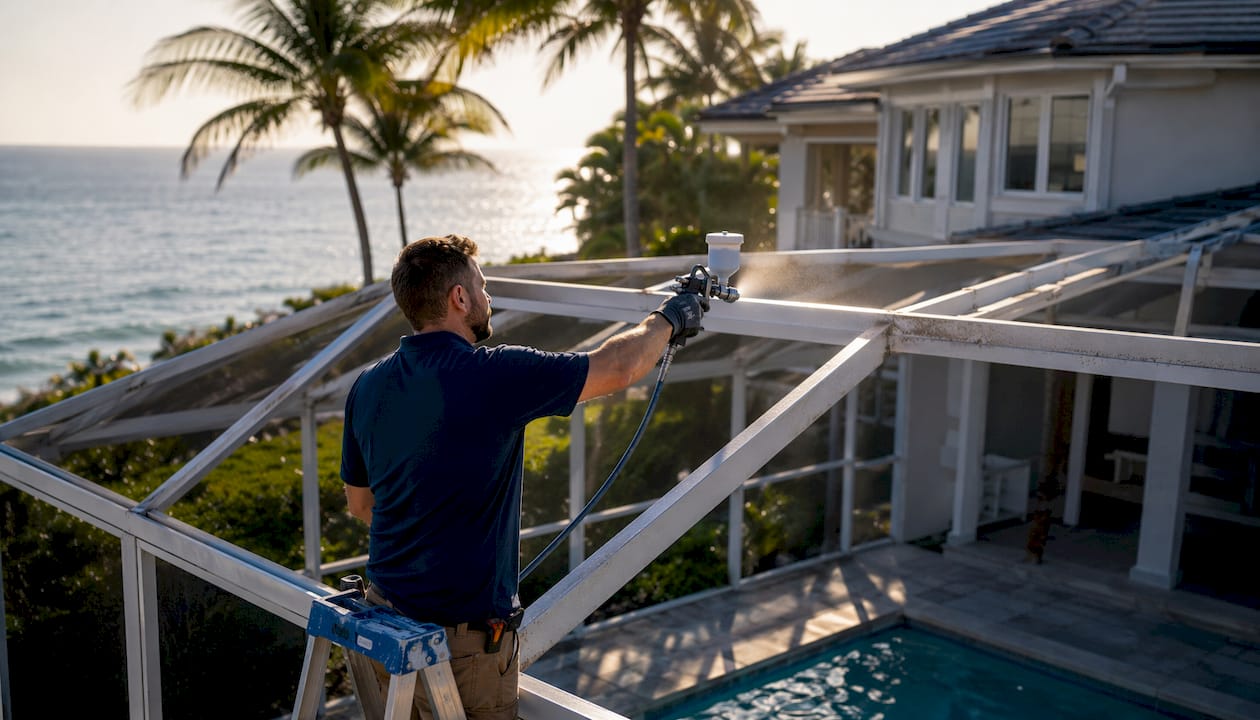
- Coating: Water-based acrylic coatings are the preferred material for pool cage frames. They flex with temperature changes, resist UV degradation, and do not emit harsh fumes near pool water.
- Drying and curing: Allowing full cure time before the frame is exposed to rain or humidity.
Professional repainting costs vary by cage size and condition, but restoration services that include repainting typically run significantly less than full replacement. Mrpoolscreen uses industrial-grade water-based acrylic coatings specifically formulated for Florida's outdoor conditions, which extends the interval between repaints compared to standard hardware-store products.
Coastal homeowners within a mile of saltwater should inspect their frames twice a year. Salt air causes galvanic corrosion that shows up as white powder or pitting near fasteners and joints. Catching it early means a cleaning and recoat. Missing it means frame replacement.
4. Practical ways to extend your pool cage's lifespan
A pool cage in Florida's climate can last 10–25 years for the full structure, while the screening mesh usually needs replacement every 7–12 years due to exposure and wear. Where your cage lands in that range depends almost entirely on how consistently it is maintained.
The habits that actually move the needle:
- Clean the frame at least once a year and apply a coat of car wax to bare aluminum sections after cleaning. Car wax acts as a sacrificial barrier against oxidation, especially in coastal areas.
- Address minor repairs within weeks, not months. A torn screen corner that gets ignored through a rainy season becomes a full panel replacement.
- Run a pre-hurricane season inspection every May or early June. Verify all panels are secure, all roof panel screws are tight, and the frame shows no visible bending or lean.
- Replace screening mesh on schedule. Screens that feel stiff, brittle, or tear easily have lost their UV resistance. Waiting until they fail completely puts the frame at risk during storms.
- Keep gutters clear year-round. Water pooling along the base rail is one of the fastest ways to accelerate corrosion at the slab connection.
- Trim back trees and shrubs that overhang or press against the cage. Organic debris holds moisture against the screen and frame.
For homeowners who use a professional pool care service, coordinating pool maintenance visits with cage inspections is an efficient way to catch problems early without adding separate appointments.
Consistent upkeep also protects against HOA compliance issues. Many Florida homeowners' associations require pool cages to be kept clean and structurally sound, with visible oxidation or torn screens potentially triggering fines.
5. Why professional restoration often beats full replacement
When a pool cage shows significant weathering, rust, and faded paint, the instinct is often to price out a full rebuild. That is usually the more expensive path. Professional restoration services can save homeowners up to 60% compared to full replacement by addressing the actual problems — rust, oxidation, surface deterioration, and worn coatings — without tearing down a structurally sound frame.
Mrpoolscreen's restoration process works through several stages:
- Assessment: Identifying which components need repair versus refinishing
- Rust and corrosion treatment: Removing oxidation and treating affected areas before any coating is applied
- Industrial-grade refinishing: Applying water-based acrylic coatings and replacing fasteners with stainless steel hardware
- Screen replacement where needed: Addressing torn or brittle panels as part of the overall restoration
The result is a cage that looks and performs like new without the cost or timeline of a full rebuild. Restoration makes the most sense when the frame is structurally intact but shows heavy surface wear, when repainting alone will not address the level of corrosion present, or when a homeowner wants to maximize the remaining lifespan of a cage that has 5–10 good years left in its structure.
What causes frequent pool cage replacement in most cases is not catastrophic failure. It is deferred maintenance. Frames that never get repainted, screens that stay torn through storm season, and fasteners that corrode unchecked eventually reach a point where restoration is no longer viable. The project gallery at Mrpoolscreen shows before-and-after examples of cages that looked like replacement candidates and came back looking like new builds.
Key Takeaways
Consistent pool cage upkeep, combining cleaning, repairs, repainting, and professional restoration when needed, can extend the structural lifespan of a pool cage in Florida to 10–25 years.
| Point | Details |
|---|---|
| Cleaning frequency | Clean every 6 months depending on exposure; use mild soap, soft brushes, and low-pressure rinsing only. |
| Screening mesh lifespan | Mesh typically lasts 7–12 years; replace on schedule rather than waiting for failure during storm season. |
| Repainting interval | Repaint aluminum frames every 5–7 years with UV-resistant, water-based acrylic coatings to prevent corrosion. |
| Restoration vs. replacement | Professional restoration addresses rust and weathering at up to 60% less than a full rebuild when the frame is structurally sound. |
| Mrpoolscreen | Specializes in pool enclosure restoration in Central Florida using industrial-grade materials, stainless steel fasteners, and water-based acrylic coatings. |
Mrpoolscreen: restoration that saves you money without cutting corners
Replacing a pool cage is a significant expense. For most Central Florida homeowners with an aging but structurally intact enclosure, restoration is the smarter path. Mrpoolscreen delivers up to 60% savings over full replacement by treating rust, refinishing oxidized frames with industrial-grade water-based acrylic coatings, and replacing worn fasteners with stainless steel hardware built to handle Florida's coastal conditions.
The process is thorough: corrosion treatment first, then refinishing, then screen replacement where needed. The result holds up. If your cage is showing chalky frames, surface rust, or faded paint but the structure itself is still solid, that is exactly the scenario Mrpoolscreen was built for. Get a quote for your pool screen restoration and see what it would cost to bring your enclosure back without starting from scratch.