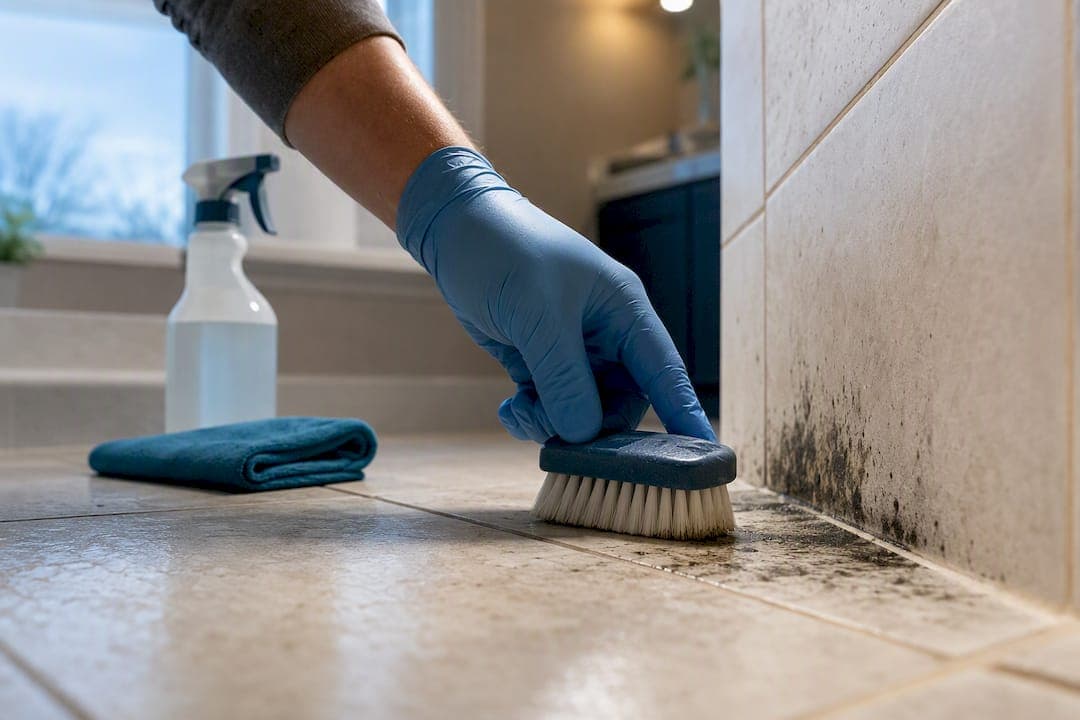
Bleach kills mold on hard, non-porous surfaces like tile and glass when diluted correctly, while vinegar works more gently and takes longer but is safer to use on more materials. Neither one solves mold hiding inside drywall, wood, or carpet padding. If mold covers more than about 10 square feet, or someone in the house has a compromised immune system, stop cleaning and call a professional.
TL;DR:
- Bleach kills surface mold quickly on hard, non-porous surfaces but does not reach mold roots inside porous materials like drywall or wood.
- Vinegar provides a gentler, surface-level solution suitable for colored grout and natural stone but requires about an hour of contact time to be effective.
- For mold larger than 10 square feet or hidden inside walls, professional removal is necessary, especially if anyone in the household has health issues.
- Household bleach degrades within six months once opened, while vinegar remains stable indefinitely but is less effective on porous materials.
- Outdoor mold issues often require restoration of materials, such as coating or hardware replacement, rather than repeated cleaning efforts.
Table of Contents
- Bleach vs. Vinegar Mold Removal: A Quick Comparison
- How Bleach Kills Mold and How to Dilute It Safely
- Does Vinegar Really Kill Mold?
- Which Surfaces Can You Clean Yourself?
- How Do You Safely Clean a Small Mold Patch Yourself?
- When Should You Call a Mold Remediation Professional?
- Environmental Impact: Bleach vs. Vinegar
- Storage and Shelf Life: What Homeowners Get Wrong
- Vinegar as a Natural Option, Bleach as the Strong Fix
- Mr. Pool Screen's Take on Recurring Outdoor Mold
- When Cleaning Stops Working, Restoration Takes Over
- Sources
- FAQ
Bleach vs. Vinegar Mold Removal: A Quick Comparison
Picking between these two comes down to what you're cleaning and how much time you're willing to spend. Bleach acts fast and looks dramatic, wiping visible mold and staining away in minutes. Vinegar works slower and doesn't bleach color out of grout or stone, but it needs almost an hour of contact time to do its job.
Here's the breakdown that actually matters before you grab a spray bottle:
- Non-porous surfaces (tile, glass, sealed countertops, metal): both products work well for surface-level cleaning, but results are cosmetic unless you also fix the moisture source.
- Porous surfaces (drywall, wood, carpet): neither bleach nor vinegar reliably kills mold growing inside the material, according to EPA guidance.
- Dwell time: bleach solution needs 5 to 10 minutes of contact; vinegar needs roughly 60 minutes to break down mold cell membranes.
- Fumes and safety: bleach produces sharp fumes and can react dangerously with ammonia or other cleaners; vinegar's smell fades and it poses far less chemical risk.
The dwell time difference alone should shape your decision. If you're treating a small, hard-surfaced spot and want it done in one pass, bleach gets you there faster. If you're working in a bathroom with natural stone or colored grout and have an hour to spare, vinegar avoids the risk of discoloration entirely.
How Bleach Kills Mold and How to Dilute It Safely
Household bleach contains sodium hypochlorite, a compound that oxidizes and breaks down the proteins in mold cells on contact. That's why it works so quickly on a tile shower wall. It's also why it does nothing for mold roots growing inside a wall cavity. Bleach never penetrates porous material deeply enough to reach the hyphae, the thread-like structures mold uses to anchor and spread.
The CDC's dilution guidance is specific: mix 1 cup (8 ounces) of household bleach into 1 gallon of water for sanitizing hard surfaces. Scrub the area, let the solution sit, then rinse and air dry.
Statistic Callout: The CDC recommends no more than 1 cup of bleach per gallon of water. More concentrated mixtures don't kill mold faster. They just add fumes and corrosion risk.
Safety rules here aren't optional:
- Wear gloves rated for disinfectant use (nitrile, neoprene, or PVC), goggles without ventilation holes, and an N-95 respirator in enclosed spaces.
- Open windows and run a fan. Bleach fumes build up fast in bathrooms and closets.
- Never mix bleach with ammonia or other cleaning products. The EPA's mold guide warns this combination produces toxic gas.
- Skip bleach on porous materials. It bleaches the surface white, which can trick you into thinking the mold is gone when it's still alive underneath.
Pro Tip: If you're treating a small tile or grout spot, apply the bleach solution with a spray bottle rather than pouring it. You'll use less, control drips, and avoid soaking nearby caulk that bleach can degrade over time.
Bleach earns its place when you're dealing with a limited, hard-surfaced patch, or when someone in the household is immune-compromised and you need a fast kill rather than a slow one.
Does Vinegar Really Kill Mold?
Plain white household vinegar runs about 5% acetic acid, and that acidity is what does the work. It lowers the pH on the surface enough to disrupt mold cell membranes, which is a gentler mechanism than bleach's oxidation but still effective on surface growth.
The application is simple: spray white vinegar undiluted (or close to it) directly onto the moldy surface, and let it sit for about 60 minutes before scrubbing and wiping dry. That hour-long dwell time is the tradeoff for using something less harsh.
- Pro: Milder fumes, no bleaching effect, safe on colored grout, natural stone, and painted surfaces.
- Con: Vinegar isn't EPA-registered as a mold treatment product, and its reach is limited to surface-level growth. It doesn't penetrate porous material any better than bleach does, according to EPA's cleanup guidance.
- Practical step: Test vinegar on an inconspicuous spot of natural stone or sealed wood first. Some sealants react poorly to prolonged acid exposure.
Vinegar makes sense for households that want to avoid bleach fumes, for surfaces where bleaching would ruin the finish, or for regular maintenance cleaning where mold hasn't gotten a strong foothold yet.
Which Surfaces Can You Clean Yourself?
Not every mold spot deserves the same response. Matching your cleanup method to the material saves you from wasted effort and false confidence.
Hard, non-porous surfaces like tile, glass, sealed concrete, and metal respond well to either bleach or vinegar. Scrub, treat, dry, and fix whatever moisture problem caused the growth in the first place, and you're usually done.
Porous materials are a different story. Drywall, ceiling tiles, carpet, insulation, and unfinished wood soak up mold spores and let hyphae grow into the material itself. Chemical treatment on the surface doesn't reach that growth. The EPA's position is direct: these materials generally need to be removed and replaced, not cleaned.
Semi-porous surfaces like grout and painted drywall sit in the middle. You can often treat them successfully, but recurrence is common if moisture keeps returning. Keep an eye on these spots for weeks after treatment, not just days.
Two thresholds should trigger a call to a professional regardless of surface type: an affected area larger than roughly 10 square feet (about 3 feet by 3 feet), or any sign that mold has spread inside a wall cavity or hidden space you can't fully inspect.

How Do You Safely Clean a Small Mold Patch Yourself?
For patches under 10 square feet on hard surfaces, here's the sequence that actually works, in order:
- Ventilate and isolate. Open windows, run a fan pointed outward if possible, and close doors to the rest of the house to limit spore spread.
- Suit up. Put on an N-95 respirator, goggles without ventilation holes, and gloves that extend past your wrist.
- Scrub first, disinfect second. Wash the visible mold with plain detergent and water before applying bleach or vinegar. This removes the bulk of the biomass so your disinfectant isn't just fighting through a layer of grime.
- Apply your chosen treatment. Use 1 cup of bleach per gallon of water on hard surfaces (5 to 10 minute dwell time) or undiluted vinegar (roughly 60 minutes), then scrub again and rinse or wipe dry.
- Dry the area completely. Mold needs moisture to return, so a fan or dehumidifier running for a day or two matters as much as the cleaning itself.
- Dispose and launder carefully. Bag contaminated rags and materials in sealed plastic before throwing them out, and wash any contaminated clothing separately from the rest of your laundry, a step the CDC specifically flags to prevent cross-contamination.
Pro Tip: Take photos of the affected area before and after cleaning. If the mold returns within a few weeks, those photos help a remediation professional figure out whether the moisture source was ever actually fixed.
When Should You Call a Mold Remediation Professional?
Certain situations are outside DIY territory no matter how motivated you are with a spray bottle. Call a professional when the affected area exceeds 10 square feet, when you suspect mold is growing inside a wall, ceiling, or subfloor you can't access, or when anyone in the household has a compromised immune system, asthma, or chronic respiratory issues.
Professional remediation typically includes:
- Containment barriers to stop spores from spreading to unaffected rooms during the work.
- Removal of contaminated porous materials rather than attempted cleaning.
- Moisture diagnostics to find the actual source, whether that's a roof leak, plumbing issue, or poor ventilation.
- A final clearance inspection confirming the space is safe before you move back in.
Timelines vary by project size, but most residential jobs run from a couple of days to a week once containment and removal begin. Before the crew arrives, take your own photos of the affected areas and note when you first noticed the smell or staining. That timeline helps professionals track down the moisture source faster.
Environmental Impact: Bleach vs. Vinegar
Bleach and vinegar leave very different footprints once they go down the drain or into the air. Sodium hypochlorite breaks down into byproducts that can react with organic matter in wastewater, and it's the reason plumbing and septic system manufacturers often caution against heavy or frequent bleach use. It's also a respiratory irritant indoors, meaning repeated use in a poorly ventilated bathroom affects air quality well beyond the time you're actively cleaning.
Vinegar, by comparison, is biodegradable and breaks down into harmless components in soil and water systems. It doesn't require the same ventilation precautions, and it won't damage septic tank bacteria the way heavy bleach use can over time. That's part of why vinegar has become the default recommendation for households trying to reduce the number of harsh chemicals they use regularly.
None of this means bleach is reckless to use occasionally. A single properly diluted application on a small tile patch isn't an environmental event. The concern is cumulative: households that reach for bleach every time mold reappears, without ever fixing the moisture problem, end up using far more of it over a year than the job should require. That repeated cycle is exactly where vinegar's lower impact profile starts to matter, especially in homes with septic systems or well water where runoff has a shorter path back into the household's own water supply.
If you're weighing environmental impact alongside effectiveness, the honest answer is that neither product is meant for constant, repeated use. A moisture fix that stops mold from returning does more for your home and your water system than switching between bleach and vinegar ever will.

Storage and Shelf Life: What Homeowners Get Wrong
Bleach loses potency faster than most people expect. Unopened, it holds close to full strength for about a year, but once opened, sodium hypochlorite begins breaking down steadily, losing roughly 20% of its strength within six months at room temperature. Heat speeds this up considerably, so a bottle stored in a hot garage or under a sink near a water heater degrades faster than one kept in a cool, dark cabinet.
That degradation matters practically: bleach that's a year old and stored poorly may not deliver the concentration the CDC's 1 cup per gallon ratio assumes. If your bleach smells faint or has gone from clear to pale yellow, treat it as compromised and buy a fresh bottle before your next mold treatment.
Vinegar behaves almost the opposite way. Distilled white vinegar is shelf-stable indefinitely thanks to its acidity, which naturally resists bacterial growth. An unopened bottle sitting in a pantry for years still works exactly as it did the day it was bottled, and even opened bottles last well beyond a year without meaningful strength loss.
The practical takeaway: don't assume the bleach in your cleaning cabinet is still effective. Check the date, check the color, and when in doubt, buy new. Vinegar you can trust to work whenever you reach for it.
Vinegar as a Natural Option, Bleach as the Strong Fix
The choice between these two isn't really about which one is "better." It's about matching the tool to the job and the household. Vinegar makes sense as your default for routine mold prevention and light surface maintenance, especially in homes with kids, pets, or anyone sensitive to strong chemical smells. It won't damage colored grout, natural stone, or painted trim, and the acidity that makes it effective against surface mold is the same acidity that makes it safe to keep under the sink without much thought.
Bleach earns its place as the stronger option for situations that call for speed and certainty on hard surfaces, such as sanitizing after a plumbing leak or treating a bathroom used by someone with a weakened immune system. The EPA notes that biocide use can be justified in these higher-risk scenarios, but it should be a deliberate choice, not a reflexive one.
What neither product should be treated as is a permanent fix. Killing mold on the surface, whether with bleach's oxidation or vinegar's acidity, still leaves dead spores behind that can trigger allergic reactions, and it does nothing to address why the mold showed up in the first place. Fix the leak, run the dehumidifier, improve the ventilation. That's the step that actually stops the cycle, and it's the one most homeowners skip because it's less satisfying than watching mold disappear after a good scrub.
Mr. Pool Screen's Take on Recurring Outdoor Mold
Everything above applies to indoor mold on tile, drywall, and countertops. Outdoor pool enclosures play by different rules. Screens and cages sit in constant humidity and shade, which means mildew can return relatively quickly after cleaning. At that point, the issue is less about mold and more about the condition of the materials.
This pattern is common across Central Florida: homeowners often clean the same rusted frame or stained screen multiple times before realizing the coating has broken down. Restoration work using high-quality water-based acrylic coatings and stainless steel fasteners can address these issues more effectively, and deck staining can help with recurring discoloration on concrete and wood surfaces around the pool.
— Michel
When Cleaning Stops Working, Restoration Takes Over
If you've scrubbed the same pool screen or deck stain more than twice this year, you're not dealing with a cleaning problem anymore. You're dealing with a materials problem, and that's where restoring the frame and coating instead of repeating the same bleach or vinegar routine actually saves money over time.

Mr. Pool Screen handles two specific problems that indoor cleaning advice can't touch: pool screen restoration for cages showing rust, staining, or repeated mildew return, and pool deck staining for concrete or wood surfaces that keep discoloring no matter how often you pressure wash them. Both use industrial-grade acrylic coatings and stainless steel or Nylotech hardware built to hold up against Central Florida humidity, backed by a three-year warranty and priced well under a full rebuild.
If your screen enclosure has rusted fasteners, visible frame corrosion, or mildew that returns within a month of cleaning, it may be time to consider restoration services to address the underlying issues rather than repeated cleaning.
This article is general information, not a substitute for advice from a qualified doctor. Consult a qualified healthcare professional about your own circumstances before acting on anything here.
Sources
FAQ
How long does it take 30% vinegar to kill mold?
Standard household vinegar is about 5% acetic acid, and that's the concentration most cleanup guidance addresses. At household strength, vinegar needs roughly 60 minutes of contact time on the surface to disrupt mold cell membranes before scrubbing.
What are the downsides of using vinegar for mold?
Vinegar isn't EPA-registered as a mold treatment and only works on surface-level growth on non-porous materials. It also requires a much longer dwell time than bleach, and its mild acidity can affect certain sealants or natural stone finishes over repeated use.
Can you kill black mold with just bleach?
Bleach kills visible black mold on hard, non-porous surfaces like tile or glass, but it doesn't reach mold growing inside porous materials such as drywall or wood. For black mold found in wall cavities or covering more than 10 square feet, professional remediation is the safer route.
What is the best homemade mold killer?
There isn't a single best option. Vinegar works well for routine cleaning on colored or sealed surfaces without bleaching risk, while a diluted bleach solution (1 cup per gallon of water, per CDC guidance) acts faster on hard surfaces that need a stronger kill. For pool screens and outdoor structures where mildew keeps returning, cleaning alone often isn't enough, and restoring the coating and hardware through a service like Mr. Pool Screen addresses the underlying problem instead of just the symptom.