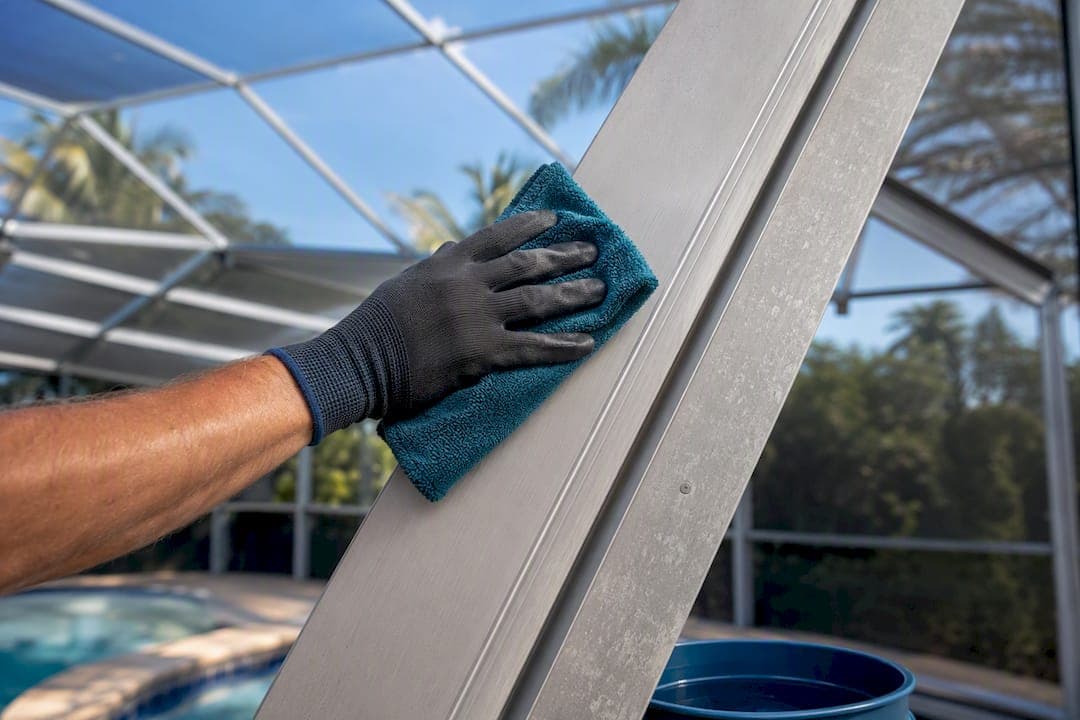
For most algae stains and white oxidation on pool enclosure frames, a low-pressure soft-wash using a pH-neutral algaecide or diluted vinegar plus gentle scrubbing removes the staining without damaging the screens. Skip the pressure washer and skip straight bleach. If you see active pitting, rust, or brittle screen mesh underneath the grime, cleaning won't fix it. That's a job for a professional restoration.
TL;DR:
- Vinegar or pH-neutral algaecides are ideal for routine cleaning and are safe for most frames and screens when applied properly.
- Bleach is highly effective against algae but risks corrosive damage to aluminum and should only be used with full safety precautions and containment.
- Pressure washing is strongly discouraged because it damages screens and accelerates oxidation, making soft-wash methods with gentle chemicals the preferred approach.
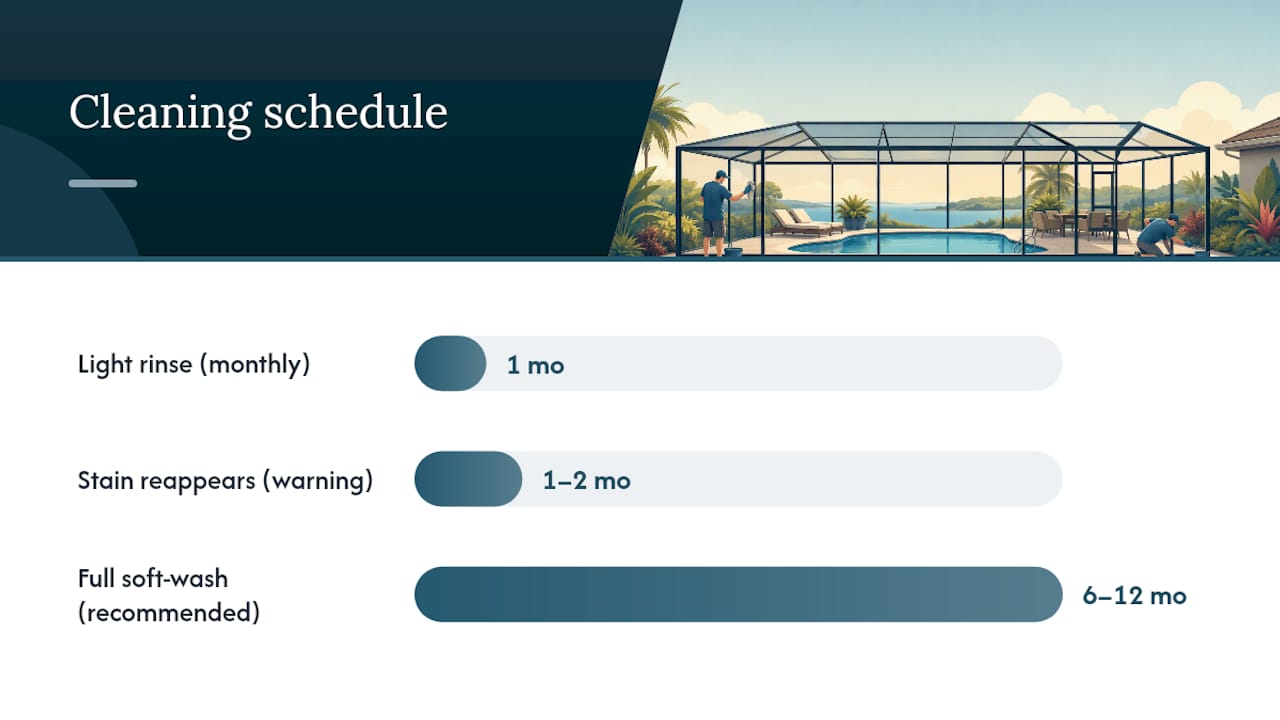
- Preventative maintenance includes monthly rinses and biannual deep cleans, especially in humid or coastal climates, to slow algae growth and frame oxidation.
- When stains and corrosion persist despite repeated cleaning, professional restoration is necessary to repair or replace compromised materials.
Table of Contents
- What Tools and Safety Gear Do You Need Before Cleaning?
- How Do You Clean Algae and Oxidation off Enclosure Frames?
- Vinegar, Bleach, Soft-Wash Products, or Pressure Washer: Which Should You Use?
- What's the Best Schedule to Prevent Algae From Coming Back?
- When Does Cleaning Stop Working and Restoration Make More Sense?
- Restoring Frames Instead of Fighting the Same Stains Every Season
- Sources
- FAQ
What Tools and Safety Gear Do You Need Before Cleaning?
Grab a soft bristle brush, a garden pump sprayer (not a pressure washer), a hose fitted with a low-pressure nozzle, a bucket, and a few microfiber cloths. That's most of the kit.
Wear gloves and eye protection at minimum, and add a mask any time you're mixing bleach. Bleach fumes concentrated in a small space can irritate your lungs faster than you'd expect.
Before you spray anything, protect what's around you:
- Cover or plug pool skimmers and filter intakes so runoff doesn't flow straight into your filtration system.
- Pre-wet nearby plants and shrubs, since even diluted cleaners can scorch leaves on contact.
- Run the pool filter for a full cycle after rinsing to catch any residue that made it into the water.
- Never mix bleach with ammonia or acidic cleaners. The combination produces toxic fumes.
Pro Tip: Test any cleaner, even a "gentle" one, on a hidden section of frame or screen first and wait 24 hours. Some screen and frame materials discolor or micro-scratch with cleaners that seem harmless on paper.
How Do You Clean Algae and Oxidation off Enclosure Frames?
Once your gear and pool are protected, the process itself is straightforward. Here's the sequence that works for both the aluminum frame and the surrounding screen mesh:
- Mix your solution. A pH-neutral algaecide mixed per the label is the safest bet. For a natural alternative, diluted vinegar works well: use a 1:1 ratio for stubborn algae on screens, and a milder 1:3 vinegar-to-water ratio on frames, since undiluted vinegar can dull some coated finishes over time. Reserve bleach (a 3:1 water-to-bleach ratio) for cases nothing else touches, and only with full protective gear and pool coverage in place.
- Apply from the bottom up. Spray with your low-pressure sprayer starting at the base of the frame and working upward. This keeps runoff from streaking clean sections you already treated.
- Let it dwell, but don't let it dry. Give the solution 5 to 10 minutes of contact time. If you're using bleach, this step matters even more. Bleach left to dry on aluminum accelerates the exact corrosion you're trying to prevent.
- Scrub gently. Use the soft bristle brush in a circular motion on frames and a light back-and-forth pass on screen mesh. Skip wire brushes and anything abrasive. They cut into the coating and give algae spores more surface area to grab onto next time.
- Rinse in one direction, away from the pool. Multiple light passes beat one heavy blast. Direct water away from the pool basin, and run the filter once you're done to clear anything that slipped through.
That dwell-and-scrub method mirrors what professional soft-wash crews use: low pressure, targeted chemistry, and patient rinsing instead of brute force.
Oxidation is a different animal than algae, and it's worth treating separately. That white or gray chalky film on aluminum frames isn't biological. It's the metal's protective layer breaking down from UV and chemical exposure. Gentle scuffing with a non-abrasive pad (a Scotch-Brite pad, not sandpaper) paired with a metal cleaner made for coated aluminum can restore some shine. But once you see actual pitting under that film, you're looking at structural corrosion, not a cosmetic problem, and no amount of scuffing reverses it.
After rinsing, let the frame dry and check your work. Faint shadowing that lightens with each treatment is normal; algae staining sometimes takes two or three cleanings spaced a week apart to fully lift. If a stain hasn't budged after three honest attempts, or if you notice the frame flexing, screen tearing at the spline, or rust bleeding through paint, stop cleaning and call a professional. At that point, you're not fighting stains. You're fighting metal fatigue.
Vinegar, Bleach, Soft-Wash Products, or Pressure Washer: Which Should You Use?
Not every cleaning method fits every situation. Here's how the common options stack up:
- Diluted vinegar: Low risk, gentle on most frames and screens, and effective on light-to-moderate algae and mildew. It's the right starting point for routine maintenance cleaning.
- Bleach: Kills algae fast, but it's the highest-risk option here. It corrodes aluminum with repeated exposure, damages nearby landscaping, and disrupts pool water chemistry if runoff isn't contained. Use it only when other methods have failed, always diluted, always with full containment.
- Commercial soft-wash algaecides: Formulated specifically for enclosures and typically pH-neutral, these split the difference between vinegar's gentleness and bleach's strength. They cost more per bottle but carry less risk to coatings.
- Pressure washers: Skip them. High pressure tears screen mesh, strips protective frame paint, and forces water into seams where it sits and accelerates oxidation from the inside out. A soft-wash rig or a garden hose with a low-pressure nozzle accomplishes the same cleaning without the collateral damage.
What's the Best Schedule to Prevent Algae From Coming Back?
Prevention beats repeat treatment every time, and the schedule doesn't need to be complicated. A light rinse once a month knocks down pollen, dust, and early algae spores before they establish a foothold. A full soft-wash every 6 to 12 months handles what the monthly rinse misses. Homes in humid or coastal areas should lean toward the more frequent end of that range, since moisture and salt air speed up both algae growth and frame oxidation.
A few habits between deep cleans make a real difference:
- Rinse the enclosure after heavy pollen season or a big storm dumps debris on the screens.
- Keep pool chemistry balanced. Airborne chemical residue settling on frames feeds the same organisms you're trying to prevent.
- Trim back trees and shrubs that shade the enclosure, since shaded, damp surfaces are where algae thrives.
Pro Tip: If you're seeing the same stain reappear within a month or two of cleaning it, that's not a cleaning problem anymore. It usually means the protective coating on the frame has worn through, and a protective recoat will do more than another round of scrubbing.
Longer term, industrial-grade coatings and stainless steel fasteners hold up far better against Florida's climate than the mill-finish aluminum and standard hardware most enclosures ship with originally; learn more about why PVC can hold up a shade cloth frame. If your cleaning routine keeps working but the frame still looks tired within a few months, that's the sign to look at protection, not more elbow grease.
When Does Cleaning Stop Working and Restoration Make More Sense?
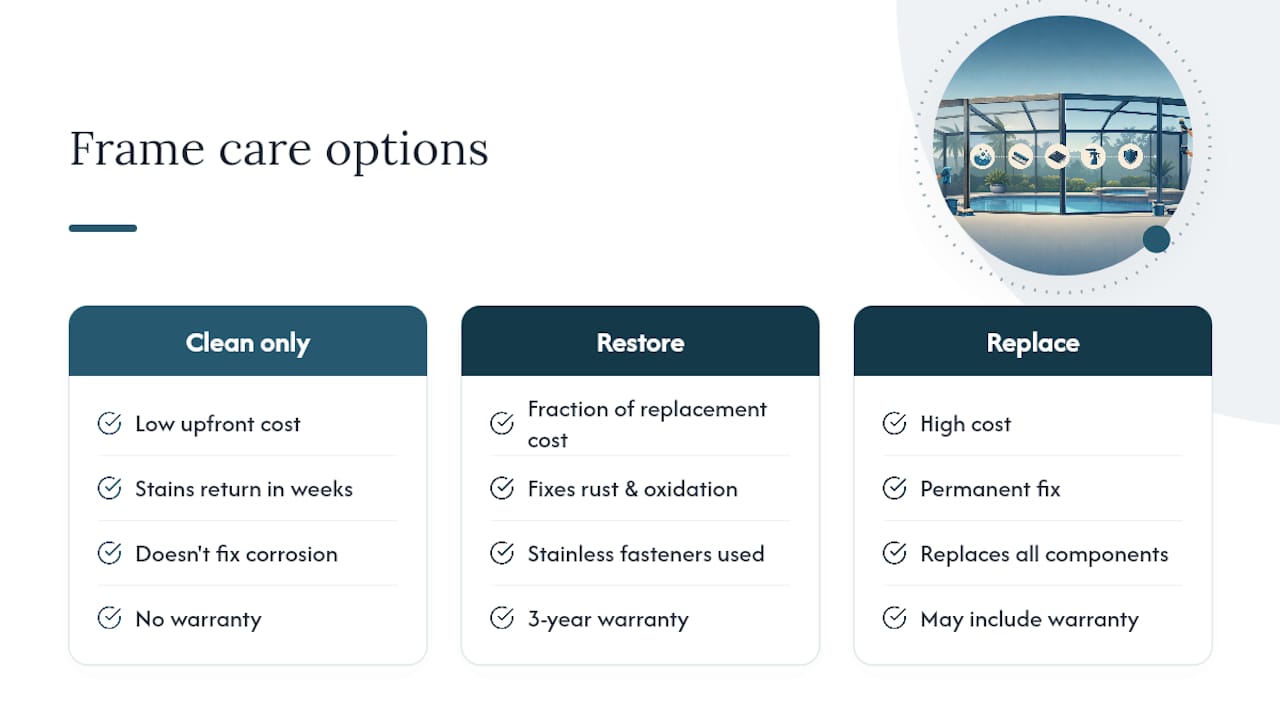
Cleaning treats the symptom. Restoration treats the cause. If you've soft-washed the same frame three times this year and the staining keeps returning, the coating underneath is probably compromised, and no cleaner fixes that. Rusted fasteners and pitted aluminum only get worse with each cleaning cycle, since the scrubbing and rinsing find their way into the same gaps where corrosion started.
A short checklist helps decide: How much of the frame shows rust bleed versus surface staining? Does the screen mesh flex or tear at the edges when you press it? Are you cleaning more than twice a year just to keep up? Two or more "yes" answers point toward restoration over another round of DIY.
— Michel
Restoring Frames Instead of Fighting the Same Stains Every Season
If you've read this far because the staining keeps coming back no matter what you scrub with, that's the real signal something structural needs attention, not another bottle of cleaner. Enclosure frames can be restored from the ground up instead of masking what's underneath: rusted fasteners replaced with stainless steel hardware, worn coatings stripped and reapplied with water based acrylic topcoats designed for durability, and decks and landscaping fully masked off before spraying.
This approach fits homeowners dealing with active corrosion, screens that have gone brittle, or oxidation that returns within weeks of a fresh clean. Full replacement of a pool cage runs into serious money. Restoration through Pool Screen Restoration addresses the same rust and staining problems at a fraction of that cost, backed by a three-year warranty on the work. If your deck surface is looking as tired as your frames, Pool Deck Staining handles that in the same visit.
Getting a quote starts with a few photos: the rusted spots, the age of your enclosure, and any torn or brittle screen sections. Send those over and get a straight estimate before deciding whether cleaning still makes sense for your frame.
Sources
The cleaning steps, safety cautions, and prevention schedule in this guide draw on established enclosure maintenance guidance, including detailed breakdowns of algae's effect on screen enclosures, a Florida-specific cleaning walkthrough, soft-wash technique comparisons for algae and oxidation removal, and material-specific care advice from a complete enclosure cleaning guide.
- Why Your Pool Screen Enclosure is Turning Green (And How to Stop It) - STRATOCLEAN | PRECISION CLEANING, ELEVATED
- How to Clean a Screen Enclosure: Step-by-Step Florida Guide | Absolute Aluminum
- How to Remove Green Algae & White Oxidation from Pool ...
- How to Clean a Pool Enclosure: The Complete Guide – Ferber Painting
FAQ
How do you get rid of brown algae stains in a pool?
Brown algae stains on pool surfaces typically respond to brushing combined with a pool-safe algaecide and shocking the water, which is a different process than cleaning enclosure frames. For frame staining specifically, a diluted vinegar or pH-neutral algaecide solution with gentle scrubbing handles most brown or black algae residue.
How do you remove algae from a pool screen enclosure?
Spray a diluted vinegar or pH-neutral algaecide solution from a low-pressure sprayer, let it sit for 5 to 10 minutes, then scrub gently with a soft bristle brush before rinsing thoroughly. Avoid pressure washers, which can tear screen mesh and force water into seams.
How do I clean the frame of my pool enclosure?
Use the same soft-wash approach as the screens: a gentle cleaner applied at low pressure, a short dwell time, light scrubbing, and a directional rinse away from the pool. For white or gray oxidation specifically, a non-abrasive pad and a metal-safe cleaner work better than scrubbing with algaecide alone.
Can algae permanently stain a pool enclosure?
Yes, if algae colonies are left untreated long enough, they can etch into coatings and leave staining that cleaning alone won't fully lift. At that point the fix is usually a protective recoat or full restoration rather than repeated cleaning, which Mr. Pool Screen's restoration service addresses directly.