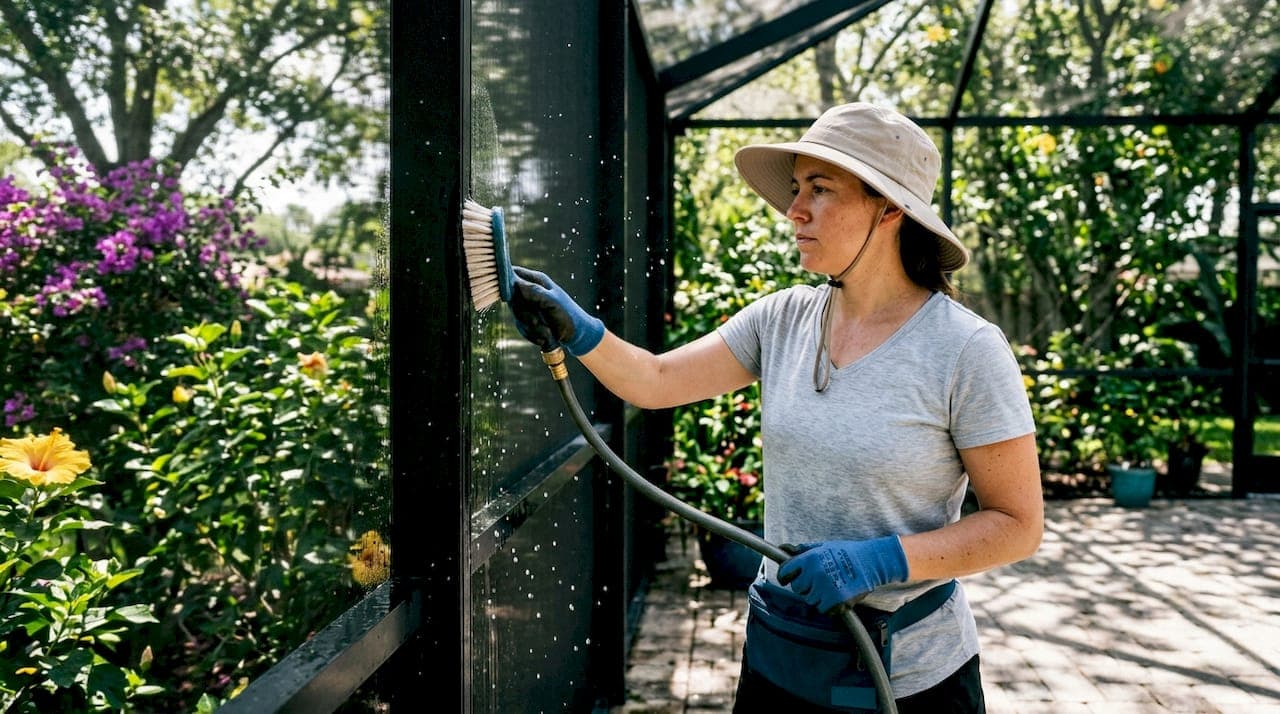
Mildew stain removal from pool screens is defined as the process of using low-pressure soft washing techniques and pH-neutral biodegradable cleaners to safely eliminate organic growth from screen mesh and aluminum frames. This pool screen mildew stain removal guide covers everything you need to restore your enclosure without causing damage. Mildew and algae grow acids that degrade vinyl coatings, making screen mesh brittle and eventually forcing full replacement if left untreated. Soft washing, operating below 1,000 PSI, is the industry-recognized standard for cleaning delicate screen enclosures safely. Mrpoolscreen uses this exact approach to restore aging pool cages across Central Florida, saving homeowners up to 60% compared to full rebuilds.
What tools and solutions do you need for mildew stain removal?
The right equipment makes the difference between a clean screen and a damaged one. Proper cleaning tools include soft bristle brushes, a garden hose with a spray nozzle, spray bottles, protective gloves, and covers for nearby plants and electronics. Using stiff or abrasive brushes tears screen mesh fibers, so soft bristle is non-negotiable.
Recommended cleaning solutions
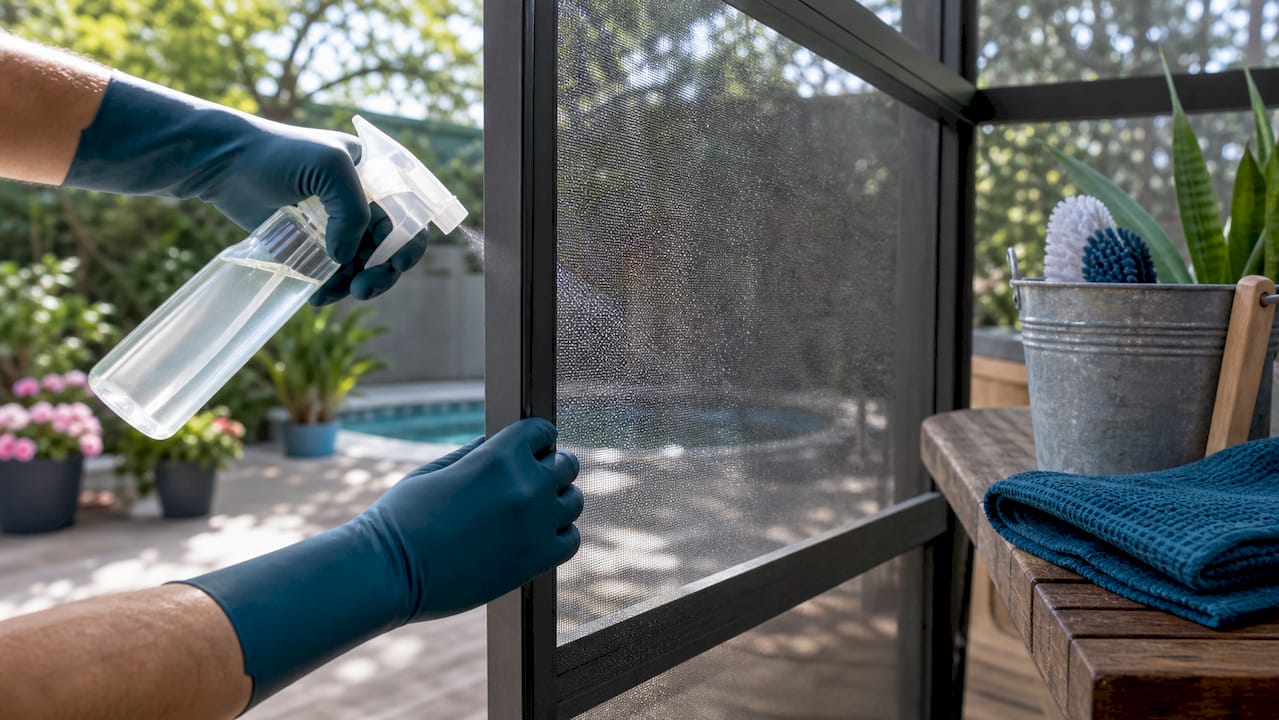
pH-neutral biodegradable detergents are the safest choice for pool screen cleaning. A diluted white vinegar and water mix (roughly one part vinegar to three parts water) works well for light mildew on pool screens. For heavier buildup, a commercial biodegradable enclosure cleaner delivers better results without harming the aluminum frame or surrounding plants.
What to avoid entirely
Household chlorine bleach corrodes aluminum frames, damages nearby landscaping, and leaves chemical residues that actually speed up mildew regrowth. That last point surprises most homeowners. High-pressure washers exceeding 3,000 PSI tear screen mesh and strip protective coatings from aluminum, creating more problems than they solve.
Pro Tip: Cover all plants within three feet of the enclosure before applying any cleaning solution, even a biodegradable one. Runoff concentration near roots causes leaf burn.
| Item | Purpose |
|---|---|
| Soft bristle brush | Scrubs mesh without tearing fibers |
| Garden hose with spray nozzle | Low-pressure rinse under 1,000 PSI |
| pH-neutral biodegradable cleaner | Breaks down mildew without corroding aluminum |
| Protective gloves | Shields skin from cleaning solution contact |
| Plant covers or tarps | Protects landscaping from chemical runoff |
How do you remove mildew stains from pool screens step by step?
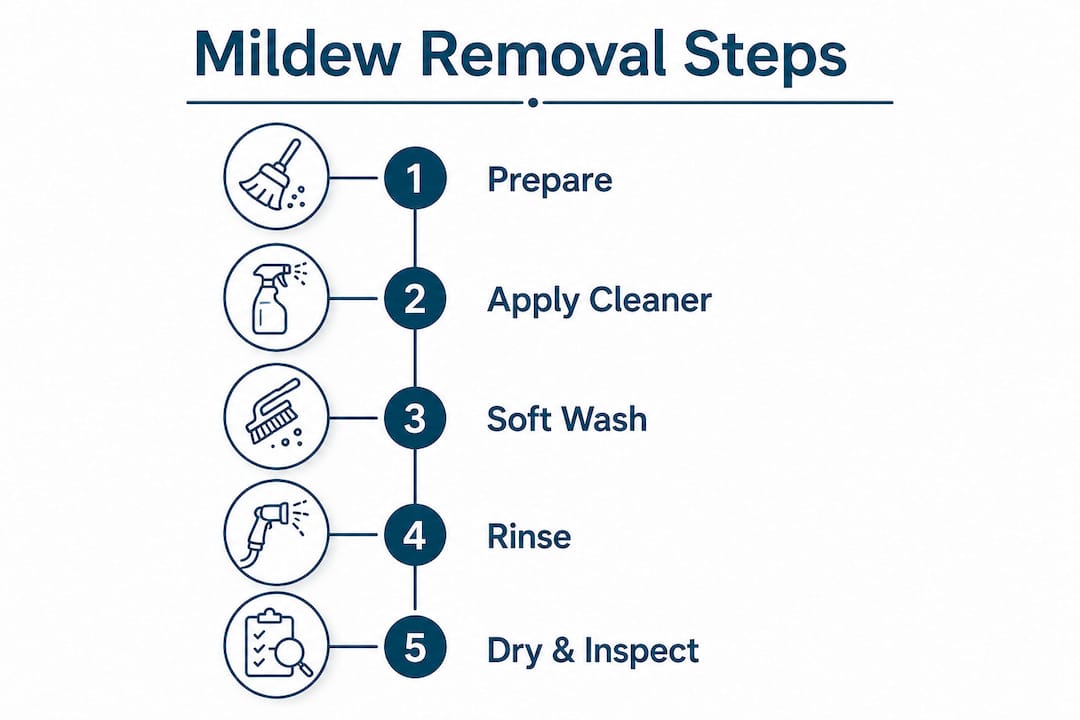
Soft washing is the proven method for how to clean pool screen mildew without causing structural damage. The process moves from inspection through application to a final rinse, and skipping any step reduces the outcome. Follow this sequence for the best results.
Step-by-step soft washing process
-
Inspect the enclosure first. Walk the full perimeter and look for torn mesh, loose fasteners, and areas with heavy black or green buildup. Note any spots where the aluminum frame shows chalky white residue, which signals oxidation. Check the pool screen safety inspection checklist to confirm nothing needs repair before you apply water and cleaner.
-
Pre-wet the screens and surrounding area. Use your garden hose to wet the screen mesh thoroughly. This softens dried debris and protects nearby plants by diluting any cleaner that reaches the soil. Pre-wetting also helps the cleaning solution spread evenly rather than absorbing into dry, dusty mesh.
-
Mix and apply your cleaning solution. Fill a spray bottle or garden sprayer with your pH-neutral biodegradable cleaner at the manufacturer's recommended dilution. Apply it evenly across the screen surface, working from top to bottom. Let the solution dwell for 5–10 minutes so it can break down mildew at the molecular level rather than just sitting on the surface.
-
Scrub gently with a soft bristle brush. Use light, circular motions on the mesh and straight strokes along aluminum frame sections. Apply just enough pressure to work the solution into the mesh weave. Pressing harder does not remove more mildew. It only risks tearing the screen.
-
Rinse thoroughly from top to bottom. Use your garden hose at full flow but without a pressure-boosting attachment. Start at the highest point of the enclosure and work downward so dirty water does not run over already-clean sections. Rinse until the water running off the screen runs completely clear.
-
Inspect and allow to dry. After rinsing, walk the enclosure again. Check for any remaining green or black patches and spot-treat them with a second application. Let the screens air dry fully before closing any enclosure doors or panels.
Pro Tip: Clean on a cloudy day or in the early morning. Direct sun dries the cleaning solution before it can dwell properly, reducing its effectiveness on stubborn mildew.
How do you prevent mildew stains from coming back?
Prevention is cheaper than repeated deep cleaning. A consistent maintenance schedule, combined with a few simple habits, keeps mildew on pool screens from reaching the heavy buildup stage.
Cleaning frequency by environment
Enclosures near water or wetlands need cleaning every 2–3 months because humidity and shade accelerate mildew growth. Enclosures in open, sunny yards can go 6 months between cleanings. Central Florida homeowners with tree canopy overhead should lean toward the shorter interval, since leaf debris and shade create ideal mildew conditions year-round.
What to include in every cleaning session
- Clean both the interior and exterior screen surfaces. Ignoring either side allows mildew to thrive in shaded, humid pockets where air circulation is low.
- Clean the aluminum frames alongside the mesh. Aluminum frame oxidation appears as chalky white residue and weakens the frame over time if left untreated.
- Clean the pool deck simultaneously to prevent algae and grime from transferring back onto freshly cleaned screens through foot traffic and water splash.
- Remove leaf litter and debris from the enclosure floor after every rain. Wet organic matter sitting on the deck feeds mildew growth on the lower screen panels.
- Inspect fasteners and frame joints for early rust or corrosion. Catching frame corrosion early prevents a cleaning problem from becoming a structural one.
Pro Tip: Keep a dated log of each cleaning session. It takes two minutes and tells you exactly when the enclosure is due for its next treatment, which prevents the "I'll do it next month" cycle that leads to heavy buildup.
What mistakes cause damage when cleaning pool screen mildew stains?
The most common mildew stain removal mistake is assuming that stronger cleaning agents or higher water pressure produce better results. Stronger cleaners and power washing cause permanent damage to screen coatings and aluminum frames, and they promote faster mildew regrowth by leaving chemical residues. That combination shortens enclosure lifespan and increases repair costs.
Mistakes to avoid
- Using undiluted bleach or ammonia-based cleaners on aluminum frames or mesh
- Applying a pressure washer above 1,000 PSI to any part of the screen enclosure
- Skipping the dwell time and rinsing the cleaner off immediately, which removes surface grime but leaves mildew roots intact
- Cleaning only the exterior and ignoring interior surfaces and frame sections
- Waiting until stains are visually severe before treating them. Early intervention drastically reduces cleaning difficulty and preserves structural integrity.
When DIY cleaning is not enough
Some stains do not respond to a single cleaning session. If green or black patches remain after two rounds of soft washing with proper dwell time, the mildew has likely penetrated the screen coating. Torn mesh, bent frame sections, or visible rust on fasteners are signs that cleaning alone will not restore the enclosure. At that point, a pool enclosure safety inspection by a professional gives you a clear picture of what needs repair versus what cleaning can still address.
"Delaying treatment past the first visible signs of mildew turns a one-hour cleaning job into a multi-session project, and sometimes into a repair bill. The screen mesh does not recover once the vinyl coating degrades. You are then replacing screens, not cleaning them."
Key Takeaways
Effective mildew removal from pool screens requires soft washing below 1,000 PSI, pH-neutral biodegradable cleaners, and a consistent maintenance schedule tied to your local environment.
| Point | Details |
|---|---|
| Use soft washing only | Keep pressure below 1,000 PSI to protect mesh and aluminum frame coatings. |
| Avoid bleach and harsh chemicals | Bleach corrodes aluminum and speeds up mildew regrowth through chemical residue. |
| Clean both surfaces and frames | Interior screens and aluminum frames harbor mildew if left untreated. |
| Match cleaning frequency to environment | Clean every 2–3 months near water or trees, every 6 months in open sunny yards. |
| Act at first signs of mildew | Early treatment preserves screen coating and prevents costly mesh replacement. |
What years of pool screen work actually taught me
Most homeowners I talk to have made the same mistake at least once: they grabbed a pressure washer or a bottle of bleach because the screen looked bad and they wanted it clean fast. I understand the impulse. The results look fine for about two weeks. Then the mildew comes back darker and faster than before, because the bleach residue left behind actually feeds the next cycle of growth.
What I have seen work consistently is patience with the dwell time. Homeowners rush the rinse step more than any other. A biodegradable cleaner needs 5–10 minutes of contact to kill mildew spores at the root. Rinsing it off in two minutes removes the surface layer and leaves the root structure intact. The stain returns within weeks.
The other thing I would stress is that the aluminum frame matters as much as the mesh. Most guides focus entirely on the screen material, but a frame showing chalky oxidation is a frame losing structural strength. Cleaning the frame with the same pH-neutral solution during every session costs nothing extra and extends the life of the entire enclosure. Mrpoolscreen's restoration work consistently shows that frames cleaned regularly alongside the mesh hold their integrity far longer than those treated as an afterthought.
Proactive maintenance is not about aesthetics alone. A clean enclosure is a structurally sound one.
— Michel
Mrpoolscreen's professional restoration services for your pool enclosure
Soft washing and regular maintenance handle most mildew problems, but aging enclosures sometimes need more than a cleaning session to look and perform their best.
Mrpoolscreen specializes in pool screen restoration for Central Florida homeowners, using eco-friendly soft washing alongside industrial-grade water-based acrylic coatings and stainless steel fasteners. The restoration process addresses weathering, rust, and mildew damage that cleaning alone cannot reverse, and it costs up to 60% less than a full rebuild. Browse the project gallery to see real before-and-after results from enclosures across the region. If your screens show persistent staining, frame oxidation, or mesh damage, a professional assessment from Mrpoolscreen gives you a clear path forward.
FAQ
What is the safest way to remove mildew from pool screens?
Soft washing with a pH-neutral biodegradable cleaner applied at low pressure (below 1,000 PSI) is the safest method. Allow the solution to dwell for 5–10 minutes before rinsing to kill mildew roots rather than just surface growth.
How often should I clean mildew from my pool screen enclosure?
Enclosures near water, wetlands, or heavy tree cover need cleaning every 2–3 months. Enclosures in open, sunny yards can be cleaned every 6 months without significant mildew buildup.
Can I use bleach to remove stains from pool screens?
Bleach corrodes aluminum frames, damages nearby plants, and leaves residues that accelerate mildew regrowth. Use a pH-neutral biodegradable cleaner instead for safe and longer-lasting results.
Why do mildew stains keep coming back after cleaning?
Mildew returns when the cleaning solution is rinsed off too quickly, leaving spore roots intact. It also returns when only the exterior surface is cleaned. Treat both interior and exterior surfaces and allow full dwell time to prevent rapid regrowth.
When should I call a professional instead of cleaning myself?
Call a professional when stains persist after two proper soft washing sessions, when mesh shows tears or brittleness, or when the aluminum frame has visible rust or structural damage. These signs indicate the enclosure needs restoration, not just cleaning.