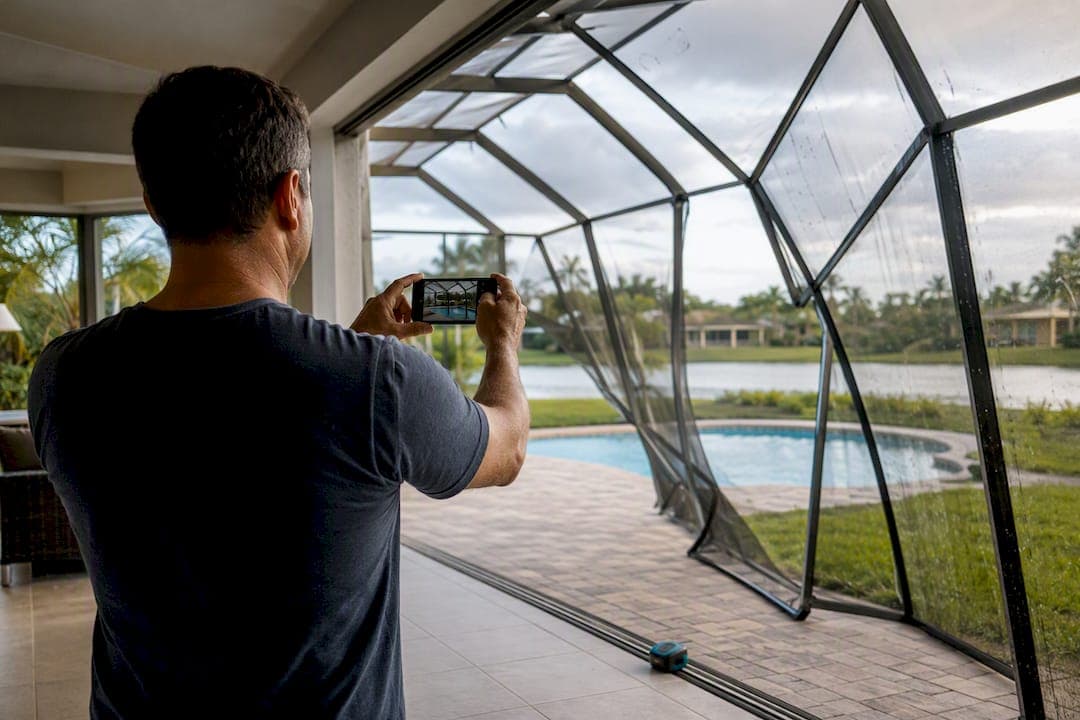
Most homeowners policies do not automatically cover a pool cage the way they cover the house itself. Coverage usually depends on a separate endorsement, and even when one exists, actual cash value settlements and hurricane deductibles can shrink your payout to almost nothing. Before you assume you're covered, pull your declarations page and look for a "screened enclosure" or "pool cage" endorsement. That single document tells you more than any adjuster's phone call will.
TL;DR:
- Most pool cages are only covered under specific endorsements, frequently settling claims on an actual cash value basis, which can lead to significant depreciation over time.
- Hurricane deductibles are percentage-based and can easily exceed the cage's repair cost, often resulting in no payout for storm-related damage.
- Running the insurance deductible calculation before filing helps determine if a claim is financially worthwhile, especially on older enclosures with ACV settlement.
- Proper documentation, including photos, measurements, and contractor estimates, is essential for building a successful claim that actually results in a payout.
- Restoration methods like cleaning, painting, and hardware upgrades can cost substantially less than full replacements and often provide a practical alternative when insurance covers only partial damages.
Table of Contents
- How Insurers Classify a Pool Cage on Your Policy
- Endorsement Limits and the ACV Trap That Catches Homeowners Off Guard
- Do Hurricane Deductibles Wipe Out Pool Cage Claims?
- Should You Even File a Pool Cage Insurance Claim?
- Building a Pool Cage Damage Claim That Actually Pays
- When Restoration Beats a Full Rebuild
- What Homeowners Consistently Get Wrong About This Coverage
- How Mr. Pool Screen Turns a Low Payout Into a Finished Repair
- Sources
How Insurers Classify a Pool Cage on Your Policy
Insurers generally handle pool cages one of three ways, and which one applies to you changes everything about how a claim pays out.
- Included in dwelling coverage (Coverage A): Rare, but it happens when the cage is structurally attached and the carrier treats it as part of the home.
- Classified as an "other structure" (Coverage B): Common for detached cages, usually capped at 10% of your dwelling limit.
- Covered only through a specific endorsement: The most frequent setup in Florida and other storm-prone states, where a Limited Screened Enclosure endorsement handles the cage separately from everything else.
Screen mesh itself is often excluded even when the aluminum frame is covered, since insurers treat the panels as more like a screen door than a structural component, according to Policygenius. Decorative elements like finials or custom trim frequently fall outside coverage too. You'll find the actual classification spelled out on your declarations page or in a rider labeled something like "Screened Enclosure Endorsement," not buried in the general policy language.
Endorsement Limits and the ACV Trap That Catches Homeowners Off Guard
Limited Screened Enclosure endorsements typically come in fixed tiers, and most homeowners never check which one they actually bought.
- Common tiers run in fixed-dollar amounts commonly used in Florida, according to the Florida Pool & Screen Enclosure Insurance guide.
- These caps are separate from your dwelling limit and don't automatically scale up with home value.
- Most of these endorsements settle on actual cash value (ACV), not replacement cost, even when the rest of your policy is replacement-cost.
Here's the math that trips people up: a 15-year-old aluminum cage can depreciate 45% to 60% under ACV rules, per the same Florida Pool & Screen Enclosure guide.
Call your agent and ask three direct questions: Is screen mesh listed as covered property? Does this endorsement settle at ACV or replacement cost? Can I buy a higher tier or convert to replacement-cost coverage? Those three answers reveal more about your real protection than the glossy policy brochure ever will.
Do Hurricane Deductibles Wipe Out Pool Cage Claims?
Often, yes, and this is the part most homeowners never see coming until they're staring at a check that barely covers a fraction of the repair. Hurricane and windstorm deductibles are usually calculated as a percentage of your dwelling coverage limit, not a flat dollar figure, with that deductible applying before the insurer pays on the claim, including cage damage.
Run the math yourself before you assume a claim is worth filing:
- Find your dwelling coverage limit (Coverage A) on the declarations page.
- Multiply it by your hurricane deductible percentage.
- Compare that dollar amount to your realistic cage repair or replacement cost.
A commonly cited example illustrates the trap: a dwelling with a hurricane deductible percentage results in a deductible that can significantly reduce the claim check under a typical ACV endorsement on a cage that costs substantially more to rebuild, as detailed by Miami Premier Insurance's breakdown. The biggest trap in these claims is when the deductible alone exceeds the cage's realistic value, which means filing produces zero payout at all.
Should You Even File a Pool Cage Insurance Claim?
Not every case of screen damage is worth a formal filing, and running through a short checklist first can save you a rate increase for a claim that never should have gone in.
- Compare your repair estimate to your deductible. If the estimate is close to or below what you'd pay out of pocket anyway, filing rarely makes sense.
- Check the settlement basis. An ACV endorsement on an older cage often means the payout won't come close to covering the repair.
- Look for other damage on the same loss event. Roof damage, fencing, or a shed loss filed alongside the cage can justify a claim even when the cage alone wouldn't.
- Ask your agent about rate impact. A single weather-related claim on a cage-only loss can sometimes affect renewal pricing more than the payout is worth.
If the numbers are close, get a written contractor estimate before you call your insurer. If the damage is severe and unmistakable, file first and let the estimate follow the adjuster's timeline.
Building a Pool Cage Damage Claim That Actually Pays
Strong claims start with strong records, not with a phone call to your agent the day after the storm.
Secure the property first. Tarp exposed areas, remove loose panels that could become hazards, and avoid permanent repairs until the insurer has documented the damage. When you talk to the adjuster, stick to facts. Speculating about cause or severity in casual conversation can end up working against you later.
Your documentation checklist should include:
- Timestamped photos and a video walk-through of every damaged section
- Pre-loss photos if you have them, showing the cage's prior condition
- Measurements of the enclosure footprint
- At least one written contractor estimate in the insurer's preferred format
- Receipts or manufacturer specs for the original installation, if available
Ask your insurer directly what estimate format they require. Some carriers reject informal quotes and demand itemized bids, a detail that catches homeowners off guard and delays payment, according to TD Screen FL's claims guidance.
Pro Tip: Keep a folder, digital or physical, with your original cage installation invoice and any past repair receipts. Adjusters weigh maintenance records heavily when deciding whether damage is storm-related or ordinary wear and tear.
If a storm has already knocked branches or debris into your enclosure, coordinating cleanup with a tree removal and storm-cleanup service before your adjuster visit keeps the damage assessment focused on the cage itself rather than surrounding yard debris.
When Restoration Beats a Full Rebuild
A low ACV payout doesn't have to mean a full teardown. Restoration, repainting the frame with a water-based acrylic coating, swapping corroded fasteners for stainless steel hardware, and rescreening damaged panels, often addresses the same problems a full rebuild would, at a fraction of the cost. Mrpoolscreen's Central Florida clients have seen savings of up to 60% compared to full rebuilds using this approach.
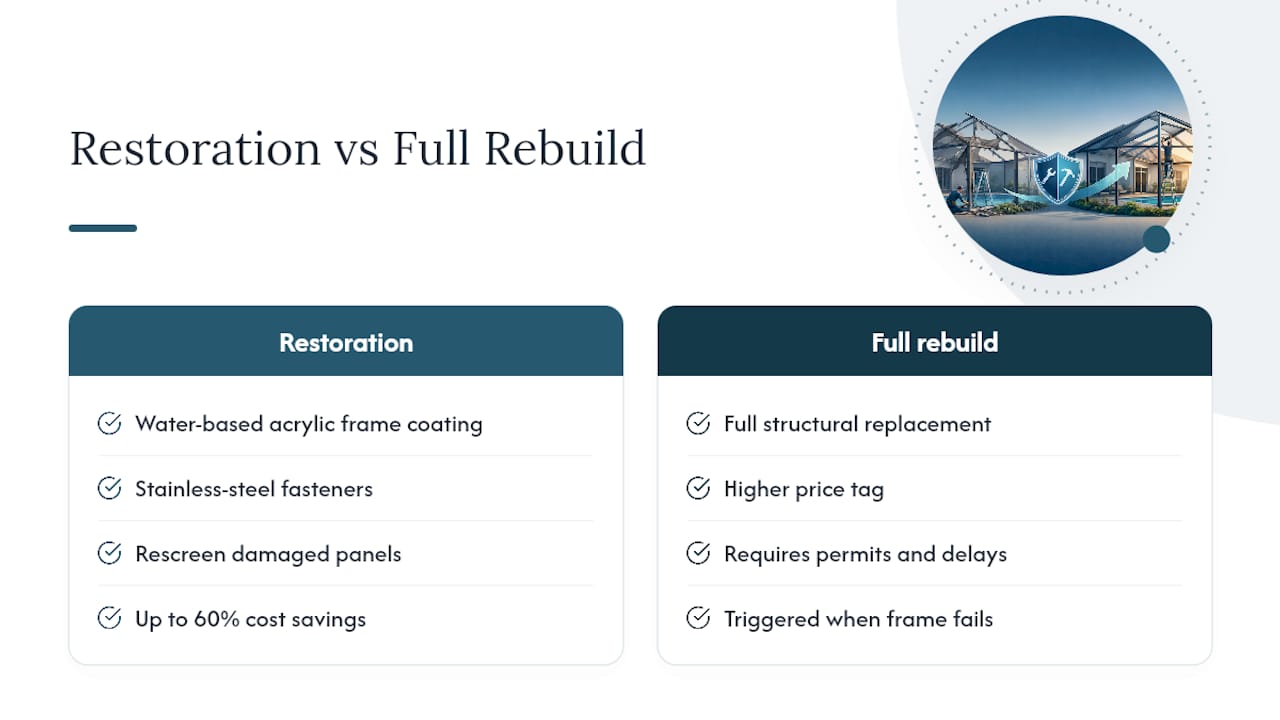
Restoration pairs especially well with a modest insurance payout: the check covers materials and labor, and the homeowner avoids the permitting delays and higher price tag of a full replacement. Code-driven replacement becomes unavoidable only when the structural frame itself has failed, not just the screening or paint. For real examples of what restoration actually looks like before and after, the project gallery shows completed jobs across a range of damage severity.
What Homeowners Consistently Get Wrong About This Coverage
Three things trip up almost every homeowner I've seen work through a pool cage claim. First, they never measure their cage or price a realistic rebuild, so they have no idea whether their endorsement limit is anywhere close to adequate. Second, they assume replacement cost applies when it's actually ACV, until the check arrives and tells them otherwise. Third, they never run the hurricane deductible math until after the storm, when it's too late to shop for better coverage.
Before your next renewal, do three things: update your cage photos, ask your agent to confirm the endorsement's settlement basis in writing, and request a replacement-cost version if your carrier offers one.
— Michel
How Mr. Pool Screen Turns a Low Payout Into a Finished Repair
Specialized restoration services can be a practical solution when insurance checks don't cover a full rebuild. A typical restoration project, rescreening, stainless steel hardware upgrades, repainting, and selective frame repair, runs well below the cost of tearing out and replacing an entire enclosure, which matters most right after an ACV settlement leaves you short.
Before you sign a repair contract with anyone, compare the scope of work against what your adjuster approved. If your insurer's estimate covers rescreening and fastener replacement, consider obtaining a restoration quote to compare with your payout. Homeowners dealing with deck damage alongside the cage can also get a combined quote through the pool deck staining page. Reach out through the Mr. Pool Screen homepage to get a restoration estimate matched against your claim documents before you commit to any repair contract.
This article is general information, not a substitute for advice from a qualified financial advisor. Consult a qualified financial professional about your own circumstances before acting on anything here.
Sources
- Florida Pool & Screen Enclosure Insurance: 2026 Guide
- Are pool cages covered by insurance? - Policygenius
- Wind damage claims in Florida: coverage and legal options