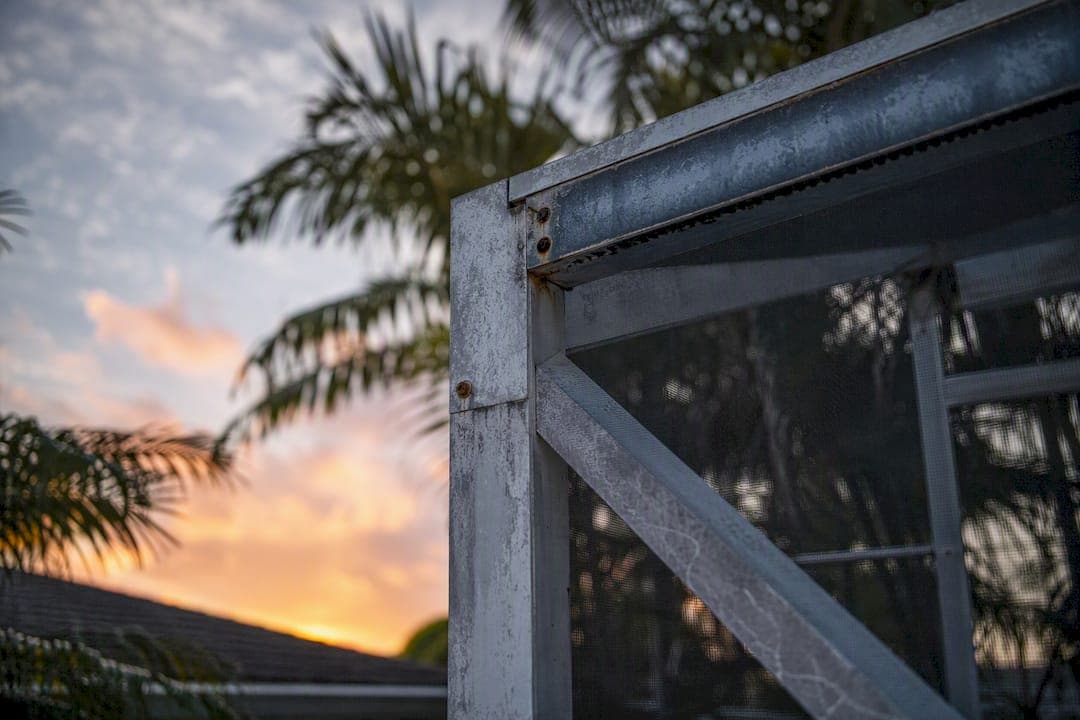
A well-built aluminum frame typically lasts multiple decades while the screen mesh holding back Florida's bugs and debris needs regular replacement depending on material and sun exposure. Fasteners and door hardware often need attention every 5 to 15 years well before the frame itself gives out. Salt air, storm exposure, and installation quality all push these numbers up or down, and routine maintenance or targeted restoration can stretch them considerably.
TL;DR:
- Fasteners and hardware near the coast often need replacement every 5 to 8 years due to accelerated corrosion from salt air and storms.
- The aluminum frame typically lasts 10 to 15 years for builder-grade installs, and up to 30 years with marine-grade materials and heavy gauge tubing.
- Screen mesh durability varies: standard fiberglass lasts 5 to 10 years, while pet-resistant options can extend to 12-15 years.
- Regular maintenance such as painting, tightening hardware, and cleaning can significantly extend the lifespan of a pool cage.
- Repair or rescreening costs are often less than a third of replacement if they add at least 5 years of life, but structural damage requires full replacement.
Table of Contents
- How Long Do Pool Cage Components Actually Last?
- What's Actually Wearing Your Pool Cage Down?
- Signs Your Pool Cage Needs Repair or Replacement
- Maintenance Steps That Extend Pool Cage Life
- Repair, Rescreen, or Replace: What's the Smarter Investment?
- Upgrades Worth Paying for the First Time
- How Professional Restoration Actually Works
- What I'd Actually Do If I Owned This Pool Cage
- When Restoration Makes Sense (And When It Doesn't)
- Sources
How Long Do Pool Cage Components Actually Last?
Not every part of your enclosure ages at the same rate, which is why a cage can look tired in one spot and solid everywhere else. The frame is almost always the last thing to fail. A properly built aluminum frame can run 20 to 30 years or longer, and builder-grade installations still typically hold up for 10 to 15 years before major issues appear. Upgraded, marine-grade aluminum with heavier gauge tubing pushes that closer to 30 years, even along the coast.
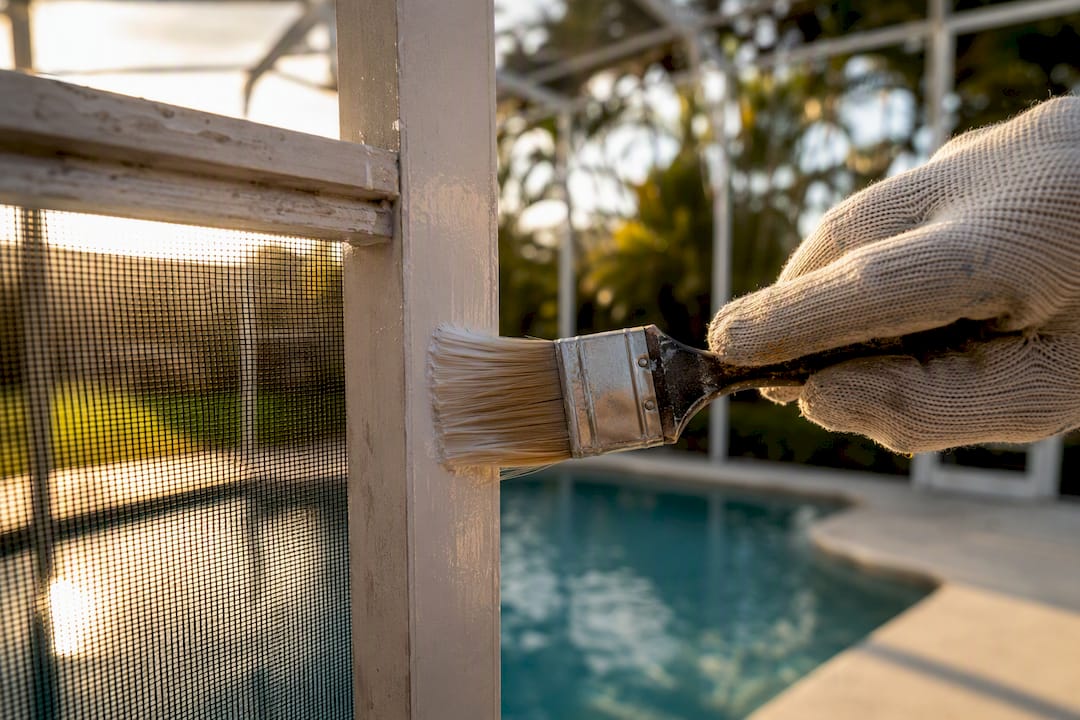
Screen mesh is a different story. Standard fiberglass screen commonly lasts 5 to 10 years in Florida's climate, while heavier options like Super Screen or pet-resistant mesh can push past 12 to 15 years. Polyester blends fall somewhere in between, depending on how much direct sun a panel takes.
Hardware wears out on its own timeline, largely driven by corrosion:
- Fasteners and screws: often need replacement every 5 to 10 years, sooner near the coast
- Door hinges and latches: typically last 8 to 12 years before hardware fatigue sets in
- Rubber seals and spline: usually need refreshing every 5 to 8 years as they dry and crack
Homes within a few miles of the coast see faster fastener corrosion than inland properties, which is one reason two nearly identical cages in different zip codes can age at very different rates.
What's Actually Wearing Your Pool Cage Down?
Florida's climate doesn't just age a pool cage. It attacks each component differently, and knowing which threat targets which part helps you know where to look first.
UV radiation is the biggest driver of screen failure. Constant sun exposure breaks down the polymer bonds in mesh fibers, and most fiberglass screens show visible embrittlement, that stiff, crackly feel, well before they visibly tear. Paint and powder coatings degrade on a similar clock, chalking and fading years before the aluminum underneath shows any real damage.
Salt air is the hardware killer. Fasteners, hinges, and anchor points near the coast pit and corrode noticeably faster than the same parts inland.
Other major stressors include:
- Storm winds and windborne debris, which stress joints and tear weakened mesh
- Standing pool water and chemical splash, which accelerate corrosion at ground-level fasteners
- Mildew and moisture trapped in shaded corners, which degrade coatings from the inside out
- Poor original installation or under-engineered anchoring, which compounds every other factor above
Statistic to know: Standard fiberglass screen in Florida often needs replacing within 5 to 10 years, roughly half the working life of the frame it's stretched across.
Signs Your Pool Cage Needs Repair or Replacement
A few recurring problems tell you it's time to act instead of patching again:
- Multiple brittle or faded panels that keep tearing in new spots after each repair.
- Visible pitting, rust streaks, or corrosion on frame members, especially near ground-level anchors.
- Loose or wobbling anchor points, which suggest the connection to the deck or slab has weakened.
- Doors, latches, or rails that fail a basic safety check, or no longer meet local code for pool barriers.
- The same repair recurring within a year or two, a sign the underlying structure or hardware is failing, not just the screen.
If you're seeing two or more of these at once, it's worth having a professional inspect the whole structure rather than patching panel by panel.
Maintenance Steps That Extend Pool Cage Life
Consistent upkeep is the single biggest lever homeowners have over pool cage maintenance costs. Once a year, clean the screen and frame, check fastener tightness, inspect for corrosion spots, and touch up any chipped paint before it spreads.
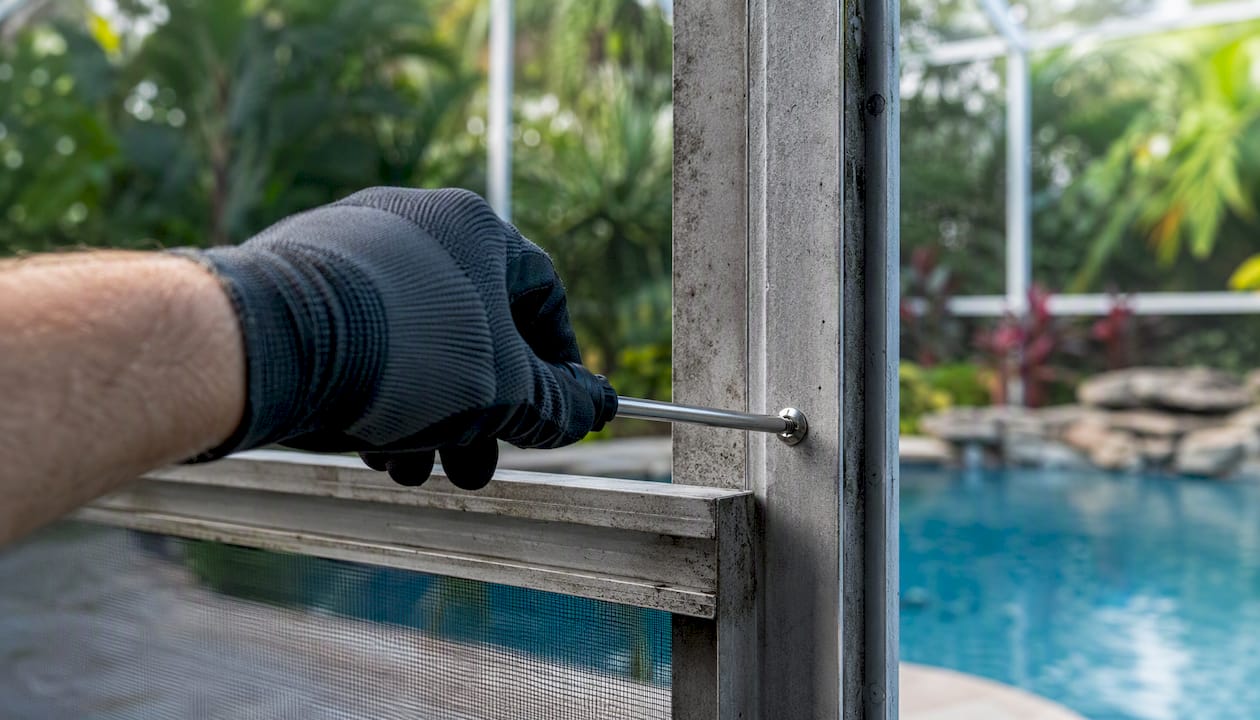
Before hurricane season, walk the perimeter and tighten loose panels; after any storm, check immediately for torn mesh or bent framing so damage doesn't spread to neighboring panels. Prompt small repairs genuinely extend the life of the whole structure.
Practical timing guidance:
- Replace fasteners showing rust or pitting, don't wait for full failure
- Repaint or recoat every 7 to 10 years, sooner in direct coastal exposure
- Rescreen individual panels as they fail; switch to a full rescreen once three or more panels show brittleness
- Leave fastener replacement and structural repairs to a licensed pro; cleaning and visual inspection are fine to DIY
Pro Tip: Check fasteners with a gentle tug, not just a visual scan. A screw can look fine and still have lost most of its grip in corroded aluminum.
Repair, Rescreen, or Replace: What's the Smarter Investment?
Money decides most of these calls, so it helps to know the real numbers before you commit. Painting labor typically runs $1.50 to $2.50 per square foot, with materials adding only a small amount on top, making a full repaint one of the cheapest ways to add years to a cage's life. Fastener replacement runs a few dollars per unit but multiplies quickly across a full structure. Full rescreening costs considerably more than spot repairs but resets tension and appearance evenly across the enclosure, which is why it's often the better value once several panels are failing rather than just one or two.
A simple rule of thumb: if repair or restoration costs less than a third of full replacement and adds five or more years of service life, it's the smarter move. Full replacement makes sense when the frame itself shows structural corrosion, anchor failure, or damage from a storm that a repaint and rescreen can't fix.
Statistic to know: Painting labor alone runs $1.50 to $2.50 per square foot, a fraction of what a full teardown and rebuild costs.
Upgrades Worth Paying for the First Time
If you're already investing in repair or rescreening, a few upgrades pay for themselves in reduced disruption over the next decade. Choosing premium mesh and stainless or Nylotech fasteners up front costs more initially but cuts down on repeat repair cycles significantly over 8 to 12 years.
- Water-based acrylic coatings resist chalking and fading longer than standard exterior paint
- Super Screen or pet-resistant mesh trades some airflow for meaningfully better tear resistance
- Stainless steel or Nylotech fasteners resist the corrosion that drives most hardware failures
- Wind-load-rated structural reinforcements matter most for homes in higher-risk coastal zones
How Professional Restoration Actually Works
A proper restoration follows a set sequence: inspect the whole structure, replace corroded fasteners with stainless or Nylotech hardware, clean every surface, repaint with a durable coating, then rescreen only the panels that actually need it.
- Full inspection identifies which components need attention versus which can be left alone
- Fastener replacement stops the corrosion cycle before repainting locks in the fix
- Targeted rescreening avoids paying to replace mesh that still has years left
- Documented before-and-after projects show what restoration realistically achieves
Restoration won't fix a structurally compromised frame or failed anchor system. If the frame itself is bent, cracked, or pulling away from the deck, replacement is the safer path.
What I'd Actually Do If I Owned This Pool Cage
If your cage is under 15 years old with no structural corrosion, restore and rescreen rather than replace, it's almost always the better return. Inspect after every major storm, and treat safety and code compliance as non-negotiable regardless of budget. Beyond that, the maintenance checklist and repair-versus-replace math above will tell you exactly which repairs are worth making now.
— Michel
When Restoration Makes Sense (And When It Doesn't)
Mrpoolscreen restores weathered pool cages across Central Florida, and for most homeowners it's the difference between a full rebuild and a project that costs up to 60% less. The process replaces corroded fasteners with stainless steel or Nylotech hardware, applies industrial-grade water-based acrylic coatings, and rescreens only the panels that actually need it, so you're not paying to replace mesh that still has years of life left.
You can see exactly what this looks like in practice on the project gallery, which shows real before-and-after results from cages in similar condition to yours. Restoration isn't the answer for every cage. If your frame has structural corrosion or an anchor system that's pulled loose, replacement is genuinely the safer call, and that's worth saying plainly rather than pitching a fix that won't hold. But if your enclosure is aging cosmetically or showing early hardware wear, get a firsthand look at the pool screen restoration service and request an estimate before committing to a full teardown.
Sources
- How Long Does a Pool Enclosure Last in Florida? - Jack Hall Jr's Construction
- Florida Pool Screen Repair & Maintenance Guide | Fabri-Tech
- HomeAdvisor — Repair a pool enclosure / painting cost estimates
- How Long Do Screen Enclosures Last in Florida? | Lifespan Guide