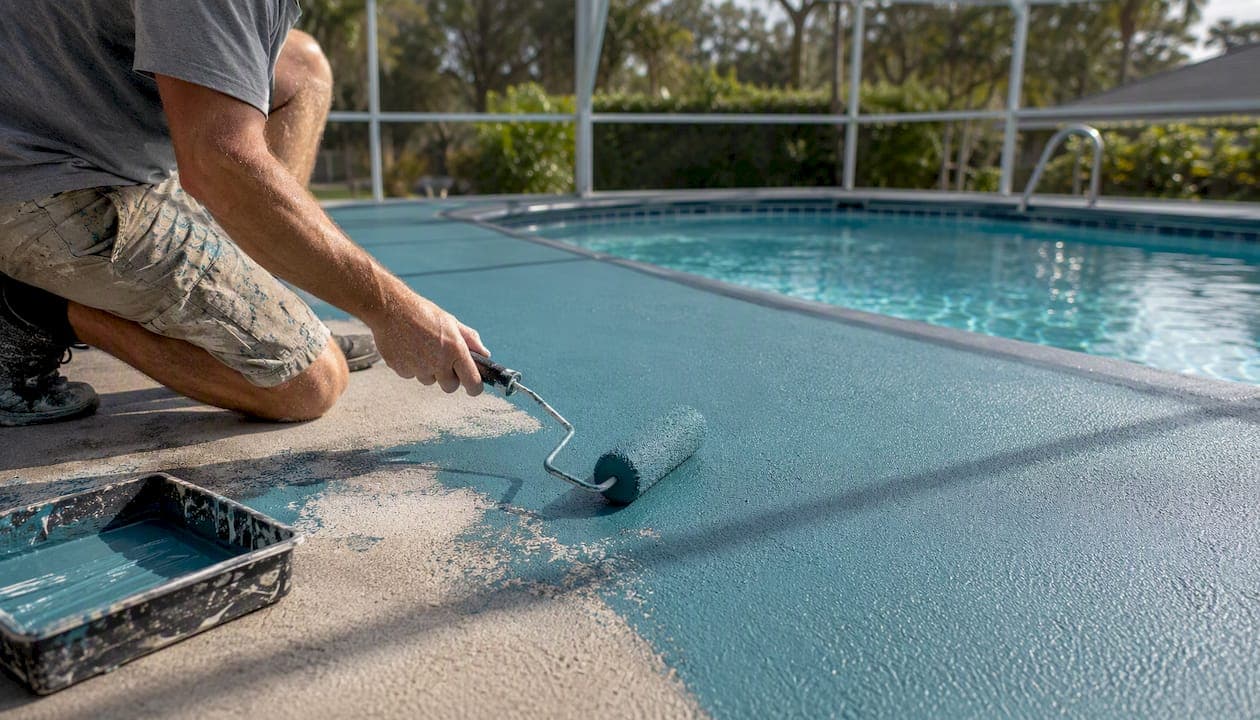
Painting a concrete pool deck runs roughly $4–$8.50 per square foot professionally installed, while wood decks typically cost $3–$5 per square foot, according to Angi's cost data. For a 300-sq-ft deck, expect to pay about $1,000. A 600-sq-ft deck will cost proportionately more, and a 1,200-sq-ft deck can run higher depending on the coating system and prep required. National data from CROC Coatings aligns with this per-square-foot range, with most projects landing in the mid-range for residential applications.
The single biggest cost multiplier is surface condition and prep. A deck with cracks, spalling, or old coatings that need removal can add several dollars per square foot before a drop of new paint goes down. That's the number most lowball quotes leave out.
Mrpoolscreen handles pool deck staining and painting for Central Florida homeowners alongside full enclosure restoration. The case study in Section 10 shows exactly how a professional inspection and coating selection changed the 5-year cost picture for one local homeowner.
Table of Contents
- What drives pool deck painting cost the most?
- Which coating type gives you the best value for your money?
- Realistic sample budgets for common deck sizes
- How to calculate how much paint you actually need
- DIY vs. hiring a pro: what the numbers actually look like
- How long does a pool deck painting project take?
- How a professional inspection changes the cost picture: a Central Florida example
- Key Takeaways
- The cost question homeowners ask wrong
- Mrpoolscreen handles the full scope, from inspection to finished deck
- Useful sources and further reading
What drives pool deck painting cost the most?
Surface material, deck size, prep condition, and the coating system you choose are the four levers that move the price. Understanding each one helps you read a quote critically rather than just compare bottom-line numbers.
Surface material sets the baseline. Concrete is the most common pool deck surface and the most forgiving for coatings. Wood and composite decking require different prep chemistry and often more coats, which pushes labor up. Masonry and stone surfaces may need specialized primers that add to material costs.
Deck size and shape affect labor more than materials. A simple rectangular deck is the fastest to coat. An irregular shape with multiple angles, steps, or built-in planters adds masking time and slows application. Contractors often add a moderate flat labor premium for complex layouts, even on smaller decks.
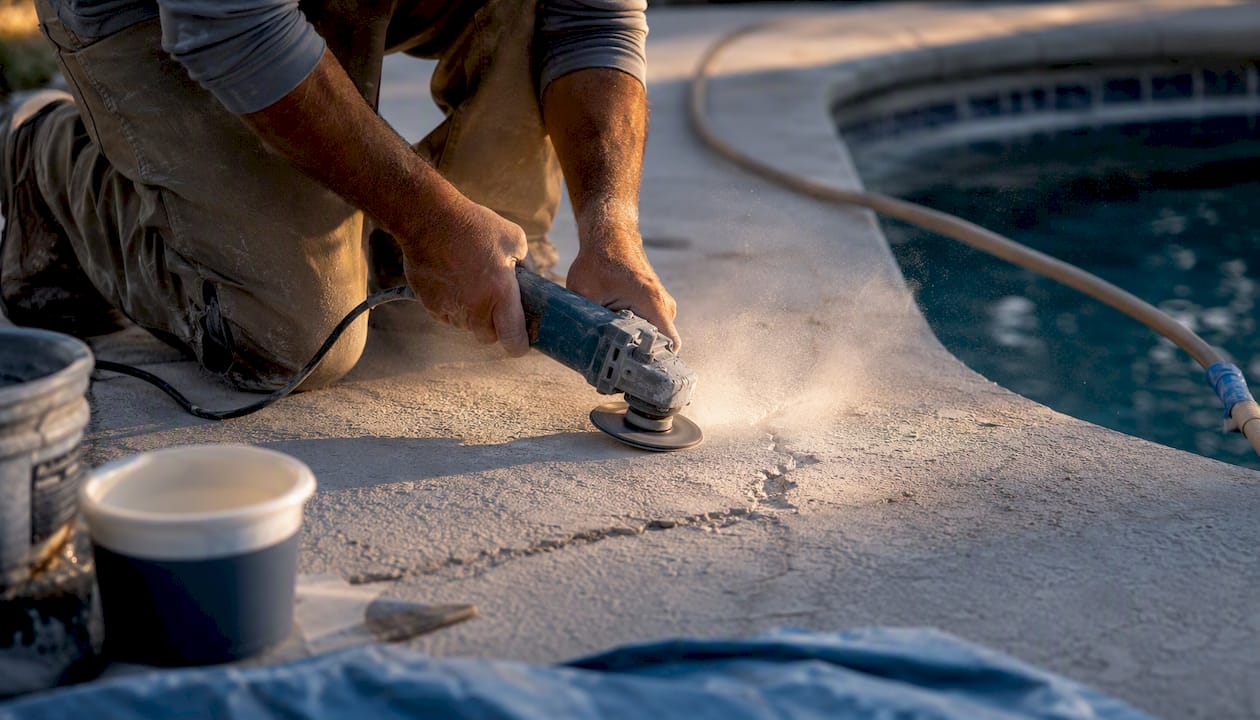
Prep and surface condition is where budgets get surprised. A deck in good shape needs pressure washing and a light etch. A deck with peeling paint, hairline cracks, or spalled concrete needs grinding, patching, and possibly chemical stripping before any coating goes down. That prep work commonly adds $2–$5 per square foot to the total. A cost calculator that breaks out prep and repair allowances separately will always give you a more accurate estimate than a flat per-square-foot quote.
Regional labor rates vary meaningfully across the U.S. Bureau of Labor Statistics occupational wage data shows painter wages differ by region, which feeds directly into contractor pricing. High-cost metros and high-demand markets like South Florida typically run 15–25% above national midpoints.
Secondary drivers worth budgeting for: color changes (darker colors often need an extra coat), non-slip additive ($0.50–$1.50 per square foot), drainage corrections if water pools near the house, and access obstructions like tight screen enclosures that slow a crew down.
Pro Tip: Ask every contractor this question before signing: "Will you perform an adhesion test and moisture check before finalizing the scope?" A contractor who skips that step is pricing blind. Moisture trapped under a coating is the leading cause of bubbling and delamination within the first year.
Which coating type gives you the best value for your money?
The coating market has expanded well beyond basic deck paint. Each system has a different installed cost, lifespan, and performance profile. Matching the right system to your climate and budget is where most homeowners leave money on the table.
- Polyaspartic/polyurea systems: The premium option for high-UV and high-traffic decks. Florida-specific data from Coating Designs indicates these coated systems cost more per square foot than simpler coatings, with superior UV stability and reduced chalking compared to acrylics. Recommended for Central Florida and other high-sun markets.
Compatibility matters. You cannot apply epoxy directly over an existing acrylic coating without full removal. Polyurea can go over prepared concrete or over some epoxy systems, but only after mechanical profiling. Always confirm compatibility before accepting a quote that skips removal.
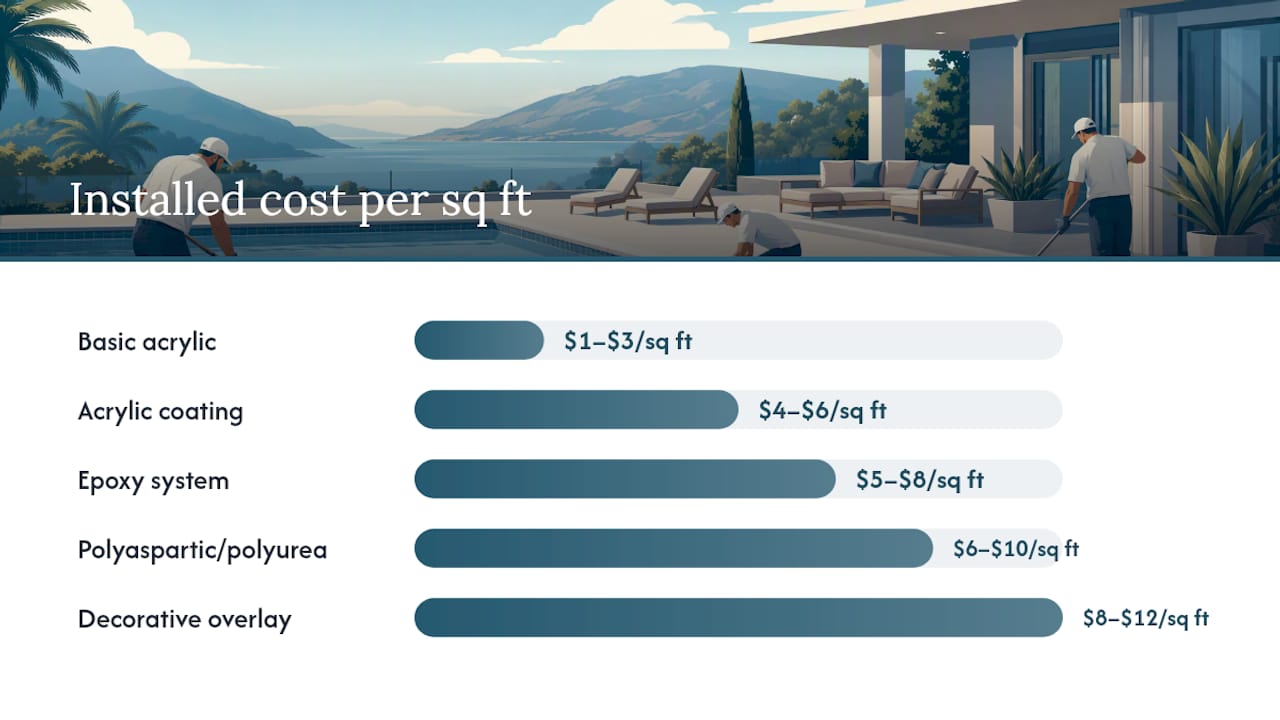
| Coating Type | Installed Cost (per sq ft) | Typical Lifespan | UV Stability | Slip Resistance |
|---|---|---|---|---|
| Basic acrylic paint | $1–$3 | 1–3 years | Low | Low (additive needed) |
| Acrylic deck coating | $4–$6 | 3–5 years | Moderate | Moderate (built-in texture) |
| Epoxy system | $5–$8 | 5–10 years | Moderate | Good |
| Polyaspartic/polyurea | $6–$10 | 10–15 years | High | Excellent |
| Decorative overlay | $8–$12 | 10–20 years | High | Excellent |
Realistic sample budgets for common deck sizes
These ranges reflect installed professional pricing, including basic prep for a deck in fair condition. Heavy repairs are not included; add $2–$5 per square foot if your deck has cracks, spalling, or old coatings to remove.
| Deck Size | Paint Refresh (per sq ft range) | Coating/Resurfacing (per sq ft range) | Premium Overlay (per sq ft range) |
|---|---|---|---|
| 300 sq ft | $4–$8.50 | $4–$12 | $8–$12 |
| 600 sq ft | $4–$8.50 | $4–$12 | $8–$12 |
| 1,200 sq ft | $4–$8.50 | $4–$12 | $8–$12 |
HomeAdvisor's deck painting data shows that small-job averages run around $1,000 for a 300-sq-ft deck on a simple paint refresh, which aligns with the low end of the paint refresh column above.
To scale these numbers to your specific deck: multiply your square footage by the per-square-foot range for your chosen system, then add a prep allowance. For a 600-sq-ft concrete deck in average condition getting a standard acrylic coating at $6 per square foot, the base cost is $3,600. Add $1 per square foot for non-slip additive ($600) and $500 for crack filling and pressure washing, and the realistic total lands around $4,700.
Regional variation is real. Florida-market data shows installed costs running at the higher end of national ranges due to UV exposure requirements and labor market conditions. High-cost metros like New York, Boston, and San Francisco typically run 20–30% above the national midpoints shown here.
How to calculate how much paint you actually need
Coverage rates vary by product type, and most manufacturers list them on the label. Here are the working rules of thumb:
- Basic exterior acrylic paint: 300–400 sq ft per gallon per coat.
- Acrylic deck coating (thicker body): 200–300 sq ft per gallon per coat.
- Epoxy systems: 200–250 sq ft per gallon per coat (two-component kits).
- Polyurea/polyaspartic: applied by spray at rates that vary by system; typically 150–200 sq ft per gallon.
Worked example for a 600-sq-ft deck, two-coat acrylic coating:
Coverage at 250 sq ft per gallon per coat means 2.4 gallons per coat. Two coats = 4.8 gallons, rounded up to 5 gallons. At roughly $35–$55 per gallon for a quality acrylic deck coating, raw material cost for the coating alone runs $175–$275. Add primer ($25–$40 per gallon, one coat = 2 gallons = $50–$80), non-slip additive ($15–$25 per bag, one bag per gallon of topcoat), masking tape and plastic sheeting ($30–$60), and patching compound ($20–$50 depending on condition). Total material cost for a 600-sq-ft two-coat acrylic job: roughly $350–$550 in materials alone.
That material figure is useful when reviewing contractor quotes. If a contractor's material line item is significantly below that range, ask what product they're using. Cheap acrylic paints marketed as "deck paint" often have lower solids content and shorter lifespans than purpose-built deck coatings.
Pro Tip: Always buy 10–15% more material than your calculated coverage to account for porous surfaces, texture variation, and touch-ups. Running out mid-coat and buying a partial gallon from a different batch can cause visible color variation.
DIY vs. hiring a pro: what the numbers actually look like
DIY can cut upfront cost significantly. Angi's data suggests DIY can reduce upfront cost by roughly 60% compared to professional installation on straightforward paint jobs. On a 600-sq-ft acrylic paint refresh, that's the difference between paying $350–$550 in materials versus $2,400–$3,000 for professional installation.
Where DIY makes sense:
- Basic acrylic paint or acrylic deck coating on a concrete deck in good condition.
- Homeowners comfortable with surface prep (pressure washing, light etching, crack filling).
- Projects where the deck can be out of service for 3–5 days without disruption.
Where DIY creates real risk:
- Epoxy and polyurea systems require precise mix ratios and application windows. Incorrect mixing causes soft spots, bubbling, and delamination that costs more to remediate than the original professional install would have.
- Heavy prep work (grinding, chemical stripping) requires equipment most homeowners don't own and experience to do correctly.
- Slip resistance is a safety issue. An improperly applied coating with inadequate texture can create a hazard, especially on a wet pool deck.
Professional labor for pool deck coating typically runs $2–$4 per square foot on top of materials, based on BLS painter wage data and regional contractor pricing. For complex systems like polyurea or decorative overlays, labor often exceeds materials. That's the range where hiring a pro pays for itself in reduced failure risk and warranty coverage.
Pro Tip: When getting contractor quotes, ask for three separate line items: materials (with product name and spec), labor, and warranty terms. Any contractor who can't or won't break out those three items is hiding something, usually a thin margin on materials offset by cutting prep time.
For a direct comparison of professional pool deck staining versus DIY outcomes, Mrpoolscreen's service page outlines what a professional scope covers versus what a homeowner typically misses.
How long does a pool deck painting project take?
Timeline depends on the coating system, weather conditions, and how much prep the deck needs. Here's a realistic breakdown:
Prep phase: Pressure washing and drying typically take about a day. Chemical stripping or mechanical grinding can add additional days. Crack filling and patching compounds usually need some cure time before coating.
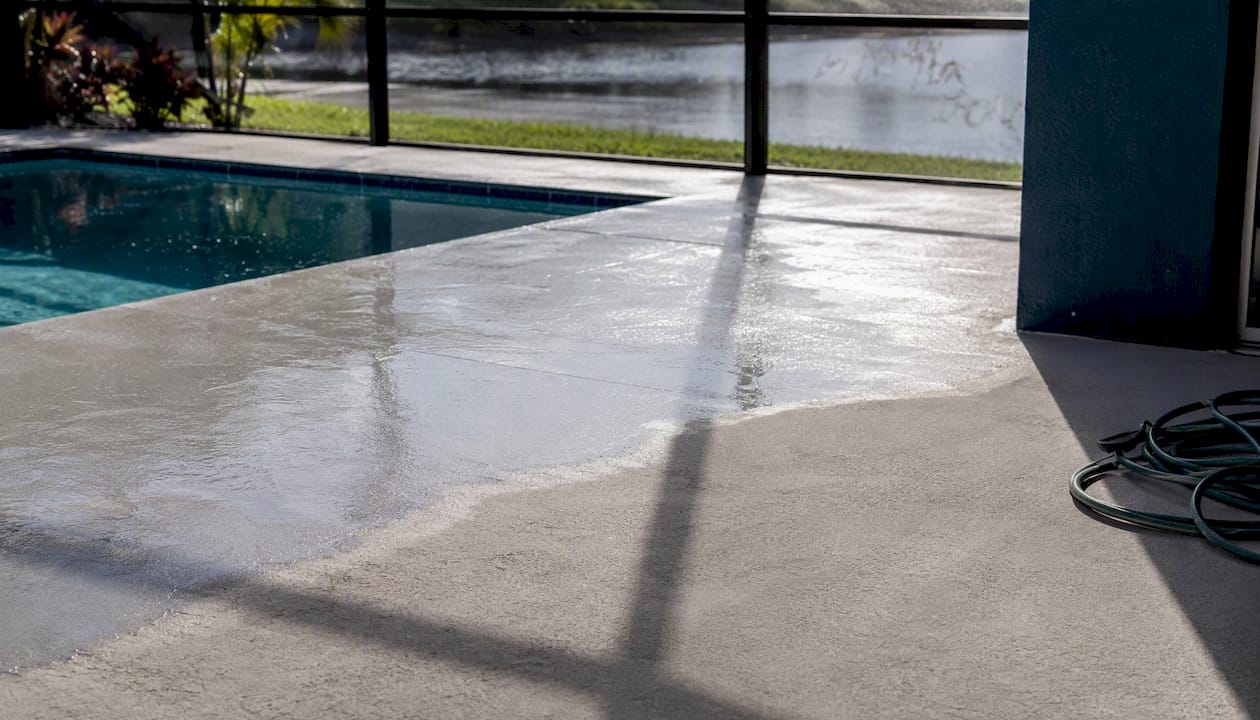
Coating application: A two-coat acrylic job on a 600-sq-ft deck takes 1–2 days of application time. Epoxy systems often require a 12–24 hour window between coats. Polyurea/polyaspartic can be applied and cured in a single day in the right conditions.
Cure and return-to-use times:
- Acrylic paint/coating: light foot traffic in 24–48 hours; full cure and pool-area use in 5–7 days.
- Epoxy systems allow foot traffic within about a day and full chemical resistance in about a week.
- Polyurea/polyaspartic coatings cure faster, allowing foot traffic the same day and full service within a couple of days.
Temperature and humidity matter more than most homeowners expect. Most coatings should not be applied below 50°F or above 90°F, and relative humidity above 85% can prevent proper cure. In Central Florida, scheduling around afternoon thunderstorms and peak summer heat is a real constraint. A reputable contractor checks a 5-day forecast before scheduling application days and builds weather contingency into the timeline.
Pool water contact should be avoided until the coating has reached full chemical cure, not just surface dry. Chlorinated water on a partially cured epoxy or polyurea coating can cause discoloration and adhesion failure.
How a professional inspection changes the cost picture: a Central Florida example
A reputable contractor doesn't start with a price. They start with an inspection. For pool deck work, that means checking surface adhesion (a simple pull test with tape or a specialized adhesion gauge), moisture content (a plastic sheet taped to the surface for 24 hours reveals trapped moisture), crack depth and pattern, and whether existing coatings are bonded or delaminating.
Mrpoolscreen's process in Central Florida follows exactly this sequence. Before any scope is written, the crew assesses the deck surface material, existing coating condition, crack severity, and drainage. That inspection determines whether the job is a paint refresh, a full coating system, or a resurfacing with overlay.
A real project scenario from Central Florida: A homeowner in the Orlando area had a 750-sq-ft concrete deck with two layers of old acrylic paint, several hairline cracks, and visible spalling near the pool edge. A surface adhesion test confirmed the existing coating was delaminating in multiple areas. The scope included full mechanical removal of old coatings, crack injection and patching, and installation of a polyaspartic system. Total installed cost landed in the $6,500–$7,500 range. The homeowner had received a competing quote of $3,200 that proposed painting directly over the existing surface. The lower quote would have failed within one season. The polyaspartic system carries a 10-year performance expectation under normal Central Florida conditions.
Pro Tip: Ask to see photos from the contractor's inspection, not just their finished project gallery. A contractor who documents the starting condition is showing you they understand why prep matters and that they're accountable for what they found.
For a full walkthrough of how Mrpoolscreen approaches pool enclosure restoration alongside deck work, the process overview covers inspection steps, material selection, and what a written warranty covers.
Key Takeaways
Hiring a professional for pool deck painting costs $4–$8.50 per square foot for concrete, with prep and coating system choice driving total cost more than deck size alone.
| Point | Details |
|---|---|
| Per-sq-ft cost ranges | Concrete decks run $4–$8.50/sq ft professionally installed; wood runs $3–$5/sq ft. |
| Prep adds real cost | Surface prep and repairs commonly add $2–$5/sq ft and should be budgeted separately. |
| Coating choice drives lifespan | Polyurea/polyaspartic lasts 10–15 years vs 1–3 years for basic acrylic paint. |
| DIY savings carry risk | DIY can cut upfront cost by roughly 60%, but epoxy and polyurea errors cost more to fix than a professional install. |
| Mrpoolscreen for Central Florida | Mrpoolscreen provides professional inspection, polyaspartic coating installation, and deck staining for homeowners in Central Florida. |
The cost question homeowners ask wrong
Most homeowners ask "how much per square foot?" when the better question is "how much per year of service life?" A $3-per-square-foot paint job that fails in 18 months costs more than a $7-per-square-foot polyurea system that holds for a decade. The math isn't complicated, but it requires knowing what you're actually buying.
The other thing most guides won't tell you: the contractor's prep philosophy reveals more about quality than their coating brand. Any professional can name a premium product. Fewer are willing to spend two days grinding and patching before they apply it, because that's where the margin gets thin. When you're comparing quotes, the one that includes a detailed prep scope in writing is almost always the better value, even if the number is higher.
One more thing worth saying plainly: non-slip texture is not optional on a pool deck. It's a safety requirement. If a quote doesn't mention it, ask specifically how slip resistance is addressed. A smooth coating on a wet surface near a pool is a liability, not a finish.
Request a written scope and warranty from every contractor you consider, and make sure both documents specify the coating system by product name, the prep steps included, and the warranty period with its conditions.
Mrpoolscreen handles the full scope, from inspection to finished deck
If you're in Central Florida and your pool deck needs more than a fresh coat of paint, Mrpoolscreen covers the complete restoration scope: water-based acrylic coatings, polyaspartic systems for high-UV exposure, deck staining for concrete, wood, masonry, and stone, plus full pool enclosure restoration including stainless steel fastener replacement and re-screening. The difference from a standard painting contractor is the inspection-first process and the industrial-grade materials used throughout.
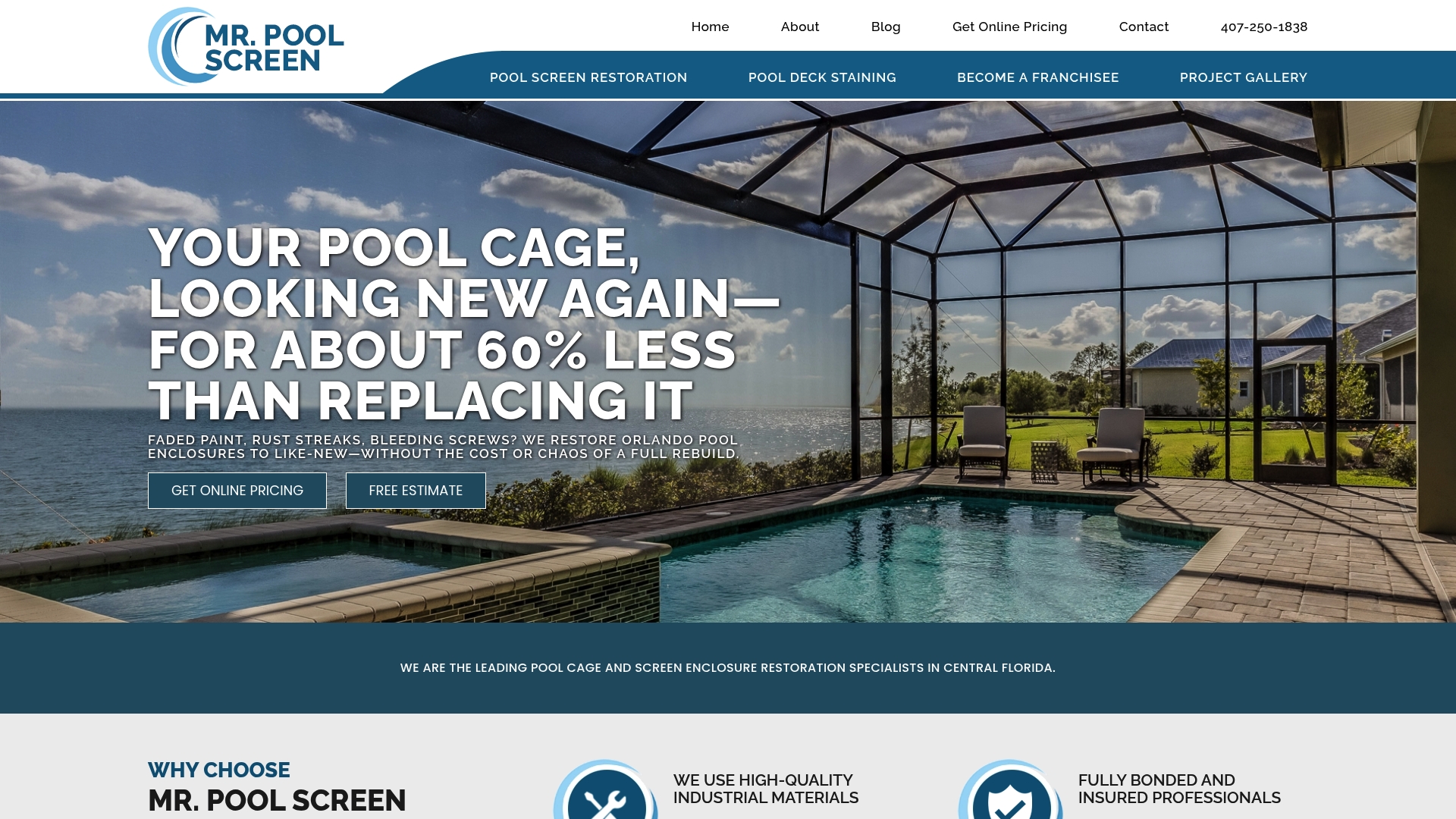
Mrpoolscreen's restoration approach typically saves homeowners up to 60% compared to full enclosure or deck rebuilds, and every project is backed by a written warranty. You can view finished project examples in the project gallery to see real before-and-after results on Central Florida decks and enclosures. When you're ready for a specific number on your deck, get online pricing directly through the website without a phone call.
Useful sources and further reading
The figures and recommendations in this article draw from the following sources. Each one is worth bookmarking if you want to verify numbers or dig deeper into a specific coating system.
- How Much Does It Cost to Paint a Pool Deck? [2025 Data]
- Pool Deck Resurfacing Cost In Florida (2026 Orlando Guide)
- Pool Deck Coating Cost: Pricing, Materials & What To Expect - Concrete Coatings & Garage Floor Coating North Idaho And Eastern WA
- Pool Deck Coating Cost Calculator - Concrete Coatings & Garage Floor Coating North Idaho And Eastern WA
- Pool Deck Resurfacing Cost by Material (& How to Save) | SKIN Microplaster
- How Much Does Deck Painting Cost in 2026? (HomeAdvisor)
- bls.gov