
Pool enclosure restoration is the process of renewing your pool cage's core components, specifically repainting the aluminum frame, rescreening torn or sagging panels, and replacing corroded fasteners, to extend its lifespan without tearing everything down. Done right, it preserves structural integrity, restores appearance, and keeps your outdoor space safe and usable. Here is what the process actually involves and why it matters:
- Repainting: Removes oxidation and chalky buildup, then applies water-based acrylic or epoxy coatings to protect the aluminum frame from UV damage and moisture
- Rescreening: Replaces torn, sagging, or discolored mesh with high-quality materials like Phifer 18/14 mesh or No See Um screens for insect protection and airflow
- Fastener replacement: Swaps out rusted steel screws for corrosion-resistant Nylo-tech or stainless steel fasteners that restore the frame's wind-load capacity
- Hardware inspection: Checks anchors, gusset plates, and base connections for corrosion or looseness before they become structural failures
Restoration typically costs about $5 per square foot, which is roughly half the price of building a new enclosure at $10 to $15 per square foot. That gap is why most homeowners with aging but structurally sound enclosures choose restoration first.
How restoration improves your outdoor living experience
Fresh screening changes the feel of a pool area more than most homeowners expect. New Phifer 18/14 mesh or No See Um screens eliminate insect access and block windblown debris, so you actually use the space instead of fighting it. Tight, clean screens also improve airflow compared to sagging old mesh that restricts circulation.
Repainting does more than cosmetic work. A properly applied acrylic or epoxy coat seals the aluminum against UV rays, slowing the oxidation that turns frames chalky and gray. Sealed joints also reduce moisture intrusion, which is the main driver of internal corrosion in Florida climates.
- Reduced insect and debris intrusion through fresh, tightly installed screens
- Better airflow from properly tensioned mesh panels
- UV protection from acrylic or epoxy coatings that slow frame fading
- Cleaner sightlines from the pool area to the yard, with no sagging or discolored panels
- Sealed frame joints that reduce moisture-driven interior corrosion
Pro Tip: When scheduling rescreening, ask your contractor about No See Um mesh if you live near a lake or wooded area. The tighter weave blocks tiny insects that standard 18/14 mesh lets through, and the airflow difference is minimal.
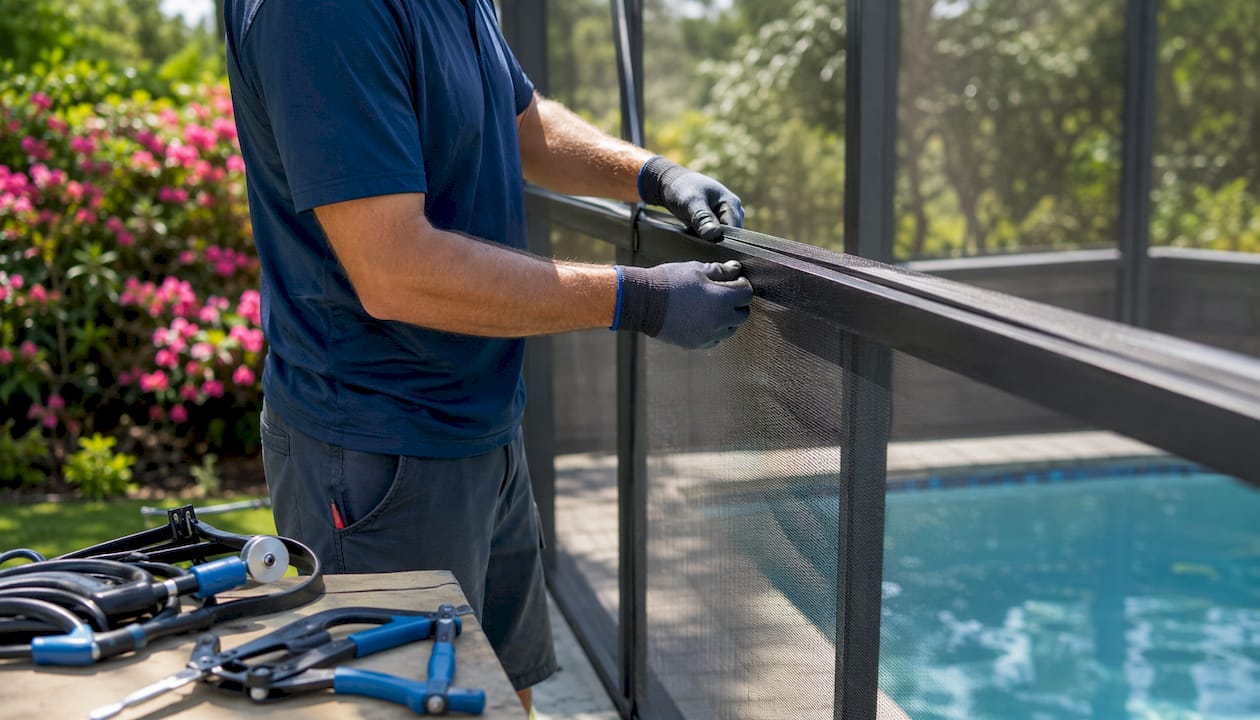
Safety improvements you get from restoring a pool enclosure
The biggest safety risk in an aging pool cage is not visible from the outside. Steel fasteners can lose a significant portion of their strength within the first year of exposure to harsh climates due to rust and corrosion, directly reducing the enclosure's wind-load capacity. A frame that looks solid may already be structurally compromised at every connection point.
Professionals consistently note that appearance and safety are two different things. A visually intact pool cage can still have serious wind-capacity deficiencies if fasteners are corroded or the aluminum temper is substandard. Restoration addresses this by replacing every corroded fastener with Nylo-tech or stainless steel hardware that restores the original connection strength.
Key safety fact: Steel fasteners can lose up to 50% of their holding strength within one year of exposure in humid, coastal, or storm-prone climates, compromising the entire frame's wind resistance.
- Corroded fasteners replaced with Nylo-tech or stainless steel screws that meet regional wind-load codes
- Base anchors inspected and re-secured to prevent the structure from lifting in high winds
- Gusset plates checked for stress fractures at rafter-to-beam joints
- Frame alignment corrected to distribute wind forces evenly across the structure
For homeowners in Central Florida, where pool screen frame corrosion accelerates in humid conditions, fastener replacement is not optional maintenance. It is the difference between a cage that holds in a storm and one that does not.
How a restored pool enclosure boosts curb appeal and property value
A freshly painted and rescreened pool cage reads as a well-maintained home to any buyer walking the backyard. The aluminum frame goes from chalky and pitted to clean and uniform, and new screens eliminate the sagging panels that signal neglect. Homes with well-maintained pool areas attract buyers more readily, and a restored enclosure makes a strong first impression without the cost of a full rebuild.
Restoration is also more affordable yet visually comparable to replacement. Repainting, rescreening, and fastener replacement costs vary but together total significantly less than a full replacement. That total sits well below the cost of a new structure, yet the finished result looks nearly identical.
- Vibrant, uniform frame color replacing chalky, oxidized aluminum
- Clear, taut screens replacing sagging or discolored mesh
- Neat structural lines from corrected frame alignment
- A pool area that photographs well for listings and impresses during walkthroughs
How early restoration reduces your long-term maintenance costs
Waiting on restoration always costs more. Minor corrosion becomes structural damage. One torn screen panel becomes a full rescreening job after wind pulls the adjacent panels loose. Addressing the enclosure proactively, before failures compound, is consistently cheaper than reactive repairs.
The math is straightforward. A full restoration costs considerably less than a full replacement, often about half the price per square foot. Replacing fasteners during a combined restoration job costs roughly 40% less than scheduling it as a standalone repair, because the labor for repainting and rescreening is already on site.
- Corrosion-resistant fasteners reduce future hardware replacement frequency
- Acrylic or epoxy coatings extend the repaint cycle to 5–8 years per application
- Fresh screens rated for up to 10 years reduce rescreening frequency
- Bundling all three services in one visit cuts total labor costs
Pro Tip: Schedule restoration during the dry season, typically october through april in Central Florida. High humidity and storm activity delay paint drying and can compromise adhesion, adding days to the project and reducing finish quality.
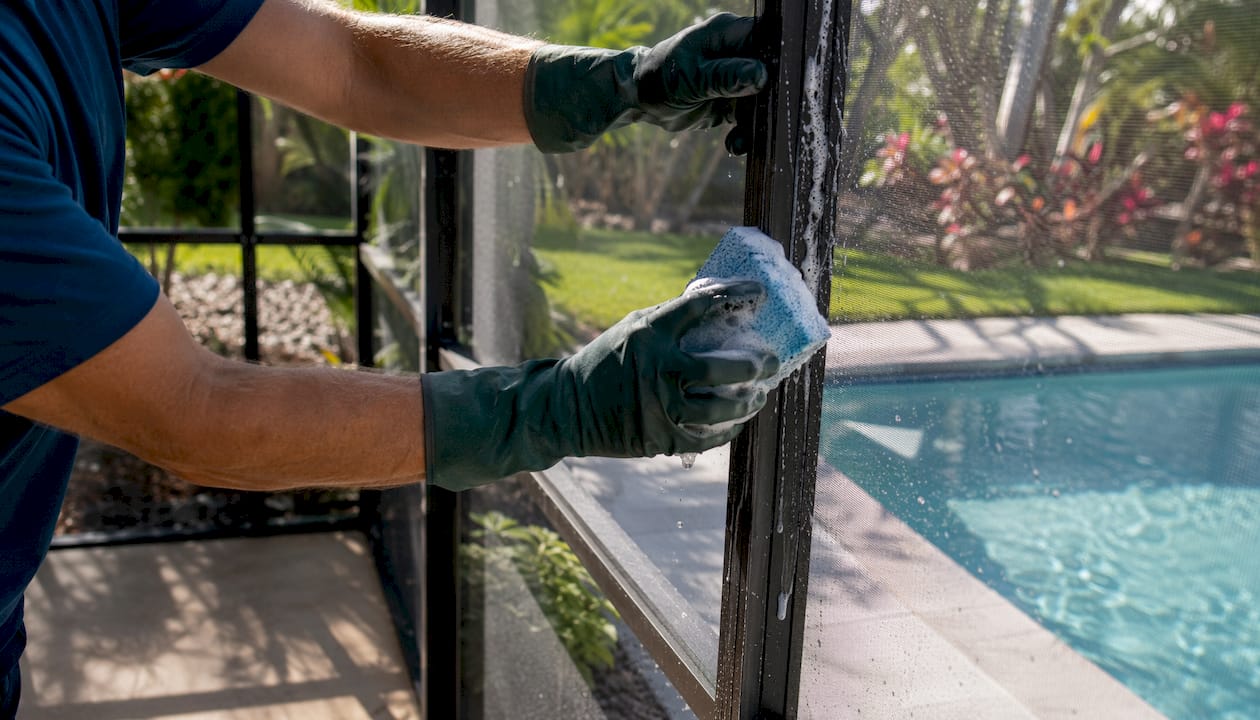
Signs that tell you it's time to repair, restore, or replace
Knowing which option fits your situation saves you from overpaying for replacement or underpaying for a repair that does not hold. The distinctions matter:
- Repair covers isolated damage: one torn screen panel, a single loose anchor, a small rust spot on a post
- Restoration addresses widespread but repairable deterioration: multiple torn screens, general frame oxidation, corroded fasteners throughout
- Replacement is warranted when the frame has bent or buckled posts, widespread aluminum failure, or corrosion so deep that fasteners have no material left to grip
Common warning signs homeowners often miss include screens that look intact but have lost tension, frame joints that flex visibly when you push on them, and paint that feels chalky or powdery rather than just faded. High-quality screens like Phifer 18/14 mesh can last up to 10 years, making age a useful benchmark for replacement.
Environmental factors accelerate the timeline significantly. Salt air, high humidity, and storm seasons all speed up fastener corrosion and screen degradation. Homeowners near the coast or in storm-prone areas should inspect annually rather than waiting for visible failure.
Pro Tip: Push gently on the frame near a corner joint. If you feel flex or hear a creak, that joint's fasteners are likely corroded. A professional inspection will confirm whether restoration or replacement is the right call.
Restoration vs. full replacement: how to make the right call
Restoration wins on cost, timeline, and disruption for most aging enclosures. A full restoration typically takes about one to two weeks and keeps your pool area accessible for much of that time. Replacement requires demolition, permitting, and full reconstruction, often taking several weeks with the pool area fully off-limits.
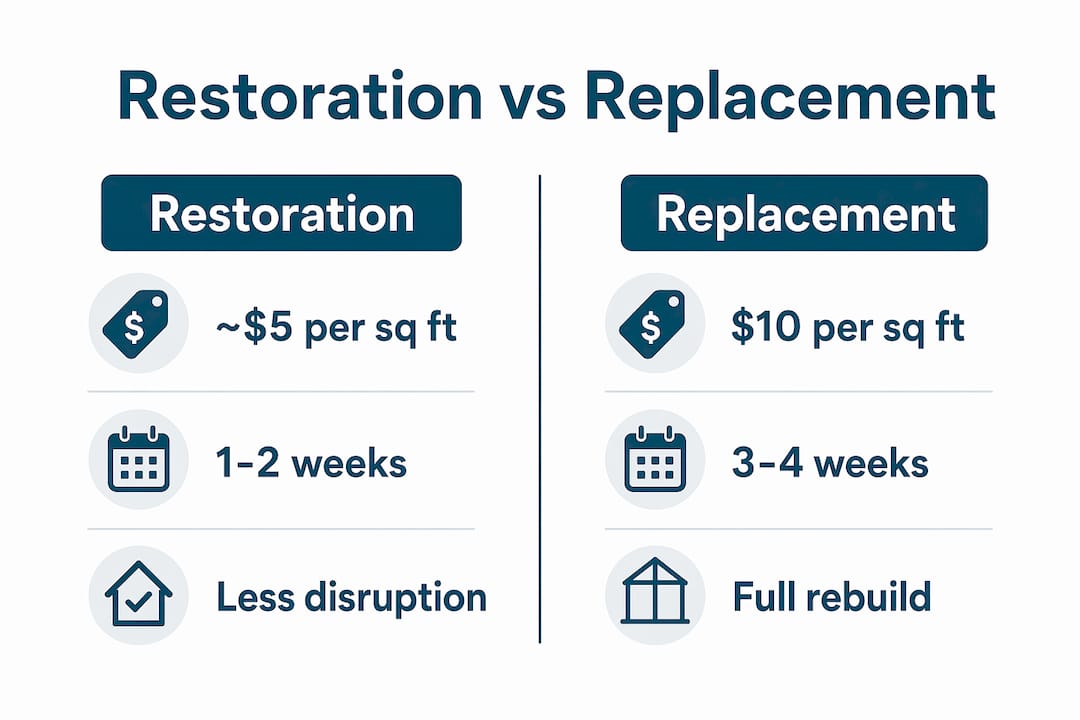
| Factor | Restoration | Full replacement |
|---|---|---|
| Cost per sq ft | ~$5 | $10 |
| Typical timeline | 1–2 weeks | one to two weeks |
| Disruption level | Low to moderate | High |
| Best for | Widespread but repairable wear | Structural failure or severe frame damage |
| Warranty | Varies by contractor | Typically includes new-structure warranty |
Restoration is not the right answer when posts are bent, the frame has buckled sections, or corrosion has eaten through the aluminum wall thickness. At that point, the underlying structure cannot support new screens or paint, and replacement is the only path to a safe enclosure. For everything short of that, restoration delivers comparable results at a fraction of the cost.
Expert process and best practices for pool enclosure restoration
Professional restoration follows a controlled sequence, and the details matter more than most homeowners realize. Timing is one of them: high humidity or storm seasons delay paint drying and compromise adhesion, so scheduling during stable, dry weather is a baseline requirement, not a preference.
Aluminum temper is another factor that separates quality work from surface-level fixes. Properly tempered aluminum at T5 or T6 grade has over 30% higher yield strength than untreated equivalents, which directly affects storm resistance. A restoration that repaints over substandard aluminum does not fix the underlying structural weakness.
Expert note: A pool cage can look perfect after a paint job and still fail in a storm if the fasteners are corroded or the aluminum temper is below specification. Visual inspection alone does not confirm structural safety.
- Pressure wash and sand the frame before any primer application to remove oxidation and ensure adhesion
- Apply primer before acrylic or epoxy topcoats; skipping primer causes peeling within months
- Replace all steel fasteners with Nylo-tech or stainless steel hardware, not just the visibly rusted ones
- Inspect the weepage system built into rafters and columns; blocked weep channels cause internal corrosion that no paint job addresses
- Verify base anchors are secure before rescreening, since loose anchors transfer stress to the screen frames
Pro Tip: Ask your contractor to show you the fastener spec before work begins. Nylo-tech fasteners have a nylon head that prevents rust bleed-through on the paint surface. Standard zinc-coated screws will rust through a fresh paint job within a year in Florida's climate.
Maintenance routines that extend your enclosure's life after restoration
A restored enclosure lasts significantly longer with a consistent maintenance schedule. The most common reason homeowners need early re-restoration is neglect after the initial work, not material failure.
Rinse the frame and screens with a garden hose every 4–6 weeks to remove pollen, mold spores, and salt deposits. In coastal areas, monthly rinsing is the minimum. Use a soft brush and mild soap on the frame twice a year to remove buildup that rinsing misses. Avoid pressure washing the screens directly; the force damages the mesh weave and shortens screen life.
Inspect fasteners and anchor points once a year, ideally before storm season. Look for rust staining on the frame near screw heads, which signals that a fastener is corroding beneath the surface. Catching one corroded screw early costs almost nothing to fix. Catching fifty corroded screws after a storm costs considerably more.
Check screen tension by pressing lightly on each panel. A properly installed screen should feel firm with minimal give. Loose panels catch wind, stress the spline channel, and tear faster than taut ones. Tighten or replace loose panels before they become a larger repair.
DIY vs. professional restoration: what you should realistically expect
DIY restoration is possible for isolated repairs, specifically replacing a single screen panel or touching up a small paint chip. The tools are accessible, and tutorial resources are widely available. The limitation is scope. A full restoration involving repainting, rescreening, and fastener replacement across an entire enclosure requires pressure washing equipment, spray painting rigs, and the physical ability to work safely at height across a large frame.
The bigger risk with DIY is the fastener assessment. Homeowners can see a rusted screw head, but they cannot easily evaluate whether the aluminum around the anchor point has corroded internally or whether the frame temper meets the engineering spec. A professional brings the diagnostic knowledge to distinguish surface rust from structural compromise, which is the call that determines whether restoration is sufficient or replacement is necessary.
For a full enclosure restoration, professional service also bundles the three core tasks at a combined labor rate that is roughly 40% cheaper than scheduling each separately. The time savings alone, typically 1–2 weeks for a full professional restoration versus a multi-weekend DIY project with uncertain results, makes professional service the practical choice for most homeowners.
If you want to see what a completed restoration actually looks like before committing, Mrpoolscreen's project gallery shows real before-and-after results from Central Florida enclosures.
Mrpoolscreen specializes in pool enclosure restoration across Central Florida, using industrial-grade acrylic coatings, Nylo-tech fasteners, and Phifer-grade screens to deliver results that hold up through Florida's storm seasons. Restoration through Mrpoolscreen can save homeowners up to 60% compared to a full rebuild. Get a quote for your enclosure at mrpoolscreen.com.
Key Takeaways
Pool enclosure restoration, done with corrosion-resistant fasteners and quality screens, costs roughly half the price of replacement while restoring both safety and appearance.
| Point | Details |
|---|---|
| Restoration vs. replacement cost | Restoration typically costs about $5 per square foot, roughly half the price of a new enclosure at $10 to $15 per square foot, depending on size and design. |
| Fastener failure risk | Steel fasteners can lose up to 50% of their holding strength within one year of exposure in humid, coastal, or storm-prone climates, compromising the entire frame's wind resistance. |
| Screen lifespan | High-quality screens like Phifer 18/14 mesh can last up to 10 years before rescreening is generally required. |
| Aluminum strength matters | Properly tempered T5 or T6 aluminum has significantly higher yield strength than untreated equivalents. |
| Typical project timeline | A full professional restoration usually takes a couple of weeks, which is less disruptive than a full rebuild. |