What does a pool lanai actually cost?
Building or enclosing a pool lanai typically runs from several thousand dollars to tens of thousands for most residential projects in the United States, with the final number shaped by size, materials, roof style, and where you live. A basic screened enclosure on the lower end of that range looks very different from a glass-enclosed Florida room with HVAC at the top. Knowing which category your project falls into is the fastest way to set a realistic budget before you call a single contractor.
Here is a quick breakdown of what that money typically covers:
- Screen enclosure (200–400 sq ft): $8,000–$15,000, aluminum frame, fiberglass screen, concrete slab
- Large screen enclosure (400–800 sq ft): $15,000–$25,000, may require engineering review
- Combined lanai and pool enclosure: $20,000–$40,000+, integrated patio and pool structure
- Glass-enclosed lanai (no HVAC): $20,000–$45,000, includes slab, framing, glass panels, solid roof
- Florida room with HVAC: $30,000–$60,000+, full climate control, extensive permitting
- Materials alone: $3.05–$4.90 per square foot; labor adds $5.35–$7.55 per square foot
- Permits: typically $200–$500 for a standard screened lanai
If you already have a covered patio and just need screens added, the cost drops sharply. Adding screens to an existing porch runs $10–$25 per square foot, compared to $50–$175 per square foot for a full ground-up build.
Key factors that drive pool lanai pricing
No two pool lanai projects cost the same, and the gap between a $9,000 job and a $35,000 job usually comes down to a handful of specific decisions.
Size and square footage are the most direct cost drivers. More square footage means more framing, more screen or glass, more labor hours, and often a more complex permit application. A 200-square-foot enclosure and a 600-square-foot one are not just different in scale; they can require entirely different structural approaches.
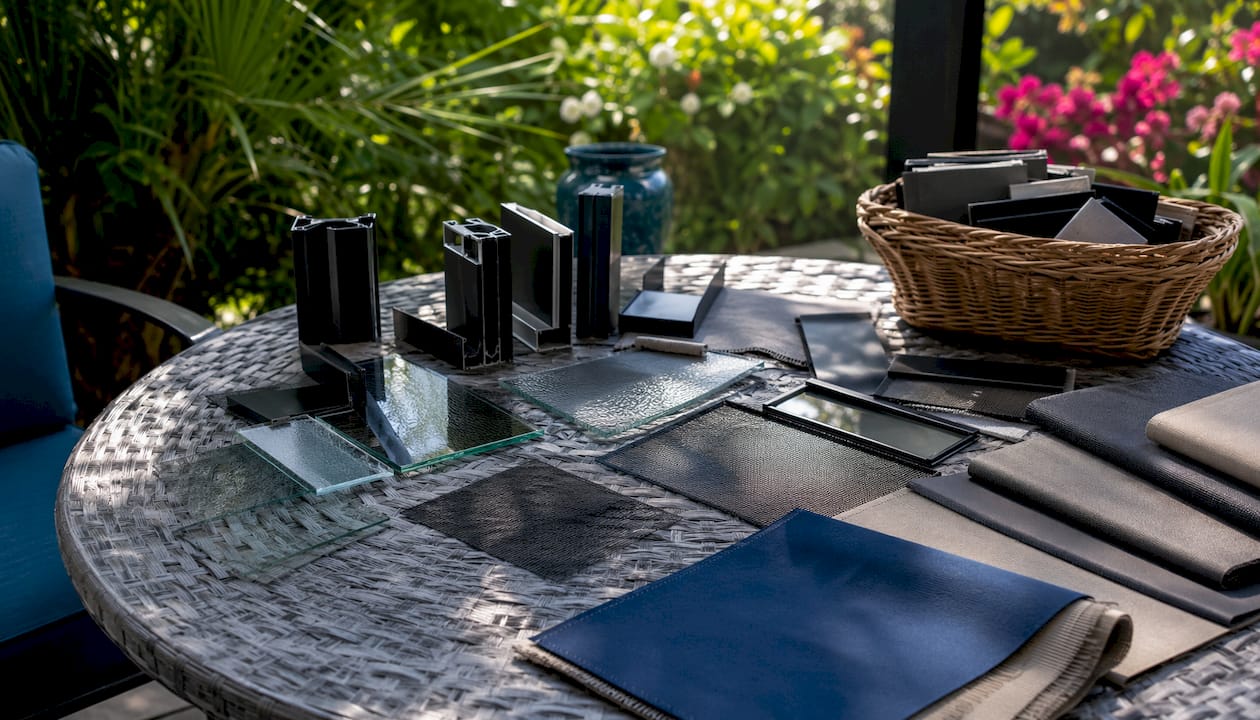
Material choices create some of the widest price swings. Fiberglass screen is the most affordable option, while specialty screens like no-see-um mesh, solar screen, or pet-resistant material cost more per square foot. Tempered glass panels cost several dollars per square foot, with laminated or insulated glass costing somewhat more. Aluminum framing is standard for most Florida enclosures; heavier-gauge aluminum or steel costs more but handles wind loads better.
Roof style affects both materials and labor significantly. A basic flat or mansard screen roof is the least expensive option. A gable roof, which matches the home's existing roofline and lasts the longest, costs $70–$155 per square foot for framing, supports, and shingles. Solid insulated aluminum panel roofs add a moderate additional cost to screen enclosure projects.
- Permit and engineering requirements vary by county and coastal zone (more on HVHZ below)
- Labor rates differ by region, contractor experience, and project complexity
- Site accessibility can quietly add $500–$4,500 if crews cannot easily stage materials near the work area
- Optional features like ceiling fans, LED lighting, mosquito misting systems, and HVAC push costs up but also increase daily usability
- Regional location matters: coastal Florida homeowners pay up to 15% more than inland buyers because of stricter wind load codes
Pro Tip: Get at least three itemized bids, not lump-sum quotes. A contractor who breaks out framing, screen material, permits, and labor separately gives you a real basis for comparison, and you can spot where one bid is cutting corners.
How do different enclosure types compare on cost and features?
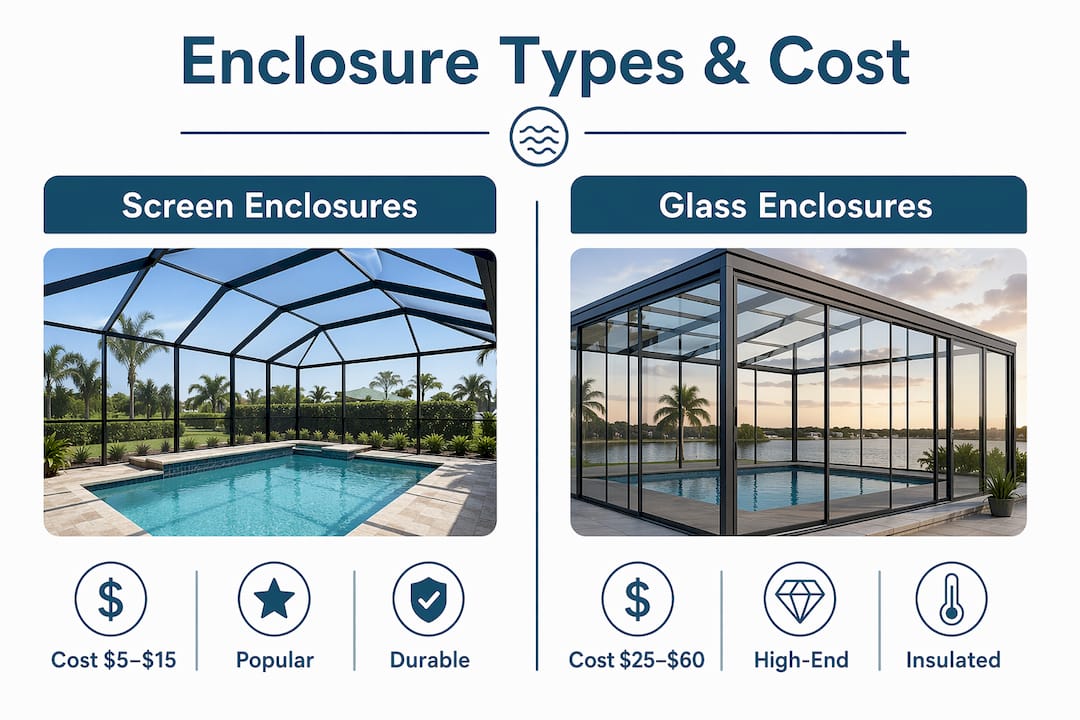
The type of enclosure you choose shapes nearly every other cost decision. Screen enclosures are the most popular and most affordable. Glass and polycarbonate options cost more upfront but add weather protection and can qualify as conditioned living space if paired with HVAC.
| Enclosure type | Cost range | Materials | Design complexity | Installation needs | Additional features |
|---|---|---|---|---|---|
| Screen enclosure (basic) | $8,000–$15,000 | Aluminum frame, fiberglass screen | Low | Standard permit, 1–3 weeks | Fans, lighting optional |
| Screen enclosure (large/pool cage) | $15,000–$25,000 | Heavy-gauge aluminum, specialty screen | Moderate | Engineering review may be required | Mosquito control, solar screen |
| Acrylic panel enclosure | $15,000–$30,000 | Aluminum frame, acrylic panels | Moderate | Permit required, — | Partial weather protection |
| Glass enclosure (no HVAC) | $20,000–$45,000 | Tempered or laminated glass, solid roof | High | Slab, framing, 4–8 weeks | Passive heat retention |
| Glass enclosure with HVAC | $30,000–$60,000+ | Insulated glass, full framing, HVAC | Very high | Electrical, HVAC, 6–12 weeks | Full climate control, counts as conditioned sq ft |
| Retractable screen system | $15,000–$25,000 | Motorized screen panels, aluminum track | Moderate | Electrical for motorized units | Flexible open/closed use |
Screen enclosures at $5–$15 per square foot remain the most popular choice in Florida, and for good reason: they keep insects out, reduce debris in the pool, and cost a fraction of glass. Glass enclosures can run double or triple that per-square-foot rate, but they convert the space into something closer to a year-round room. Polycarbonate and acrylic panels split the difference, offering better weather protection than screen at a lower price than glass, though they can yellow over time in direct sun.
Retractable systems are worth considering if you want flexibility. They cost more than a fixed screen enclosure but let you open the space fully on calm days. The motorized versions require an electrical connection, which adds to installation time and cost.
What to expect from installation costs and timelines
Labor is often the line item homeowners underestimate. Installation labor runs $4–$10 per square foot for adding screens to an existing covered porch, and $22–$60 per square foot for a full ground-up build. The wide range reflects real differences in project scope, not just contractor markup.
Here is what typically drives installation costs up:
- Permitting delays: A standard screened lanai permit costs $200–$500, but fees climb for larger structures. In Florida, coastal counties under HVHZ rules require engineering drawings and inspections that add both time and cost.
- Site access problems: Difficult site access adds $500–$4,500 to labor costs when crews must hand-carry materials around fences, landscaping, or tight side yards.
- Existing structure condition: If the slab, posts, or framing from a previous enclosure are deteriorated, contractors must remove and replace them before new work begins.
- Contractor pricing structure: Most contractors price by square foot for standard work, then add line items for custom features, permit fees, and engineering. Always ask whether the quoted price includes permit fees or lists them separately.
Timeline varies by project type. A basic screen enclosure on an existing slab takes 1–3 weeks from permit approval to completion. A glass-enclosed Florida room with HVAC can run 6–12 weeks, with permitting alone taking several weeks in busy counties.
Pro Tip: Schedule your project outside of hurricane season (june through november in Florida). Contractor availability is better, material lead times are shorter, and you avoid the post-storm surge in pricing that can add weeks to your wait.
One often-overlooked option is restoration rather than full replacement. Mrpoolscreen specializes in pool screen restoration for aging enclosures in Central Florida, using water-based acrylic coatings and stainless steel fasteners to address rust, weathering, and structural wear. This approach can save homeowners up to 60% compared to a full rebuild, which matters a great deal when replacement quotes are coming in at $15,000 or more.
Cost drivers, home value impact, and when restoration makes sense
That reality hits hardest in coastal Florida. HVHZ regulations require reinforced framing, stronger anchoring systems, and third-party engineering sign-off, all of which add complexity and cost that inland projects simply do not face. Homeowners in Miami-Dade and Broward counties routinely pay 10–15% more for the same enclosure footprint compared to someone in Orlando or Tampa.
The value question is one most homeowners ask before committing. A well-built screened lanai adds to resale value by extending usable living space, and buyers in Florida's competitive market actively look for homes with pool enclosures. A glass-enclosed lanai with HVAC that qualifies as conditioned square footage adds more to appraised value than a basic screen enclosure, though the upfront cost is also much higher. The degree of value added depends heavily on installation quality and whether the enclosure is maintained over time.
Lanais with HVAC and proper insulation function as conditioned living space, which increases both the upfront investment and the resale return. A deteriorating enclosure, on the other hand, can actually hurt a sale: buyers discount homes where the pool cage shows visible rust, torn screens, or structural sag.
That is exactly where Mrpoolscreen's restoration model fills a gap. Rather than tearing down a structurally sound but visually worn enclosure, Mrpoolscreen's restoration process applies industrial-grade coatings and replaces corroded hardware to extend the enclosure's life at a fraction of replacement cost. For homeowners preparing to sell, or simply protecting an investment they made years ago, restoration often delivers better return than a full rebuild. You can browse completed projects in the Mrpoolscreen project gallery to see the before-and-after difference firsthand.
Using high-quality materials and meeting engineering codes, especially in high-wind areas, requires higher initial investment but can lower long-term costs. Cutting corners on framing gauge or anchor depth to save a few thousand dollars tends to show up as a much larger repair bill after the first major storm.
Key Takeaways
Pool lanai costs in 2026 range from $8,000 for a basic screen enclosure to $60,000+ for a glass-enclosed Florida room with full HVAC, with restoration offering savings of up to 60% over full replacement for aging structures.
| Point | Details |
|---|---|
| Typical cost range | Most pool lanai projects fall between $8,000 and $15,000 for standard screen enclosures, with higher prices for larger or glass-enclosed structures. |
| Biggest cost drivers | Size, roof style, material choice, and coastal wind-load requirements (HVHZ) have the largest impact on final price. |
| Per-square-foot benchmarks | Screen enclosures run $5–$15 per square foot; glass enclosures cost substantially more, often double or triple that rate. |
| Restoration as an alternative | Mrpoolscreen's restoration services save homeowners up to 60% compared to full enclosure rebuilds for aging pool cages. |
| Value impact | A well-built lanai adds resale value; a deteriorating one can hurt a sale, making maintenance and timely restoration worth the investment. |
Mrpoolscreen can save you thousands on your pool enclosure
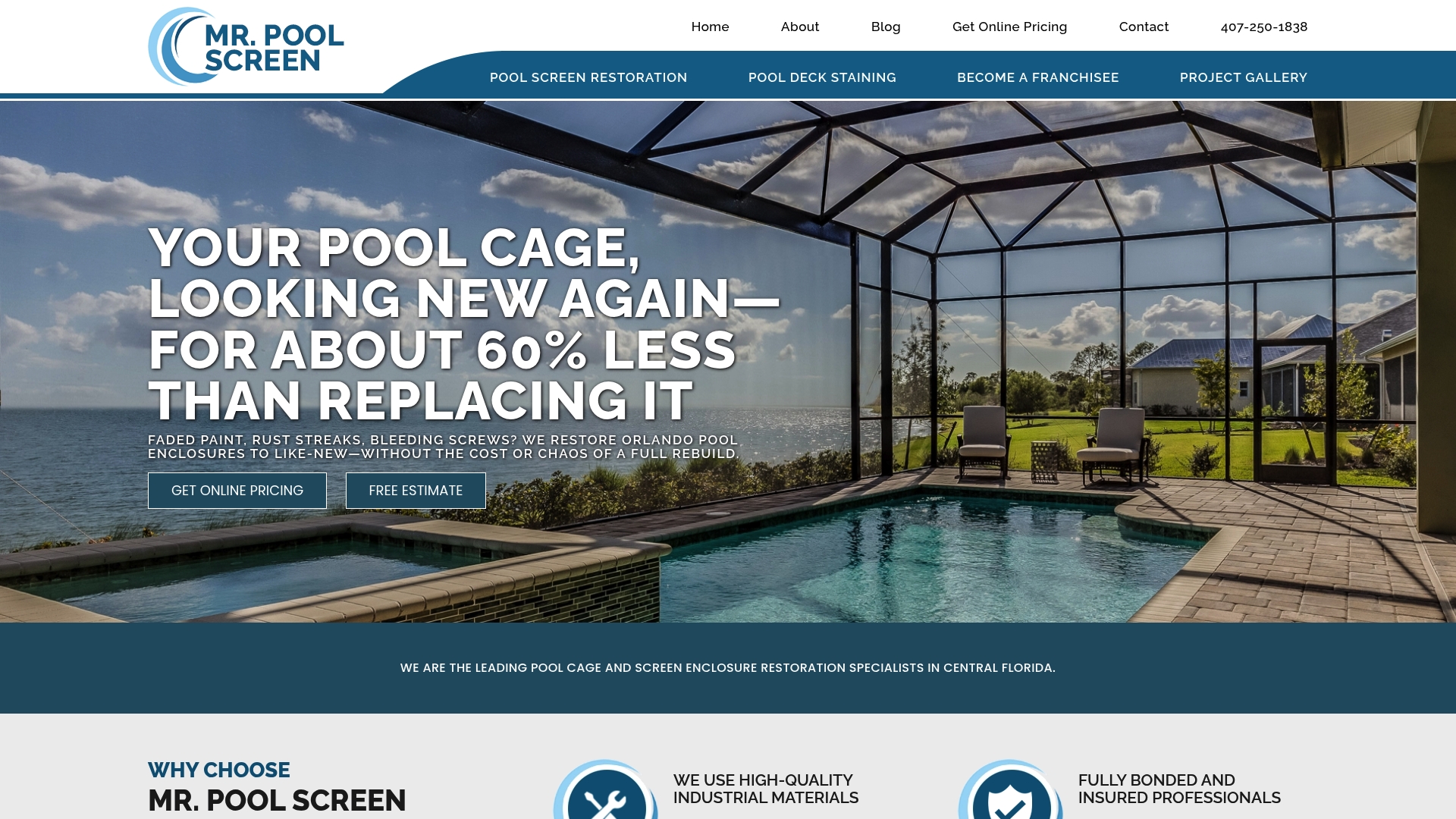
If your pool enclosure is showing rust stains, faded framing, or torn screens, a full replacement is not your only option. Mrpoolscreen restores pool cages and screen structures across Central Florida using industrial-grade water-based acrylic coatings and stainless steel fasteners, delivering results that last without the cost of a complete rebuild. Clients save up to 60% compared to full replacement quotes.
Get a free, no-obligation estimate and see exactly what restoration would cost for your enclosure. Visit Mrpoolscreen's free estimate page to get started, or explore online pricing options if you prefer to review numbers before making a call. For homeowners planning a broader outdoor upgrade, backyard patio construction paired with a restored enclosure can transform the entire space at a fraction of what new construction would cost.