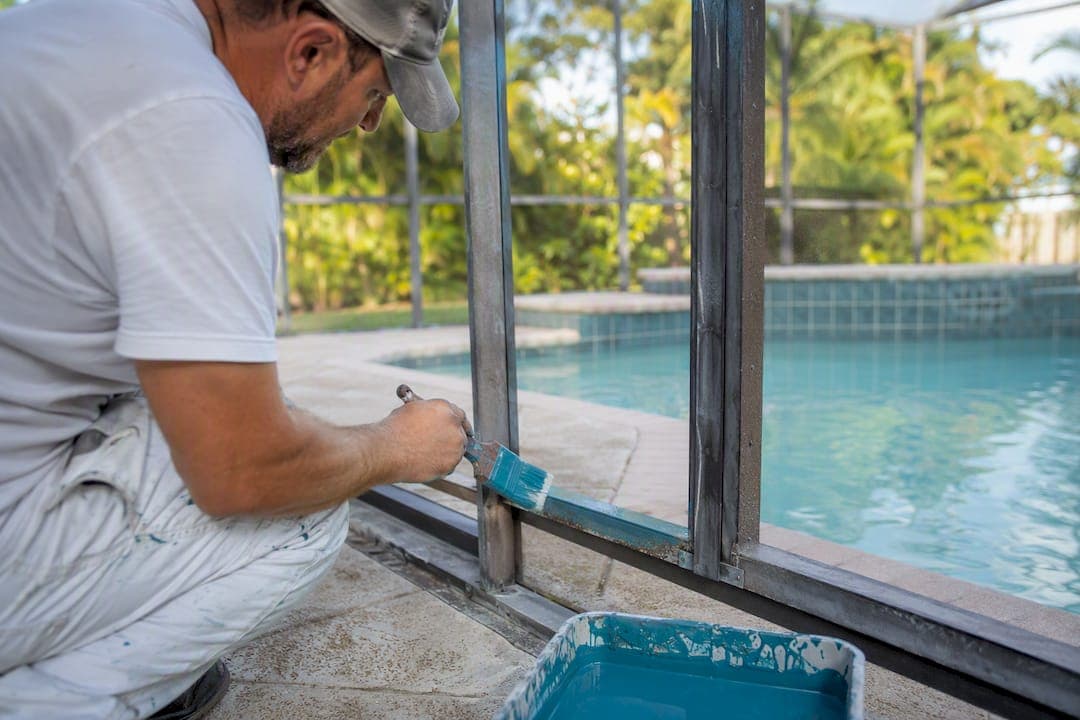
The four upgrades that fix most aging pool cages are rescreening, swapping rusted fasteners for stainless steel or Nylotech hardware, refinishing the frame with a powder coat, and converting to picture-window panels for an unobstructed view. Most homeowners see a real payoff: less cleaning, lower chemical use, and a cage that looks new for a fraction of what a teardown and rebuild costs.
- Rescreening: fixes torn or clouded mesh, restores airflow and clarity
- Fastener replacement: stops rust streaks and structural weak points
- Frame refinishing/powder-coating: erases chalking and corrosion, adds years of life
- Picture-window conversion: swaps screen for clear panoramic panels
Pro Tip: A cage with a sound frame and only surface rust is almost always a restoration candidate, not a rebuild candidate. Full replacement makes sense only when you see bent or shifted frame members, cracked anchor points, or corrosion that's eaten through structural aluminum, not just the fasteners.
Key Takeaways
Restoring an existing pool cage with targeted upgrades typically costs a fraction of a full rebuild while extending the enclosure's usable life by years.
| Point | Details |
|---|---|
| Start with fasteners | Replacing rusted screws with stainless or Nylotech hardware removes the biggest source of staining cheaply. |
| Match mesh to your problem | Choose no-see-um for gnats, pet screen for durability, or solar screen for heat and glare control. |
| Budget by access, not just size | Two-story or hard-to-reach panels raise labor costs more than square footage alone. |
| Reserve replacement for structural failure | Bent frames, cracked anchors, and widespread corrosion are the real triggers for a full rebuild. |
| Mr. Pool Screen restores instead of rebuilds | Their process uses acrylic coatings and stainless hardware and can save homeowners up to 60% versus replacement. |
Table of Contents
- Pool Enclosure Upgrades Worth Prioritizing First
- What Pool Enclosure Upgrades Typically Cost
- Choosing Mesh, Finishes, and Hardware That Last
- Repair, Retrofit, or Replace? A Quick Decision Checklist
- What to Expect During a Restoration Project
- How Mr. Pool Screen Restores Aging Pool Cages
- Can You Automate a Pool Enclosure With Smart Home Tech?
- What Homeowners Get Wrong About Pool Cage Upgrades
- Get a Restoration Quote for Your Pool Enclosure
- Frequently Asked Questions
- Sources
Pool Enclosure Upgrades Worth Prioritizing First
Not every upgrade delivers the same return, and the order you tackle them in matters. Here's how to think through the options, starting with the ones that fix the most common problems for the least money.
-
Rescreening. If your mesh is torn, sagging, or so clouded with mineral deposits that you can barely see the yard, this is job one. Patching a single hole is fine for accidental damage, but once you've got three or four repairs, full rescreening is cheaper long term and looks far better. No-see-um mesh keeps out tiny biting gnats, which matters if you live near standing water or wooded lots. Pet screen costs more but resists claws and won't sag under a dog leaning against it. Solar screen cuts glare and UV exposure, which some homeowners prefer over standard mesh for comfort during peak afternoon sun. Polyester screening is the standard workhorse; fiberglass mesh handles heat and UV a bit better over time but costs more upfront.
-
Frame refinishing and powder-coating. A chalky, faded aluminum frame ages a whole enclosure even when the structure underneath is fine. Powder-coating outperforms a fresh coat of paint because it bonds to the metal instead of sitting on top of it, so it resists chipping, peeling, and UV fade far longer. Expect a properly powder-coated frame to hold its finish for years without the flaking you'd get from a standard paint job.
-
Hardware upgrades. Rusted screws and old fasteners are often the real culprit behind those ugly brown streaks running down your screen panels. Swapping them for stainless steel or Nylotech fasteners eliminates that corrosion point entirely, and it's one of the most cost-effective fixes you can make relative to the visual difference it produces.
-
Picture-window or panoramic conversions. Swapping screen panels for clear, framed glass or acrylic sections opens up your view dramatically, especially if your cage faces a lake, golf course, or landscaped yard. These conversions use engineered framing and thicker aluminum extrusions to hold wind loads that a screen panel doesn't have to handle. That means more planning and, in many areas, a permit.
-
Comfort and style add-ons. Integrated LED lighting, retractable shade panels, and decorative privacy screening turn a purely functional cage into an outdoor living space. Pair these with low-maintenance landscaping around the cage perimeter and you've upgraded the whole pool area without touching the pool itself.
If you're weighing screen types, prioritize the problem you actually have. Bugs? Go no-see-um. Fading and heat? Solar screen. Dogs or kids running into panels? Pet screen every time.
What Pool Enclosure Upgrades Typically Cost
Costs swing widely based on enclosure size, roof style, screen grade, and how much access a crew needs to reach upper panels. That said, general pricing guides for enclosure add-ons give you a useful starting range to sanity-check any quote.
- Full rescreening: varies with square footage and mesh grade; solar and pet screens run higher than standard polyester
- Fastener replacement: one of the lowest-cost line items, often bundled into a rescreening job
- Frame powder-coat touch-up: priced by linear footage of frame, with taller or multi-panel roofs costing more
- Picture-window conversion: the biggest jump in price, driven by engineered framing, thicker aluminum, and permit or inspection fees
The biggest swing factor is access. A single-story lanai with ground-level panels costs less to work on than a two-story screen enclosure requiring lift equipment. Engineering review and permits add cost mainly for structural changes like picture-window conversions, not for cosmetic work like rescreening or refinishing. Get at least two detailed rescreening quotes before assuming an online calculator reflects your actual job.
Choosing Mesh, Finishes, and Hardware That Last
Material choice determines whether your upgrade holds up for three years or fifteen. Screen type should match your actual problem, not just habit or whatever the last contractor had on the truck.
- No-see-um mesh: tightest weave, best for biting gnats near water or wooded areas
- Pet screen: heavier, tear-resistant weave built for claws and rough contact
- Solar screen: blocks a meaningful share of UV and glare, popular in hot, sun-heavy climates
- Polyester vs. fiberglass: polyester is the standard value option; fiberglass resists heat distortion better over the long run
Frame finish matters just as much as mesh. Powder-coated aluminum resists the chalky fade and corrosion that plain painted frames develop within a few years, especially in humid, coastal-adjacent air. And don't overlook the small stuff: proper spline installation (the rubber cord that locks mesh into the frame channel) prevents the sagging and popped screens that make a brand-new rescreen job look sloppy within months.
Pro Tip: If your budget allows for only one material upgrade this year, choose stainless or Nylotech fasteners over anything else. They're inexpensive relative to the whole job and they remove the single biggest source of streaking and structural weak points across an aging cage.
Glass panels are worth considering only where wind engineering supports them, since the thicker extrusions required for panoramic sections change how the whole structure needs to be rated.
Repair, Retrofit, or Replace? A Quick Decision Checklist
- Check the frame first. Bent, shifted, or visibly twisted structural members mean the cage has taken real stress and likely needs more than cosmetic work.
- Inspect the anchors. Cracked or pulled anchor points at the footer are a structural red flag, not a screen problem.
- Look at how widespread the corrosion is. Isolated rust on a few fasteners is a quick fix; corrosion eating through multiple structural beams usually isn't.
- Flag any span changes. Converting to picture-window panels or making other major structural moves typically triggers permit and engineering review, even when the rest of the project is routine.
A sound frame with only localized corrosion or cosmetic fading is almost always a restoration job. Widespread structural failure is the one scenario where replacement genuinely makes more financial sense than trying to save what's there.
What to Expect During a Restoration Project
Most homeowners are surprised by how fast a restoration moves compared to a rebuild. A straightforward rescreening job usually wraps in one to three days. A cosmetic tune-up combining fastener replacement and frame refinishing runs closer to two to four days. Picture-window conversions take longer, often several weeks, because engineered framing and permit approval have to happen before crews start installing.
- Inspection and quote come first, usually within the same visit
- Materials get ordered once you approve the scope, including mesh grade and hardware type
- The job itself follows, then a final walkthrough to confirm fit, tension, and finish
- Simple homeowner prep includes clearing furniture near the cage and keeping pets away from work zones during the job
How Mr. Pool Screen Restores Aging Pool Cages
Mr. Pool Screen approaches every job as a restoration first, using water-based acrylic coatings on frames and stainless steel fasteners in place of the rusted originals, plus a full range of rescreening options matched to each homeowner's climate and privacy needs.
Restoring an existing cage instead of tearing it out can save homeowners up to 60% compared to a full rebuild, while addressing the same rust, weathering, and cosmetic decay that make a cage look its age.
Before hiring anyone for this kind of work, ask for:
- Before-and-after photos from recent, comparable jobs
- Exact hardware specifications (stainless vs. standard fasteners)
- A written warranty on materials and labor
- Proof of permits or engineering sign-off when the job involves structural changes
You can browse real completed jobs in the project gallery before requesting your own quote.
Can You Automate a Pool Enclosure With Smart Home Tech?
Motorized, remote-controlled screen and shade systems are showing up more often in enclosure upgrades, and they solve a real annoyance: manually adjusting privacy panels or retractable shades every time the sun angle shifts. Automated retractable screens let you open or close shade sections from a wall switch or phone app, which matters most on cages with large picture-window conversions where sun exposure changes throughout the day.
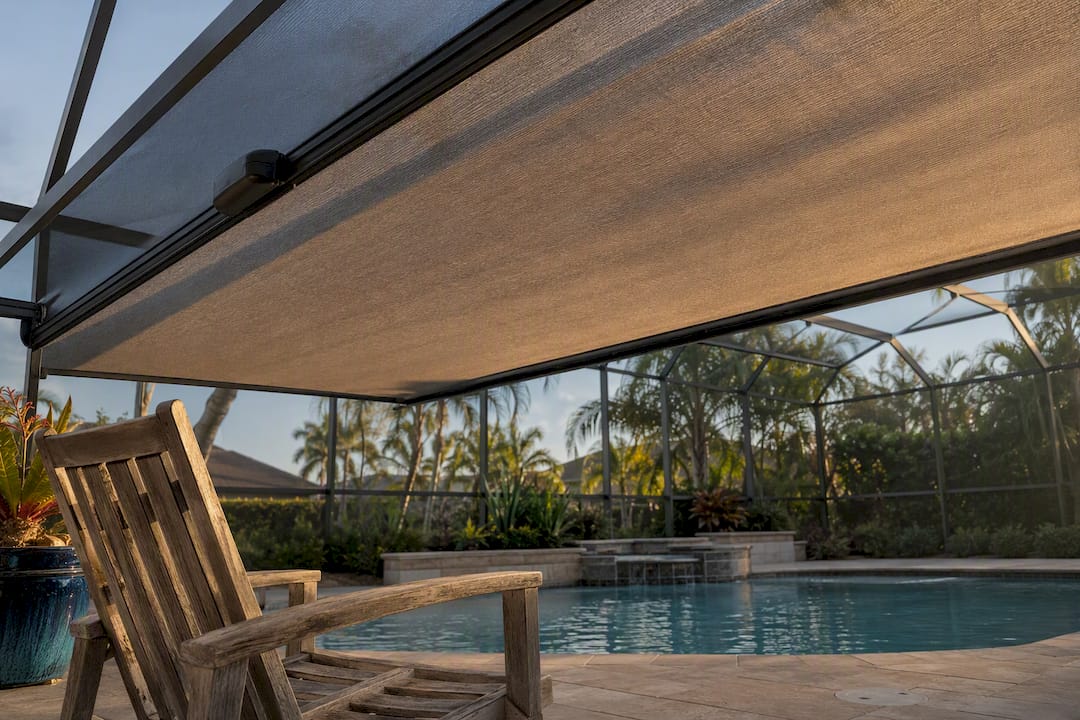
Some homeowners pair these automated panels with existing smart home hubs to schedule shade positions around peak heat hours, similar to how a smart thermostat schedules temperature changes. Remote-controlled lighting integrated into the cage structure is a simpler, lower-cost entry point if full automation feels like overkill. It lets you turn on perimeter lighting from inside the house without walking out to a switch by the pool gate.
None of this replaces the structural or material upgrades that actually extend a cage's lifespan. Think of smart features as the finishing layer you add once the frame, mesh, and hardware are already sound. Adding automation to a cage with failing fasteners or a corroding frame just means you're remotely controlling a structure that still needs real repair work underneath.
What Homeowners Get Wrong About Pool Cage Upgrades
Most homeowners assume a rusted, faded cage means it's time to start pricing a full rebuild. That instinct is usually wrong, and it costs people thousands of dollars they didn't need to spend. The frame underneath a decade of cosmetic decay is often structurally fine. What's failed is the finish and the hardware, not the aluminum itself.
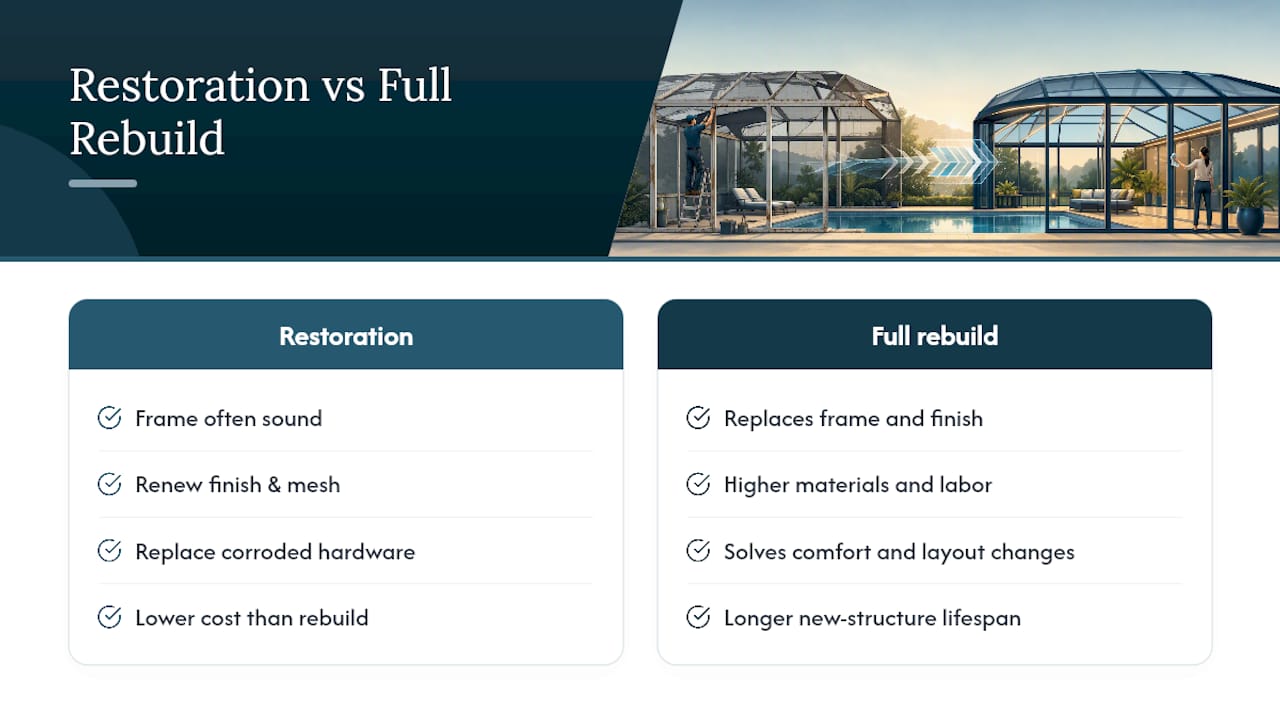
The conventional advice online leans too hard toward replacement math, comparing the cost of a rebuild against doing nothing, instead of comparing it against a proper restoration. That's the comparison homeowners actually need. A cage with a sound frame and localized rust is a restoration candidate almost every time, and treating it like a rebuild candidate wastes money on materials and labor you didn't need to touch.
Prioritize fasteners and mesh before you think about picture-window conversions or smart features. Those upgrades look impressive, but they solve comfort problems, not structural ones. Fix the corrosion first. Everything else is optional polish on a cage that's already sound.
Get a Restoration Quote for Your Pool Enclosure
Full replacement isn't the only path back to a pool cage that looks good and functions right. Mr. Pool Screen is the alternative to tearing out an aging enclosure entirely. Their restoration process addresses the rust, weathering, and screen failure you're actually dealing with, often at a fraction of rebuild pricing, using stainless steel fasteners and water-based acrylic coatings built to hold up under Central Florida sun and humidity.
If your cage has good bones and just needs new mesh, fresh hardware, or a frame refinish, this is exactly the kind of job Mr. Pool Screen handles daily. Homeowners weighing options can review completed jobs on the restoration services page or request a fast estimate through online pricing before committing to anything.
Frequently Asked Questions
What's the cheapest way to upgrade a pool enclosure? Replacing rusted fasteners with stainless steel or Nylotech hardware and patching or rescreening only the damaged panels is typically the lowest-cost upgrade with a visible impact.
How long do pool cages usually last before needing major work? A well-maintained aluminum frame can last decades, but screen mesh and fasteners often need attention within 10 to 15 years depending on sun exposure and coastal humidity.
Are there creative upgrade ideas beyond standard rescreening? Integrated lighting, retractable shade panels, decorative frame colors, and picture-window conversions all go beyond basic maintenance and change how the space looks and functions.
Do picture-window conversions require a permit? In many areas, yes, because they involve structural framing changes rather than a simple screen swap. Check with a local contractor familiar with your jurisdiction's code before committing to the project.
Can I upgrade just part of my enclosure instead of the whole thing? Yes. Fastener replacement, spot rescreening, and partial powder-coat touch-ups are all reasonable if the rest of the structure is sound and the damage is localized.
Sources
- How much does it cost to build a swimming pool enclosure? – Angi
- Panoramic pool enclosures: The ultimate guide – Evolve Construction