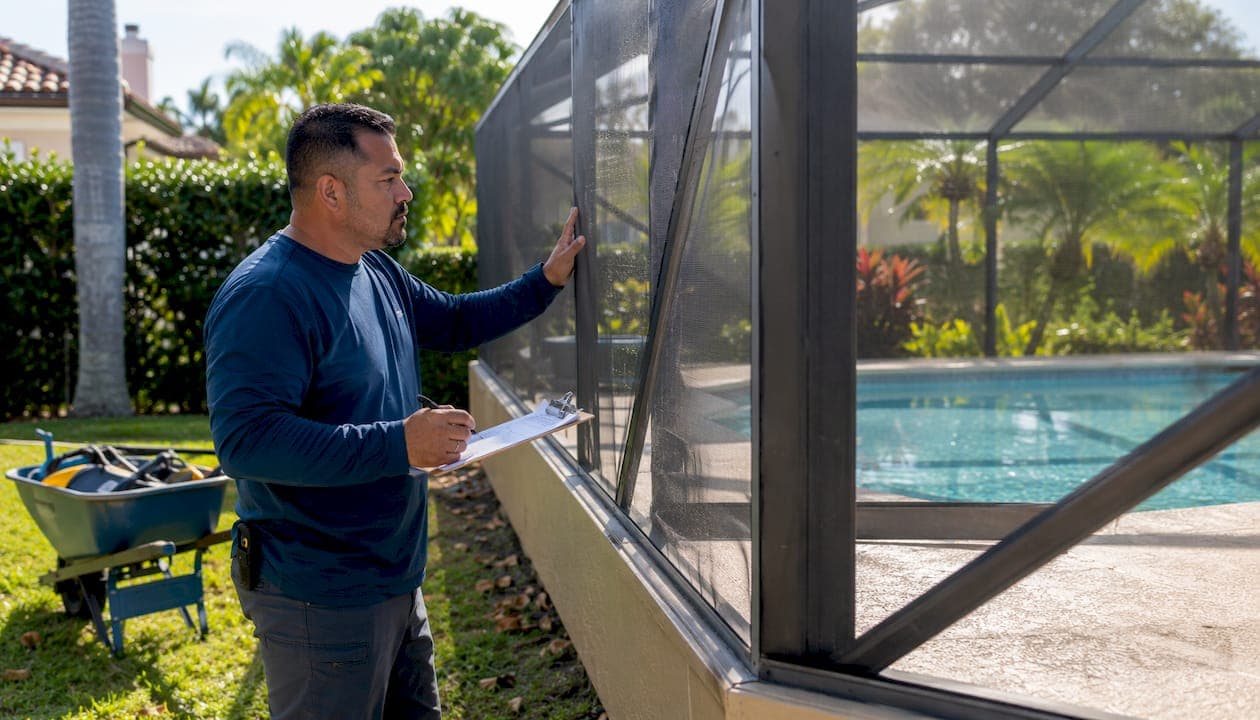
Most Florida homeowners pay $7–$9 per square foot for a complete pool enclosure rescreen, including materials and labor. A typical 600-sq-ft enclosure runs $4,200–$5,400, with $4,800 as a common midpoint. Partial rescreen jobs, where only damaged panels get replaced, typically land between $200 and $900. Full rescreens for larger or more complex cages can push past $4,500.
Quick price anchors:
- Partial rescreen (a few panels): costs varying widely but generally less than a full rescreen
- Full rescreen, 600 sq ft: $4,200–$5,400
- Restoration (repaint + fasteners + targeted rescreen): often 40–60% less than a full rebuild
For most homeowners with an aging but structurally sound cage, professional restoration is the most cost-effective path. Full rescreening makes sense when screen damage is widespread. A full rebuild is rarely necessary unless the frame is beyond repair.
Table of Contents
- What does rescreening a pool enclosure actually cost?
- The main factors that drive your rescreening quote
- Which screen material should you choose, and how long will it last?
- DIY, full professional rescreen, or restoration: which one fits your situation?
- Signs your pool cage needs rescreening now
- Will insurance cover your rescreening, and do you need a permit?
- How long does a rescreening project take?
- How to get an accurate quote and compare bids
- How restoration saved one Central Florida homeowner thousands
- Estimate your own project cost in minutes
- Key Takeaways
- What most homeowners get wrong about pool cage costs
- Mrpoolscreen restores Central Florida pool cages for less than you think
- Useful sources
What does rescreening a pool enclosure actually cost?
Per-square-foot pricing is a useful way to estimate your project before a contractor sets foot on your property. In Florida, the installed rate for a standard fiberglass mesh rescreen typically covers both materials and labor. Premium mesh types, high-access jobs, or significant frame repairs push that number higher.
| Enclosure Size (sq ft) | Cost Estimate Range |
|---|---|
| Small to medium | Costs vary moderately with enclosure size and complexity |
| Larger enclosures | Costs increase with size, mesh type, and access difficulty |
Estimates assume standard fiberglass mesh, single-story access, and no major frame replacement.
Three worked examples:
- 250 sq ft, standard mesh, minor spline replacement: 250 × $8 = $2,000 base + $150 spline = roughly $2,150–$2,500 total.
- 600 sq ft, mid-grade mesh, one door panel: 600 × $8.00 = $4,800 + $200 door hardware = roughly $5,000 total.
- 900 sq ft, pet-resistant mesh, partial frame repair: 900 × $9 = $8,100 + $400–$800 frame work = roughly $8,500–$9,000 total.
These numbers assume a single-story cage with standard contractor access. Add 20–40% for two-story or high-access structures.

The main factors that drive your rescreening quote
Size is the most obvious driver, but it is rarely the only one. Contractors price jobs based on a combination of variables, and knowing them helps you spot a vague or incomplete bid.
- Enclosure size and geometry: More square footage means more material and more labor hours. Curved or arched frames take longer to cut and fit than flat panels.
- Partial vs. full rescreen: Replacing only damaged sections costs less upfront but may not match the color or tension of older screen. Full rescreens give a uniform result.
- Screen mesh type: Standard fiberglass is the cheapest. Pet-resistant, solar, and polyester-reinforced meshes add cost per square foot (more on this below).
- Frame condition: Rust, corrosion, or bent extrusions add labor. A minor frame repair can raise total cost by 10–30%, even when the screen material itself is inexpensive.
- Access and height: Two-story cages or enclosures with limited ground access require scaffolding or lifts, which adds equipment rental and setup time.
- Labor rates: Labor for screen work commonly runs $35–$50 per hour for straightforward repairs, with Florida metro rates trending toward the higher end.
- Fastener replacement: Rusted screws and clips are often skipped in low-bid jobs. Replacing them with stainless steel hardware adds cost now but prevents premature failure later.
- Permits: Most simple rescreens do not require a permit, but structural frame replacement or enclosure modifications can trigger local permit requirements, adding $0–$1,000 depending on the municipality.
- Extras: Screen doors, pool-deck work, and debris disposal are often quoted separately. Always ask what is and is not included.
Pro Tip: Before calling contractors, walk your enclosure and note two things: how many panels are damaged versus intact, and whether you see rust on the frame or fasteners. Those two observations will tell you whether you are looking at a partial rescreen, a full rescreen, or a restoration job, and they will help you catch a bid that is underscoping the work.
Which screen material should you choose, and how long will it last?
Florida's combination of UV exposure, humidity, and storm season is hard on screen mesh. The material you choose affects both your upfront cost and how often you will be back here reading this article.
- Standard fiberglass mesh: The most common choice. Costs roughly $0.75–$2.50 per sq ft for materials alone. Lifespan in Florida: 7–12 years with normal maintenance. Good for most residential enclosures.
- Polyester-reinforced mesh: Heavier weave, more tear-resistant. Costs more per sq ft than basic fiberglass. Handles wind-driven debris better and typically lasts a few years longer under comparable conditions.
- Pet-resistant screen: Woven from heavier vinyl-coated polyester. Per-sq-ft material rates for premium mesh types can reach $12 for specialty options. Lifespan is comparable to polyester-reinforced when installed correctly.
- Solar or privacy screen: Reduces UV and glare inside the enclosure. Costs more than standard fiberglass and reduces airflow slightly. Popular in west-facing enclosures with afternoon sun exposure.
Frame fasteners matter as much as the mesh itself. Galvanized screws corrode in Florida's salt-air environment, often failing before the screen does. Replacing them with stainless steel or Nylotech hardware at the time of rescreening adds modest cost but meaningfully extends the life of the whole structure. Contractors who skip this step are setting you up for an earlier return visit.
Warranties vary widely. Some contractors offer a one-year labor warranty; others provide two to five years on materials when premium mesh is used. Always get the warranty terms in writing before signing.
DIY, full professional rescreen, or restoration: which one fits your situation?
| Approach | Typical Cost | Best For | Main Risk |
|---|---|---|---|
| DIY rescreen | $1–$4/sq ft materials only | Minor damage, budget-conscious, single-story | No warranty, time-intensive, quality varies |
| Professional full rescreen | $7–$9/sq ft installed | Widespread screen damage, uniform result needed | Higher upfront cost, does not address frame rust |
| Professional restoration | 40–60% less than rebuild | Aging cage with rust, oxidation, or aesthetic wear | Requires a specialist; not all contractors offer it |
| Full rebuild | — | Structural frame failure, code non-compliance | Highest cost; rarely necessary for sound frames |
DIY rescreening is genuinely feasible for a single damaged panel on a ground-level enclosure. Screen kits cost roughly $1 per sq ft, and the process is straightforward with the right spline roller. The problem is scale. A full DIY rescreen on a 600-sq-ft cage takes a weekend or more, requires working at height, and produces results that rarely match professional tension and alignment. There is also no warranty, which matters when the next storm rolls through.
Professional full rescreening makes sense when damage covers most of the enclosure or when you want a consistent, warranted result. The $7–$9 per sq ft installed rate is the standard Florida benchmark.
Restoration is the option most homeowners overlook. When a cage has sound framing but shows rust, oxidized paint, and a mix of torn and intact panels, a full rescreen replaces the screens but leaves the underlying deterioration untouched. Restoration addresses the frame first, then the screens, which is the correct sequence for long-term durability.
For homeowners with an aging pool cage in Central Florida, pool enclosure restoration often delivers the best cost-to-outcome ratio. It treats the cause, not just the symptom.
Which approach fits your situation?
- One or two torn panels, frame looks clean: partial DIY or partial professional rescreen.
- More than 30% of screens damaged, frame intact: professional full rescreen.
- Frame shows rust, oxidized paint, or loose fasteners alongside screen damage: restoration.
- Frame is bent, cracked, or structurally compromised: get a rebuild quote, but verify the diagnosis with a second opinion.
Signs your pool cage needs rescreening now
Waiting too long is one of the most reliable ways to turn a $500 repair into a $5,000 project. These are the signs that mean act now, not next season.
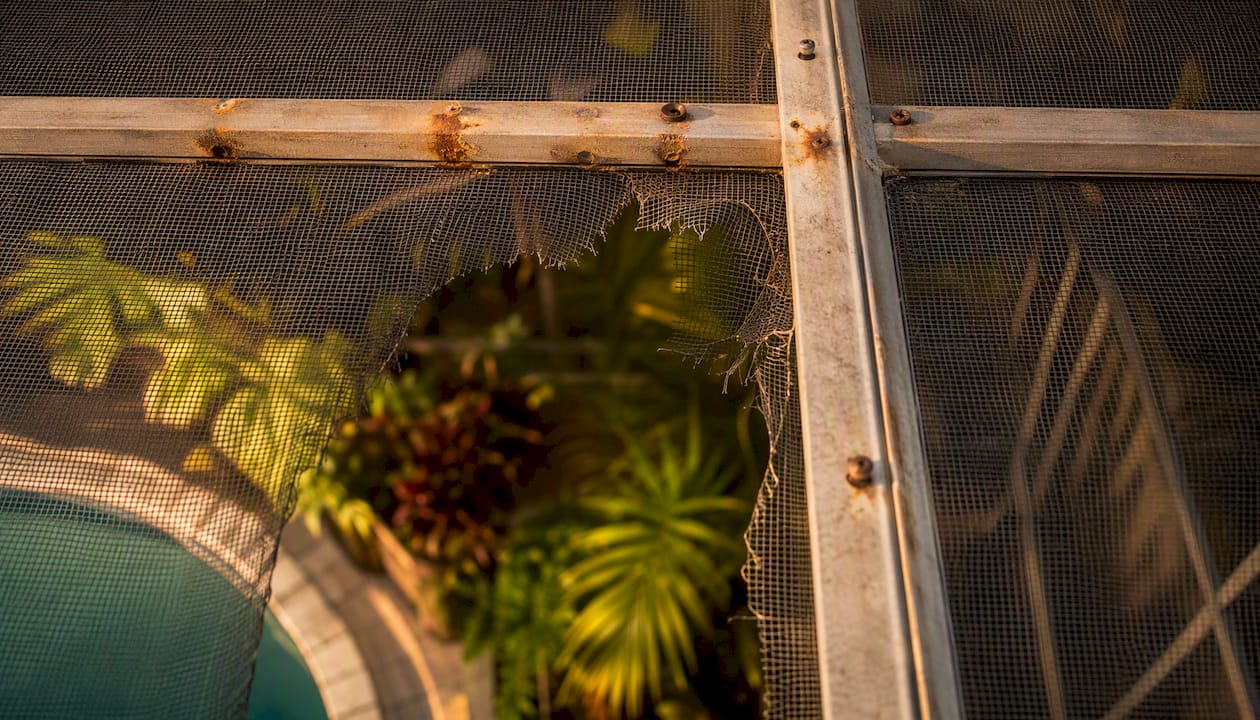
- Visible tears or holes: Even small ones let insects in and expand quickly under wind pressure.
- Sagging panels: Screen that has lost tension is near the end of its useful life and will not survive a storm.
- Ripped or missing spline: The rubber cord holding screen in the channel. When it fails, panels come loose.
- Oxidized or chalky frame: White or orange powder on aluminum extrusions signals corrosion that will spread.
- Rusted fasteners: Brown streaks running down from screw heads mean the hardware is failing. This accelerates frame deterioration.
- Large insect ingress: If mosquitoes are getting in despite intact-looking screens, check for micro-tears along seams and corners.
- Falling screen panels: A panel that has already detached is a safety and liability issue, not just an aesthetic one.
Standard fiberglass mesh in Florida typically lasts 7–12 years. If your enclosure is approaching or past that range, plan for rescreening even if visible damage is limited. Age-related brittleness makes screens far more vulnerable to the next storm.
Timing matters too. Scheduling a rescreen between November and February, outside hurricane season and the peak summer demand window, often means shorter contractor wait times and occasionally better pricing.
Will insurance cover your rescreening, and do you need a permit?
Insurance coverage:
Standard homeowner policies typically cover pool enclosure frames and screens for sudden, accidental perils like impact damage. Wind and hurricane losses are commonly excluded unless you carry a hurricane endorsement or separate windstorm policy. Wear-and-tear damage is almost never covered.
- File a claim when: a named storm, falling tree, or impact event caused the damage, and you have documentation.
- Skip the claim when: screens are simply old, sun-degraded, or showing normal wear. The deductible will likely exceed the repair cost.
- What contractors should provide: a written damage assessment, photos of the affected panels and frame, and a detailed scope of work. Insurers need this documentation to process a claim.
Permits:
- Simple screen-only replacement on an existing frame: usually no permit required in most Florida municipalities.
- Frame repair or partial frame replacement: may trigger a permit depending on the extent of structural work.
- Full frame replacement or enclosure modification: almost always requires a permit and inspection.
- Permit costs in Florida typically range from $0 for minor work to several hundred dollars for structural repairs, depending on the county.
Contractors who include permit handling in their quote reduce your coordination burden. Ask specifically whether permits are included and who pulls them. A contractor who tells you permits are never needed for any job is a red flag.
How long does a rescreening project take?
Step-by-step process:
- Inspection and measurement: Contractor walks the enclosure, notes damaged panels, checks frame and fastener condition, and measures total screen area.
- Material ordering: Screen mesh, spline, and hardware are ordered or pulled from stock.
- Old screen removal: Existing screen and spline are pulled from channels. Rusted fasteners are removed.
- Frame prep: Any rust treatment, frame repair, or fastener replacement happens before new screen goes in.
- New screen installation: Mesh is cut, tensioned, and splined into channels panel by panel.
- Door and hardware reinstallation: Screen doors are rehung and adjusted.
- Cleanup and final inspection: Debris is removed, and the contractor walks the job with the homeowner.
| Job Type | Typical Duration |
|---|---|
| Single-panel repair | 1–2 hours |
| Partial rescreen (5–10 panels) | Half day to full day |
| Full rescreen, 300–600 sq ft | 1–2 days |
| Full rescreen, 600–1,000 sq ft | 2–3 days |
| Two-story or high-access job | Add 1–2 days |
| Restoration (repaint + fasteners + rescreen) | 3–5 days |
Before the crew arrives, clear furniture and plants from inside the enclosure, secure pets indoors, and make sure the gate is accessible. Pool chemicals do not need to be drained, but covering the pool surface during screen removal keeps debris out.
How to get an accurate quote and compare bids
Most homeowners get one quote and accept it. Getting three written estimates takes a few extra days and routinely saves hundreds of dollars, sometimes more.
What every written quote should include:
- Scope: partial or full rescreen, which panels, which mesh type
- Materials: screen brand or grade, spline size, fastener type
- Labor: hours estimated or flat rate
- Warranty: length and what it covers (labor, materials, or both)
- Permits: included or excluded, and who pulls them
- Disposal: whether old screen removal and debris hauling are included
- Scaffolding or lift rental: itemized separately if needed
- Payment terms: deposit amount and final payment timing
Questions to ask the contractor on-site:
- What condition is the frame in, and will any extrusions need replacement?
- Are you replacing the fasteners, or just the screen?
- What is the warranty on labor and materials?
- How long will the job take, and will the crew be on-site continuously?
- Can you provide references from similar jobs in this area?
Red flags:
- A bid significantly lower than the others with no explanation of what is excluded
- Vague scope language ("rescreen as needed" with no panel count)
- No written warranty
- Requiring full payment upfront before work begins
- Pressure to sign the same day
Hiring a pool enclosure specialist rather than a general handyman typically means better material knowledge, proper tensioning technique, and a warranty worth something. The price difference is usually modest relative to the total job cost.
How restoration saved one Central Florida homeowner thousands
A typical restoration candidate in Central Florida looks like this: a 10-to-15-year-old pool cage with oxidized aluminum, orange rust streaks running from the fasteners, and a mix of torn and intact screen panels. The frame is structurally sound. A full rebuild quote comes in at $12,000–$18,000. A rescreen-only quote addresses the screens but leaves the rust and oxidation to continue spreading.
Mrpoolscreen's restoration process addresses the problem in the correct sequence. Rusted fasteners are replaced first with stainless steel or Nylotech hardware. The frame is then cleaned, treated, and repainted with a water-based acrylic coating. Targeted rescreening replaces only the damaged panels. The result is a cage that looks and performs like new without the cost of demolition and full rebuild.
Restoration clients typically save 40–60% compared to a full rebuild. The savings come from three places: no demolition labor, no new framing material, and targeted rather than wholesale screen replacement. For a cage that would cost $15,000 to rebuild, restoration can bring the total to $6,000–$9,000.
The before-and-after project gallery at Mrpoolscreen documents scope, materials, and visible outcomes across completed Central Florida jobs. It is worth reviewing before you accept a rebuild quote.
Estimate your own project cost in minutes
The formula contractors use is straightforward:
(Square footage × installed $/sq ft for chosen mesh) + frame/fastener repair allowance + permit and equipment surcharges = estimated total
For two-story or high-access jobs, multiply the installed $/sq ft by 1.2–1.4 before applying the formula.
| Scenario | Sq Ft | $/Sq Ft | Repair Allowance | Permit | Estimated Total |
|---|---|---|---|---|---|
| Low (basic fiberglass, clean frame) | 400 | $7.00 | $0 | $0 | $2,800 |
| Mid (mid-grade mesh, minor frame work) | 600 | $8.00 | $400 | $100 | $5,300 |
| High (pet-resistant mesh, frame repair, two-story) | 800 | $9.00 × 1.3 | $800 | $200 | $10,360 |
Three worked examples:
- Low scenario, 400 sq ft: 400 × $7.00 = $2,800. Clean frame, no permits needed. Total: $2,800.
- Mid scenario, 600 sq ft: 600 × $8.50 = $5,100 + $400 frame work + $100 permit = $5,600.
- High scenario, 800 sq ft, two-story: 800 × ($9.00 × 1.3) = $9,360 + $800 frame + $200 permit = $10,360.
For a more detailed pool lanai cost breakdown with additional size examples, Mrpoolscreen's budgeting guide covers common Central Florida scenarios in more depth.
Key Takeaways
Full rescreening in Florida typically costs $7–$9 per square foot installed, and restoration can cut that figure by 40–60% for homeowners with structurally sound but deteriorating cages.
| Point | Details |
|---|---|
| Typical installed cost | Full rescreen runs $7–$9/sq ft; a 600-sq-ft cage costs roughly $4,200–$5,400. |
| Partial vs. full rescreen | Partial jobs cost $200–$900; full rescreens run $4,200–$5,400 depending on size and complexity. |
| Frame condition changes everything | Rust or corrosion adds 10–30% to total cost; address fasteners and frame before new screen goes in. |
| Get three written estimates | Compare scope, mesh type, warranty, and permit handling, not just the bottom-line number. |
| Mrpoolscreen restoration option | Mrpoolscreen's restoration service in Central Florida can save homeowners up to 60% versus a full rebuild by treating rust, repainting, and rescreening without demolition. |
What most homeowners get wrong about pool cage costs
The conventional wisdom says rescreening is a straightforward commodity job. Call a few contractors, pick the lowest bid, done. That framing costs homeowners money every time.
The lowest bid almost always omits something. Fastener replacement is the most common casualty. A contractor who rescreens over corroded hardware is handing you a job that will fail in three to five years instead of ten. You will pay for the screen twice. The math on that is not complicated, but it is easy to miss when you are comparing bottom-line numbers without reading the scope.
The second mistake is treating rescreening and restoration as interchangeable. They are not. Rescreening replaces the mesh. Restoration treats the frame, the fasteners, and the finish before the mesh goes in. For a cage showing rust and oxidation, rescreening without restoration is like painting over a water stain. It looks fine for a season.
The third mistake is waiting. A torn panel that costs $300 to fix today becomes a full rescreen job after the next storm pushes water and debris through the gap, accelerating corrosion across the frame. The maintenance habits that extend screen life are simple: annual inspections, prompt small repairs, and keeping the frame clean of debris and standing water.
My practical tip: once a year, walk the perimeter of your enclosure with a flashlight and press lightly on each panel. Any panel that moves easily or shows a gap at the spline needs attention before it becomes a bigger problem.
Mrpoolscreen restores Central Florida pool cages for less than you think
If your pool cage is showing rust, chalky paint, or a mix of torn and intact screens, a full rebuild is rarely the right answer. Mrpoolscreen specializes in pool screen restoration for Central Florida homeowners, addressing the root causes of deterioration rather than just replacing the mesh.
The process covers frame repainting with water-based acrylic coatings, replacement of rusted fasteners with stainless steel or Nylotech hardware, targeted rescreening with your choice of mesh type, and pool deck staining when needed. Clients typically save up to 60% compared to a full rebuild, with no demolition and no new framing costs. The result holds up under Florida conditions because the underlying structure is treated correctly before the new screen goes in.
To see what that looks like in practice, browse the project gallery for before-and-after examples from completed Central Florida jobs. When you are ready for an estimate, contact Mrpoolscreen directly through the restoration page.
Useful sources
- HomeAdvisor: Pool Enclosure Repair Cost — Per-square-foot benchmarks and 600-sq-ft sample calculations used throughout this guide.
- Angi: Pool Screen Enclosure Repair Cost — Repair cost ranges, labor rate data, and minimum contractor visit fees.
- Absolute Aluminum: Florida Rescreen Cost Guide — Florida-specific partial and full rescreen ranges; useful for local price verification.
- Slide Insurance: Screened Enclosures and Pool Cages — Insurance coverage guidance for frames and screens, including hurricane endorsement notes.
- Lanai Screen Replacement Cost Guide — Material cost ranges from basic to premium mesh and permit cost context.
- Mrpoolscreen Project Gallery — Before-and-after documentation of completed Central Florida restoration jobs; useful for verifying scope and typical outcomes.
This article is general cost and planning information, not a substitute for a written estimate from a licensed contractor or a review of your specific homeowner policy. Verify permit requirements with your local Florida municipality before beginning any structural enclosure work.