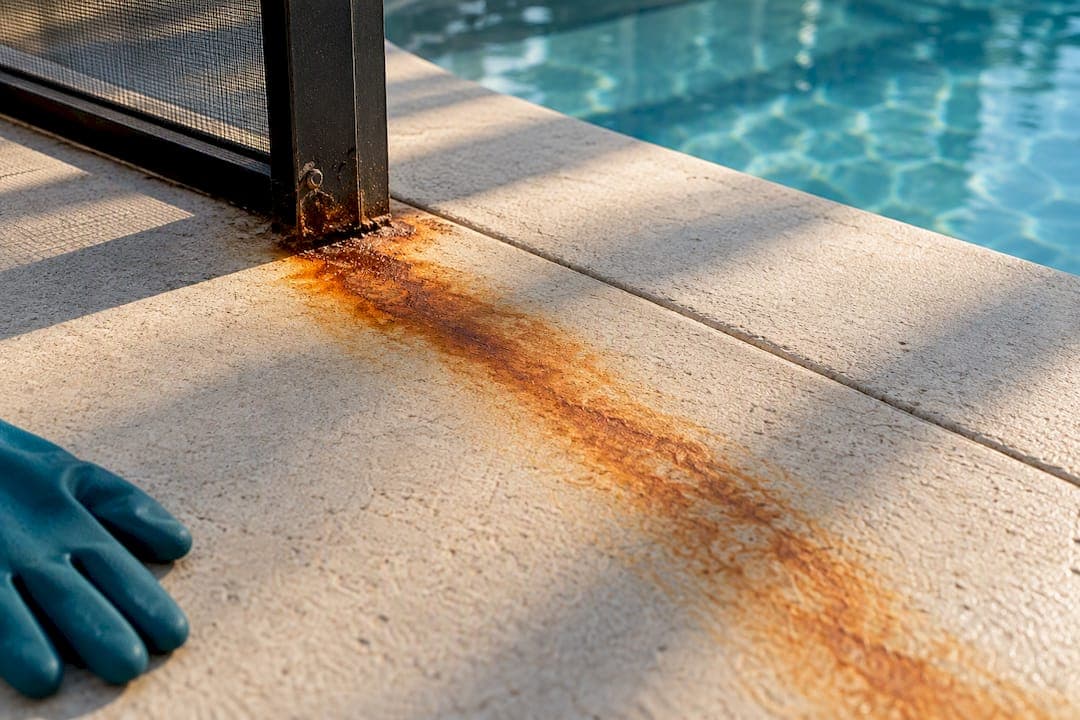
Use a surface-appropriate oxalic- or phosphoric-acid rust remover, applied first to a hidden test patch, to clear most rust stains on a pool deck. Mask off the pool and nearby plants, follow the label's dwell time exactly, and rinse thoroughly before deciding whether a second pass is needed. Save muriatic acid or a full contractor treatment for stubborn, large-area, or decorative-surface stains, where a company like Mr. Pool Screen can handle the diagnosis and repair safely.
TL;DR:
- Only professional-grade oxalic- or phosphoric-acid removers should be used for persistent rust stains on concrete decks, avoiding muriatic acid due to its risks.
- An accurate diagnosis distinguishes rust from other stains like efflorescence or fertilizer, which require entirely different treatments to prevent surface damage.
- Protect surrounding plants and pool water before cleaning, and avoid mixing different acids or using chlorine, bleach, or oil-based lubricants like WD-40 for stain removal.
- Specific cleaning techniques depend on deck material, with sealed or decorative surfaces needing testing and possibly professional intervention to prevent damage.
- Recurring rust stains usually indicate ongoing corrosion from hardware or water sources, warranting hardware replacement and structural inspection rather than repeated cleaning.
Table of Contents
- Is That Really Rust, or Something Else Entirely?
- What's the Safest Way to Remove Rust Yourself?
- How Do You Treat Rust on Different Deck Surfaces?
- How Do You Keep Rust From Coming Back?
- When Should You Call a Professional Instead?
- Why Restoration Often Beats Repeat Spot Cleaning
- Ready to Stop Cleaning the Same Rust Stain Every Summer?
- Where to Go for Technical Details
- Sources
- FAQ
Is That Really Rust, or Something Else Entirely?
Not every orange or brown mark on concrete is rust. Tannins from leaves, fertilizer runoff, and efflorescence (the white or rust-toned mineral bloom that pushes up through curing concrete) all mimic iron staining, and treating the wrong one with acid wastes time and risks etching your deck. Getting this diagnosis right matters more than picking the "best" cleaner, because a fertilizer stain and a corroded rebar stain need completely different fixes.
Rust tends to show up in telltale shapes: a perfect ring under a planter, an arc tracing where a chair leg dragged, or a streak bleeding from a single point (often a screw head or a crack where rebar sits close to the surface). A quick wet test helps too. Wet the stain; true rust usually darkens but keeps its orange or reddish undertone rather than washing lighter.
Before committing to a full treatment, run a small test patch: dab your chosen cleaner on a hidden corner and watch it darken, then lighten as the iron dissolves. That reaction confirms rust and previews how your specific concrete will react.
Common sources worth hunting down:
- Metal furniture feet, planters, or decorative iron sitting directly on the deck
- Irrigation or well water with high iron content
- Fertilizer with iron additives blown or spilled onto the surface
- Corroded screws, fasteners, or pool cage hardware
- Rebar sitting too close to the surface, bleeding through hairline cracks
What's the Safest Way to Remove Rust Yourself?
For very light, fresh spots, mild household options sometimes work. Beyond that, you need dedicated chemistry, and reaching for the wrong bottle is the single most common mistake homeowners make on this project.
- Lemon juice and salt, or plain white vinegar. These work only on faint, recent marks. Sprinkle salt over the stain, squeeze lemon juice on top, let it sit an hour, then scrub. Always test first. This will not touch an established stain.
- Oxalic- or phosphoric-acid rust removers. This is the workhorse tier, and the University of Georgia Cooperative Extension recommends oxalic-acid products specifically for iron stains on concrete and masonry. These acids bond with iron oxide and lift it without the aggression of muriatic acid. A professional-grade, non-hydrochloric remover formulated for pavers and concrete slabs gives you similar dissolving power with less risk to color and texture.
- Muriatic acid, used only with real caution. It removes rust, but it also attacks concrete, mortar, and coatings, and it can never be mixed with chlorine products near a pool, according to Zep's technical guidance on the chemical. Reserve it for cases where a labeled rust remover has already failed.
Skip bleach and chlorine entirely; they do not break down iron oxide, so pouring pool chemicals on a rust mark just wastes chlorine and time. Skip WD-40 too. It is a lubricant, not a stain remover, and it leaves an oily film that makes the next cleaning attempt harder. Pressure washing has a role, but mainly for rinsing and prep. Too much pressure can scar decorative concrete or strip a sealer, so treat it as a finishing step, not the main event.
Pro Tip: Wear gloves and eye protection, cover pool water and nearby plants with plastic sheeting, and never combine two different acid products in the same cleaning session. Neutralize and rinse thoroughly before letting anything drain toward the pool.
How Do You Treat Rust on Different Deck Surfaces?
The right process depends heavily on what the deck is made of, and a technique that's perfectly safe on bare concrete can ruin a sealed or stamped finish.
Universal prep, every surface: Clear furniture and planters, cover the pool, wet down surrounding grass or landscaping so runoff doesn't scorch it, and put on gloves and eye protection before opening any bottle.
- Bare, uncoated concrete: Apply an oxalic- or phosphoric-acid remover per the label, let it dwell for the specified time, then agitate gently with a nylon brush. Rinse well and let the deck dry fully before judging results. Water darkens concrete and can hide stubborn spots, so don't call it finished while it's still wet.
- Sealed, painted, or decorative stone surfaces: Always run a test patch first, matching the exact dilution and dwell time you plan to use on the visible stain. If the coating's compatibility is uncertain, this is where a stone deck staining specialist or restoration contractor earns their fee.
- Pavers and natural stone: Stick to manufacturer-approved, paver-safe rust removers rather than aggressive acids, which can pit or discolor softer stone. Delicate travertine or limestone is often better handled by a professional.
- Post-clean: Neutralize any acid residue if the label calls for it, then let the surface dry completely before applying sealer or paint. Sealing over a damp or partially cleaned deck traps moisture and invites the stain right back.
How Do You Keep Rust From Coming Back?
Cleaning the stain fixes the symptom. Stopping recurrence means fixing whatever is feeding rust onto the deck in the first place, and that's the step most homeowners skip.
- Swap out corroding furniture feet, planters, and any hardware in constant contact with the deck for stainless steel or plastic versions.
- Walk the yard and check irrigation heads. Overspray hitting metal fixtures or depositing iron-heavy well water on the deck is one of the most common repeat offenders.
- If well water carries visible iron, look into a whole-house iron filter or a revised watering schedule that keeps sprinklers off the hardscape.
- Once the surface is fully clean and dry, a compatible sealer adds a protective layer, though decorative finishes need a compatibility check first.
- Walk the deck every season, spot-clean small marks before they set, and stick to a resealing schedule instead of waiting for stains to pile up.
Pro Tip: Rust that returns within weeks of cleaning almost always traces back to a metal object still sitting on the deck or a fastener that's actively corroding, not a failure of the cleaner itself.
When Should You Call a Professional Instead?
Some stains are a weekend project. Others are a sign the underlying structure needs attention, not just another bottle of cleaner.
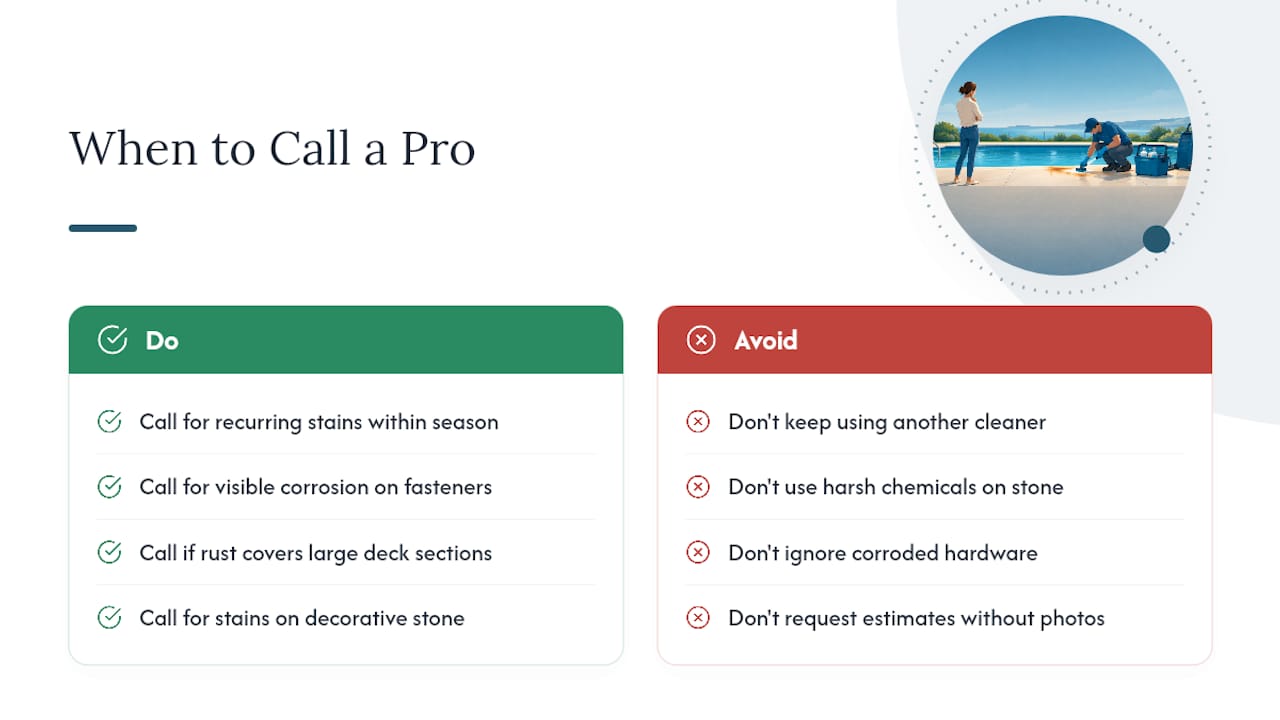
Call a contractor when you notice recurring stains that reappear within a season of cleaning, visible corrosion at structural fasteners or pool cage hardware, rust covering a large section of the deck, or any staining on decorative stone where the wrong chemical could cause permanent damage. Professionals diagnose the substrate first, apply controlled acid treatments matched to the material, replace corroded hardware, and recoat or seal the surface, often backed by a warranty.
Before requesting an estimate, gather clear photos of the stains, measure the affected area, note which cleaners you've already tried, and describe the surface (bare concrete, stamped, sealed, or natural stone). That groundwork speeds up an accurate quote and helps a pool screen frame rust guide or contractor pinpoint the real cause fast.
Why Restoration Often Beats Repeat Spot Cleaning
Homeowners treat the same rust ring three summers in a row and call it maintenance. It's not. It's a symptom being managed instead of solved, and every reapplication of acid cleaner nudges a concrete or decorative surface a little closer to real wear.
Some restoration approaches use water-based acrylic coatings and stainless steel fasteners specifically because those materials stop the corrosion cycle rather than just cleaning up after it. A rusting screw replaced once outlasts a stain scrubbed away a dozen times, and a full restoration frequently runs well below the cost of tearing out and rebuilding a cage or deck, which is where the real savings show up over years, not one cleaning session.
Diagnosis before chemistry remains the principle worth repeating: figure out what's actually corroding before reaching for another bottle.
— Michel
Ready to Stop Cleaning the Same Rust Stain Every Summer?
If you've already tried a rust remover twice on the same spot, the smarter move might not be a stronger acid. It's fixing what's causing the corrosion. Mr. Pool Screen handles both sides of that problem in Central Florida: pool screen frame rust restoration that replaces corroding fasteners with stainless steel hardware, and pool deck staining that refinishes the surface once the old stains are gone.

Before you call, snap a few photos of the affected areas, measure roughly how much deck or screen is involved, and jot down which cleaners you've already tried. That's enough for a real assessment. Browse the project gallery to see finished restorations, then reach out through Mrpoolscreen to schedule an on-site evaluation and get a straight answer on whether cleaning, staining, or full restoration fits your deck.
Where to Go for Technical Details
For safety data and label guidance, start with the UGA Cooperative Extension's stain-removal resource, the manufacturer technical data sheet for muriatic-based products, and a professional rust remover product page for paver-safe formulas. Read the SDS and label on any product before use, especially near a pool.
Sources
- Remove stains from iron/rust | UGA FACS
- Zep product/specification technical data sheet (muriatic acid-based cleaner)
- Techniseal Rust Stain Remover product page
- WD-40 official site
FAQ
Will Chlorine Dissolve Rust Stains?
No. Chlorine and other pool chemicals do not break down iron oxide, so pouring them on a rust mark does nothing but waste product. You need an oxalic- or phosphoric-acid rust remover, or in tougher cases, a carefully controlled muriatic acid treatment.
Does WD-40 Remove Rust Stains From a Pool Deck?
Not reliably. WD-40 is built as a lubricant and water displacer, and the manufacturer's own site doesn't position it as a concrete stain remover. It can leave an oily residue on masonry that makes the next cleaning attempt harder, not easier.
Does White Vinegar Actually Remove Rust Stains?
Vinegar can lighten very light, fresh rust marks, but it lacks the strength to clear an established stain. For anything beyond a faint spot, an oxalic- or phosphoric-acid rust remover, applied per the UGA Extension's guidance, works far more consistently.
What Is Causing Rust Stains on My Pool Deck?
The most common culprits are metal furniture feet, planters, corroded fasteners, and irrigation or well water carrying dissolved iron. Fixing the source, not just the stain, is what actually stops the marks from coming back, which is why Mr. Pool Screen focuses on hardware replacement alongside cleaning.
When Should I Choose Professional Restoration Over DIY Cleaning?
Call a contractor once stains keep returning after cleaning, when corrosion appears at structural fasteners or cage hardware, or when the affected surface is decorative stone or a sealed finish. Pool screen restoration and deck staining services often have pricing information available directly through the provider's website.