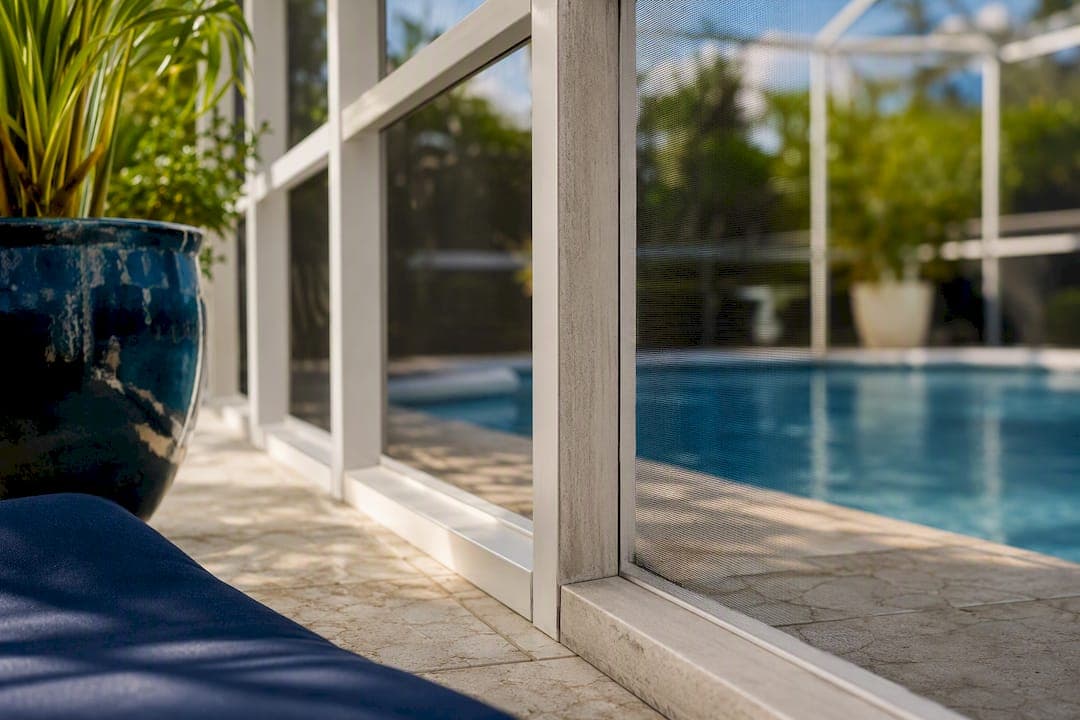
White pool cages earn their popularity for a reason: they brighten a backyard and read as classic and clean against most home trim. The real trade-off isn't durability but visibility. White frames show pollen, mildew, and water spots faster than darker finishes, which means more frequent cleaning to keep that bright look intact. Climate, mesh choice, and hardware quality drive most of the maintenance burden, and restoration can usually preserve a white finish for a fraction of what full replacement costs.
TL;DR:
- White pool cages show pollen, mildew, and water spots more visibly than darker finishes, requiring more frequent cleaning to maintain appearance.
- Using stainless steel fasteners and applying periodic repainting with quality coatings can extend the lifespan of a white cage without full replacement.
- The main concern with white frames is cosmetic upkeep, especially in humid or salty environments that accelerate staining and corrosion.
- Frame color affects visual integration with home design but does not influence the enclosure’s durability or lifespan.
- Restoration of existing cages using repainting and new screens often costs less and is more sustainable than complete structural replacement.
Table of Contents
- White Pool Cage Pros and Cons for Everyday Comfort
- The Real Drawbacks and Hidden Costs of a White Pool Cage
- Maintenance, Lifespan, and When Restoration Beats Rebuilding
- White vs Bronze: What You're Actually Choosing
- Safety and Resale: What Buyers and Insurers Actually Care About
- Checklist Before You Commit to White
- When Restoration Makes More Sense Than Replacement
- Impact on Pool Water Temperature and Circulation
- Effect on Pool Usability and Space
- Environmental Considerations of Pool Screening
- Potential Resale Value Impact of a White Pool Cage
- Why the White vs Bronze Debate Misses the Point
- Restore Your White Pool Cage Instead of Replacing It
- Sources
White Pool Cage Pros and Cons for Everyday Comfort
A screened enclosure changes how a pool actually gets used, not just how it looks. The biggest wins show up in daily life rather than on a spec sheet.
- Fewer bugs and less debris. Mosquitoes, leaves, and windblown grass clippings stay outside the mesh, which cuts pool-cleaning time dramatically compared to an open patio.
- Real shade without blocking the view. Standard screen mesh lets through roughly 70 to 80 percent of sunlight, enough to soften UV exposure and glare while keeping the pool visible from indoors.
- Longer pool finish life. Less direct sun and fewer leaves in the water mean less algae pressure and less wear on pool surfaces over time.
- More privacy and a brighter frame. White powder coating reflects light back into the space, which makes a screened room feel open rather than caged in.
- Extended usable hours. Homeowners tend to use a screened pool earlier and later in the day since bugs and harsh glare aren't forcing them back inside.
None of that is unique to white frames specifically. It's the enclosure itself doing the work. White just happens to be the finish that shows it off best in daylight.
The Real Drawbacks and Hidden Costs of a White Pool Cage
The honest downside isn't structural. It's cosmetic upkeep, and it catches a lot of first-time buyers off guard.
- Higher visible maintenance. White frames show pollen streaks, mildew spots, and hard-water marks well before bronze or charcoal finishes do, according to a comparison of white versus bronze enclosures.
- Layout can feel closed in. Poor bay spacing or a door placed in the wrong spot makes a large enclosure feel smaller than it is.
- Permits and HOA rules add friction. Most municipalities require a permit for a new cage, and some HOAs restrict frame color or roofline style outright.
Before you sign anything, get a written explanation of how the quoted price breaks down by materials, labor, and engineering. Vague line items are where surprise costs hide.
Maintenance, Lifespan, and When Restoration Beats Rebuilding
A white pool cage isn't high maintenance in any technical sense. It's just unforgiving about being ignored.
- Rinse the frame every one to two months in humid climates to knock off pollen and mildew before it sets into the powder coat.
- Inspect screen panels each season for tears, especially near corners and door frames where stress concentrates.
- Plan to recoat every several years, depending on sun exposure and salt air, using a proper primer and high-quality exterior metal coating.
Salt air and heavy humidity shorten every one of those intervals. That's exactly why restoration, rather than a full teardown, often makes more financial sense once a cage starts showing its age.
Pro Tip: If your frame still looks straight and the aluminum isn't pitted, repainting and re-screening almost always costs less than tearing out and rebuilding the whole structure.
White vs Bronze: What You're Actually Choosing
Frame color is a visual decision, not a durability one. White and bronze aluminum age the same structurally; only the appearance ages differently.
- White brightens a space and pairs naturally with traditional or coastal homes that already have white trim and light-colored pavers.
- Bronze and charcoal frames visually recede, which means they hide pollen film and water spotting far longer between cleanings.
- Bring an actual frame sample to your house and hold it against your trim and pavers in daylight. Photos and small swatches misrepresent color more often than people expect.
- A lighter mesh weave increases the sense of open air, while darker mesh reduces glare and slightly dims the interior.
Safety and Resale: What Buyers and Insurers Actually Care About
A screened enclosure adds a real physical barrier around the pool, but it's not a substitute for a proper pool gate.
- Pair the enclosure with a self-closing, self-latching gate. That combination cuts down accidental pool access more than the screen wall alone.
- On resale, a clean, well-maintained cage reads as an asset. A yellowed, streaked one with sagging screens reads as deferred maintenance and can hurt negotiations.
- Ask your insurer whether your enclosure's wind-load engineering meets current code, particularly if the home was built before recent hurricane-rating updates.
Checklist Before You Commit to White
Run through this before signing a contract, whether you're installing new or restoring an existing cage.
- Assess sun and tree exposure. Heavy pollen or oak trees nearby mean more frequent white-frame cleaning, no matter how good the coating is.
- Check HOA restrictions on frame color and roofline before you fall in love with a design.
- Budget for five years of upkeep, not just the install price, when comparing white against bronze.
- Ask contractors specific questions: What powder-coat spec are they using? Are fasteners stainless steel? What mesh options do they offer, and how was the bay spacing and door placement planned for your pool shape?
- Watch for red flags: no hardware specs on the quote, vague material names, or a price with no engineering documentation attached.
When Restoration Makes More Sense Than Replacement
Plenty of white cages that look ready for the landfill just need attention, not replacement. Restoration that addresses rusted hardware, repaints the frame, and re-screens torn panels can extend a cage's life at a fraction of full rebuild cost.
- Look for water-based acrylic coatings rather than cheap spray paint, since they hold up better against Florida humidity and UV.
- Confirm the contractor uses stainless steel fasteners, not galvanized replacements that will rust again within a couple of seasons.
- Ask to see a project gallery or before-and-after photos so you can judge workmanship, not just promises.
Pro Tip: Ask any restoration contractor whether they replace fasteners as standard practice or only on request. That answer alone tells you a lot about how thorough the job will be.
Impact on Pool Water Temperature and Circulation
An enclosure changes the pool's microclimate more than most homeowners expect going in. Screening blocks wind, which slows evaporation and can keep water a degree or two warmer overnight compared to an open pool, especially with a solid roof panel over part of the structure.
That same wind reduction cuts down on debris blowing across the surface, which means the pump and skimmer system works less hard clearing leaves and pollen. Circulation itself isn't affected by the screen. It's driven by your pump and plumbing, not the enclosure. But indirectly, cleaner water with less organic debris means fewer algae blooms and less strain on the filtration system overall.
One trade-off worth knowing: full sun exposure on an open pool actually warms water faster during the day than a screened pool does, since the mesh blocks a portion of direct solar gain. If you're relying on passive solar heating in cooler months, an enclosure with denser mesh can work against you slightly. Homeowners in that situation sometimes opt for a lighter weave mesh specifically to preserve more solar heat gain while still getting bug protection. It's a minor effect compared to the comfort and cleanliness gains, but it's worth mentioning to your contractor if pool temperature matters to your routine.
Effect on Pool Usability and Space
Enclosure size is dictated by the footprint of the pool deck, not by some fixed standard, and that has real consequences for how the space feels day to day. A cage built tight to the pool edge saves money on materials but leaves little room for lounge furniture, a grill, or a shaded seating area away from the water.
Roofline height matters just as much as square footage. A low-pitched roof over a small footprint can feel closed in, especially with a solid panel section rather than full screen overhead. Homeowners who plan to entertain often specify a taller roofline and wider bay spacing specifically to avoid that boxed-in feeling, even though it adds to the wind-load engineering requirements and the overall cost.
Door placement is the detail people underestimate most. A door positioned awkwardly relative to the house entrance turns a simple walk to the pool into an inconvenient detour, and it's not something you can easily fix after the structure is built. If you're planning a new enclosure or a significant restoration that touches the frame, walk your daily route from the house to the pool and make sure the door lines up with how you'll actually use the space, not just where it's cheapest to install.
Environmental Considerations of Pool Screening
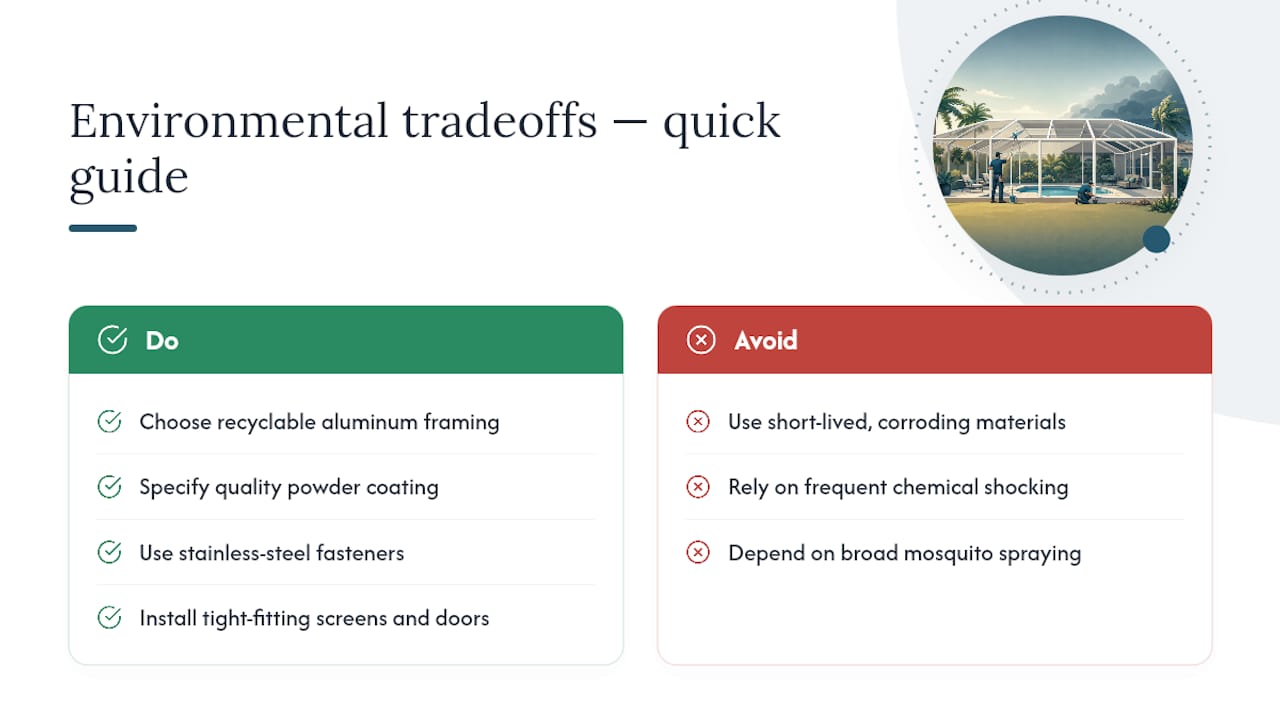
Screen enclosures have a modest but real environmental upside: they cut down on chemical use. Fewer leaves, less pollen, and less direct sun mean less chlorine demand and less frequent shocking to keep water balanced, which reduces the volume of pool chemicals draining into the ground over the life of the pool.
On the materials side, aluminum framing is highly recyclable, and a well-built cage with quality powder coating can last decades before any component needs full replacement. That's a better environmental profile than structures that need to be torn out and rebuilt every decade due to corrosion or coating failure. Choosing stainless steel fasteners over galvanized hardware extends that lifespan further, which means fewer replacement parts end up in a landfill over time.
As for wildlife, screening mostly keeps larger animals like frogs, lizards, and birds out of the pool area, which is generally a net positive since it reduces both animal drownings and the waste homeowners deal with from birds roosting near the water. Insects still pass through in small numbers around door seals, but the enclosure meaningfully reduces the need for mosquito spraying near the pool, which is a modest win for the pollinators and beneficial insects that would otherwise be affected by broader yard treatments.
Potential Resale Value Impact of a White Pool Cage
Buyers touring a home with a pool almost always walk the enclosure before anything else outside. A white cage that's clean, straight, and free of rust streaks reads as a well-kept feature. One with yellowed panels, sagging screens, or visible rust bleeding from fastener heads reads as a project the buyer will have to tackle themselves, and that perception shows up in negotiations.
The color itself, white versus bronze, rarely moves the needle on price. What moves it is condition. A bright, well-maintained white frame can actually help a listing photograph better, since it makes the pool area look larger and more open in daylight photos than a darker frame would. That's a small but real marketing advantage for sellers.
The bigger resale risk with white cages isn't the color choice. It's deferred maintenance catching up right before a sale, when a homeowner suddenly needs to fix years of streaking and corrosion on a tight timeline. Addressing the frame condition well before listing, rather than scrambling during a home inspection period, protects far more value than picking one frame color over another ever will.
Why the White vs Bronze Debate Misses the Point
Most advice on this topic frames white and bronze as a durability contest, and that's the wrong lens entirely. The aluminum underneath ages identically either way. What actually differs is how visible that aging is, and homeowners who choose based on looks alone often underestimate how much cleaning white demands to stay looking good.
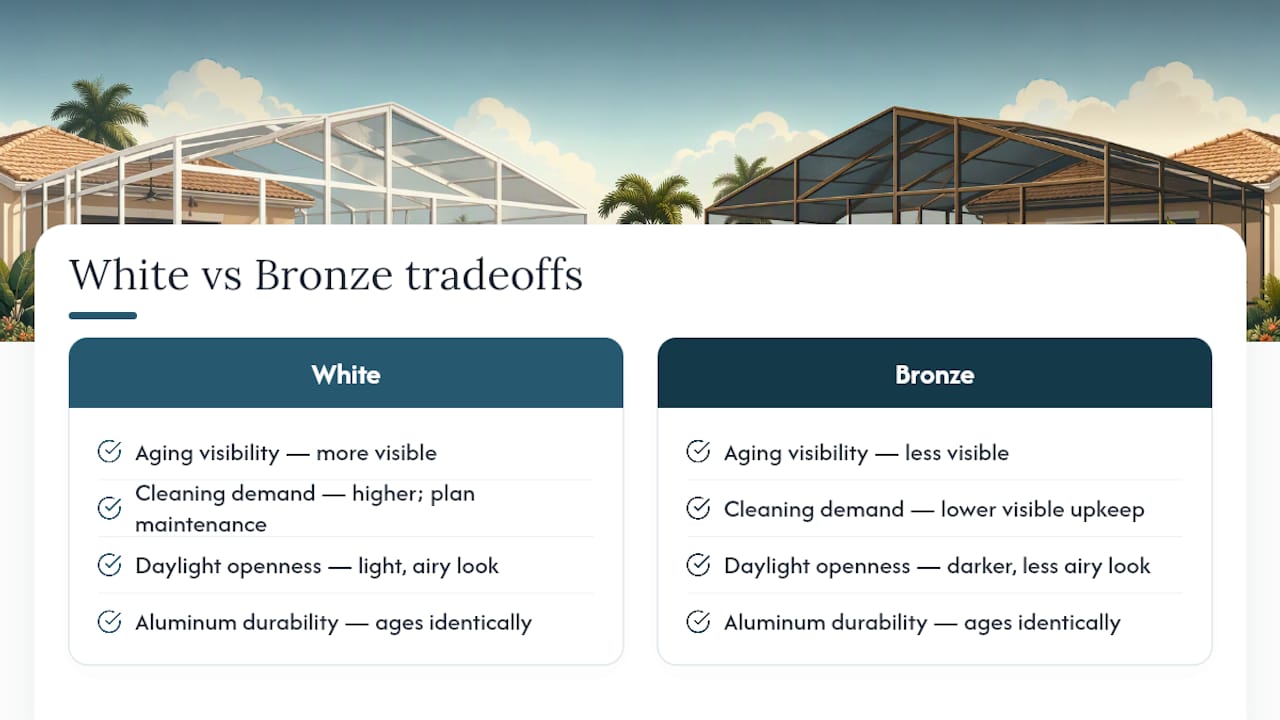
The bigger blind spot is assuming a tired-looking white cage means it's time to rebuild. In most cases the frame is structurally fine. It's the coating and fasteners that failed, not the aluminum. That distinction changes the entire financial calculation, since a repaint and hardware swap can often solve what looks like a replacement-level problem.
If you're set on white, plan your maintenance calendar before you plan your color scheme. Rinse frequency and fastener checks matter more to how the cage looks in five years than any coating brand or contractor promise. Get that routine right, and white holds up just fine in most Central Florida yards.
— Michel
Restore Your White Pool Cage Instead of Replacing It
If your white pool cage is showing rust streaks, chalky paint, or torn screen panels, restoration usually solves it for a fraction of what a full rebuild costs. Mrpoolscreen specializes in exactly this kind of work across Central Florida, using water-based acrylic coatings and stainless steel fasteners instead of the cheaper materials that cause the same problems to return within a couple of years.
A typical project starts with an on-site inspection where a contractor evaluates your frame condition, fastener corrosion, and screen wear before quoting anything. From there, you can review real completed work in the project gallery to see how restored frames hold their brightness over time. If your cage is due for attention, start with the pool screen restoration page and book an inspection to get a firm quote before deciding between restoration and replacement.
Sources
- Screen Enclosure Frame Colors: White or Bronze
- Painting Your Pool Cage: Tips, Benefits, And Best Practices | ShunShelter