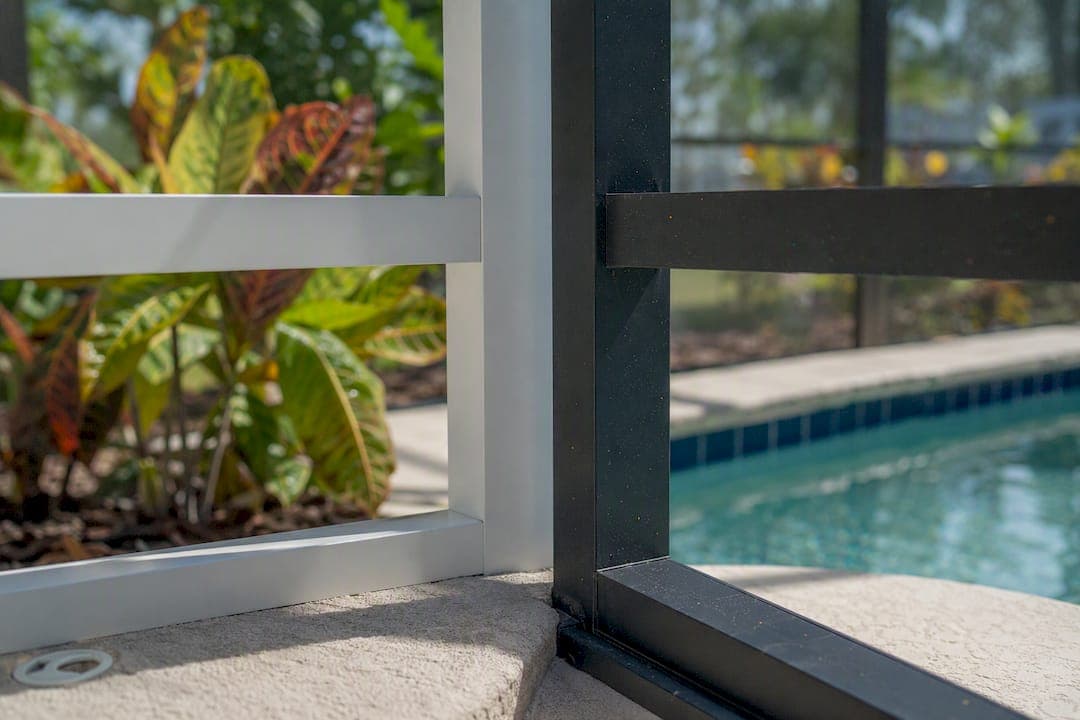
For most homeowners, the lowest-visibility, lowest-upkeep combination is a bronze frame with charcoal or black mesh. Choose white only if you want a bright, architectural grid and don't mind cleaning it more often. Maintenance and view clarity both favor darker finishes, but restoring an existing enclosure to a new color often costs far less than starting over. Mr. Pool Screen can make that switch without a full rebuild.
TL;DR:
- Darker frame finishes like bronze or charcoal recede into landscaping and are easier to restore, offering better maintenance and view clarity than white frames.
- Black or charcoal mesh provides the clearest view and masks dirt better, while gray mesh reduces glare but is slightly more visible against darker backgrounds.
- White frames show dirt and pollen buildup faster, requiring more frequent cleaning, but reflect more heat and fade less visibly over time.
- Restoration with water-based acrylic coatings and stainless fasteners can update color and improve appearance without a full rebuild, saving costs.
- Choosing frame and mesh colors based on actual samples in natural light and matching your home's trim ensures better satisfaction than relying on online swatches or names.
Table of Contents
- Frame Color for a Pool Enclosure: White vs. Bronze/Charcoal
- Black, Charcoal, or Gray Mesh: Which Gives the Clearest View?
- How Screen Color Affects Cleaning and Long-Term Upkeep
- Homeowner Checklist Before You Hire an Installer or Restoration Contractor
- What Restoration Projects Show About Changing Your Enclosure's Color
- Does Frame Color Affect Heat and UV Durability?
- Popular Pool Enclosure Color Schemes Right Now
- Light vs. Dark Enclosure Colors: Which Fits Your Climate?
- Quick Heuristics for Picking Pool Enclosure Colors
- Get a Restoration Quote or Physical Color Sample
- Sources
Frame Color for a Pool Enclosure: White vs. Bronze/Charcoal
Most manufacturers offer just two frame colors: white and bronze. That surprises a lot of first-time buyers who expect a paint-chip wall of options. In practice, bronze reads as a dark, near-charcoal tone rather than the warm metallic bronze you might picture from a light fixture or door hardware. It's formulated that way on purpose, so it functions as the "dark" choice without needing a true black anodized finish.
That distinction matters when you're standing at your pool deck deciding what will actually blend into your yard. A bronze frame against green landscaping or blue sky tends to recede, drawing the eye past the structure to the pool itself. White does the opposite. It's crisp, it reads as architecture, and it can look great against a Mediterranean-style home with white stucco and terra cotta roof tiles. On a modern home with dark window frames and gray siding, though, a white cage can look like an afterthought bolted onto the house.
A few practical rules for matching frame color to your home:
- Traditional or coastal homes with light exteriors often pair well with white frames and white or gray trim.
- Modern or Mediterranean homes with dark window frames or black shutters usually look better with bronze.
- If your home has black gutters, dark garage doors, or charcoal roof shingles, bronze frames tie the whole exterior together.
- Check your HOA guidelines before ordering. Some communities restrict frame color to match a neighborhood standard.
Don't trust a swatch card or a photo on a website. Bring physical frame samples to your property and look at them in morning light, afternoon light, and from where you'll actually sit on the pool deck. Color under a showroom fluorescent bulb rarely matches how it looks against your actual siding and sky at 4 p.m. in July.
Black, Charcoal, or Gray Mesh: Which Gives the Clearest View?
Darker mesh wins on visibility, and the reason is contrast, not light transmission. Black and charcoal mesh increase perceived transparency by reducing the visual noise created by reflections bouncing off the individual strands. Your brain essentially tunes out the darker grid faster than it tunes out a lighter one, so the view beyond the screen looks cleaner.
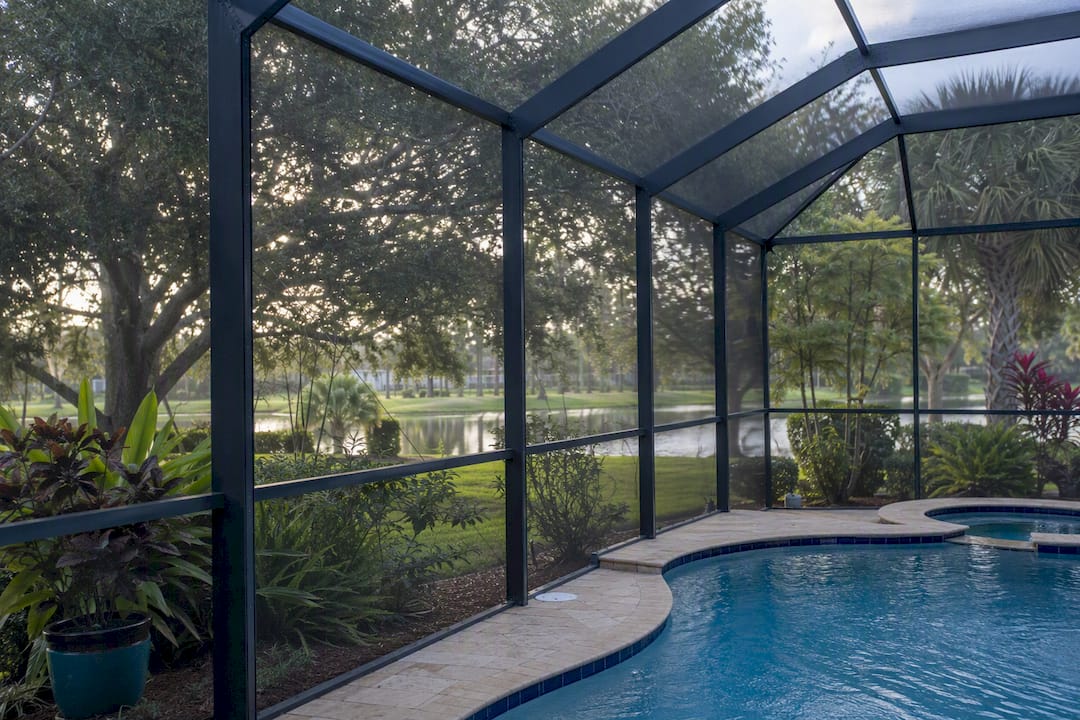
Standard pool screen mesh, regardless of color, lets roughly 70 to 80 percent of sunlight through. Color doesn't change that light transmission much. What it changes is glare. Gray mesh tends to soften harsh reflections in extremely bright, sun-drenched enclosures, which is why some installers still recommend it for west-facing lanais that catch brutal afternoon sun.
Here's how the two options typically play out:
- Black or charcoal mesh: Best outward view, least visible grid, disappears against most frame colors, slightly better at masking dirt buildup.
- Gray mesh: Slightly brighter overall enclosure feel, can diffuse intense glare, but the grid pattern is more visible against darker backgrounds.
At night, darker mesh also gives you more privacy from outside, since interior lighting doesn't project through it as visibly as it does through lighter screening. Homeowner forums back this up too. Builders commonly recommend black mesh for the clearest sightlines, even though many local suppliers default to stocking charcoal because it's the more universally available option.
Pro Tip: If you're torn between charcoal and black, ask your installer for both samples side by side. In daylight, the difference is often smaller than the names suggest, but it's worth confirming before you commit to a full re-screen.
How Screen Color Affects Cleaning and Long-Term Upkeep
Color changes how soon your enclosure looks dirty, not how quickly it actually gets dirty. Pollen, mildew spores, and dust land on white and bronze frames at the same rate. But white frames show that buildup far sooner, especially in Central Florida where pollen season and afternoon humidity team up to create streaking that shows up within weeks of a good cleaning.
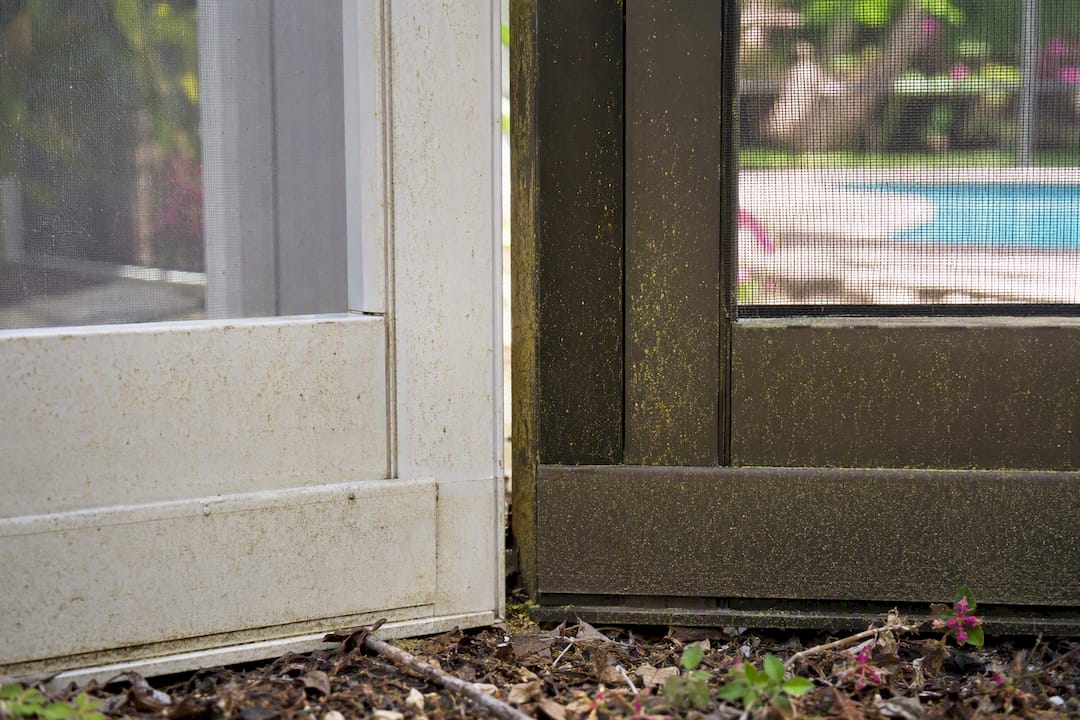
Darker frames and mesh hide the same residue much longer between washes, which is a real consideration if you're not looking to hose down your cage every month.
Material choice matters as much as color here:
- Water-based acrylic topcoats resist chalking and fading better than older oil-based finishes, keeping color true for years instead of months.
- Stainless steel fasteners don't rust and streak the way standard steel screws do, which is often the actual source of those orange stains homeowners blame on "dirty" screens.
- A washable mesh surface holds up to gentle cleaning without degrading the weave, extending the usable life of your chosen color.
If your current cage is discolored, rusted at the fasteners, or just looks tired, restoration is usually the more sensible move before you assume a full teardown is necessary.
Homeowner Checklist Before You Hire an Installer or Restoration Contractor
Walking into a bid conversation with the right questions saves you from surprises after the crew shows up. Work through this list before you sign anything:
- Decide your visual priority. Do you want the cage to disappear against your landscaping, or are you fine with it standing out as a design feature?
- Match your trim. Note your home's window frame color, gutter color, and roofline details before choosing bronze or white.
- Pick your mesh color. Default to charcoal or black unless glare from direct afternoon sun is a specific problem.
- Request physical samples. Any contractor who won't bring frame and mesh samples to your property is asking you to guess.
- View samples at multiple times of day. Morning and late afternoon light change how bronze and charcoal actually look.
- Confirm HOA compliance. Get color approval in writing if your neighborhood has design restrictions.
- Ask about the finish system. A water-based acrylic coating holds color longer than cheaper alternatives.
- Ask about fasteners. Stainless steel resists the rust stains that ruin an otherwise good-looking cage.
- Get a restoration quote alongside a replacement quote. Compare both before deciding a rebuild is necessary.
Watch for red flags during these conversations: vague answers about "the finish we usually use," reluctance to show samples, or a proposal with no warranty terms in writing. Those are signs to get a second bid.
What Restoration Projects Show About Changing Your Enclosure's Color
Mr. Pool Screen's restoration process centers on two materials that matter more than most homeowners realize: water-based acrylic coatings for the frame finish and stainless fasteners to replace corroded hardware. Together, they let a faded or rusted cage come back looking like a new color choice rather than a patched-up old one.
- Restoration can update frame color, replace failing mesh, and swap out rusted screws in a single project.
- Homeowners typically save against the cost of a full teardown and rebuild, since the structural frame stays in place.
- The project gallery shows before-and-after examples of enclosures that went from chalky white or rust-streaked bronze to a clean, consistent finish.
Restoration can't change the frame's physical geometry. If the structure itself is bent, undersized, or failing at the welds, replacement is the right call, not a repaint.
Does Frame Color Affect Heat and UV Durability?
Darker frames and mesh absorb more heat than white or light gray finishes, which can raise the surface temperature of the aluminum on hot afternoons. That heat doesn't transfer meaningfully into the pool itself since the enclosure sits above and around the water rather than touching it, but it can make the frame noticeably warmer to the touch and slightly raise ambient air temperature inside the cage on still days.
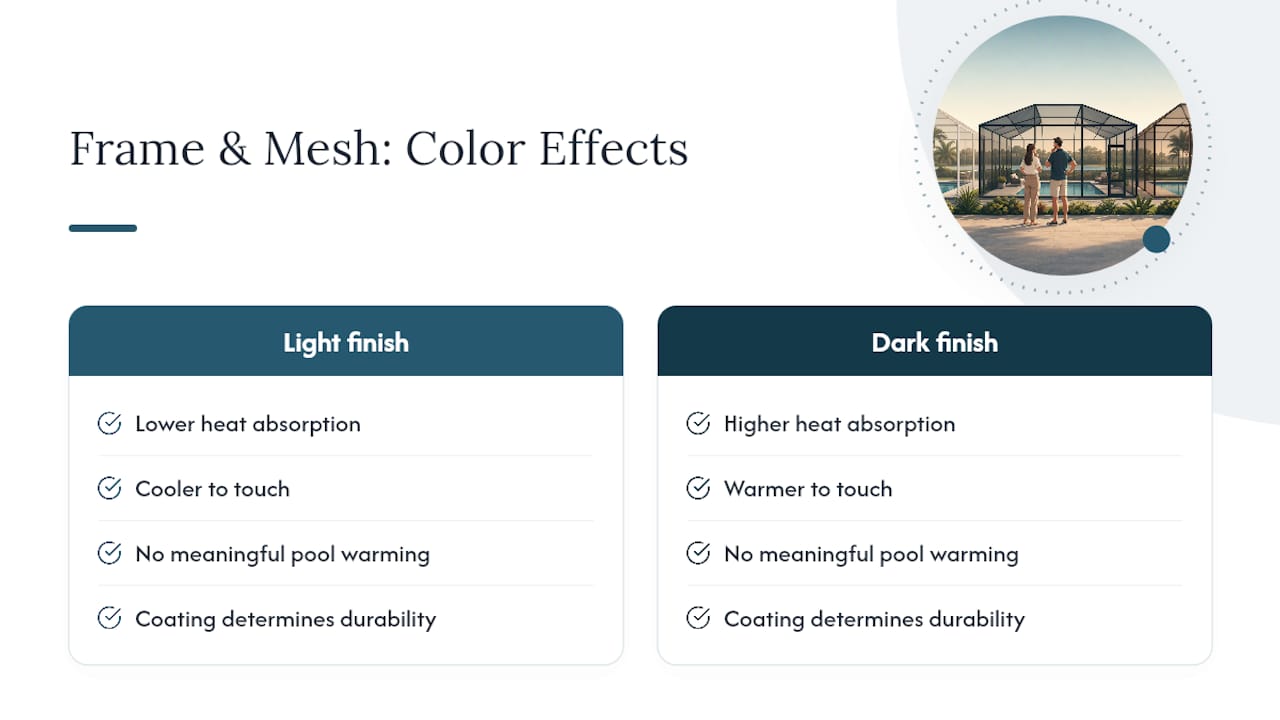
UV exposure is the bigger long-term concern for any color. Aluminum frames don't degrade from sun the way vinyl or wood siding does, but the finish coating on top of that aluminum does fade and chalk over years of Florida sun. A quality acrylic topcoat resists UV breakdown far better than a basic factory paint job, which is why the coating matters more than the color itself when it comes to durability.
Mesh is a different story. Polyester and fiberglass screen material both degrade under sustained UV exposure regardless of color, though darker mesh tends to show that degradation less visibly since fading is harder to spot on black or charcoal strands than on lighter gray. If you're weighing mesh materials for durability alongside color, it's worth reading through the differences between fiberglass and polyester screen before you commit to a re-screen.
Popular Pool Enclosure Color Schemes Right Now
Bronze frames paired with charcoal or black mesh remain the most requested combination among homeowners updating an older white cage. It's a shift driven partly by aesthetics and partly by practicality: homeowners tired of scrubbing pollen off white frames every spring are gravitating toward finishes that hide that buildup between cleanings.
Modern coastal homes are also leaning into darker frame and mesh combinations that mimic the black window frames and black hardware trending in exterior design more broadly. That pairing gives a pool enclosure a sleeker, more intentional look rather than the "screen porch" feel that all-white cages sometimes carry.
White hasn't disappeared. It still shows up often on traditional Florida homes, especially ones with white stucco, white trim, and a more classic architectural style where a bright frame complements the existing palette rather than fighting it. For a broader look at how color choice fits into the rest of your enclosure decisions, from mesh type to panel layout, the visual upgrade options guide walks through the combinations homeowners are choosing most.
Light vs. Dark Enclosure Colors: Which Fits Your Climate?
In hot, sun-heavy climates like Central Florida, light-colored frames and mesh have a real advantage: they stay cooler to the touch and reflect more heat away from the structure, which matters if you or your kids are touching the frame or lounging near it on a scorching afternoon. White also shows less visible fading over time since it starts at the brightest end of the color spectrum.
The tradeoff is maintenance. White shows dirt, pollen, and mildew streaks faster, meaning more frequent cleaning to keep that heat-reflecting benefit looking good.
Darker colors trade some of that heat reflection for lower-maintenance appearance and better view clarity. In milder or less humid climates, that tradeoff leans more favorably toward dark finishes since pollen and mildew buildup happen slower. In Florida's combination of intense sun, high humidity, and heavy pollen seasons, the choice really comes down to what you're willing to manage. If you want a low-upkeep cage and don't mind slightly warmer frame surfaces, dark wins. If you want the coolest possible structure and don't mind a cleaning routine, white wins.
Quick Heuristics for Picking Pool Enclosure Colors
The biggest mistake homeowners make is picking a color from an indoor swatch or a name on a spec sheet. "Bronze" sounds warm and metallic until you see it against your actual roofline, where it often reads as dark charcoal. Trusting a name over a sample in daylight is how people end up disappointed on install day.
Three heuristics hold up consistently: match your frame to your dominant trim color, default to dark mesh if a clear view matters to you, and never approve a color without seeing physical samples outdoors. Stand at your actual pool deck before you sign anything. That single step catches more surprises than any spec sheet ever will.
— Michel
Get a Restoration Quote or Physical Color Sample
If your current enclosure is faded, rust streaked, or just the wrong color for your home now, restoration lets you fix all three without tearing anything out. Mr. Pool Screen refinishes frames with water-based acrylic coatings, swaps in stainless fasteners where rust has taken hold, and re-screens with the mesh color you actually want, at a fraction of what a full rebuild costs.
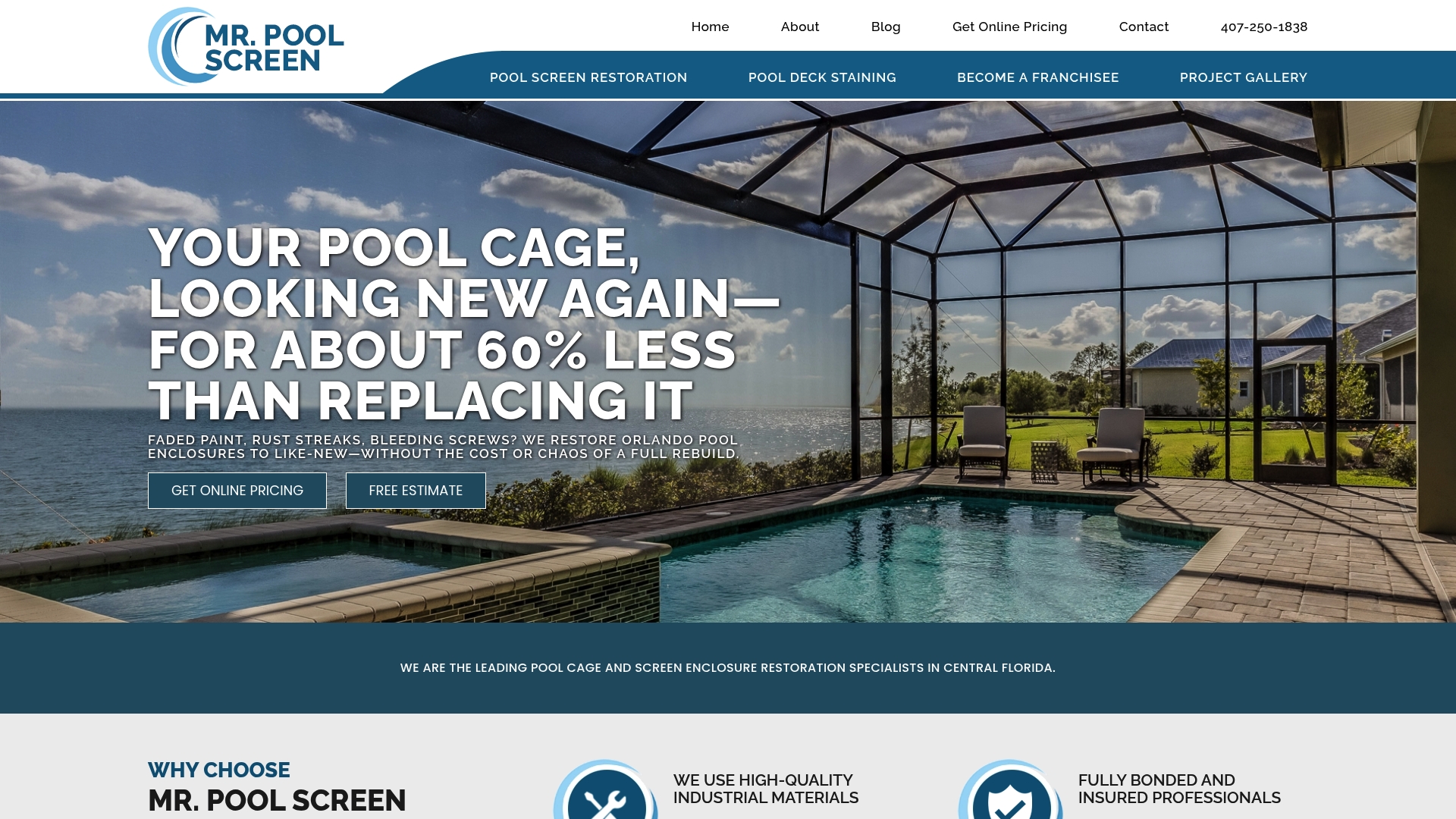
Browse the pool screen restoration page to see exactly what's included, or look through the project gallery for before-and-after examples close to what you're picturing for your own cage. If your screens have visible algae buildup you want to address before your restoration appointment, this DIY cleaning guide covers safe methods that won't damage the mesh. When you're ready to see samples against your own home, request a quote and Mr. Pool Screen will bring the frame and mesh options straight to your pool deck.
Sources
- Black vs Grey Screen Mesh: VLT & Glare Reduction Data - Blog - Weiziran
- Swimming Pool Screen Enclosures - Dreamscapes Pools & Spas