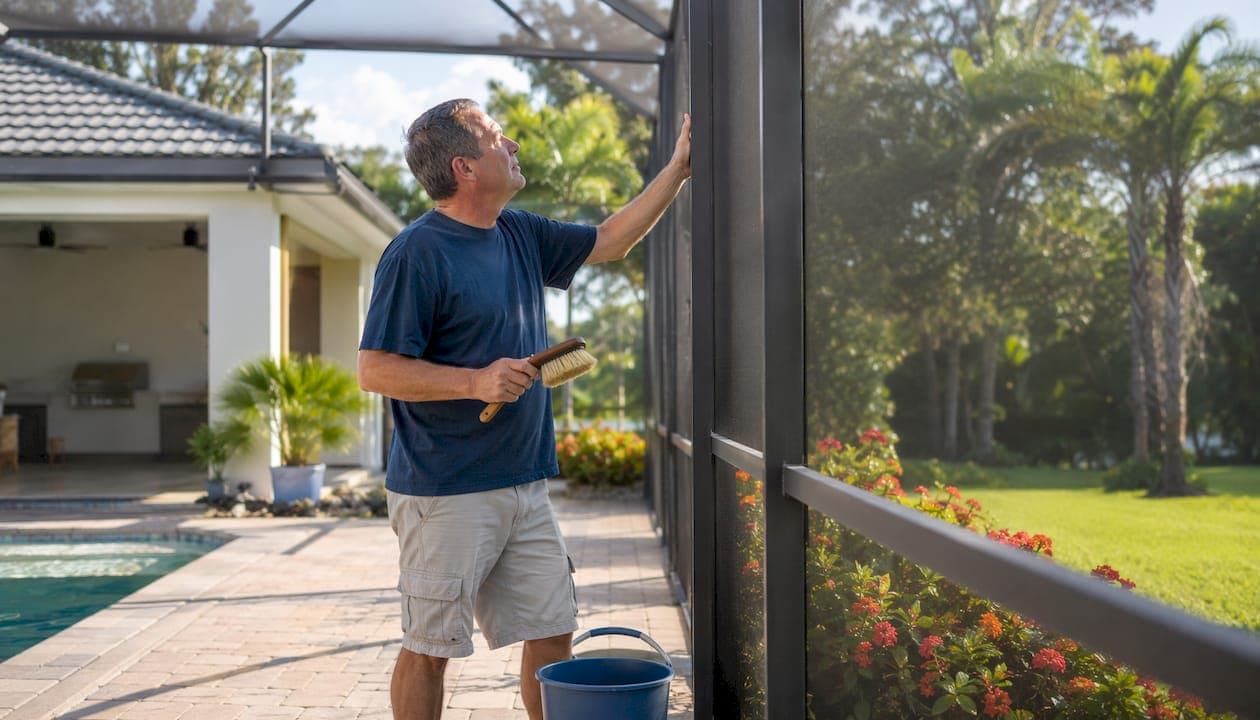
Local pool screen maintenance service benefits every homeowner with an aging enclosure by preventing the three most damaging forces: algae growth, frame corrosion, and structural failure. A pool enclosure represents an investment of $8,000 to $25,000, and routine professional upkeep is the most direct way to protect that value. Skipping maintenance does not save money. It accelerates deterioration and pushes homeowners toward full rescreening costs that dwarf what regular service would have cost. The sections below break down exactly what professional pool screen care does for your enclosure, your safety, and your wallet.
1. How regular maintenance extends the life of your pool enclosure
A well-maintained pool screen enclosure lasts 10–12 years. Without proper upkeep, coastal environments cut that lifespan to 5–7 years due to algae and salt buildup. That is a loss of nearly half the enclosure's useful life, and it is entirely preventable.
The main causes of deterioration are algae, mold, oxidation, and biological debris. These forces attack both the mesh and the aluminum frame. Algae embeds into screen fibers and holds moisture against the frame, which speeds up corrosion. Mold produces acids that weaken mesh over time.
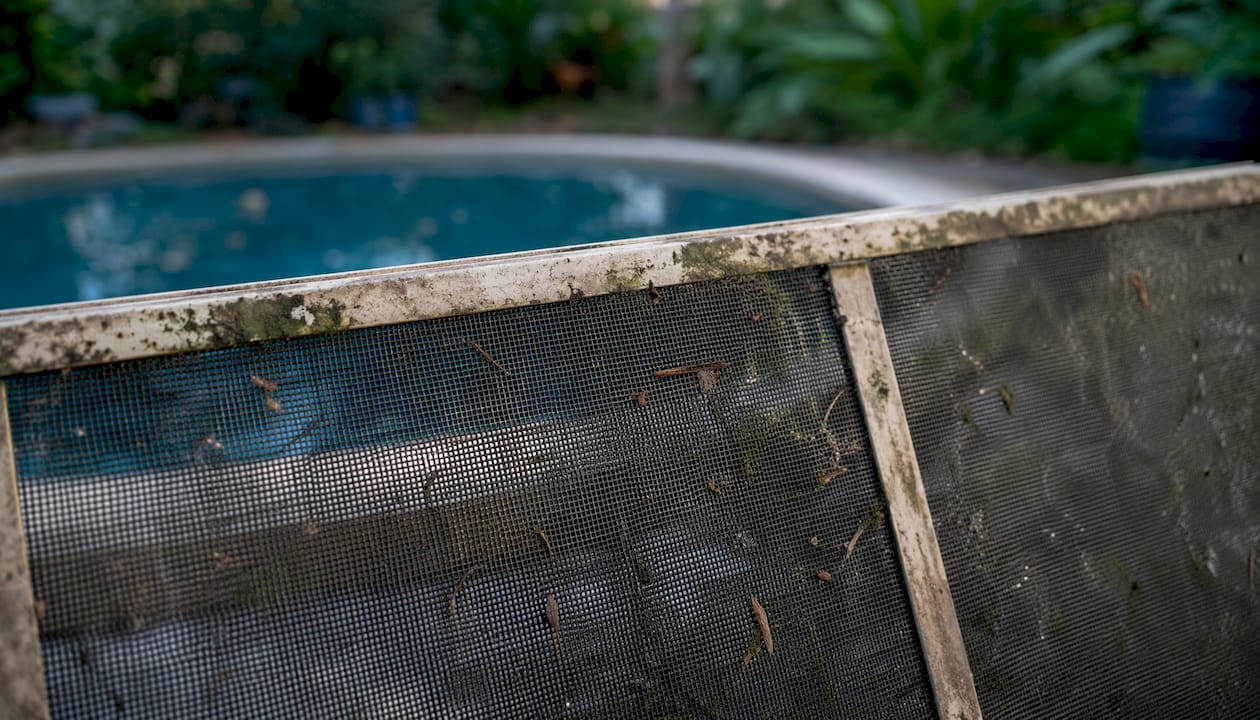
Industry standards recommend professional cleaning every 6–12 months, with quarterly service for enclosures exposed to heavy pollen, tree debris, or salt air. Homes near Florida's coastline or under heavy tree canopy fall into the high-frequency category. Skipping even one annual cleaning in those conditions creates compounding damage.
Common causes of premature enclosure aging include:
- Algae and mold embedding into screen mesh fibers
- Salt air oxidizing aluminum frame joints
- Pollen and organic debris trapping moisture against the frame
- Biological buildup blocking drainage channels and causing pooling water
Pro Tip: Monthly homeowner rinsing with plain water slows biological buildup between professional visits. Use a garden hose on a gentle setting, not a pressure washer, and work from the top of the enclosure downward.
2. Safety improvements that professional upkeep delivers
Pool enclosure safety is not just about keeping bugs out. The frame, fasteners, and mesh work together as a barrier that protects children and pets from unsupervised pool access. When any part of that system degrades, the barrier fails.
Professional maintenance identifies early signs of fastener failure, mesh degradation, and frame oxidation before those issues become accidents. A loose spline or corroded corner bracket is invisible to most homeowners during a casual glance. A trained technician spots it during a routine visit.
Homeowners who follow a pool screen safety inspection checklist alongside professional service catch problems at the earliest and cheapest stage. Early detection is always less expensive than emergency repair.
Safety risks that routine professional service mitigates:
- Loose or missing fasteners that allow screen panels to detach
- Frame sections weakened by corrosion that can collapse under wind load
- Torn mesh panels that create gaps large enough for a child or pet to pass through
- Degraded door hardware that prevents secure latching
- Structural instability from water-damaged frame joints
3. Aesthetic and environmental benefits of professional screen cleaning
A green or gray pool enclosure does not just look neglected. It signals to neighbors and potential buyers that the property lacks upkeep. Algae staining and mold streaks on screen frames are among the most visible signs of deferred maintenance on any Florida home.
Professional soft washing removes algae at the root level, not just at the surface. That distinction matters because surface-only cleaning leaves spores behind, and regrowth appears within weeks. A proper treatment clears the enclosure and slows the return of biological growth.
Combining pool deck and enclosure cleaning in a single service visit prevents re-contamination. When a dirty deck is left untreated, debris and spores migrate back onto freshly cleaned screens within days. Bundled cleaning produces results that last significantly longer.
The environmental benefits extend beyond appearance:
- Removal of mold and algae reduces airborne spore counts inside the enclosure
- Cleaner screens allow better airflow, reducing humidity buildup that promotes mold
- Eco-friendly cleaning solutions avoid chemical runoff into pool water or surrounding landscaping
Pro Tip: Ask your provider whether they use pH-neutral, biodegradable cleaning solutions. Bleach-based products corrode aluminum frames and promote faster algae regrowth by leaving behind residue that feeds spores.
4. The financial case for investing in local pool screen maintenance
Routine maintenance is a cost-effective pool care solution when measured against the alternative. A full rescreening project or frame replacement costs far more than a series of annual professional cleanings. Protecting a $8,000 to $25,000 enclosure with regular service is straightforward math.
Maintenance also reduces ongoing pool operating costs. Fewer debris entering the pool means less chlorine consumption and shorter heater runtimes. Those savings accumulate across every swimming season.
Mrpoolscreen reports that restoration services can save homeowners up to 60% compared to full enclosure rebuilds. That figure reflects the real cost gap between proactive care and reactive replacement.
| Cost Scenario | Typical Range | Notes |
|---|---|---|
| Annual professional cleaning | Low annual cost | Prevents biological and structural damage |
| Full rescreening (mesh only) | Moderate to high | Required when mesh is torn or degraded beyond repair |
| Frame repair or section replacement | High | Triggered by corrosion or structural failure |
| Full enclosure rebuild | Highest cost | Avoidable with consistent maintenance |
| Restoration vs. rebuild savings | Up to 60% | Mrpoolscreen restoration versus full rebuild cost |
The pattern is consistent: homeowners who invest in regular local pool upkeep services avoid the largest expense categories entirely. The enclosure stays structurally sound, the mesh stays intact, and the frame resists corrosion long enough to reach its full expected lifespan.
5. How to choose the right local pool screen maintenance provider
Local providers offer a genuine advantage over regional or national services. Local maintenance providers deliver more personalized service, deeper knowledge of regional environmental challenges, and faster response times. A provider who works in your specific county understands whether your area has high pollen counts, salt air exposure, or seasonal algae pressure.
Choosing the wrong provider creates new problems. High-pressure washing, for example, tears screen mesh and forces water into frame joints, accelerating the corrosion it was supposed to prevent. A provider who does not use soft wash techniques is not a safe choice for screen enclosures.
Use this checklist when evaluating any professional pool screen service:
- Soft wash capability: Confirm they use low-pressure, pH-neutral solutions rather than high-pressure equipment
- Local experience: Ask how long they have operated in your specific region and whether they understand local environmental conditions
- Eco-friendly products: Verify that cleaning solutions are safe for pool water, landscaping, and aluminum frames
- Insurance and licensing: Require proof of liability insurance and any required state contractor licensing
- Bundled services: Prefer providers who clean both the enclosure and the pool deck in a single visit to prevent re-contamination
- Inspection included: Choose providers who document fastener condition, frame integrity, and mesh status during each visit
A provider who checks every box on that list treats maintenance as a preventative maintenance cycle rather than a one-time cleaning job. That mindset produces better long-term results for your enclosure.
Key takeaways
Consistent professional pool screen maintenance is the single most cost-effective action a homeowner can take to protect an aging enclosure from structural failure, safety hazards, and premature replacement.
| Point | Details |
|---|---|
| Lifespan protection | Regular cleaning prevents algae and corrosion from cutting enclosure life nearly in half. |
| Safety detection | Professional visits catch loose fasteners and frame degradation before they cause accidents. |
| Aesthetic results | Soft washing removes algae at the root, producing results that last far longer than surface cleaning. |
| Financial savings | Routine maintenance avoids rescreening and rebuild costs that can reach $25,000 or more. |
| Provider selection | Choose local providers with soft wash capability, eco-friendly products, and inspection protocols. |
Why I stopped waiting for visible damage before calling a professional
The most common mistake I see homeowners make is treating pool screen maintenance as a reactive task. They wait until the enclosure looks green, a panel sags, or a door stops latching. By that point, the damage is already structural, and the repair bill reflects it.
Cleaning should function as a preventative cycle, not a cleanup job. The algae you can see on a screen panel has already been growing for weeks. The spores you cannot see are already embedded in the mesh fibers. Waiting for visible confirmation means you are always one step behind the deterioration.
I have also watched homeowners try bleach-based DIY cleaners to save money. The short-term result looks fine. The medium-term result is a corroded frame and faster algae regrowth, because bleach residue feeds the next generation of spores. The money saved on one cleaning gets spent twice over on the next repair.
My honest recommendation: schedule professional service before you think you need it, not after. Pair that with monthly garden hose rinsing on your own. That combination keeps biological buildup from ever reaching the stage where it causes real damage. A good pool enclosure maintenance guide gives you the framework to stay ahead of the problem rather than chasing it.
— Michel
Mrpoolscreen's restoration services for aging pool enclosures in Orlando
Homeowners in Central Florida dealing with green frames, corroded fasteners, or sagging screen panels have a direct option that does not require a full rebuild.
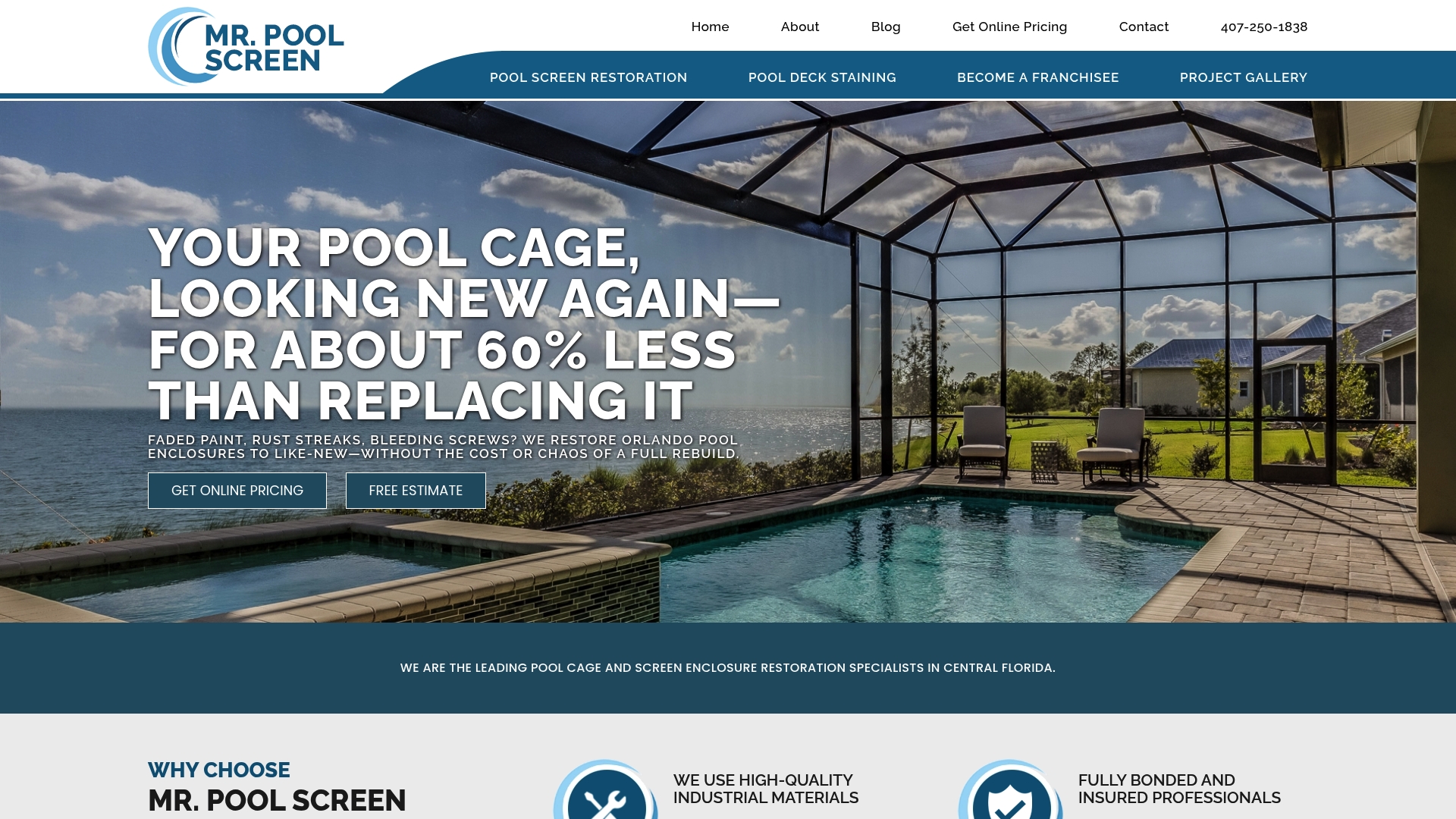
Mrpoolscreen specializes in pool screen restoration for aging enclosures across the Orlando area, using water-based acrylic coatings and stainless steel fasteners that outperform standard replacement materials. Their process addresses weathering, rust, and aesthetic deterioration at a fraction of full rebuild costs. Clients save up to 60% compared to complete enclosure replacement. The team combines soft washing, structural inspection, and frame restoration in a single service visit. If your enclosure is showing signs of age, contact Mrpoolscreen for an assessment before the damage reaches the point of no return.
FAQ
How often should I schedule professional pool screen cleaning?
Industry standards recommend professional cleaning every 6–12 months, with quarterly service for enclosures in coastal areas or under heavy tree canopy. High-pollen and salt-air environments accelerate biological buildup and require more frequent attention.
What is soft washing, and why does it matter for pool screens?
Soft washing uses low-pressure water and pH-neutral cleaning solutions to remove algae and mold without tearing mesh or forcing water into frame joints. High-pressure washing damages screen mesh and accelerates frame corrosion, making it the wrong tool for enclosure cleaning.
Can I maintain my pool screen enclosure myself between professional visits?
Monthly rinsing with a garden hose on a gentle setting slows biological buildup between professional cleanings. Avoid bleach-based cleaners, which corrode aluminum frames and promote faster algae regrowth.
How do I know if my pool enclosure needs professional attention now?
Signs of fastener failure, visible green or gray staining, sagging panels, or a door that does not latch securely all indicate the enclosure needs professional service. Waiting for multiple symptoms to appear together usually means the damage is already structural.
Is pool screen restoration cheaper than full rescreening?
Restoration is significantly less expensive than full rescreening or frame replacement. Mrpoolscreen reports savings of up to 60% compared to a complete rebuild, making restoration the practical first option for homeowners with aging but structurally repairable enclosures.