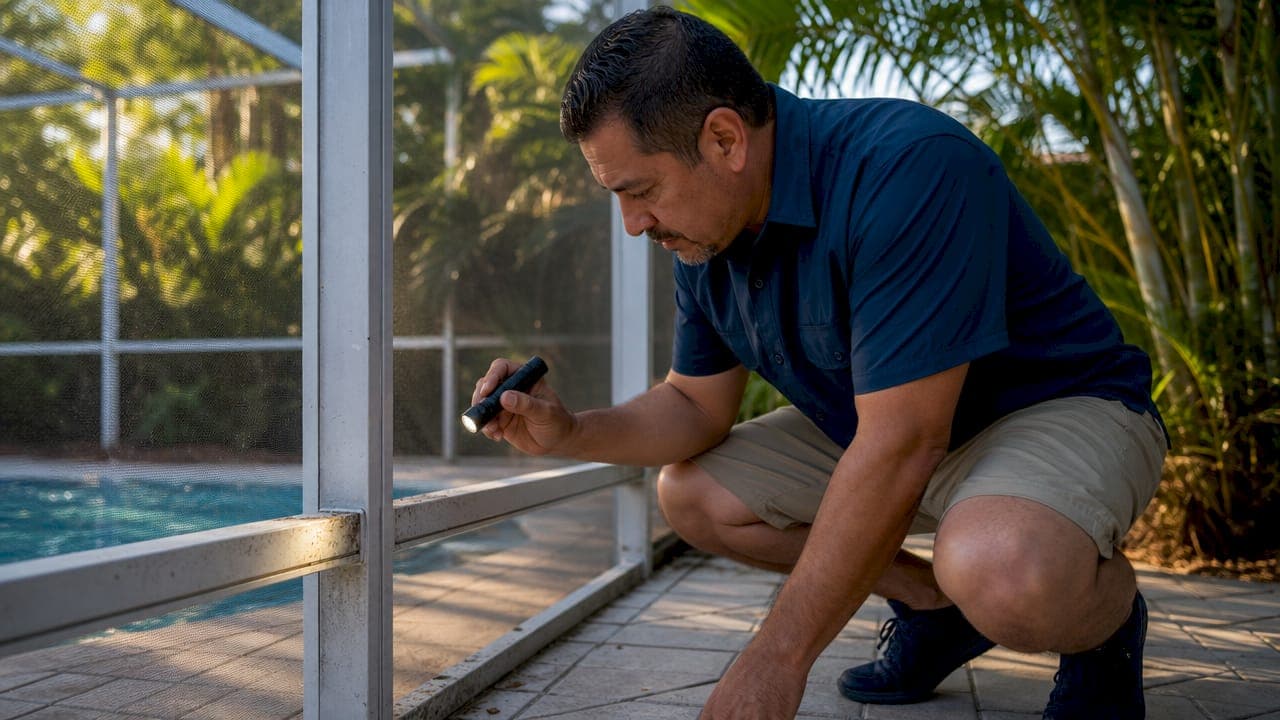
Pool screen fastener failure signs are the visible and audible clues that tell you when your pool enclosure's critical connections are weakening. Fasteners are the screws and anchors holding every frame joint together, and when they fail, the entire structure loses integrity. Industry maintenance standards recommend inspecting fasteners twice per year to catch problems before they become expensive. Catching these signs early is the difference between a simple screw replacement and a full structural repair.
1. Pool screen fastener failure signs start with visible rust and corrosion
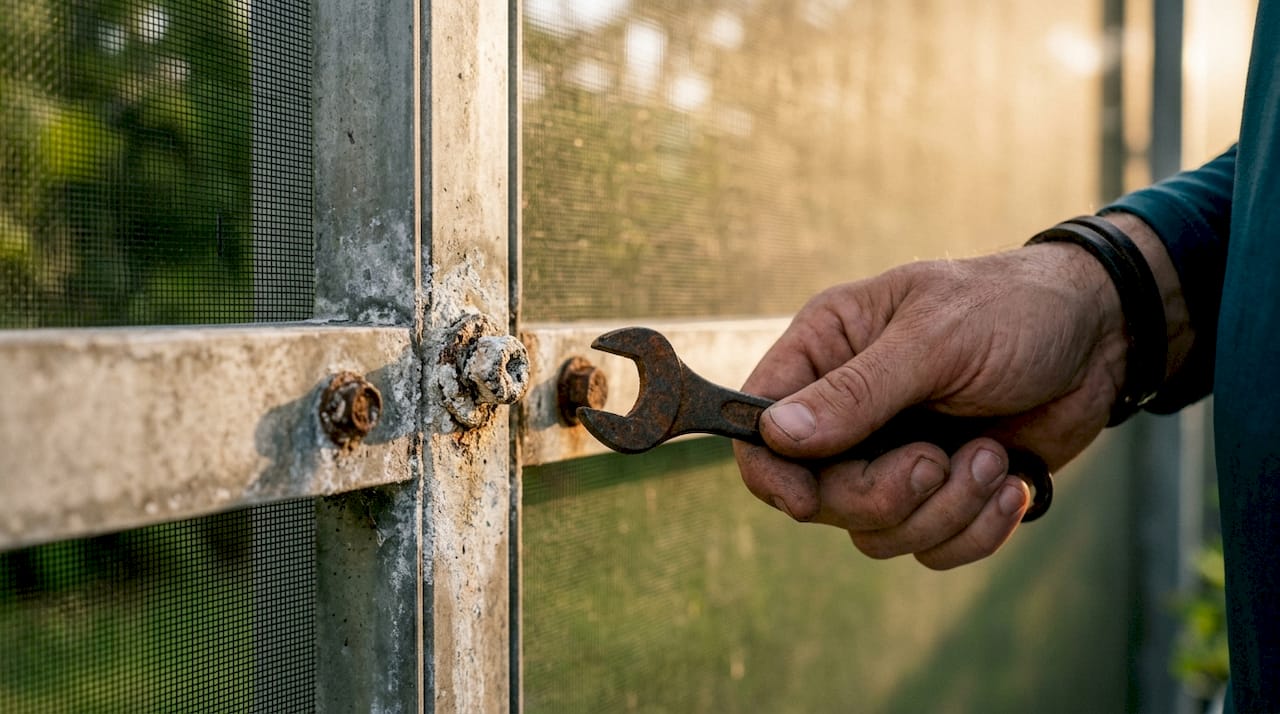
Rust and corrosion are the earliest and most reliable indicators of fastener trouble. Brown or orange streaks running down from screw heads, or orange staining on the aluminum frame around a fastener, signal that the steel inside is oxidizing. Left untreated, this corrosion eats through the screw shank and severs the connection entirely.
The more dangerous form is galvanic corrosion, which happens when stainless steel screws contact aluminum frames in the presence of moisture and salt air. This reaction produces a white powdery residue around the fastener. That white powder is not just surface dirt. It signals that corrosion has penetrated the frame material itself, weakening the structure beyond what the fastener alone can hold.
- Brown or orange streaks running from screw heads down the frame
- White powdery buildup around screws or at frame joints
- Pitting or cratering on the screw head surface
- Orange staining on the aluminum frame surrounding the fastener
Pro Tip: Surface rust on the screw head alone is less serious than white powder at the frame joint. White powder means the aluminum frame is corroding, not just the screw. That requires professional assessment, not just a screw swap.
2. Rattling, creaking, and metallic pinging during wind
Your ears are one of the best diagnostic tools you have. Rattling, creaking, or metallic pinging during moderate wind are acoustic signs that fasteners have sheared or pulled free, allowing frame sections to vibrate independently. A solid, well-fastened enclosure makes almost no noise in normal wind conditions.
These sounds are easy to dismiss as normal settling or wind noise. They are not. Each rattle means a frame section is moving when it should be locked in place. The more fasteners that fail, the louder and more frequent the noise becomes.
- Rattling from one section of the enclosure during light wind
- Creaking at frame corners or roof panels under pressure
- Metallic pinging when the structure flexes
- Intermittent knocking that stops when wind dies down
Pro Tip: Walk the perimeter of your enclosure during a breezy afternoon and listen for sounds that localize to one area. That spot is almost always where fastener failure is most advanced.
3. Physical wobble and frame movement when pushed
A structurally sound pool enclosure does not move when you push it. If you press gently on a frame section and feel it flex, shift, or rock, the fasteners at that joint have lost their holding power. Audible movement combined with physical wobble is a strong indicator that fasteners have already sheared or pulled out of the frame.
Test each major frame section by placing both hands flat on it and applying steady, moderate pressure. A small amount of give is normal in screen panels. Movement in the aluminum frame itself is not. Pay close attention to corners and roof-to-wall joints, since those carry the most load.
This test takes less than five minutes and reveals problems that visual inspection alone misses. A frame that wobbles under hand pressure will fail under storm-force wind.
4. Screw heads that spin freely or feel loose
A screw head that turns without resistance is a fastener that has already failed internally. Tap testing screws with a screwdriver reveals shank failure even when the head looks perfectly intact from the outside. If the head spins freely or produces a hollow click when tapped, internal corrosion has destroyed the shank's grip.
This is one of the most underestimated pool screen damage signs. Homeowners see an intact screw head and assume the fastener is fine. The shank, buried inside the frame, can be completely corroded while the head still looks normal. A quick tap test with a flathead screwdriver takes seconds and tells you far more than a visual check.
Run the screwdriver handle along each screw head in a section. A solid, healthy screw produces a firm tap sound. A failed one produces a dull thud or spins under light pressure.
5. Visible missing or popped-out screws
Missing screws are not a minor cosmetic issue. A loose screw is rarely isolated. When one fastener fails and pops out, the load it carried transfers to the screws beside it. Those adjacent fasteners then carry more stress than they were designed for, accelerating their own failure.
Walk the full perimeter of your enclosure and look at every frame joint. Empty screw holes, screws sitting proud of the frame surface, or screws that have backed out halfway are all warning signs of pool screen failure that demand immediate attention.
- Empty screw holes at frame joints or corner brackets
- Screws sitting above the frame surface rather than flush
- Visible gaps where frame sections have separated
- Bent or deformed screw heads from stress overload
When multiple adjacent screws are missing from the same section, that area of the enclosure is at serious risk of collapse under wind load. Do not wait on this one.
6. Frame misalignment and out-of-square corners
A pool enclosure with failing fasteners gradually loses its shape. Significant frame misalignment is a severe warning sign that fastener loss has progressed to structural failure. When corners go out of square or frame sections visibly gap, the enclosure can no longer distribute wind load evenly.
Stand back and look at your enclosure from the yard. The roofline should be straight and level. Corner angles should look crisp and 90 degrees. Any visible bowing, leaning, or sagging in the frame is a sign that fasteners have failed at multiple points.
Persistent movement after you attempt to tighten screws is another red flag. If a screw tightens but the frame still wobbles, the hole itself has stripped or the frame material has corroded around it. That requires professional repair, not just a larger screw.
7. Sagging screen mesh and loss of tension
Screen mesh that sags, billows, or hangs loosely is a secondary but reliable indicator of fastener problems. Screen losing tension and doors misaligning both indicate structural loosening that needs fastener attention. When screws back out of spline channels or frame rails, the mesh loses the tension that keeps it taut and functional.
Sagging mesh also creates a feedback loop. Loose mesh catches more wind, which puts more stress on already-weakened fasteners, which causes more screws to fail. A section that looks like a minor cosmetic sag today can become a full panel failure after one storm.
Check mesh tension by pressing lightly on each panel. Properly tensioned screen should feel firm and spring back. Mesh that deflects more than an inch or two under light pressure has lost its structural support.
8. Sticking or misaligned enclosure doors
Doors that stick, drag, or no longer close flush are often the first functional sign of frame movement caused by fastener failure. Pool enclosure doors are calibrated to fit within a square frame. When fasteners fail and the frame shifts even slightly, the door opening changes shape and the door no longer fits correctly.
This sign is easy to overlook because homeowners often blame the door hardware itself. The hinges, latch, and door frame are rarely the root cause. Check the frame around the door opening for gaps, misalignment, or visible separation at the joints. If the frame has moved, fasteners have failed.
A door that suddenly starts sticking after years of smooth operation is a reliable early warning. Address it before the frame movement becomes severe enough to require realignment.
9. Water intrusion and leaking at frame joints
Water dripping or pooling inside the enclosure along frame joints is a sign that fasteners have failed and gaps have opened. A properly sealed enclosure with intact fasteners keeps rain outside the screened area. When screws back out, the joint separates slightly and water finds the path of least resistance.
Regular cleaning and maintenance slow corrosion progression and help preserve fastener integrity. Removing pollen, debris, and biological growth reduces moisture trapped near fasteners, which is the primary driver of corrosion. Leaking pool screen signs like water stains inside the frame or wet spots on the pool deck after rain point directly to joint separation from fastener loss.
Run a garden hose along the roofline and watch where water enters. The entry points almost always correspond to joints where fasteners have backed out or corroded through.
10. How to inspect your pool screen fasteners twice a year
Biannual inspections, timed with spring and fall, catch the most common seasonal damage before it compounds. Preventive inspections avoid escalating from simple fastener replacement to costly frame realignment and structural reinforcement. A thorough inspection takes about 30 minutes and requires no special tools beyond a flathead screwdriver and a flashlight.
- Visual scan. Walk the full perimeter in good daylight. Look for rust streaks, white powder, missing screws, and visible frame gaps at every joint.
- Tap test. Use a screwdriver handle to tap each screw head. Listen for hollow sounds or feel for free spinning, both of which indicate internal failure.
- Push test. Apply steady hand pressure to each major frame section. Note any wobble, flex, or movement in the aluminum frame itself.
- Door check. Open and close every enclosure door. Note any sticking, dragging, or gaps around the door frame.
- Mesh tension check. Press each screen panel lightly. Flag any that deflect more than an inch or show visible sagging.
- Water test. After rain or with a hose, check for water entry at frame joints and roof-to-wall connections.
The pool screen safety inspection checklist from Mrpoolscreen covers each of these steps in detail and helps homeowners document findings between professional visits.
Key takeaways
Catching pool screen fastener failure signs early prevents minor corrosion from becoming a full structural collapse that costs far more to fix.
| Point | Details |
|---|---|
| Rust and white powder are urgent | White powdery residue signals aluminum frame corrosion, not just surface rust on the screw. |
| Sound is a diagnostic tool | Rattling or pinging during wind means fasteners have sheared and frame sections are disconnecting. |
| Tap test reveals hidden failure | A screw head that spins freely or clicks hollow has failed internally, even if it looks intact. |
| Missing screws accelerate failure | One popped screw transfers its load to adjacent fasteners, triggering a chain reaction. |
| Inspect twice per year | Spring and fall inspections catch seasonal damage before it compounds into structural repair. |
What I've learned from watching enclosures fail silently
The most common mistake I see homeowners make is waiting for something dramatic before they act. A panel blowing off in a storm feels like a sudden failure. It almost never is. The screws in that panel had been corroding for months, maybe years, before the storm finished the job.
Early inspections save homeowners money by avoiding extensive damage requiring costly frame repairs. That is not a sales pitch. That is the consistent pattern across every aging enclosure I have seen. The homeowners who catch white powder and a few loose screws in the spring spend a fraction of what the ones who wait until fall storm season spend.
The other thing most articles get wrong is the screw head test. People look at a screw, see a clean head, and move on. The shank is where failure happens, and the shank is invisible. The tap test takes two seconds per screw. Skipping it is the single most expensive mistake a homeowner can make during a DIY inspection.
Enclosures in Central Florida face salt air, UV exposure, and hurricane-season wind loads that accelerate every failure mechanism described here. The pool enclosure weather damage prevention steps that work in a mild climate are not enough here. Biannual inspections are the minimum. After any significant storm, do a full check within 48 hours.
— Michel
Mrpoolscreen restores aging enclosures before failure takes hold
Mrpoolscreen specializes in pool enclosure restoration across Central Florida, replacing corroded fasteners with industrial-grade stainless steel screws and treating frames with water-based acrylic coatings that resist UV and salt air. Homeowners who restore rather than rebuild save up to 60% compared to full reconstruction.
If your inspection turns up rust streaks, white powder, missing screws, or frame wobble, a professional assessment tells you exactly what needs replacing before the next storm decides for you. Mrpoolscreen's team handles everything from single-section fastener replacement to full pool screen restoration for enclosures showing widespread corrosion. Get a free estimate and know exactly what your enclosure needs before the problem gets worse.
FAQ
What are the first signs of pool screen fastener failure?
The earliest signs are rust streaks or white powdery residue around screw heads and frame joints. White powder specifically indicates galvanic corrosion between the steel fastener and aluminum frame, which signals structural weakening beyond surface rust.
How often should I inspect pool enclosure fasteners?
Inspect fasteners at least twice per year, once in late spring and once in late fall. After any major storm, perform an additional check within 48 hours to catch damage before it compounds.
Can I fix loose pool screen screws myself?
You can tighten screws that have simply backed out, but if the screw spins freely or the hole has stripped, DIY tightening will not hold. Persistent movement after tightening means the frame or fastener has failed and requires professional repair.
What does white powder around pool screen screws mean?
White powder signals galvanic corrosion, a chemical reaction between stainless steel screws and aluminum frames accelerated by moisture and salt air. This corrosion extends into the frame material itself and requires professional assessment, not just screw replacement.
When should I call a professional for fastener problems?
Call a professional when you find multiple adjacent missing screws, visible frame misalignment, out-of-square corners, or persistent wobble after tightening attempts. These signs indicate advanced structural failure that DIY repairs cannot safely address.