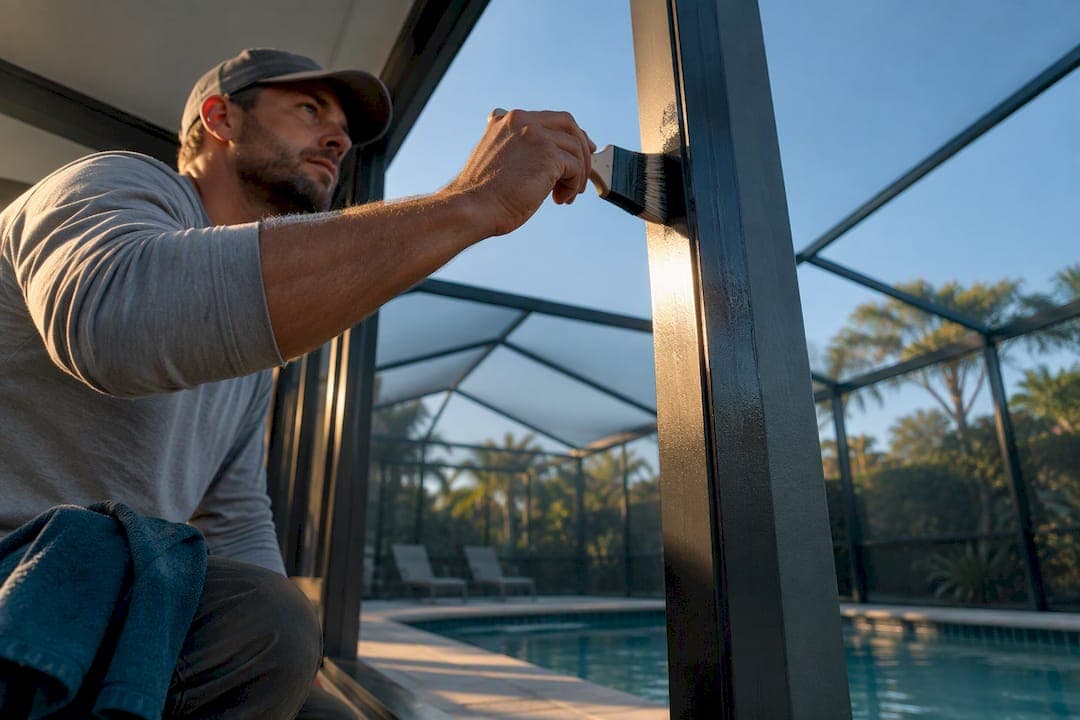
Dry-to-touch on pool cage paint typically runs 1 to 4 hours. Recoat windows land between 4 and 24 hours depending on the product and weather, and full cure usually takes 3 to 7 days, sometimes longer in Florida humidity. Before you paint, confirm the temperature sits between 50°F and 85°F and relative humidity stays under 65%. Then hold off on pool use or rescreening until the paint reaches the manufacturer's minimum full-cure mark, not just the point where it feels dry.
TL;DR:
- Recoat windows are usually around 4 hours, but actual full cure for pool cage paint can extend from 3 to over 7 days, especially in humid Florida conditions.
- Temperature and humidity significantly influence drying and curing, with ideal conditions between 50°F and 85°F and relative humidity below 65% to ensure optimal performance.
- Thin coats dry and cure faster and more evenly than heavy coats, reducing the risk of trapping moisture and weakening the finish.
- Homeowners should wait at least one full week after painting before scheduling rescreening or pool use to allow the coating to fully cure.
- Rushing the cure by rescreening early risks developing soft spots, premature failure, and additional repair costs in the future.
Table of Contents
- What Dry-to-Touch, Recoat, and Full Cure Actually Mean
- What Changes Your Drying and Curing Timeline
- Your Pool Cage Repaint Timeline, Day by Day
- Choosing Paint That Matches Your Cure Expectations
- Prep Mistakes That Undo a Good Paint Job
- How Mr. Pool Screen Times a Real Repaint Job
- Why Rushing the Cure Costs You More Later
- Get Your Pool Cage Repainted the Right Way
- Sources
- FAQ
What Dry-to-Touch, Recoat, and Full Cure Actually Mean
Those three milestones aren't interchangeable, and mixing them up is how homeowners end up with fingerprints in fresh paint or screens stuck to a tacky frame.
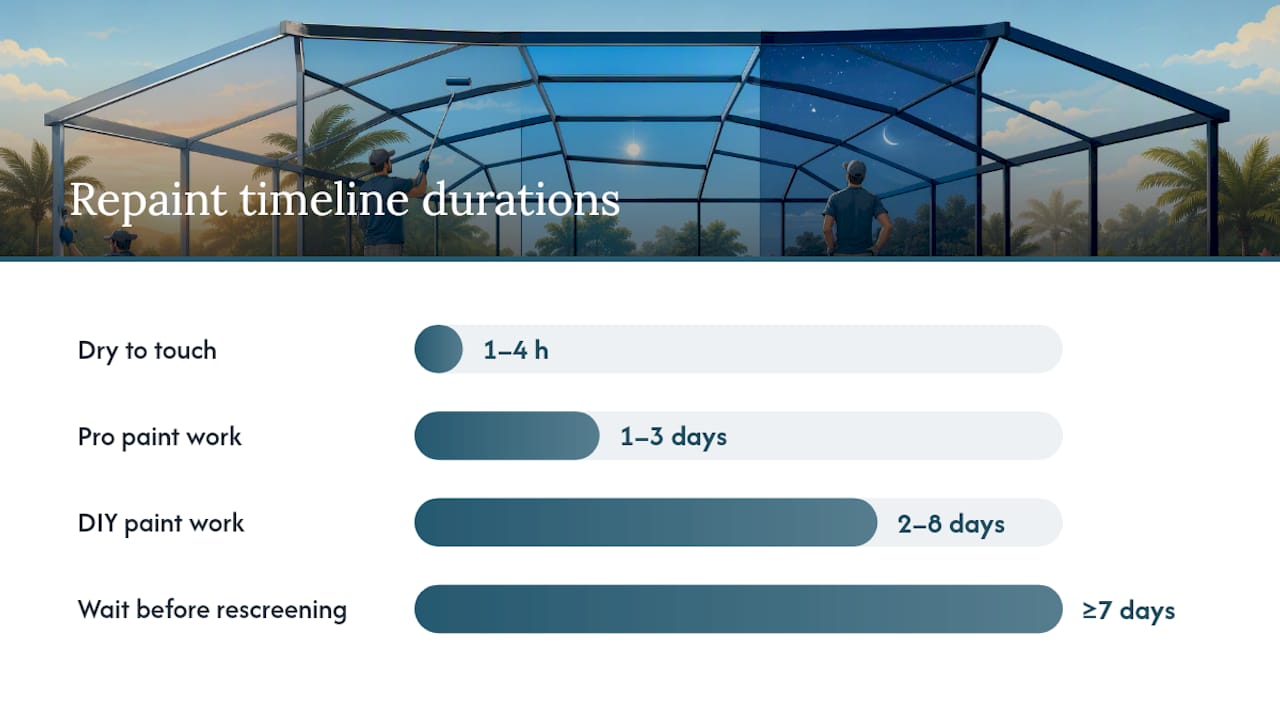
Dry-to-touch means the surface film has set enough that light contact won't mar it. This happens fastest, often within 1 to 4 hours under good conditions, but it doesn't mean the coating has any real strength yet.
Recoat time is the window when you can safely apply a second coat without lifting or blistering the first. Sherwin-Williams' Pro Industrial Waterbased Alkyd Urethane Enamel lists dry-to-touch at 1 to 2 hours and recoat at around 4 hours, measured at 77°F and 50% relative humidity in a lab, not on a Florida patio in August.
Full cure is the finish line: the coating has hardened all the way through and can handle foot traffic, screen tension, and pool chemicals splashing against it. Field reports from contractors put this at 24 to 48 hours for basic hardness, with 5 or more days often needed before the paint can handle heavy use or pool exposure.
What that translates to on the ground:
- Dry-to-touch: safe to walk near, unsafe to lean a ladder against
- Recoat window: safe for the second coat, still too soft for hardware contact
- 24 to 48 hours: safe for light foot traffic on the frame, not for rescreening
- Full cure (3 to 7+ days): safe for rescreening, pool use, and normal weather exposure
What Changes Your Drying and Curing Timeline
Manufacturer numbers assume a controlled room. Your pool cage sits outside, which means temperature, humidity, and how thick you lay the paint all push those numbers around, sometimes by days.
Temperature matters more than most people expect. The ideal painting window runs roughly 50°F to 85°F. Below that range, the coating cures slower and can fail to bond properly. Above it, especially in direct Florida sun, the surface can skin over too fast while the layer underneath stays wet, trapping solvents and weakening the finish.
Relative humidity is the variable homeowners underestimate most. Mr. Pool Screen's own guidance recommends painting only when RH sits below 65%, since higher moisture in the air stalls water-based acrylics from releasing their carrier water. Coastal properties and anything near constant chlorine splash should plan for the longer end of every cure estimate.
Film thickness is the other lever you control directly. Two or three thin coats dry and cure faster, and more evenly, than one heavy coat, which can stay gummy at the surface for days while trapping moisture underneath.
Quick reference: Paint between 50°F and 85°F, keep RH under 65%, and apply thin coats. Miss any one of those three, and your cure time stretches, sometimes past a week.
Spraying shortens open time and gives a more even film than brushing, but it demands tighter overspray control around screens and pool water. Wind above a light breeze carries mist further than most homeowners plan for.
Your Pool Cage Repaint Timeline, Day by Day
A standard-size enclosure, painted by a professional crew, generally wraps in 1 to 3 days for the paint work itself. DIY jobs usually stretch to 2 to 8 days, mostly because of slower prep and single-person application pace.
- Day 1: Prep. Pressure wash the frame, let it dry completely (this alone can eat half a day in humid weather), then mask screens, pool surfaces, and landscaping.
- Day 1 or 2: First coat. Apply a thin base coat once the frame is bone dry. Wait for the recoat window before touching it again.
- Day 2: Finish coat. Apply the second coat, then leave the enclosure alone. No ladders, no leaning, no rescreening.
- Days 3 to 7: Cure check. Confirm hardness before allowing pool use or scheduling rescreening. Humid stretches push this toward the longer end.
On sequencing: paint before you rescreen. Sanding dust and overspray ruin new mesh fast, and most contractors sequence the job that way unless the frame itself needs structural repair first.
Pro Tip: *Book your rescreening appointment for at least one full week after the final coat, not the day after it feels dry.
Choosing Paint That Matches Your Cure Expectations
Water-based DTM (direct-to-metal) acrylic coatings are the standard recommendation for aluminum pool enclosures, and for good reason: they bond to bare metal without a separate primer step in most cases, and they resist the chalking that plain latex paint develops under constant UV exposure.
Representative product data sheets, like Sherwin-Williams' Pro Industrial line, list dry-to-touch around 1 to 2 hours and recoat around 4 hours at 77°F and 50% RH. Treat those as a starting benchmark, not a promise. Your actual timeline shifts with:
- Ambient temperature and humidity on the day you paint
- How thick each coat goes on (wet mils vs. dry mils)
- Whether you're brushing, rolling, or spraying
- Airflow and shade around the enclosure
Thin, even coats applied within the manufacturer's spread-rate guidance cure more predictably than thick coats rushed to save a day. Contractor-grade sprayed coatings tend to hold up longer against UV and chlorine exposure than a brushed DIY job, largely because spray application produces a more consistent film thickness across the whole frame.
Prep Mistakes That Undo a Good Paint Job
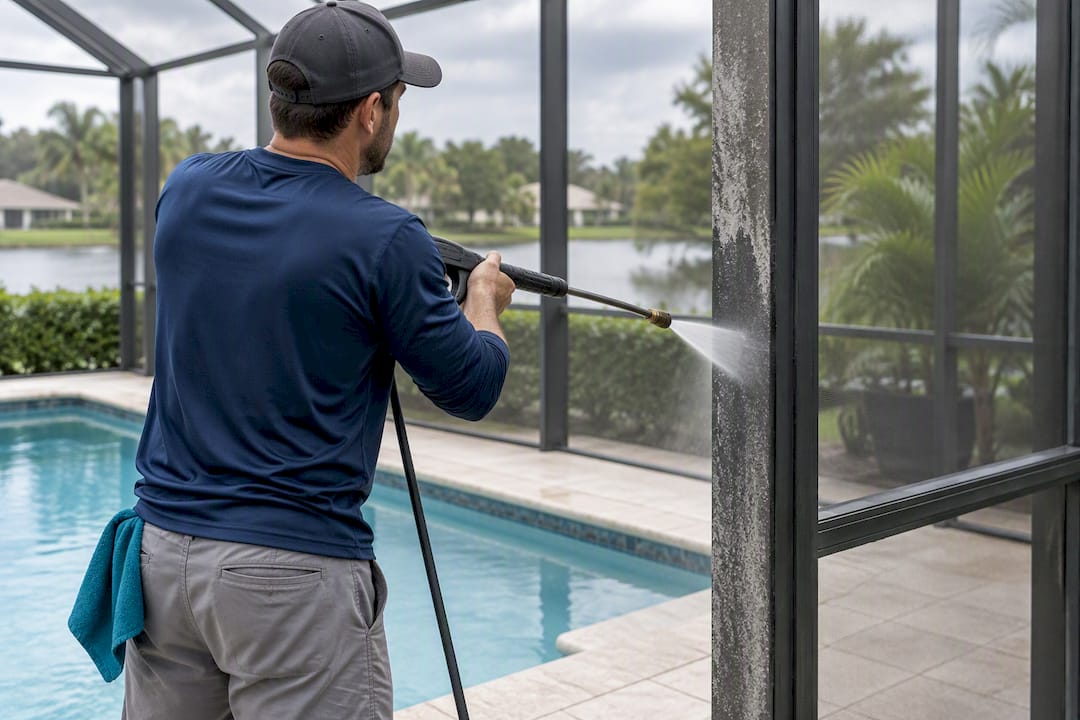
Most repaint failures trace back to prep, not the paint itself. Skip pressure washing chalk and oxidation off the aluminum, and the new coat has nothing solid to grip.
Older frames carry a real risk homeowners often miss: lead in old paint layers. Sherwin-Williams' own safety guidance warns that removing old coatings can release dust and fumes containing lead, and recommends a NIOSH-approved respirator whenever you're disturbing aged paint. Never dry-sand an older frame without containment.
Other pitfalls worth flagging:
- Painting right before rain or during fog adds moisture the coating can't shed
- Loose masking lets overspray drift onto pool decking and screens
- Piling on a thick "extra" coat to hide streaks instead of waiting for the recoat window
Pro Tip: If you can still see faint chalk residue on a white rag after wiping the frame, it's not clean enough to paint yet, no matter how dry it looks.
How Mr. Pool Screen Times a Real Repaint Job
Professional timing looks different from a lab data sheet because real jobs deal with real weather. Mr. Pool Screen builds its restoration schedule around industrial-grade water-based acrylic coatings and stainless steel or Nylotech fasteners, then adjusts recoat and cure windows for Central Florida's humidity rather than assuming lab conditions.
Rescreening gets scheduled only after the coating has reached a safe cure point, protecting new mesh from sanding dust and overspray. Homeowners working with a restoration crew can generally expect a tighter, more predictable timeline than DIY, along with protection steps around pool decking and landscaping.
Why Rushing the Cure Costs You More Later
Callbacks almost always trace back to one thing: someone reopened the pool or rescreened before the coating actually cured, not just dried. A finish stressed too early develops soft spots that fail years before they should.
The fix is boring but effective: check the extended forecast, pick a dry stretch, and coordinate your painter and rescreener around the same calendar instead of squeezing both into one rushed weekend.
— Michel
Get Your Pool Cage Repainted the Right Way
Mr. 
The Pool Screen Restoration service uses industrial-grade water-based acrylic coatings and stainless steel fasteners, applied on a schedule built around Central Florida's actual weather rather than a lab data sheet. Rescreening happens only once the finish has properly cured, and every job carries a three-year warranty. Browse real completed jobs in the project gallery to see how the timing plays out on enclosures like yours, then request a quote to get a firm schedule for your repaint.
Sources
- Pro Industrial™ Waterbased Alkyd Urethane Enamel Gloss B53-1050/2050 Series
- Best Paint for Aluminum Pool Cages: Durable and Weather-Resistant Solutions – Slappe Painting
- Screen Enclosure Painting Guide for Fort Myers and Naples Homes
FAQ
Can You Repaint a Pool Cage Instead of Replacing It?
Yes. Most aluminum pool cages can be pressure washed, prepped, and repainted rather than rebuilt, which often costs significantly less than a full replacement. A restoration process can specifically target weathering, rust, and faded finishes without touching the underlying structure.
How Long Does Pool Cage Paint Need to Dry?
Dry-to-touch typically takes 1 to 4 hours, but full cure for pool exposure or rescreening can take 5 or more days depending on temperature and humidity. Manufacturer data sheets like Sherwin-Williams' list recoat at around 4 hours under lab conditions, but real-world humidity often extends that.
How Much Does It Cost to Repaint a Pool Cage?
Pricing depends on enclosure size, condition, and coating choice, so current rates are best confirmed directly through Mr. Pool Screen's Pool Screen Restoration page. Getting a quote also gives you a project-specific timeline based on your local weather window.
Is 2 Hours Enough for the Paint to Dry?
Two hours is usually enough for dry-to-touch, but not for recoating or resuming pool use. Treat 2 hours as the point where you can stop worrying about smudging the surface, not the point where the coating has any real durability.