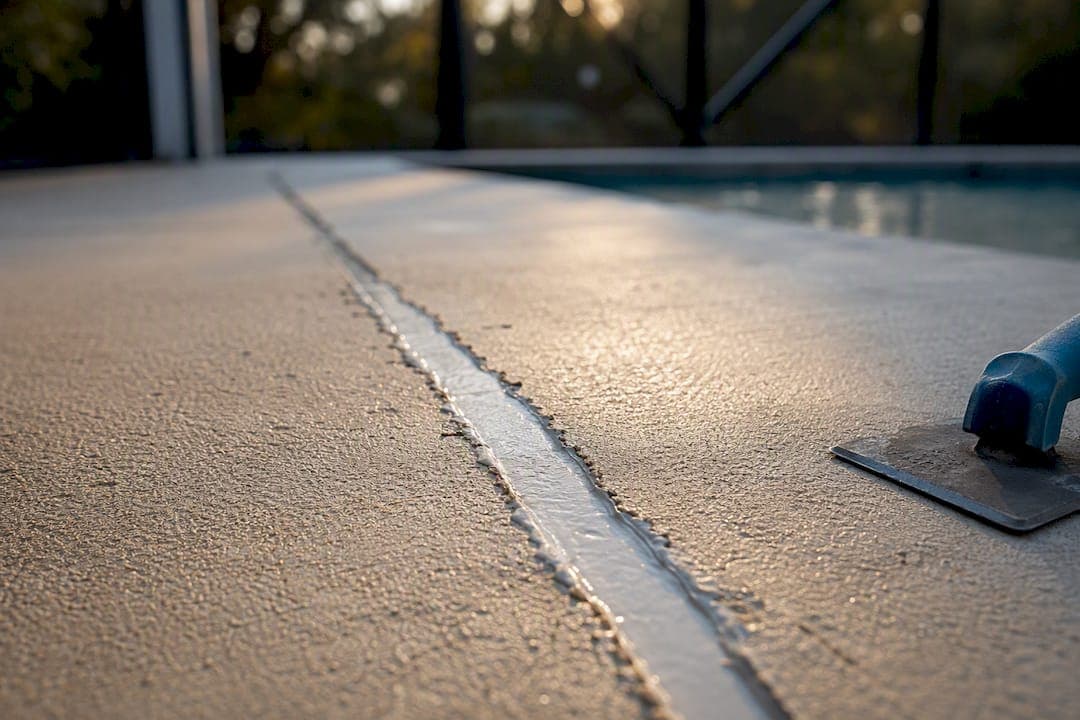
Yes, you can repair most pool deck cracks before painting, and you should. A stable slab with hairline or moderate cracks takes a flexible sealant for movement cracks and a polymer-modified patch for wider gaps, then a proper cure before you ever open a paint can. The one exception: cracks tied to structural movement, heaving, or settlement need a contractor, not a caulk gun.
TL;DR:
- Most cracks under 1/4 inch in width are repairable with flexible sealants or patches, but wider or uneven cracks may indicate structural issues requiring professional evaluation.
- Proper surface preparation, including cleaning and widening cracks into a V-shape, is essential for long-lasting repairs that resist paint failure or re-cracking.
- Cure times vary from 24 to 72 hours depending on the material, with extra caution needed in humid conditions or when cracks are actively moving.
- Repair failures often stem from moisture entrapment, incorrect material choices, or poor surface prep, making thorough following of the process critical.
- For widespread or serious slab movement symptoms, calling a professional is the safest option rather than attempting DIY patching.
Table of Contents
- What You Need Before You Start This Weekend
- How Do You Tell If a Crack Is a Real Problem?
- Tools and Materials That Actually Match the Crack
- The Step-by-Step Repair Process
- How Long Should Repairs Cure Before You Paint?
- Why Do Pool Deck Repairs Fail, and When Should You Call a Pro?
- What Mr. Pool Screen Sees on Real Central Florida Decks
- What a Realistic Timeline Looks Like After Repair
- A Faster Route If You'd Rather Skip the Grinder
- Sources
- FAQ
What You Need Before You Start This Weekend
Give yourself a dry window of 24 to 72 hours with no rain forecast, and avoid working in extreme heat above 95°F or cold below 50°F since both throw off cure times. Before buying anything, walk the deck and flag problem spots so you're not making a second trip to the hardware store.
- Check the forecast for a 3-day dry stretch, ideally with moderate temperatures.
- Walk the deck and mark every crack with painter's tape or chalk.
- Gather your tools and materials in one trip (see the list below).
- Block out at least 3 to 5 days total for cleaning, repair, and cure before paint goes on.
How Do You Tell If a Crack Is a Real Problem?
Not every crack in a pool deck means trouble, but the width tells you almost everything about what to do next. A hairline crack, anything under 1/8 inch, is usually cosmetic and caused by ordinary concrete shrinkage. Moderate cracks between 1/8 and 1/4 inch often signal some slab movement but are still very repairable with the right polymer-modified structural repair product. Anything wider than 1/4 inch, especially if one side sits higher than the other, deserves a closer look before you patch it.
A simple test tells you whether a crack is still active: draw a pencil line across it, note the date, and check back in two to three weeks. If the line has split or widened, the slab is still moving, and cosmetic filler alone won't hold.
- Hairline (under 1/8 in): Cosmetic, minimal movement, safe for DIY sealant.
- Moderate (1/8 to 1/4 in): Likely minor settling, repairable with patch compound.
- Wide or uneven (over 1/4 in): Possible structural issue, get it evaluated.
- Control and expansion joints: These are supposed to move. Use flexible sealant only, never rigid cement, so the joint keeps doing its job.
Tools and Materials That Actually Match the Crack
Buying the wrong filler is the single most common way DIY repairs fail before they even start. Your tool list should include a pressure washer, an angle grinder or crack chaser blade, a wire brush, a shop vac, a caulk gun, and a margin trowel.
- Pressure washer: strips loose debris and old paint from the crack and surrounding area.
- Grinder or chisel: widens hairline cracks so filler has something to grip.
- Wire brush and shop vac: clears dust that ruins adhesion no matter how good the product is.
- Caulk gun and trowel: applies sealant cleanly and packs patch compound into wider gaps.
For hairline and moving cracks, use a flexible, self-leveling polyurethane or silicone sealant with good elongation and UV resistance, since pool decks bake in direct sun all day. For cracks wider than 1/4 inch or ones that are crumbling at the edges, a polymer-modified cementitious patch holds up better than plain caulk. If a crack is actively leaking, hydraulic cement stops the water fast, though it won't flex with the slab long term. For any crack deeper than 1/2 inch, pack in a foam backer rod first so the sealant sits at the right depth instead of sinking into a bottomless gap.
Pro Tip: *Check the product label for "elongation percentage" before buying.
The Step-by-Step Repair Process
Repairing a crack the right way isn't complicated, but skipping a step is exactly how a patch pops out three months after you painted over it.
- Pressure wash the entire deck. Remove dirt, algae, rust stains, and old coating flakes by following effective rust stain removal from concrete methods to ensure a clean surface. Let it dry fully, usually 24 hours in warm weather, longer if it's humid.
- Chase hairline cracks. Use a grinder or crack chaser to widen the crack into a V or U shape, roughly 3/16 inch wide and 1/4 inch deep. This gives the sealant a reservoir to bond into instead of skating across a surface it can't grip.
- Clean out the channel. Wire brush the inside of the crack, then vacuum or blow out the dust. Any grit left behind is the top reason patches fail, according to guidance from Specchem on concrete surface prep.
- Insert backer rod for deep cracks. Push the rod in so it sits about 1/4 inch below the surface, giving the sealant the right depth-to-width ratio to flex properly.
- Fill the crack. For hairline and moderate cracks, gun in the self-leveling polyurethane and tool it flush. For wider gaps, pack the polymer-modified patch in firm layers, pressing out air pockets. For wet or leaking cracks, mix and apply hydraulic cement quickly since it sets in minutes.
- Feather and texture-match. Smooth the edges level with the surrounding concrete. On textured decks, broadcast a matching aggregate into the wet patch so it doesn't stick out like a smooth scar once painted.
- Let it cure fully before sanding. Once cured, lightly sand any high spots so the surface is smooth and ready for paint.
Skip the chasing step on a hairline crack and you're just smearing filler over a surface it can't grip. That crack will telegraph right through fresh paint within a season.
How Long Should Repairs Cure Before You Paint?
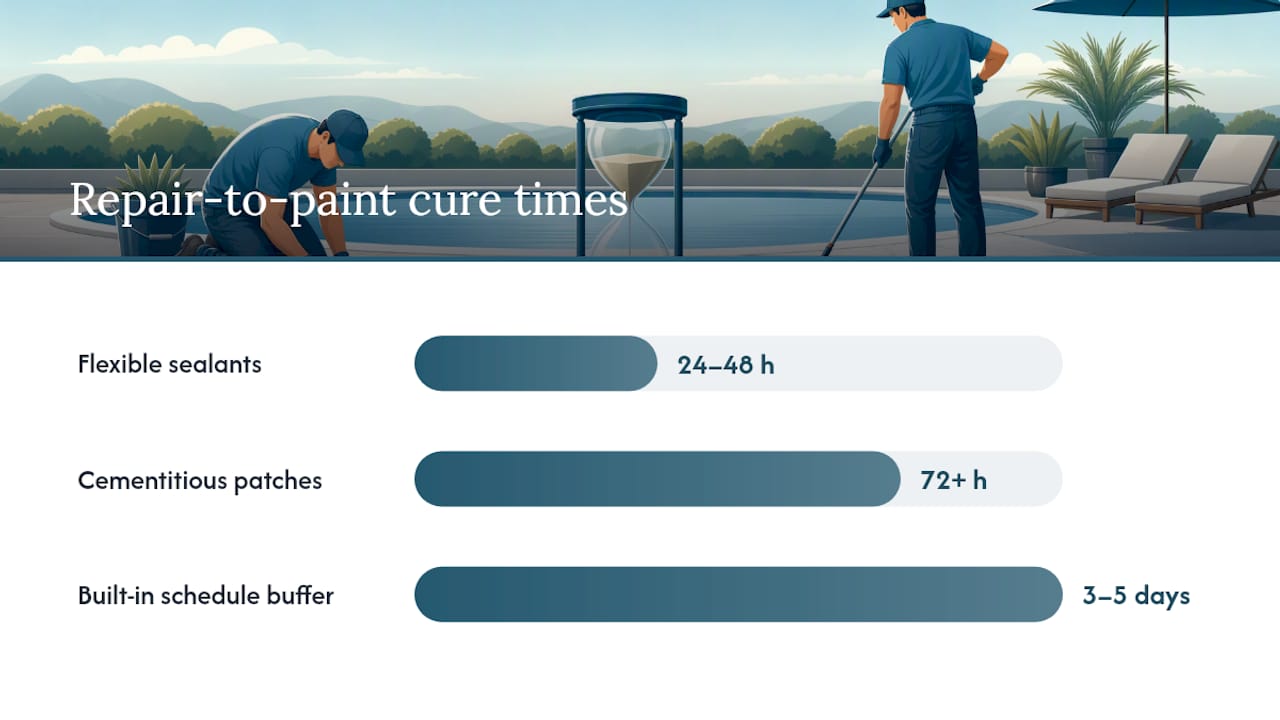
Cure time depends entirely on the material, and rushing this step is where most DIY jobs go wrong. Flexible sealants typically reach paintable firmness in 24 to 48 hours, while polymer-modified cementitious patches often need 72 hours or more before they're ready for primer. Humid climates stretch both timelines, so build in an extra day if you're working in July rather than a dry March.
Two quick tests confirm you're ready. Tape a small plastic sheet over the repair overnight. Condensation underneath means moisture is still trapped, and you need to wait longer. Press a fingernail into the patch. If it dents easily, it's not cured. Once both tests pass, apply a bonding primer or masonry sealer rated for pool decks, and consider a slip-resistant additive mixed into the topcoat since a freshly painted deck can get slick fast around water.
- Sealants: 24 to 48 hours minimum before priming.
- Cementitious patches: 72+ hours, longer in humidity.
- Always check the manufacturer's label. Cure times vary by brand and formula.
Roughly 3 to 5 extra days built into your painting schedule covers most repair and cure combinations without guesswork.
Why Do Pool Deck Repairs Fail, and When Should You Call a Pro?
Most failed patches trace back to the same three causes: a dirty substrate, the wrong material for the crack width, or moisture trapped under the patch before it was sealed. If a patch pops loose but the surrounding slab is stable, you can usually grind it out, reclean thoroughly, and redo it with the correct product.
But some signs point to something bigger than a bad patch. If a crack keeps widening month over month, if one side of the slab sits visibly higher than the other, or if you're losing pool water and can't find the source, stop patching and call a contractor. Those are signs of slab settlement or heave, and no amount of sealant fixes a foundation problem. For decks with widespread crazing or dozens of small cracks, resurfacing with a polymer-modified overlay is often smarter than chasing every crack individually.
- Failed patch, stable slab: regrind, reclean, reapply with matched material.
- Widening crack over weeks: possible active settlement, get it inspected.
- Uneven slab or water loss: structural concern, call a professional.
What Mr. Pool Screen Sees on Real Central Florida Decks
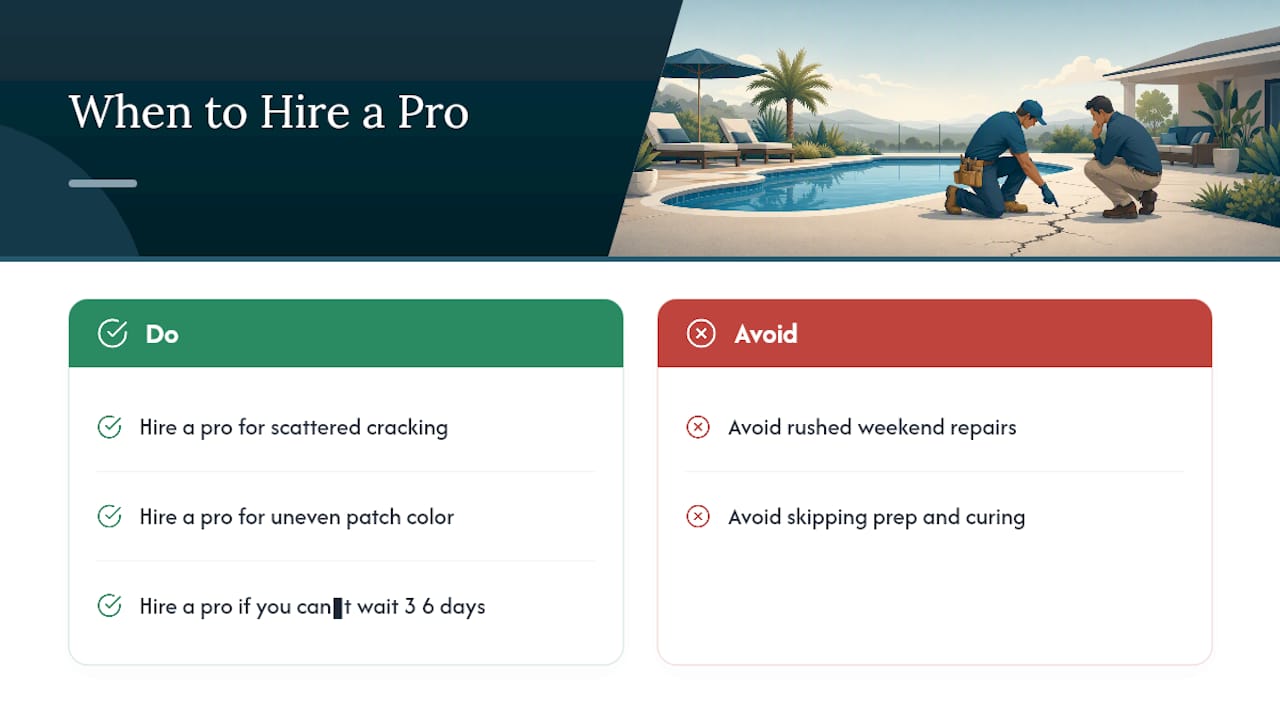
Mr. Pool Screen has spent years restoring pool enclosures and refinishing decks across Central Florida's heat, humidity, and constant sun exposure. That combination is brutal on concrete, and it's why so many decks here show hairline cracking within a decade of pouring. If your deck has scattered cracking beyond a few spots, uneven color from prior patches, or you're short on the multi-day window proper curing demands, that's usually when hiring out beats a rushed weekend job. Related reading on restoring faded deck color and pool deck paint peeling causes covers what happens when prep gets skipped.
What a Realistic Timeline Looks Like After Repair
A careful DIY crack repair, done with the right material and full cure time, typically holds up for several years before you see any reappearing lines. Professional resurfacing tends to last considerably longer because it addresses the whole slab rather than isolated spots. Tackle the small, cosmetic cracks yourself. It's satisfying work and it's cheap. But if you're staring at a deck with cracking everywhere, uneven color, or any sign the slab itself is moving, get a professional quote before you spend a weekend on a fix that won't hold.
— Michel
A Faster Route If You'd Rather Skip the Grinder
Professional crews can handle the full job, including cleaning, crack repair, and finish coat, using industrial-grade water-based acrylic coatings built to hold up under Central Florida sun, often with a warranty offered.

If your deck has more than a handful of cracks, uneven staining from old patches, or you just don't have five days to spare for cure times, Pool Deck Staining covers the repair-through-finish process from start to end. Rusted screen enclosures often show up alongside cracked decks since both come from the same sun and humidity exposure, and Pool Screen Restoration addresses that side of the job at a fraction of a full rebuild's cost. Request a quote and find out which approach fits your deck.
Sources
- Lowe's product/category guidance — polymer-modified structural repair
- Prosoco — concrete crack repair guidance
- Specchem — concrete surface preparation guidance
- ConcreteNetwork — pool deck repair and resurfacing advice
FAQ
What Is a Good Crack Filler for a Pool Deck?
Flexible, self-leveling polyurethane or silicone sealant works best for hairline and moving cracks under 1/8 inch, while a polymer-modified cementitious patch suits wider or crumbling gaps.
How Do You Repair Hairline Cracks on a Pool Deck?
Chase the crack into a small V-shaped channel, clean out all dust, then fill it with a flexible polyurethane sealant and let it cure fully before painting.
Is It Common for Pool Decks to Crack?
Yes, hairline cracking is extremely common on concrete pool decks due to normal shrinkage, thermal expansion, and years of sun exposure, and it's rarely a sign of structural trouble on its own.
What Is the Most Effective Sealant for Repairing Pool Cracks?
A high-elongation, UV-resistant polyurethane sealant holds up best on pool decks since it flexes with thermal movement instead of cracking again under sun exposure.
Does Mr. Pool Screen Handle Deck Crack Repair Before Staining?
Yes, crack repair and surface prep are part of the Pool Deck Staining process, and pricing details are available directly through the service page.