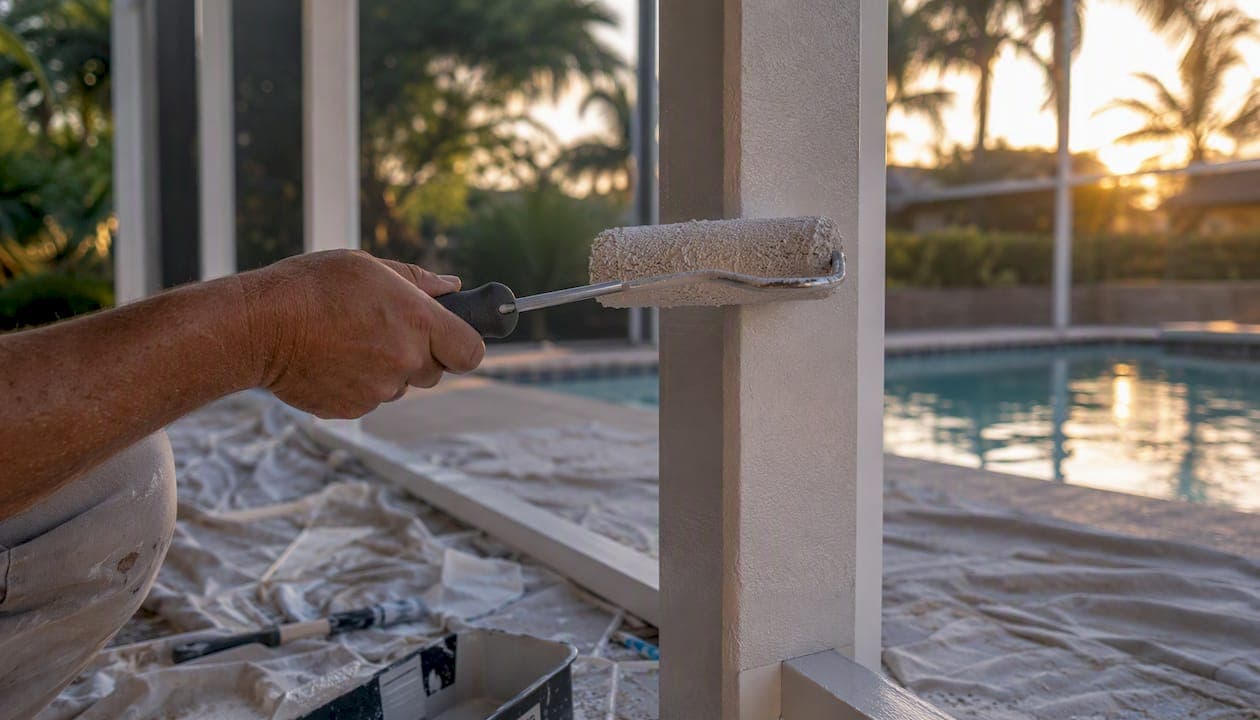
For most homeowners with a structurally sound aluminum pool cage showing surface oxidation, chalking, or a faded finish, repainting is the right call. It costs significantly less than full replacement, typically restores near-factory appearance, and when done with proper prep and the right coatings, adds years of service life. The one situation where you skip the paint and call for a replacement quote: visible structural corrosion, heavy pitting through the metal, warped or bent rails, or joints that move when you push them.
If your enclosure passes a basic structural check, the next step is a free on-site estimate from a restoration specialist. A trained eye will catch what a homeowner walking the perimeter often misses.
Key Takeaways
Repainting a structurally sound pool enclosure is the most cost-effective way to restore appearance, arrest surface corrosion, and extend service life in Central Florida's climate.
| Point | Details |
|---|---|
| Restore vs. replace decision | Restore when the frame is structurally sound; replace when pitting, warped rails, or joint movement is present. |
| Cost savings | Professional restoration typically costs 40–50% less than full replacement for comparable enclosures. |
| Coating choice | Water-based acrylic is the practical standard for field application; powder coat cannot be reapplied in place. |
| Prep is the deciding factor | Painting over oxidized or chalky aluminum without removing the degraded layer causes early peeling regardless of coating quality. |
| Mrpoolscreen's approach | Mrpoolscreen handles the full restoration scope in Central Florida, from inspection and fastener replacement to water-based acrylic coating and rescreening. |
Table of Contents
- Should you repaint a pool enclosure or replace it?
- Signs that repainting won't fix the problem
- How a professional pool enclosure restoration works, step by step
- Which coatings and finishes hold up best on pool enclosures?
- What does it cost to repaint a pool enclosure?
- How to vet a pool enclosure restoration contractor
- DIY repainting: what you can handle and when to call a pro
- How Mrpoolscreen's restoration process works in practice
- Mrpoolscreen restores pool enclosures across Central Florida
- Sources
Should you repaint a pool enclosure or replace it?
Restoration typically costs 40–50% less than full replacement, and for an enclosure that is cosmetically degraded but structurally intact, that savings is real money with no meaningful trade-off. A professionally applied repaint also arrests surface corrosion before it reaches the structural layer, which matters a lot in Central Florida's heat and humidity.
The trade-offs are worth naming plainly. Paint cannot fix internal corrosion that has already compromised the aluminum's load-bearing capacity. If the original build was poor, repainting is a cosmetic fix on a structural problem. And the logistics of pool enclosure painting add cost: screens often need removal to prevent overspray damage, and any fasteners showing rust need replacement before the first drop of primer goes on.
Pros of restoration:
- Cost savings of 40–60% compared to full replacement
- Faster project timeline, typically 1–3 days for a standard enclosure
- Improved curb appeal and a refreshed appearance
- Surface corrosion arrested when prep is done correctly
- Stainless steel or Nylotech fastener upgrades extend hardware life
Cons of restoration:
- Paint will not correct structural weakness or internal corrosion
- Improper surface prep leads to early peeling and adhesion failure
- Screen removal and reinstallation adds to the overall project cost
- Results depend heavily on the contractor's prep discipline
The decision rule is simple: restore when the frame is structurally sound and the damage is surface-level. Replace when the metal itself is compromised.
Signs that repainting won't fix the problem
Surface oxidation and faded color are normal wear. The following signs are different, and they tell you that paint is the wrong answer.
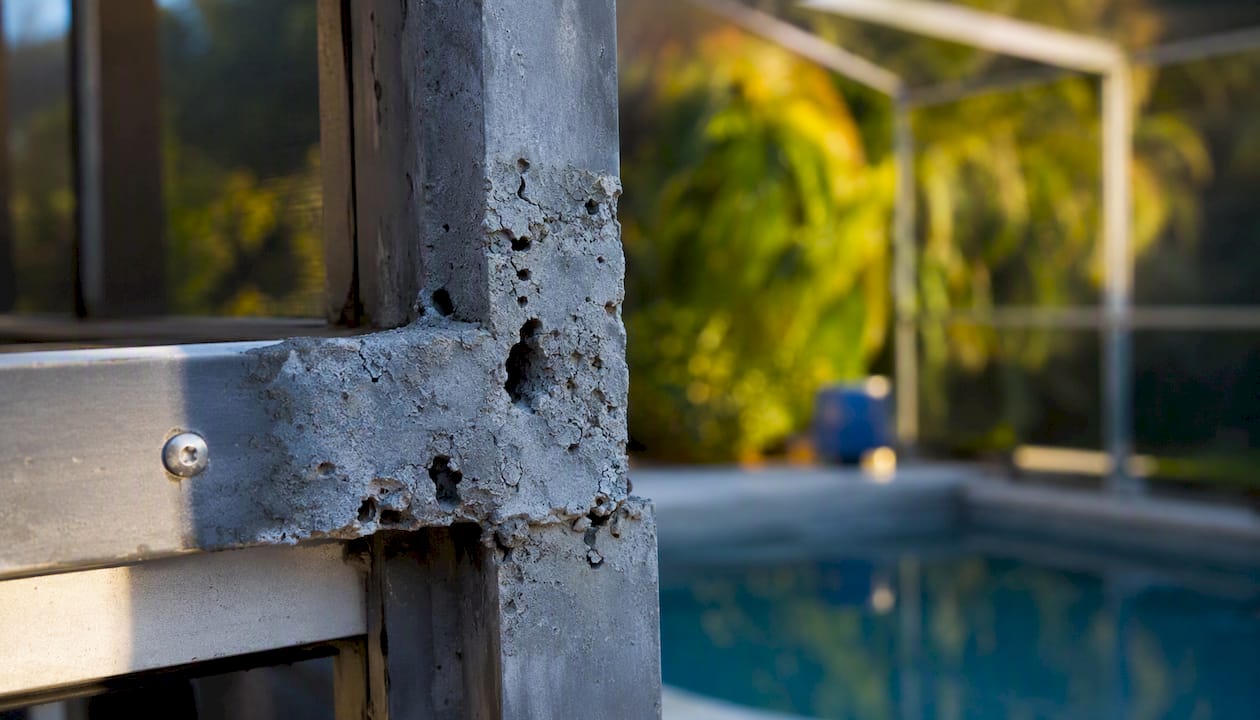
Heavy pitting that goes through the aluminum wall thickness means the metal has lost structural integrity in those sections. A coat of paint will hide it temporarily and fail within a season. Structural bending or warped rails indicate the frame has been stressed beyond its design tolerance, often from storm loading or a prior impact. Electrolysis damage, visible as white powdery corrosion at metal-to-metal contact points, can indicate an ongoing electrochemical reaction that paint alone will not stop. Loose or missing fasteners causing joint movement is a red flag: if the frame shifts when you apply moderate hand pressure, the joint has failed and no coating will stabilize it. Repeated paint failure after prior repaints usually means the substrate has deteriorated past the point where adhesion is reliable.
Aggressive surface prep, such as light blasting to remove heavy oxidation, sometimes reveals deeper pitting that was hidden under chalking. That is not a prep failure; it is the process doing its job. A qualified contractor will pause and walk you through what they found before proceeding.
How a professional pool enclosure restoration works, step by step
Understanding the process helps you compare quotes and spot contractors who are cutting corners.
-
Inspection and scope definition. A thorough structural check covers the full frame: fastener condition, screen integrity, corrosion mapping, and joint stability. This step determines whether restoration is appropriate and what repairs are needed before coating begins.
-
Site preparation. Furniture is moved or covered, the pool water and surrounding landscaping are masked, and any electrical equipment near the enclosure is protected. Screens are removed when spraying is the application method, which is the professional standard for even coverage and overspray control.
-
Surface preparation. Chalking and oxidation are removed by sanding or light mechanical prep. Edges are feathered, pitting is treated, and any rusted or compromised fasteners are replaced with stainless steel or Nylotech hardware. Painting is feasible on aluminum only when the surface is properly pretreated; skipping this step is the single most common cause of early paint failure.
-
Priming and coating. A bonding primer is applied wherever bare metal is exposed. The topcoat, typically a water-based acrylic or marine-grade system, is then applied by spray in controlled passes with careful attention to overlaps, joints, and corners. A three-step sequence of clean, prime, and topcoat is the professional standard for durable results, and skipping the primer on bare aluminum is where many DIY and budget jobs fail within the first year.
-
Screen and hardware reinstallation. Screens are reinstalled, hardware is torqued to spec, and the full enclosure is inspected for missed spots, drips, or thin coverage at joints.
-
Final inspection, warranty briefing, and maintenance guidance. A reputable contractor walks you through what was done, what to watch for, and what the warranty covers.
Pro Tip: The single prep shortcut that almost always causes failure is painting over chalky or oxidized aluminum without removing the oxidation layer first. The one inspection item that best predicts repaint longevity is fastener condition: if the fasteners are corroding, the frame is corroding, and no topcoat will outlast the hardware underneath it.
After a proper restoration, expect the frame to look close to its original finish, with no visible chalking or rust staining. The enclosure will feel structurally tighter if fasteners were replaced, and the coating will have a uniform sheen rather than the patchy, faded look of weathered aluminum.
Which coatings and finishes hold up best on pool enclosures?
Three coating categories come up in pool enclosure painting, and they are not interchangeable.
Water-based acrylic coatings
This is the workhorse of professional pool cage repainting, and the system Mrpoolscreen uses. Water-based acrylics formulated for exterior aluminum offer good UV resistance, flexibility as the metal expands and contracts with temperature, and lower VOC output than solvent-based alternatives. In Central Florida's climate, a properly applied acrylic system on a well-prepped frame typically lasts 5–7 years before refinishing is needed. Rinsing frames monthly and planning for refinishing every 5–7 years is the standard maintenance recommendation for enclosures in Florida's exposure conditions.
Marine-grade epoxy systems
Marine epoxy offers harder film build and stronger chemical resistance, which makes it attractive for coastal properties with heavy salt exposure. The trade-off is less flexibility: epoxy is more brittle than acrylic and can crack at joints where the aluminum moves. It also requires more precise surface prep and longer cure windows. For most inland Central Florida enclosures, a quality acrylic system outperforms epoxy on the flexibility and ease-of-application axes.
Powder-coat finishes
Powder coating is the factory finish on most new aluminum enclosures, and it is genuinely excellent: hard, UV-stable, and applied electrostatically at high heat. The problem is that reapplying powder coat in the field is not practical. The process requires a controlled oven environment, which means the enclosure would need to be disassembled and sent to a facility. For field restoration, powder coat is the benchmark you are trying to match, not the method you use.
Adhesion rules that matter: You can paint over existing finishes only when the surface is correctly prepped and a compatible primer is used. Painting over chalky or oxidized substrates without removing the degraded layer causes the new coat to lift with the old one. When bare metal is exposed, a bonding primer is not optional.
Color and heat: Lighter tones hide salt deposits and staining better in coastal climates. Darker colors show salt and staining faster and absorb more heat, which can stress the coating at joints over time. Mid-tone whites and light bronzes are the most practical choices for Florida enclosures.
| Coating type | Best for | Flexibility | Typical field lifespan | Field-applicable? |
|---|---|---|---|---|
| Water-based acrylic | Most aluminum enclosures | High | 5–7 years | Yes |
| Marine-grade epoxy | Heavy salt/coastal exposure | Low | 4–6 years | Yes, with care |
| Powder coat | Factory application only | High | 5–7 years | No |
What does it cost to repaint a pool enclosure?
Professional repaint jobs commonly range from $2,500–$6,500 for standard enclosures, with larger or heavily corroded jobs running higher. The variables that move the number most are enclosure size, roof complexity, corrosion level, and whether rescreening is included.
A detailed quote should break out prep labor, fastener replacement, primer and topcoat materials, screen handling, cleanup, and warranty terms as separate line items. A quote that bundles everything into one number with no breakdown is a red flag: you cannot compare it to other bids or verify what is actually included.
Timing matters too. Multi-coat systems applied by professionals with commercial equipment need adequate cure windows between coats, and scheduling during Florida's dry season (roughly October through April) reduces the risk of rain interrupting the cure. High humidity slows drying and can cause adhesion problems in water-based systems.
How to vet a pool enclosure restoration contractor
The difference between a repaint that lasts seven years and one that peels in eighteen months usually comes down to who applied it and how.
Credentials and trust signals to verify:
- Active general contractor or specialty contractor license in Florida
- Liability insurance and workers' compensation coverage (ask for certificates, not just verbal confirmation)
- Written workmanship warranty, not just a materials warranty
- Before-and-after photos from local projects, not stock images
- Local references you can actually call
- A documented process for aluminum surface prep, not a vague "we clean and paint" description
Questions to ask on the estimate:
- What specific coating product and brand will you use, and what is its rated exterior lifespan?
- Do you apply a bonding primer, and on what surfaces?
- How do you handle fastener replacement, and what hardware do you use?
- Will screens be removed or masked in place?
- What is the cure time before the enclosure is back in normal use?
- What does the written warranty cover, and for how long?
Red flags to walk away from:
- No on-site inspection before quoting
- "We paint over everything" with no mention of prep or primer
- No proof of insurance or license
- No local references or project photos
- A quote delivered by phone or email without seeing the enclosure
Verifying local licensing and checking reviews before signing any contract is standard practice for any home services contractor. A local pool screen maintenance specialist who knows Central Florida's specific climate conditions will also give you more accurate long-term maintenance guidance than a general painter.
DIY repainting: what you can handle and when to call a pro
A capable homeowner can handle light cleaning, masking small sections, and touch-up work on minor chips or scratches. For a full pool enclosure repaint, the gap between what looks manageable and what actually produces durable results is wider than most people expect.
For a full DIY repaint, you need a pressure washer capable of 2,000–3,000 PSI, a quality airless or HVLP sprayer rated for exterior enamels, aluminum-rated bonding primer, and an exterior acrylic topcoat. You also need to remove or meticulously mask every screen panel to prevent overspray from clogging the mesh. Removing screens before spraying simplifies masking and significantly reduces overspray risk; working around screens in place is the approach that produces uneven coverage and mesh damage.
When to hire a professional: multi-story enclosures, heavy oxidation or pitting requiring mechanical prep, any fastener replacement beyond a handful of screws, and any job that includes rescreening. Professionally applied multi-coat systems using commercial equipment consistently outlast DIY spray jobs, and the gap widens on larger enclosures where coverage consistency is harder to maintain with consumer-grade equipment.
For responsible pool enclosure upkeep between professional refinishing cycles, monthly rinsing with a garden hose and a mild soap wash twice a year are tasks any homeowner can manage without special equipment.
How Mrpoolscreen's restoration process works in practice
A typical Mrpoolscreen project in Central Florida starts with an enclosure that has been weathering for 8–12 years: chalky white oxidation on the aluminum frame, rust staining around fasteners, and screens that are either torn or discolored. The frame is structurally intact but looks neglected, and the homeowner is weighing restoration against a full replacement quote that came in at roughly twice the cost.
The pool screen restoration process follows a consistent sequence:
- Pre-work inspection: full corrosion mapping, fastener audit, and screen condition assessment
- Site protection: pool water covered, landscaping masked, electrical equipment protected
- Surface prep: oxidation and chalking removed, pitting treated, all compromised fasteners replaced with stainless steel or Nylotech hardware
- Coating application: bonding primer on bare metal, water-based acrylic topcoat applied by spray for uniform coverage
- Rescreening (when applicable): new mesh installed to match or upgrade the original specification
- Final inspection and warranty briefing: homeowner walkthrough of completed work and maintenance schedule
The result is a frame that looks close to factory-new, with corrosion arrested at the surface level and hardware that will outlast the original fasteners by years. The project gallery shows before-and-after results across a range of enclosure sizes and corrosion levels, which gives homeowners a realistic picture of what restoration achieves versus what it cannot fix.
What this workflow demonstrates is that a methodical restoration, done with the right materials and genuine prep discipline, delivers near-factory appearance and extends service life at a fraction of replacement cost. The savings are real, and so is the longevity when the process is followed correctly.
When a paint job is worth it: a practical take
The conventional wisdom on pool enclosure repainting tends to split into two camps: contractors who say "always restore" and homeowners who assume "new is always better." Neither is right.
A restoration is worth every dollar when the frame is structurally sound and the degradation is cosmetic. In Central Florida's climate, that describes most enclosures between 8 and 15 years old. The aluminum is fine; the finish has just taken a beating from UV, humidity, and salt. A properly prepped and coated frame at that stage will look better than it did at year five and hold that appearance for another 5–7 years with basic maintenance.
Where homeowners get burned is in setting unrealistic expectations. A repaint will not make a 20-year-old enclosure with compromised joints perform like a new one. It will make it look better. If your priority is guaranteed long-term storm resistance and you are in a high-wind zone, the honest answer is that restoration buys time, not certainty. For most homeowners weighing curb appeal, budget, and a reasonable service-life extension, restoration is the smarter move. Just make sure the contractor you hire is doing the prep, not skipping it.
Mrpoolscreen restores pool enclosures across Central Florida
Replacing an aging pool cage costs roughly twice what a professional restoration does, and for most structurally sound enclosures, the outcome difference does not justify that gap. Mrpoolscreen's restoration service covers the full scope: on-site inspection, oxidation removal, stainless steel or Nylotech fastener replacement, water-based acrylic coating application, and rescreening options, all backed by a workmanship warranty.
The estimate process starts with a free on-site inspection, where a technician maps corrosion, audits fasteners, and gives you a written scope before any work begins. No vague phone quotes, no surprises on the day. If you want to see what restoration looks like on real projects before committing, the before-and-after gallery covers a range of enclosure conditions and sizes. Ready to get a number? Schedule your free estimate and find out whether restoration is the right call for your enclosure.
Sources
- Screen Enclosure Painting Guide for Fort Myers and Naples Homes
- The Ultimate Guide to Pool Enclosure Painting in Florida: Expert Tips from Tru Colors Contracting
- Painted Swimming Pools