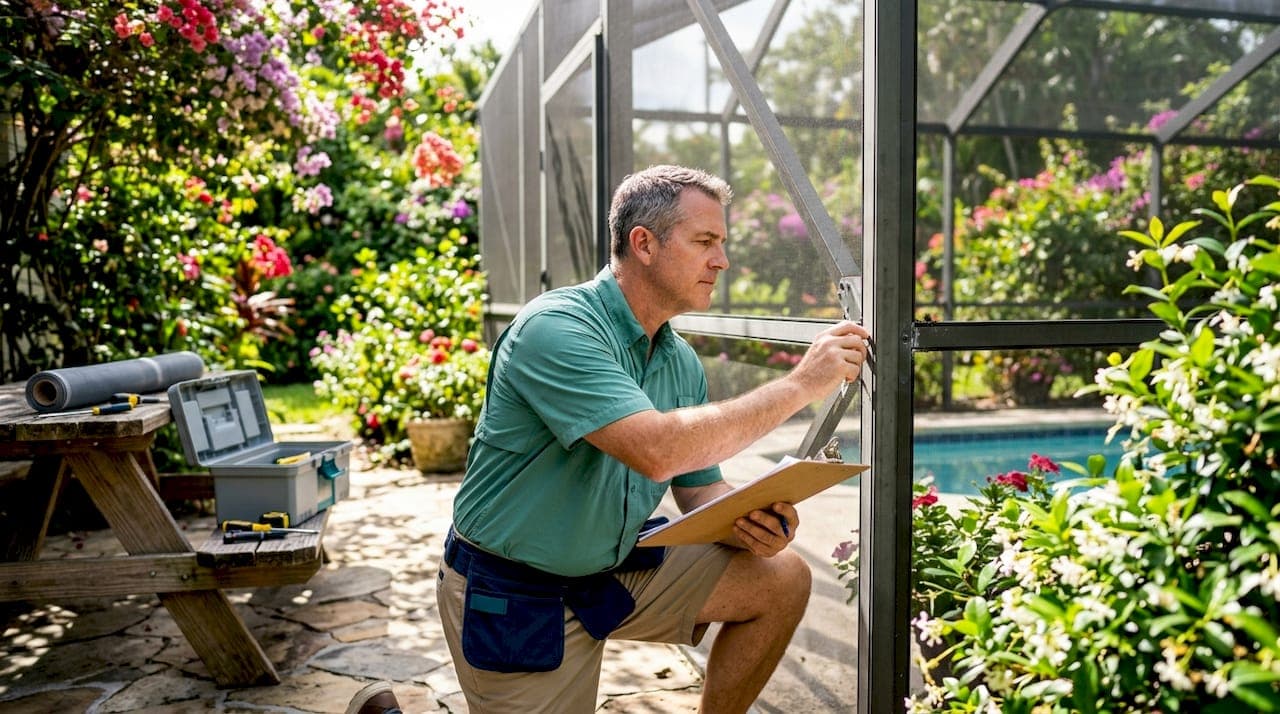
Screen enclosures are outdoor framed structures with aluminum frames and mesh screens that create protected, comfortable living spaces by blocking insects, debris, and harsh UV rays while preserving airflow and natural light. Florida homeowners rely on these structures to extend their outdoor living season and protect pool areas from the constant pressure of heat, humidity, and storm activity. The Florida Department of Business and Professional Regulation (DBPR) governs contractor licensing for all enclosure work, and building permits are mandatory for new builds and major structural modifications. Skipping either requirement puts your home's safety, insurance coverage, and resale value at risk.
What are the most common problems with aging screen enclosures?
Aging pool cages and patio structures share a predictable set of failure points. Catching them early saves money and prevents safety hazards.
The most frequent problems include:
- Frame corrosion. Aluminum oxidizes over time, and galvanic corrosion accelerates when dissimilar metals contact each other at fastener points. Salt air in coastal Central Florida speeds this process significantly.
- Screen tears and sagging. UV exposure and storm debris weaken mesh fibers. A sagging screen panel is not just unsightly. It creates gaps that let in mosquitoes and palmetto bugs.
- Loose or missing fasteners. Spline channels and screws loosen over years of thermal expansion and contraction. Loose hardware compromises the frame's ability to handle wind loads.
- Structural lean or racking. When corner connections weaken, the entire frame can shift out of square. This is a safety hazard, not a cosmetic issue.
- Rust staining on concrete. Steel fasteners used by lower-quality contractors corrode and bleed rust onto pool decks, creating stains that are difficult to remove.
Ignoring these problems does not just reduce outdoor enjoyment. A structurally compromised enclosure can collapse under the wind pressure of a Florida afternoon thunderstorm. Insurance companies may deny claims for damage caused by a structure that was not properly maintained or permitted.
Pro Tip: Inspect your enclosure after every named storm. Look for bent frame members, torn screens at corners, and any fasteners showing orange rust. Catching damage early keeps repair costs low.
Regular maintenance and timely repairs extend enclosure lifespan considerably. Restoration is almost always more cost-effective than a full rebuild when the frame is structurally sound.
Do screen enclosures in Florida require permits and licensed contractors?
The answer is yes, without exception for major work. Florida building codes mandate permits for all new screen enclosures and for major structural modifications to existing ones. This is not a technicality. It is a legal requirement enforced at the county level.
Contractors must hold a Specialty Structure Contractor license, a Certified Residential Contractor license, or a General Contractor license issued through the Florida DBPR. You can verify any contractor's license status directly on the DBPR website before signing a contract. This takes less than two minutes and protects you from significant financial exposure.
Here is what the permitting process typically involves for a Florida homeowner:
- Contractor submits permit application. Your licensed contractor files with the local building department, including engineering drawings for wind-load compliance.
- Plan review. The county reviews structural plans against Florida Building Code requirements, including hurricane wind-load standards for your specific zone.
- Permit issuance. Once approved, work can begin. The permit number must be posted at the job site.
- Inspections during construction. A building inspector verifies that framing, anchoring, and screen installation meet code at defined stages.
- Final inspection and certificate. The county issues a certificate of completion, which becomes part of your home's permanent record.
Unpermitted work complicates insurance claims and can trigger fines or force you to tear out completed work. That outcome is far more expensive than the permit fee. When you sell your home, unpermitted structures appear during title searches and can kill a deal or force price reductions.
Licensed contractors handle permits, engineering, and code compliance for structures built to Florida hurricane and wind-load standards, including child-proof locking doors required by safety codes. Hiring unlicensed labor to save money transfers every legal and financial risk directly to you.
What materials and design options work best for restoring a pool cage?
Material selection determines how long your restored enclosure lasts and how good it looks. The wrong choices create the same problems you are trying to fix.
Frame and fastener choices
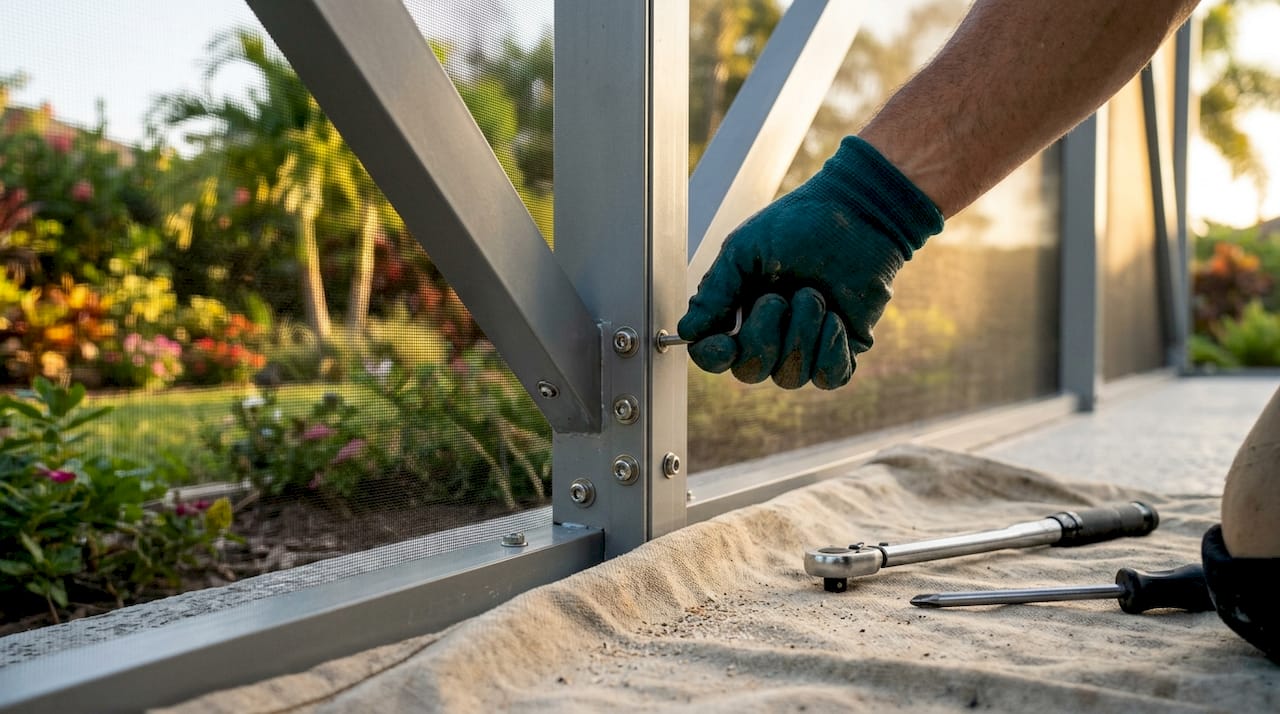
Aluminum is the standard framing material for Florida enclosures. It resists corrosion far better than steel and carries the weight-to-strength ratio needed for large span structures. Aluminum gauge matters. Heavier gauge extrusions handle wind loads better and resist bending during storms. Fastener grade is equally critical. Stainless steel fasteners prevent the galvanic corrosion that causes rust staining and structural loosening. Using standard zinc-plated screws in a Florida pool environment is a mistake that shows up within two to three years.
Screen mesh comparison
| Mesh type | UV protection | Insect resistance | Visibility | Best use |
|---|---|---|---|---|
| Standard fiberglass | Moderate | High | Good | Budget-conscious restoration |
| Solar screen | High | High | Reduced | Sun-facing exposures |
| No-see-um mesh | Moderate | Maximum | Reduced | Properties near water or wooded areas |
| Pet-resistant screen | Moderate | High | Good | Homes with large dogs |
Choosing the right enclosure design is a composite decision that includes pool size, home architecture, wind codes, and homeowner lifestyle. A solar screen on a west-facing wall can meaningfully reduce afternoon heat load on your pool deck.
Restoration versus full replacement
Restoration makes sense when the aluminum frame is structurally sound and corrosion is surface-level. Full replacement is necessary when frame members are bent, connections are cracked, or the structure no longer meets current wind-load codes. Mrpoolscreen uses water-based acrylic coatings and stainless steel fasteners during restoration, which can save homeowners up to 60% compared to a full rebuild while delivering results that match new construction aesthetics.
Pro Tip: Ask your contractor to show you the aluminum gauge spec sheet for any new framing material. Thicker is not always necessary, but knowing the spec lets you compare bids on equal terms.
For visual inspiration before committing to a design, the screen enclosure upgrade options guide covers color choices, door configurations, and architectural integration ideas.
How do you restore an aging screen enclosure step by step?
A proper restoration follows a defined sequence. Skipping steps leads to callbacks and repeat failures.
Step 1: Full structural inspection. Walk the entire perimeter and examine every frame connection, anchor point, and corner. Look for corrosion, cracks, and any member that has shifted out of alignment. A safety inspection checklist helps homeowners document findings before a contractor arrives.
Step 2: Assess scope and pull permits. Determine whether you need rescreening only, partial frame repair, or full frame replacement in sections. Any structural frame work requires a permit in Florida. Schedule this before ordering materials.
Step 3: Frame preparation. Clean all aluminum surfaces. Remove oxidation with appropriate cleaners. Treat any surface corrosion before applying coatings. Replace all corroded or missing fasteners with stainless steel hardware.
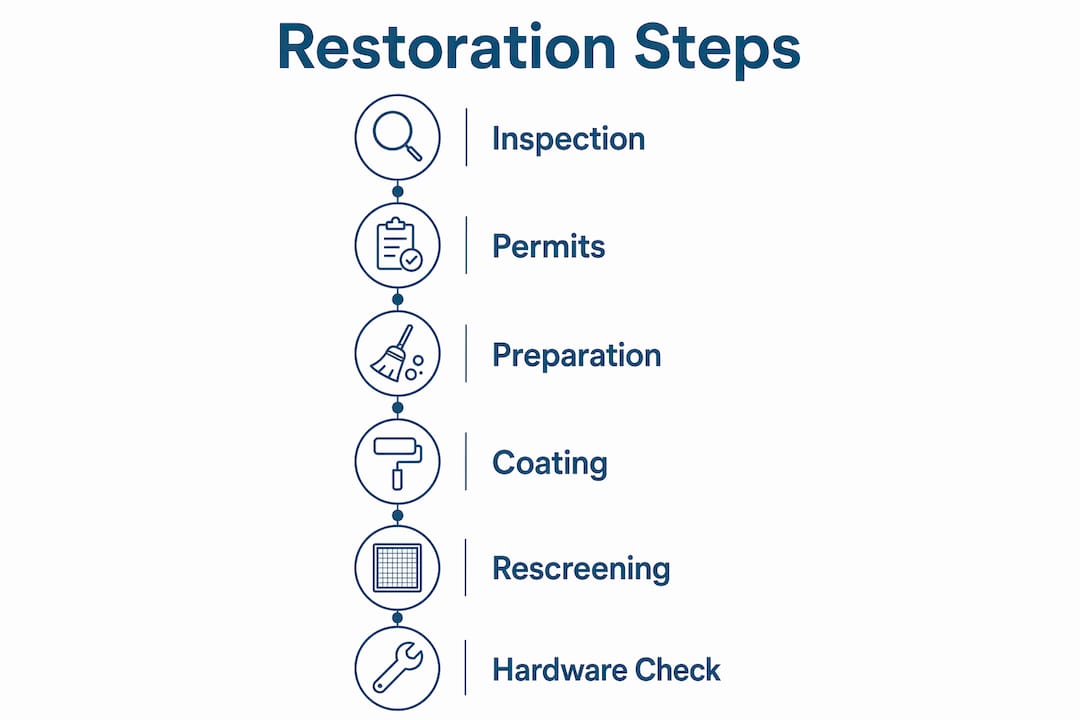
Step 4: Frame coating. Apply water-based acrylic coating to cleaned aluminum. This step restores appearance and adds a protective barrier against future oxidation. It is the step most budget contractors skip, and its absence is why enclosures look aged within two years of a cheap repair.
Step 5: Screen replacement. Install new mesh panels using fresh spline. Pull screens taut before securing. Loose installation creates sag within one season.
Step 6: Hardware and door inspection. Test all door latches, hinges, and self-closing mechanisms. Florida safety codes require self-closing, self-latching pool enclosure doors. Replace any hardware that does not function correctly.
Step 7: Final inspection and documentation. Schedule the required county inspection for permitted work. Keep all documentation, including the permit, inspection sign-off, and contractor warranty, in your home file.
Ongoing maintenance after restoration is straightforward:
- Rinse the frame and screens with fresh water monthly to remove pollen, dirt, and salt deposits.
- Check fasteners and spline channels after each storm season.
- Reapply frame coating every few years depending on sun and salt exposure.
- Trim vegetation that contacts the frame to prevent moisture retention and staining.
Proactive weather damage prevention between storm seasons keeps repair costs predictable and low.
Key Takeaways
Restoring a screen enclosure with licensed contractors, proper permits, and quality materials protects your home's value, safety, and outdoor usability for years beyond what a cheap repair delivers.
| Point | Details |
|---|---|
| Permits are non-negotiable | Florida law requires permits for all new builds and major structural repairs to screen enclosures. |
| Licensing protects homeowners | Verify DBPR license status before hiring any contractor to avoid legal and financial exposure. |
| Material quality determines lifespan | Stainless steel fasteners and water-based acrylic coatings prevent corrosion and extend enclosure life. |
| Restoration beats replacement | Restoring a structurally sound frame costs significantly less than a full rebuild and delivers comparable results. |
| Maintenance extends investment | Monthly rinsing, post-storm checks, and periodic recoating keep a restored enclosure performing for years. |
Why I always tell homeowners to check the license before the price
The most expensive mistake I see homeowners make is choosing a contractor based on the lowest bid. I have walked properties where unlicensed crews installed enclosures with zinc-plated screws, no permit, and no engineering review. Within three years, the rust stains were visible from the street, the frame had shifted, and the homeowner's insurance company had denied a storm damage claim because the structure was unpermitted.
Smaller, family-owned companies often provide better warranty support and more personalized service than large volume contractors. They know the local building departments, they know the wind-load zones, and they are accountable in a way that a franchise operation passing through your neighborhood is not. That personal accountability shows up in the quality of the work.
Written scope of work and warranty terms protect your investment in a way that a verbal promise never does. Before any contractor starts work, get the permit number, the license number, and the warranty terms in writing. If a contractor resists providing any of those three things, that is your answer.
Proper restoration also adds measurable value to your home. A clean, structurally sound enclosure signals to buyers that the property has been maintained. An enclosure with rust stains, torn screens, and missing fasteners signals the opposite, and buyers price that risk into their offers.
— Michel
Mrpoolscreen restores Central Florida pool cages the right way
Central Florida homeowners dealing with rust stains, torn screens, or a frame that has seen better days have a proven option that does not require a full rebuild.
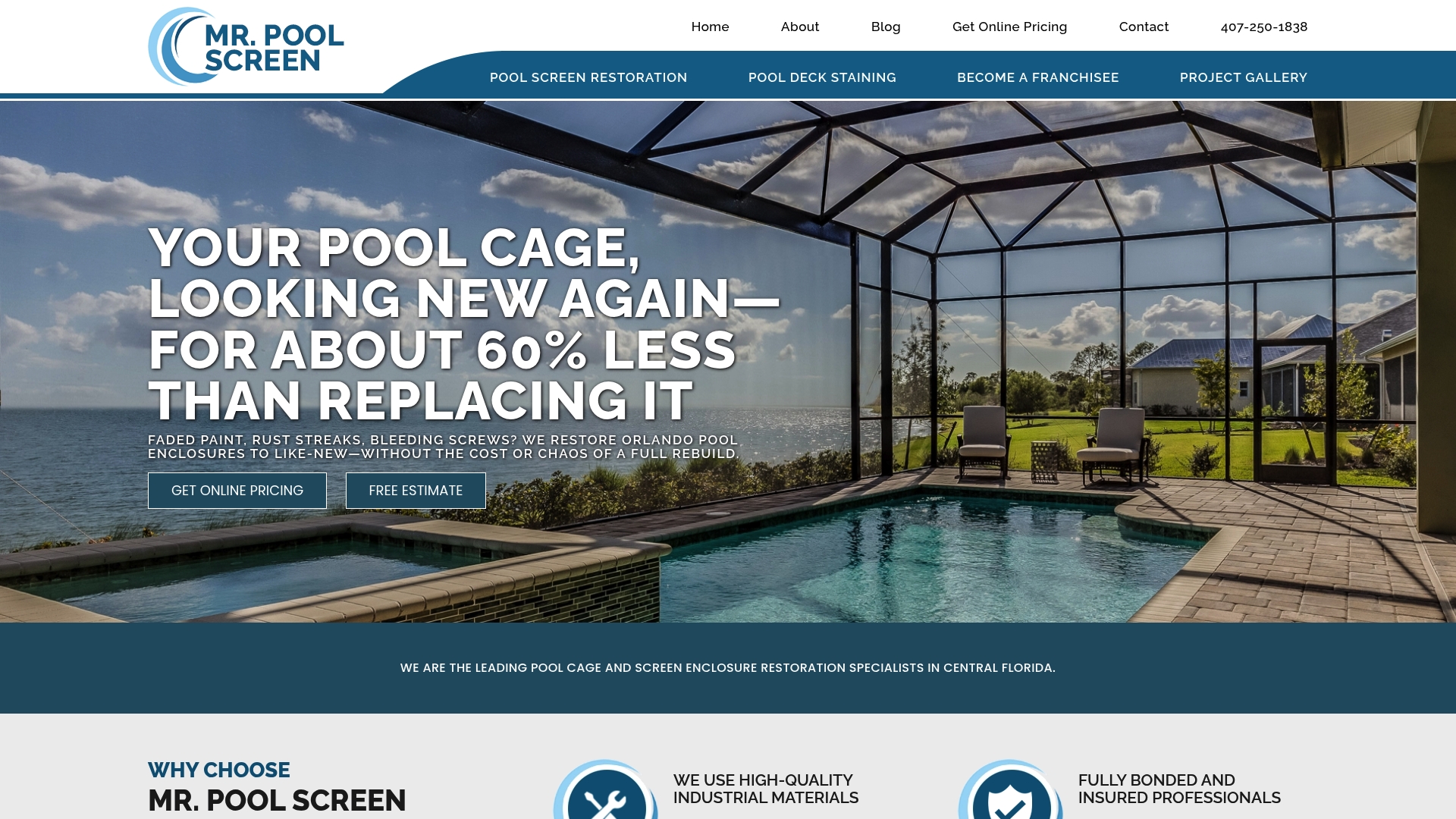
Mrpoolscreen specializes in pool screen restoration across the Orlando area, using water-based acrylic coatings, stainless steel fasteners, and fully licensed, insured workmanship. The process addresses corrosion, screen damage, and structural wear at a fraction of full replacement cost. Homeowners can also view the completed project gallery to see the quality of finished restorations before making a decision. If your pool deck needs attention alongside the enclosure, Mrpoolscreen also offers pool deck staining to complete the outdoor refresh. Contact Mrpoolscreen to schedule a consultation and get a written estimate.
FAQ
What is a screen enclosure?
A screen enclosure is an aluminum-framed outdoor structure covered with mesh screening that protects pool areas and patios from insects, debris, and UV exposure while maintaining airflow and visibility.
How much does a screen enclosure restoration cost compared to replacement?
Restoration of a structurally sound enclosure costs significantly less than a full rebuild. Mrpoolscreen reports savings of up to 60% for homeowners who restore rather than replace.
Do I need a permit to rescreen my pool cage in Florida?
Rescreening only, with no structural changes, typically does not require a permit. Any frame repair, modification, or new installation requires a building permit under Florida building codes.
How long does a restored screen enclosure last?
A properly restored enclosure with quality coatings, stainless steel fasteners, and regular maintenance can last many additional years beyond the point of restoration, depending on sun and salt exposure.
How do I verify a screen enclosure contractor's license in Florida?
Search the contractor's name or license number on the Florida DBPR website. Valid licenses show current status, license type, and any disciplinary history.