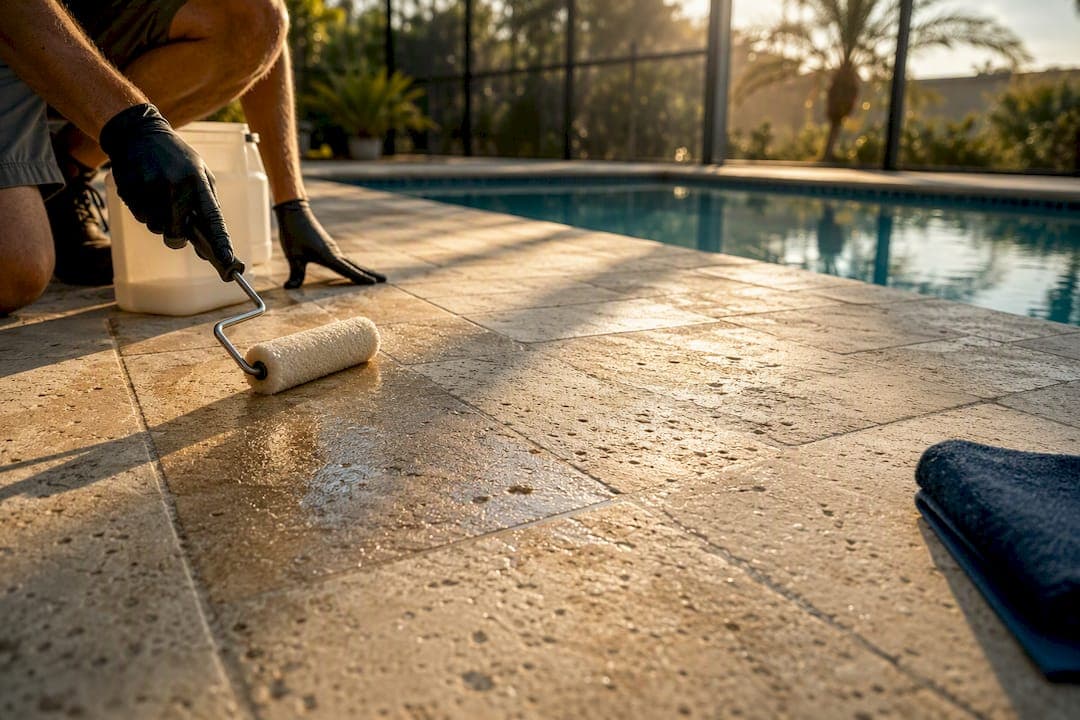
Yes: seal most natural stone pool decks with a penetrating, breathable sealer after complete cleaning and drying. The three moves that matter most are proper prep, choosing a penetrating sealer over a film-forming coating, and testing the surface with a water-bead check every one to three years to know when to reseal.
TL;DR:
- Proper sealing involves applying a penetrating, breathable sealer after thorough cleaning and rechecking the surface with a water-bead test every one to three years.
- Avoid topical film coatings, which are prone to peeling, yellowing, or trapping moisture, especially in outdoor pool environments.
- Prepare the stone carefully by removing stains, repairing damage, and ensuring it is fully dry before sealing; skipping this step leads to poor results.
- Applying sealer with the correct technique, in dry conditions, and following manufacturer instructions prevents premature failure and cloudy finishes.
- Heavy foot traffic, frequent chemical use, and sun exposure shorten reseal intervals, making regular maintenance and professional assessment important for longevity.
Table of Contents
- Why sealing a natural stone pool deck pays off
- Which sealer type actually belongs on pool stone
- Preparing the stone before you ever open the sealer can
- Applying the sealer without trapping moisture underneath
- Fixing sealer problems after the fact
- Keeping the seal working season after season
- How a restoration contractor approaches a stone pool deck
- What most sealing advice gets wrong
- Getting a professional estimate for deck staining and sealing
- Sources
- FAQ
Why sealing a natural stone pool deck pays off
Pool water carries chlorine, salt, and pH adjusters that eat into unprotected stone over time. A breathable sealer slows that penetration and cuts down on staining from sunscreen, leaves, and standing water around the coping.
Sealed stone also cleans up faster. Oils and organic debris sit on the surface instead of soaking in, so a rinse and a mild cleaner usually do the job instead of scrubbing or chemical treatment.
Slip resistance depends on the product. Some penetrating sealers leave the stone's natural texture untouched, while others add a slight sheen that can change surface friction, so check the technical data sheet before buying.
- Sealing reduces water and chemical penetration into the stone's pores.
- A sealed surface resists oil and organic staining better than bare stone.
- Preventive sealing helps avoid spalling, the flaking damage that shows up when trapped moisture freezes or expands.
A well-chosen impregnating sealer often lasts 1 to 3 years on outdoor travertine, which means the upfront work of sealing correctly saves you from a much bigger repair job later.
Which sealer type actually belongs on pool stone
The rule of thumb: use a penetrating, or impregnating, sealer, and skip topical film-forming coatings on natural stone around a pool. Impregnators soak into the stone's pores and block moisture from within while letting vapor escape, which matters because stone near a pool stays damp longer than stone anywhere else in the yard.
Topical coatings sit on top of the surface instead of inside it. Outdoors, that surface film tends to yellow, peel, or trap moisture underneath it, which is exactly the failure mode contractor guidance for Florida climates warns against for marble and travertine pavers. Once a coating starts lifting, you are usually looking at stripping and starting over rather than a quick touch-up.
Color-enhancing impregnators are a separate category worth understanding before you buy. They darken the stone and boost natural veining, which some homeowners like and others find too dramatic. If keeping the stone's original color is the goal, choose a non-enhancing impregnator and test a small, hidden area first, since the effect is not always reversible.
- Penetrating sealers protect from within and preserve breathability.
- Topical coatings tend to fail on outdoor stone through yellowing or peeling.
- Color-enhancing products change appearance permanently in most cases.
- A technical data sheet lists coverage rate, VOC content, and recommended substrates.
Pro Tip: Check the data sheet's slip-resistance rating before buying. A sealer rated for interior floors is not automatically safe for wet pool decking.
Preparing the stone before you ever open the sealer can
Skip prep is the fastest way to waste a sealer. Work through this checklist in order.
- Sweep the deck and rinse with a pH-neutral stone cleaner, avoiding acidic or generic household cleaners that etch natural stone.
- Treat specific stains individually: oil and organic stains often lift with a poultice, but rust needs special handling since bleach and household acids can permanently damage travertine and worsen the stain.
- Repair loose pavers, top off joint sand, and address any efflorescence or spalling before sealing over it.
- Confirm the stone is fully dry with a water-bead test, and use a moisture meter if there is any doubt.
Preservation guidance built around historic stone care applies directly here: the National Park Service's cleaning approach stresses using the gentlest method that works, since aggressive cleaning can permanently damage stone you are trying to protect. That same logic holds for a pool deck: a soft-bristle brush and a neutral cleaner beat a wire brush and full-strength acid every time.
Drying time varies by climate and stone density, but plan for several days to a couple of weeks after washing before sealing, especially with dense stones like travertine that hold moisture in their pores.

Pro Tip: If the deck was pressure washed, wait longer than you think you need to. Trapped subsurface moisture is the top cause of cloudy or failed sealer jobs.
Applying the sealer without trapping moisture underneath
Once the stone tests dry, application technique determines whether the sealer performs for years or fails within months.
- Choose your applicator by area: a pump sprayer gives even coverage on large decks, a roller works well on smaller sections, and a brush handles edges and joints; wear gloves and eye protection as the data sheet directs.
- Apply to the point of saturation without letting the product puddle, then let it sit for the manufacturer's dwell time before wiping off any excess residue.
- Follow the coverage rate listed on the technical data sheet, and apply a second coat if the manufacturer calls for one.
- Let the sealer cure fully before foot traffic or pool use resumes, which can range from several hours to a couple of days depending on the product and weather.
The most common failures all trace back to ignoring the instructions on the can. Sealing damp stone, working in direct sun or high heat, or skipping the recommended dwell time are the three mistakes that show up again and again. Manufacturer technical guidance consistently points to substrate dryness and correct cure conditions as the difference between a sealer that lasts and one that clouds within weeks.
Fixing sealer problems after the fact
A cloudy or milky finish almost always means moisture got trapped under the sealer before it cured. Let the deck dry out fully and retest, and if the haze persists, the sealer likely needs to be stripped and reapplied.
Peeling or flaking points to a topical coating that was never suited to outdoor stone, or a surface that was not properly cleaned before application. This usually calls for professional stripping and repointing rather than a homeowner fix.
- Slippery patches call for a friction check and, if needed, a traction additive or a reseal with a non-slip-rated product.
- Persistent stains after sealing often need a poultice treatment or professional cleaning rather than another coat of sealer.
- Repeated cloudiness in the same spot usually means a drainage or grading issue is keeping that area wet longer than the rest of the deck.
Keeping the seal working season after season
A short seasonal routine keeps a sealed deck performing without much effort: sweep debris, rinse the surface, check joints for gaps, and watch for efflorescence or new staining.
- Run the five-minute water-bead test seasonally: if water soaks in rather than beading up, it is time to reseal.
- Typical impregnators hold up for 1 to 3 years outdoors, with enhanced systems sometimes lasting longer depending on chemistry and foot traffic.
- Heavy pool chemical use, intense sun exposure, and high foot traffic all shorten that window, so busy decks should plan for the lower end of the range.
Decks with frequent, heavy foot traffic and daily chemical exposure tend to need resealing closer to the one-year mark rather than the three-year end of the typical window.
How a restoration contractor approaches a stone pool deck
A preparation-first approach catches problems a homeowner might miss: checking joints for movement, swapping rusted fasteners on nearby screen framing for stainless steel hardware, and masking thoroughly to keep overspray off stone that is not being treated.

A professional restoration service uses industrial-grade materials, including water-based acrylic coatings and stainless steel or Nylotech fasteners on enclosure work, and backs completed jobs with a warranty as part of its standard process.
Homeowners should call in a professional when stains run deep or cover a wide area, when structural issues show up in the surrounding enclosure, or when moisture readings stay high with no clear explanation. Those situations usually need equipment and diagnostic steps beyond a weekend project.
What most sealing advice gets wrong
Most guides treat sealer choice as the whole decision, when prep and drying time actually decide the outcome. A premium impregnator poured over damp, dirty stone fails just as fast as a bargain product, and manufacturer data sheets back this up again and again: substrate condition is the variable that actually predicts success.
The other overrated idea is that sealing is a one-time job. Stone around a pool takes more chemical and UV exposure than almost any other surface on the property, so treating a reseal cycle as optional rather than routine is how decks end up needing full restoration instead of a maintenance coat.
If you take one thing from this, prioritize the boring parts. Clean gently, dry fully, test before you seal, and test again before you decide it is time to reseal. The sealer brand matters far less than most marketing suggests.
— Michel
Getting a professional estimate for deck staining and sealing
If the deck has widespread staining, recurring moisture problems, or damage tied into an aging pool enclosure, a professional assessment saves time over trial and error. Mr. Pool Screen handles deck prep, staining and sealing, joint repair, and full enclosure restoration for homeowners dealing with worn or discolored stone.

Call in a pro when stains run deep across multiple areas, efflorescence keeps returning after cleaning, or moisture readings stay high with no obvious source. For an estimate, have your deck measurements, stone type, photos of the damage, and recent maintenance history ready.
- Deck prep and cleaning suited to your specific stone type.
- Staining and sealing using industrial-grade, water-based products.
- Joint repair and, where needed, restoration of the surrounding pool enclosure.
Start with the pool deck staining page to see the process, or reach out through Mrpoolscreen for a full estimate on your project.
Sources
- National Park Service: Cemetery preservation course — cleaning grave markers
- Laticrete product data / technical guidance (example: substrate moisture and application)
- How to Clean a Travertine Pool Deck? (ThePoolAndDeck)
- SurfaceCarePros: How do I remove rust stains from a travertine pool deck?
FAQ
Does natural stone need sealing?
Most natural stone used around pools benefits from sealing because it slows water and chemical penetration that leads to staining and long-term damage. Unsealed stone absorbs pool chemicals and organic debris more readily, which shortens its lifespan and increases cleaning effort.
What do you seal natural stone with?
Penetrating, breathable sealers are the standard choice for natural stone around pools because they protect from within without trapping moisture. Contractor guidance for outdoor marble and travertine specifically warns against topical film coatings, which tend to peel and discolor outdoors.
Should you seal a natural stone patio?
Yes, sealing a natural stone patio protects against staining, weathering, and moisture damage the same way it does on a pool deck. The process differs slightly since patios face less direct chemical exposure, but the same penetrating sealer and dry-substrate rule applies.
What is a good sealant for stone around a pool?
A breathable, penetrating impregnator formulated for the specific stone type is the safest choice around a pool. Check the product's technical data sheet for coverage rate and recommended substrates, and avoid topical coatings that can peel from chlorine and UV exposure.
How often should you reseal a stone pool deck?
Most impregnating sealers on travertine need reapplication every 1 to 3 years, depending on foot traffic and chemical exposure. A simple water-bead test tells you when it is time: if water soaks in instead of beading, it is time to reseal.