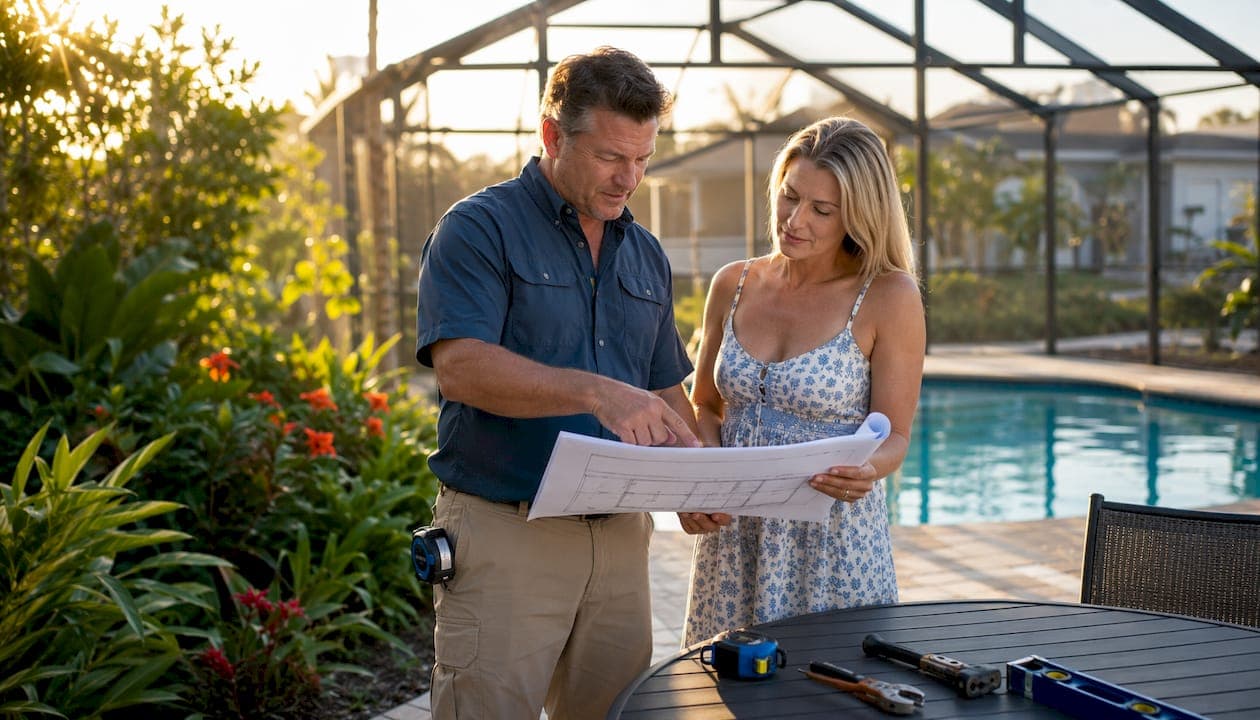
Why hiring a pool enclosure specialist protects your home and investment
A licensed pool enclosure specialist is the only contractor type that combines structural engineering knowledge, local permit experience, and materials expertise specific to pool environments. General contractors can build decks and additions, but pool enclosures sit at the intersection of wind-load engineering, corrosion-resistant materials, and county-specific building codes that most generalists have never navigated. Hiring the wrong person here does not just produce a subpar result. It can void your homeowner's insurance, expose you to legal liability, and leave you paying twice.
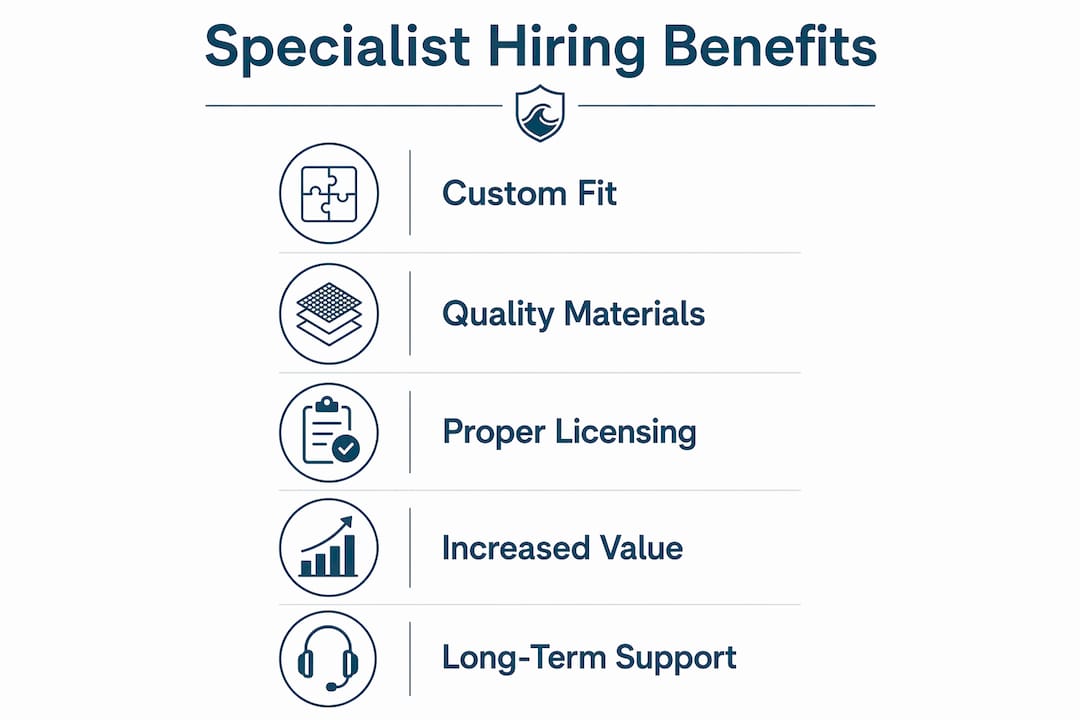
Here is what a qualified specialist brings to your project:
- Compliance with local wind-load codes and permitting requirements that protect your safety and insurance coverage, unlike general contractors who often lack this niche knowledge
- Expert selection of corrosion-resistant materials, including powder-coated aluminum alloys and stainless steel fasteners, matched to your climate
- Workmanship and product warranties that protect your investment after installation
- Avoidance of the structural failures, permit gaps, and insurance denials that follow DIY or unqualified hires
- Long-term cost savings by preventing the expensive repairs that poor installation almost always produces
Table of Contents
- What services does a pool enclosure specialist actually provide?
- How much does hiring a pool enclosure specialist cost?
- What to check before you hire: licensing, insurance, and credentials
- Key questions to ask a pool enclosure specialist before signing
- Risks of hiring cheap or unlicensed pool enclosure contractors
- What to expect after you hire a pool enclosure specialist
- Expert insights from Mrpoolscreen on what separates good contractors from bad ones
- Specialist pool enclosure contractors versus general contractors
- How your region shapes what a pool enclosure specialist needs to know
- Why reviews and testimonials matter when choosing a pool enclosure contractor
- Mrpoolscreen: restoration and repair for Central Florida homeowners
- Key Takeaways
What services does a pool enclosure specialist actually provide?
Specialists do far more than install screens. The full scope of what a qualified contractor handles explains why the role requires dedicated expertise.
- Custom enclosure design tailored to your pool's dimensions, yard layout, and architectural style, including mansard, gable, and dome configurations
- Permitting and local authority coordination, including structural drawings stamped by a licensed engineer and inspection sign-off before project completion
- Site preparation, covering foundation work, drainage, and clearing access for safe installation
- Frame, screen, door, and hardware installation using industry-grade aluminum alloys, commercial mesh grades, and corrosion-resistant fasteners
- Maintenance, repair, and restoration services backed by workmanship warranties, extending the life of your enclosure well beyond what a generalist's work typically delivers
Experienced specialists also avoid prefab enclosure kits entirely, building custom frames adapted to your home's exact layout for a fit and durability that off-the-shelf systems cannot match.
How much does hiring a pool enclosure specialist cost?
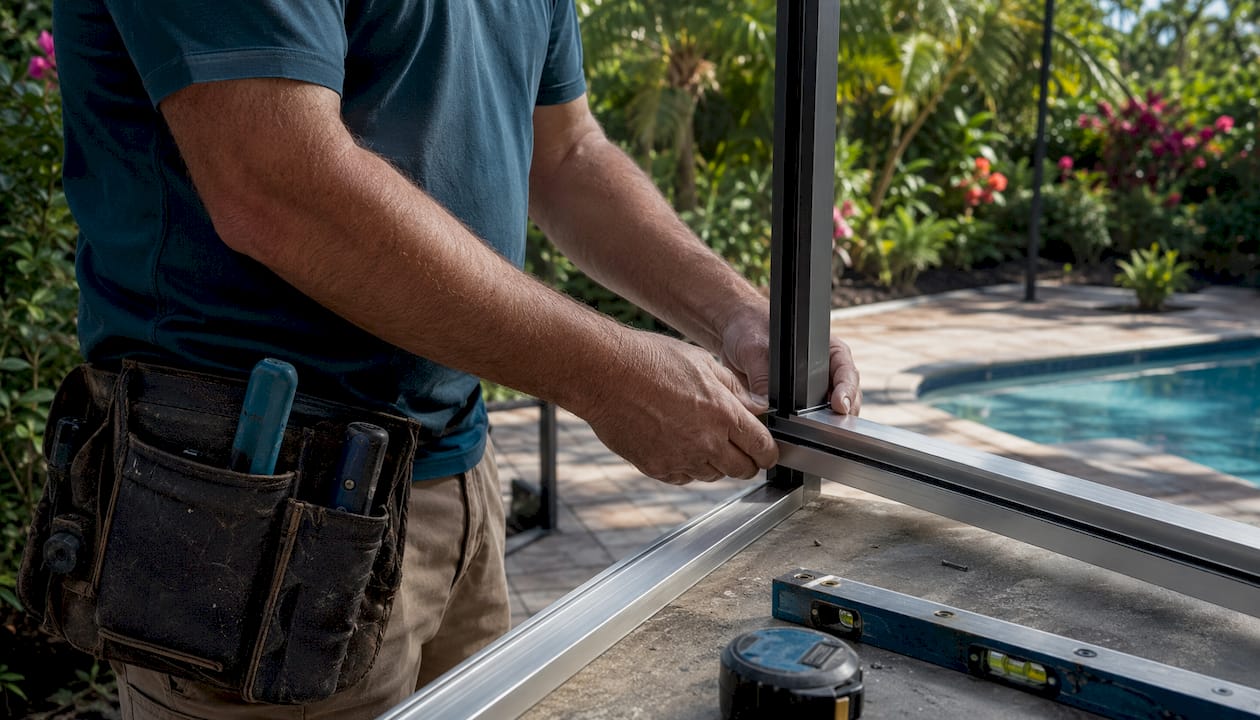
Professional installation averages $12,170, with most projects falling between $7,050 and $18,830 depending on design complexity, materials, and local permitting fees. Labor typically runs $35–$50 per hour, reflecting the engineering knowledge and code compliance that specialist crews bring.
- Project size and design complexity drive the largest cost differences. Hip roofs, multi-elevation changes, and integration with existing pool equipment all require more custom fabrication and engineering time.
- Material choices between screen mesh, polycarbonate, and glass panels affect both upfront cost and long-term maintenance.
- Local permitting fees vary by county and can add meaningfully to the total, particularly in Florida where wind-zone requirements have tightened since the mid-2000s hurricane seasons.
- Specialty labor costs more than general construction labor because the installer must understand structural drawings, anchor systems, and code compliance simultaneously.
The upfront premium over a cheap bid pays for itself. Properly engineered enclosures can increase property value and reduce annual maintenance costs through lower cleaning frequency and reduced chemical usage. A poorly installed enclosure, by contrast, typically requires costly repairs within a few years and can complicate a home sale if permits were skipped.
Pro Tip: Get three written quotes for the identical scope of work. Quotes clustering in a similar range reflect a competitive market pricing honestly. A significantly lower bid compared to others often signals missing scope, inferior materials, or unlicensed labor.
What to check before you hire: licensing, insurance, and credentials
Verifying credentials takes about 20 minutes and eliminates a large share of contractors who should never be on your shortlist.
- License verification: Check the Florida DBPR database directly. Do not accept a contractor's assurance or a document they hand you. You want an active license, current status, and no disciplinary history. A specialty structure contractor license (SCC) is the specific credential for aluminum pool enclosure work in Florida.
- Insurance certificates: Request proof of general liability and workers' compensation coverage, with you named as an additional insured. Call the insurer to confirm the policy is active. Contractors who resist this request are telling you something about how they operate.
- Engineering plans and permits: Custom enclosure designs stamped by a licensed engineer protect against structural failures and are required for permit approval. Any contractor suggesting you skip the permit is transferring legal and financial exposure onto you.
- Local business presence: No physical address, no verifiable location, operating only from a mobile number. That is a red flag regardless of how good the price sounds.
- Disciplinary history: The DBPR database shows complaints and disciplinary actions. A pattern of issues there is not something to explain away.
Pro Tip: Ask for references from projects completed at least 12 months ago. That is when installation quality reveals itself honestly, after a full weather cycle including at least one serious storm.
Key questions to ask a pool enclosure specialist before signing
Good questions do two things at once. They get you the information you need, and they show you how the contractor thinks.
- Local codes and permitting: Ask specifically how long permit approval typically takes in your municipality and what happens to your timeline if it is delayed. Contractors with genuine local experience answer this without hesitation.
- Materials specifics: Request the exact aluminum alloy, screen mesh grade, fastener materials, and door hardware brand. "Premium materials" is not an answer. Actual product names and specifications are, because they give you recourse if substitutions happen after signing.
- Who does the physical installation: Many contractors sell the project and subcontract the labor. That is not automatically a problem, but you want to know whether those workers are covered by the contractor's insurance and whether the contractor supervises directly.
- Warranty coverage: What is covered, for how long, and who stands behind it? A warranty from a company that may not exist in three years is worth nothing. Ask how long they have operated under their current business name.
- Written timeline with milestones: Not "a few weeks." Specific dates or date ranges for permit submission, material delivery, installation start, and final inspection. Vague timelines are how projects drift from weeks into months.
- Change order policy: Any modification to scope, materials, or timeline must be documented in a signed change order before work proceeds. Verbal agreements about changes are where costs expand unexpectedly.
Risks of hiring cheap or unlicensed pool enclosure contractors
Unlicensed contractors frequently ignore wind-load codes and use inferior materials, producing enclosures that look fine at first and fail structurally during the first serious weather event. In Florida, that is not a theoretical risk.
- Structural failure: Enclosures built to incorrect wind-load specs or with substandard anchoring can collapse in storms, damaging your pool, your home, and anyone nearby.
- Insurance claim denials: Unpermitted or unlicensed work can void your homeowner's insurance coverage for related damage. Insurance policies cover frame and screen damage from everyday events, but that coverage depends on the structure being legally installed.
- Legal liability shift: If an unlicensed contractor skips permits and something goes wrong, the liability lands on you as the homeowner, not the contractor.
- Compounding repair costs: Poor workmanship at installation, particularly around fastener sealing and frame anchoring, produces corrosion and structural loosening within a few years. Fixing it costs more than the original savings.
- Resale complications: An unpermitted enclosure surfaces during a home sale and can kill a transaction or require expensive remediation before closing.
Southwest Florida sees a particular spike in unlicensed operators after storm seasons, when demand is high and homeowners are eager to move quickly. That urgency is exactly when credential verification matters most.
What to expect after you hire a pool enclosure specialist
Professional installation timelines run up to 30 business days from permit approval through final inspection, depending on project scope and local permitting speed. Here is the typical sequence:
- Permit submission and approval: The contractor submits stamped engineering drawings to the building department. Approval timelines vary by county.
- Site preparation: The crew clears access, prepares the foundation or base slab, and sets up a safe workspace.
- Frame and screen installation: Posts, beams, screen panels, track plates, and door hardware go in according to the approved engineering drawings.
- Anchoring and structural inspection: The structure is anchored against wind loads and inspected by the building department before the project is considered complete.
- Final documentation: You receive the signed inspection certificate, warranty documentation, and maintenance guidance. Final payment should release only after the inspection certificate is in your hands.
Regular communication throughout this sequence, with written updates at each milestone, is a sign of a contractor who manages projects professionally. Silence between signing and completion is not.
Expert insights from Mrpoolscreen on what separates good contractors from bad ones
Mrpoolscreen works specifically in Central Florida, where the combination of humidity, salt air, and hurricane-season wind loads creates conditions that expose installation shortcuts faster than almost anywhere else in the country. A few things stand out after years of seeing what goes wrong.
- Custom engineering over prefab kits: Off-the-shelf enclosure kits are built to generic dimensions and generic wind assumptions. A custom frame engineered for your specific property and your county's wind zone performs differently over ten to fifteen years.
- Corrosion-resistant materials throughout: Stainless steel fasteners and powder-coated aluminum are not optional upgrades in a coastal or near-coastal Florida environment. They are the baseline. Contractors who substitute cheaper hardware are making a decision you will pay for in a few years.
- Milestone-based payment structure: Tie payments to project milestones, not calendar dates. A reasonable structure runs from a deposit at signing through payments at permit approval, material delivery, installation completion, and final inspection sign-off. This keeps contractor incentives aligned with actual progress.
- Verify local market presence: A contractor with a verifiable physical address, a history of permitted projects in your county, and references you can actually call is a fundamentally different proposition from one operating off a mobile number and a social media page.
Pro Tip: Ask to see the project gallery or completed jobs in your area. Driving past a finished enclosure and seeing how it looks after 12 months tells you more than any sales conversation.
Specialist pool enclosure contractors versus general contractors
The core difference is not capability. It is focus. A general contractor can coordinate a full backyard renovation across multiple trades, which is genuinely useful when you are also adding a patio, outdoor kitchen, and landscaping at the same time. For the enclosure itself, that breadth comes at the cost of depth.
Pool enclosure specialists know the specific aluminum alloys that hold up in your climate, the screen mesh grades rated for your wind zone, and the permit process at your county's building department. They have navigated the Florida Building Code wind-load requirements dozens or hundreds of times. A general contractor managing an enclosure as one line item in a larger project typically subcontracts that work anyway, adding a layer between you and the people actually installing the structure.
For enclosure-only work, a dedicated specialist is the better fit. The licensing and compliance knowledge alone, particularly around wind-zone designations that vary by county, justifies the specialization.
How your region shapes what a pool enclosure specialist needs to know
Florida's building environment is genuinely different from most of the country, and it shapes what good pool enclosure work actually requires. Wind-zone designations vary by county, and the Florida Building Code's structural requirements for screen enclosures have tightened significantly since the hurricane seasons of the mid-2000s. An enclosure permitted to older standards or to codes from a lower-risk region is not just potentially unsafe. It can affect your homeowner's insurance and create problems when you sell.
Salt air corrosion is a factor that separates contractors with genuine Florida experience from those without it. The material and fastener choices made at installation determine how the enclosure ages over five, ten, or fifteen years in a coastal or near-coastal environment. Experienced local contractors make those choices with that aging process in mind. Out-of-market operators sometimes do not, and the difference shows up within a few years in ways that are expensive to address.
Homeowners outside Florida face different regional variables, including snow load requirements in northern climates and humidity-driven corrosion in Gulf Coast states, but the principle holds everywhere: a specialist who works regularly in your specific market understands the local code environment and material demands that a generalist or out-of-area contractor simply does not.
Why reviews and testimonials matter when choosing a pool enclosure contractor
Review scores are a starting point, not a verdict. A contractor with a strong rating on the Better Business Bureau or Google has cleared a basic bar, but the reviews that actually tell you something are the ones that describe how problems were handled, not just whether the project finished on time.
Pool enclosure work has a delayed quality reveal. An enclosure can look perfect at installation and show its weaknesses only after the first hurricane season, the first year of salt air exposure, or the first time a fastener point starts corroding. That is why references from clients at least 12 months post-completion carry more weight than recent reviews. When you speak to those references, ask specifically about post-installation issues and how the contractor responded. A company that fixes problems quickly and without argument is demonstrating something about its long-term reliability that no sales pitch can replicate.
For a pool safety inspection after installation, the same principle applies: documented follow-through matters more than the initial impression.
Mrpoolscreen: restoration and repair for Central Florida homeowners
If your pool enclosure is aging but structurally sound, a full rebuild is often not what you actually need. Mrpoolscreen specializes in restoring pool enclosures and screen structures across Central Florida, using water-based acrylic coatings and stainless steel fasteners to address weathering, rust, and aesthetic deterioration at a fraction of replacement cost. Clients typically save up to 60% compared to a full rebuild, which is a meaningful difference on a structure that can otherwise run well into five figures to replace.
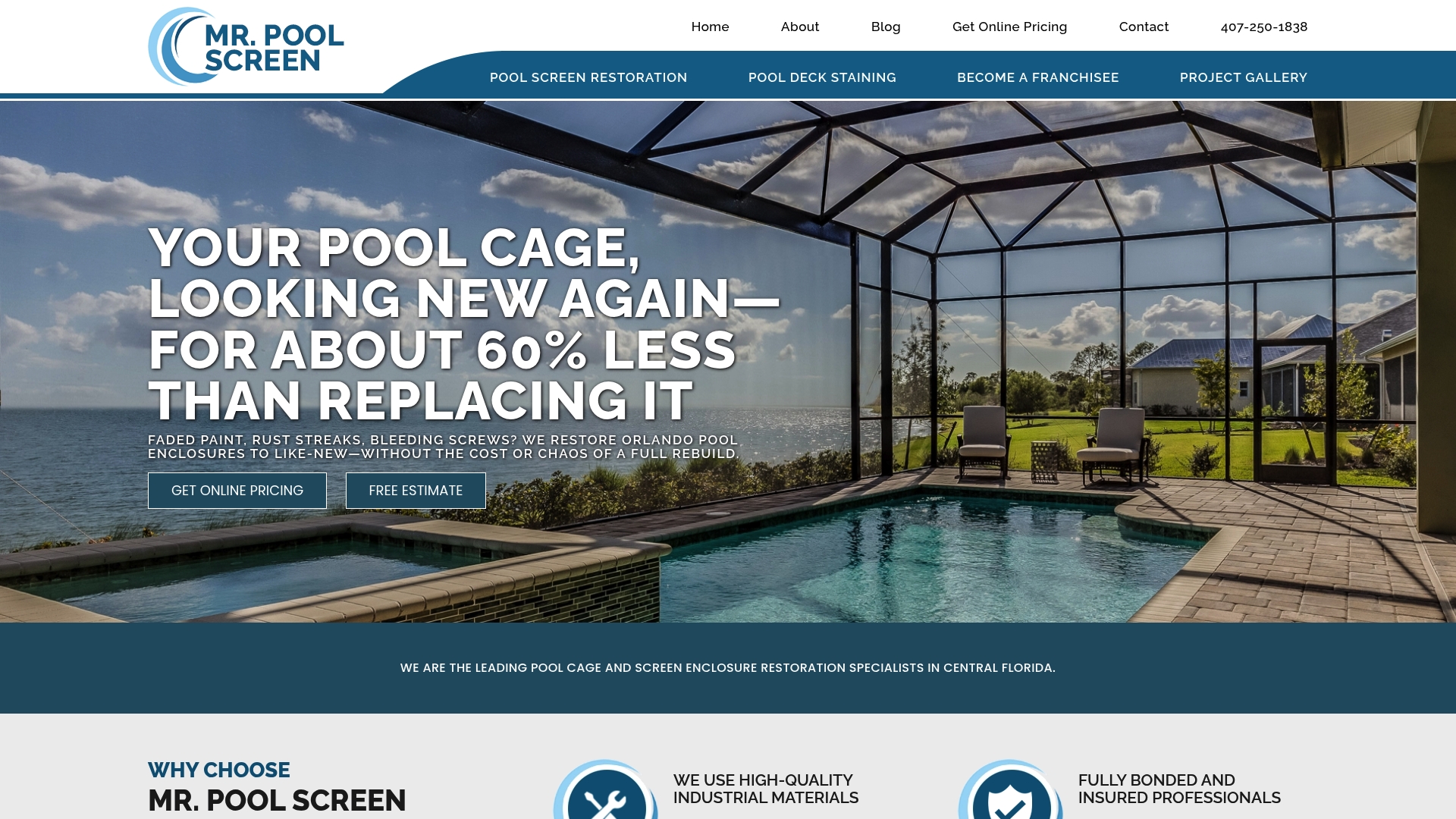
The restoration approach works specifically for homeowners with aging pool cages that have lost their appearance or developed surface corrosion but do not require complete structural replacement. It protects your investment, maintains safety, and extends the life of the enclosure without the permitting timeline and disruption of new construction. For ongoing care after any professional installation, pairing with a luxury pool care service keeps the water and surrounding structure in top condition year-round.
Get a quote for your pool screen restoration and see what Mrpoolscreen's process looks like on your specific enclosure.
Key Takeaways
Hiring a licensed pool enclosure specialist is the single most reliable way to protect your investment, maintain insurance coverage, and avoid the structural failures that cheap or unlicensed work produces.
| Point | Details |
|---|---|
| Verify credentials first | Check the Florida DBPR database directly for an active specialty structure license and no disciplinary history. |
| Cost range | Professional installation averages $12,170, with most projects between $7,050 and $18,830 depending on complexity. |
| Property value upside | Properly engineered enclosures increase property value by 5–8% and reduce ongoing maintenance costs. |
| Milestone payment structure | Tie payments to permit approval, material delivery, installation completion, and final inspection sign-off. |
| Mrpoolscreen restoration | Central Florida homeowners with aging enclosures can save up to 60% versus a full rebuild through Mrpoolscreen's restoration services. |