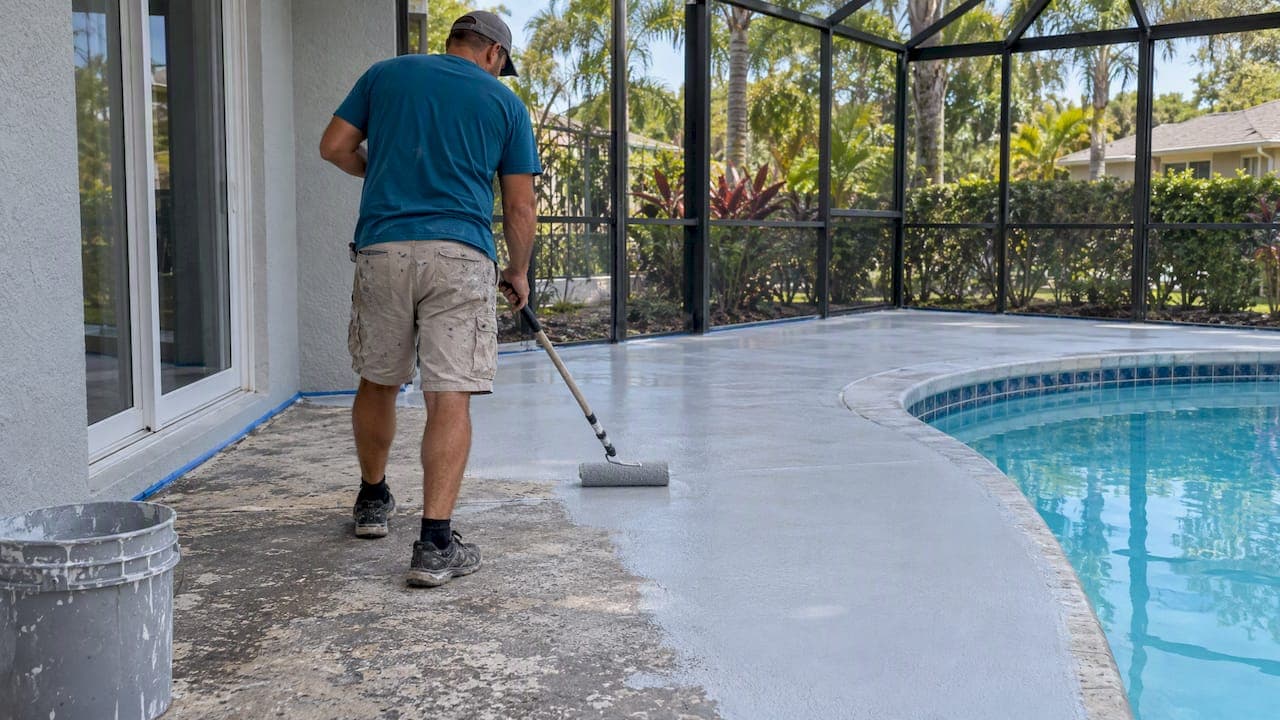
Yes: chlorine and chlorine-containing cleaners can and do degrade many deck paints. Repeated splash exposure bleaches pigments, breaks down the paint binder, and leaves salt residues that invite peeling. The simplest fix is rinsing splash zones after heavy pool use and choosing a breathable, UV-stable coating built for pool decks rather than a generic exterior paint.
TL;DR:
- Acrylic coatings are generally best for residential pool decks because they balance UV stability, breathability, and low VOC emissions.
- Chlorine and salt residues cause chalking, cracking, blistering, and can corrode reinforcement steel if the coating fails and chloride ingress continues.
- Regular rinsing after heavy pool use, choosing appropriate coatings, and inspecting for damage are essential to extend deck coating life.
- Epoxy coatings resist chemicals but are less durable outdoors due to UV exposure and moisture cycling, making them less ideal for splash zones.
- Proper surface preparation, moisture testing, and selecting a coating that matches climate and traffic are key to long-lasting pool deck finishes.
Table of Contents
- How chlorine and pool conditions cause fading, peeling, and bond failure
- Coating options: acrylics, epoxies, polyurethanes, and sealers compared
- Maintenance and prevention checklist to protect your coating
- How to choose a chlorine-resistant coating or hire a pro
- Our field approach to pool deck coatings
- What homeowners get wrong about pool deck durability
- If you'd rather hire a pro for your pool deck
- FAQ
- Sources
How chlorine and pool conditions cause fading, peeling, and bond failure
Chlorine does its damage in more than one way. As an oxidizing agent, hypochlorite breaks down organic pigments and wood fibers, which is why older deck paint often looks chalky or washed out near the waterline first. On wood, chlorine-based cleaners can bleach the surface and loosen fibers, and residue left behind can cause premature graying once sunlight hits it, according to USDA Forest Products Laboratory guidance.

On concrete and masonry, the bigger threat is often the salt itself. Chloride residues draw moisture into the surface, and that moisture cycling between wet and dry promotes efflorescence, the white mineral bloom that pushes coatings apart from underneath. Combine that with UV exposure weakening certain binder chemistries, and you get a predictable failure pattern: chalking first, then hairline cracking, then blistering, and delamination where moisture gets trapped beneath the paint film. For wood substrates specifically, our guide to wood pool deck refinishing covers prep steps that reduce this risk from the start.
The stakes go beyond looks on concrete decks. If coatings fail and chlorides keep migrating into the slab, they can eventually reach embedded reinforcing steel and begin corroding it, a slower but more expensive problem than peeling paint.
A few warning signs tend to show up together:
- Chalking or color fade concentrated near the pool edge and splash zones.
- Fine surface cracking that widens into flaking over a season or two.
- Blistering or bubbling, a sign moisture is trapped beneath the coating.
- White powdery residue (efflorescence) on masonry, signaling chloride-driven moisture movement.
Lab testing on epoxy overlays found they resist chloride ingress well at shallow depths, but bond strength can degrade after repeated freeze-thaw and moisture cycling, which matters for anyone comparing coating families for an exposed pool deck.
Coating options: acrylics, epoxies, polyurethanes, and sealers compared
Not every coating responds to chlorine and moisture the same way, and picking the right family matters more than picking a specific brand.
- Water-based acrylic coatings tend to offer a strong balance of UV stability, breathability, and low VOC content, which is why they remain a common recommendation for residential pool decks exposed to direct sun and splash.
- Epoxy coatings resist chemicals and abrasion well, but outdoor epoxy can struggle with UV exposure and moisture-driven bond loss over time, particularly in climates with freeze-thaw cycles.
- Polyaspartic and polyurethane topcoats cure fast and hold up to wear and chemical exposure, and they're often layered over an appropriate primer rather than used as a standalone system.
- Penetrating silane and siloxane sealers waterproof concrete effectively but don't fully block chloride migration on their own in every case.
A comparative study of concrete coating systems found that waterborne acrylics often provide a better balance of UV stability, breathability, and sustainability trade-offs than many solvent-based epoxies for exterior architectural surfaces. This aligns with why acrylics show up so often on residential pool decks rather than industrial epoxy floors.
Sealers have their own caveats. Testing on bridge deck sealers found that silanes and siloxanes improved waterproofing significantly compared with untreated concrete, but some products failed to screen chlorides effectively in accelerated testing. Coverage rate, cure time, and substrate moisture all affected results, which is a reminder that a sealer is one layer of defense, not the whole system.
Slip resistance matters just as much as chemical resistance near a pool. Aggregate or bead broadcast finishes work with acrylic, epoxy, and polyaspartic systems alike, and we cover the texture options in more detail in our slippery pool deck fix guide.
Pro Tip: Ask any product data sheet for its VOC content and recommended recoat window before you commit, since both numbers tell you how the coating will actually perform in full sun.
Maintenance and prevention checklist to protect your coating
Most chlorine damage is preventable with a short, repeatable routine rather than an expensive overhaul.
- Rinse splash zones with a hose after heavy pool use so chlorinated water doesn't sit and dry on the coating.
- Use non-chlorine cleaners for routine upkeep, saving stronger bleach solutions for deep structural cleaning with full rinsing and drying afterward.
- Inspect seasonally for chalking, hairline cracking, or peeling, and check for trapped moisture before recoating anything.
- Strip and refinish when a coating shows widespread delamination rather than isolated spots, since patching over failed adhesion rarely lasts.
- Respect cure times from the manufacturer before placing furniture or allowing heavy foot traffic. Surface dry is not the same as fully cured.
Faded color alone doesn't always mean the coating has failed structurally. Our notes on restoring faded pool deck color walk through when a simple recoat is enough versus when the surface needs to be stripped first.
How to choose a chlorine-resistant coating or hire a pro
Start with the substrate, not the product. A quick visual check plus a basic moisture test tells you whether you're dealing with sound concrete that just needs a fresh coat or a surface with underlying delamination. If you spot active cracking, address it before painting: our guide on repairing deck cracks before painting recommends letting repairs cure for several days before coating over them.
From there, match your priorities to the coating families above: appearance and breathability point toward acrylics, heavy chemical exposure points toward epoxy or polyaspartic topcoats, and waterproofing an already-sound slab points toward a penetrating sealer.
If you're hiring a contractor, ask these questions before signing anything:
- What surface preparation do you use: shot-blasting or grinding, or just a power wash?
- Do you test for substrate moisture before applying any coating?
- Can you provide the product data sheet for the exact coating you're proposing?
- What's the warranty length, and what specifically does it cover?
- How long before the deck can handle furniture and foot traffic?
Treat vague answers as red flags, especially around surface prep and warranty terms. A contractor who skips moisture testing or promises an unrealistic lifespan is cutting corners you'll pay for later.
Our field approach to pool deck coatings
We favor water-based acrylic coatings for most residential pool decks because they hold up to UV exposure and sun without trapping moisture the way some solvent-based systems can. That preference shapes how we prepare every surface we coat: thorough masking to prevent overspray, careful substrate prep, and installation of appropriate fasteners where hardware is part of the job.
What homeowners get wrong about pool deck durability
The conventional advice to just "repaint every few years" misses the actual lever that extends coating life, which is rinsing and substrate prep, not the paint brand on the can. Homeowners often chase a coating with the longest marketed lifespan, but a mediocre acrylic applied over a properly cleaned, moisture-tested surface will usually outlast a premium epoxy rushed over a damp or dirty slab.

The other overrated factor is chemical resistance alone. Epoxy's abrasion and chemical resistance sound impressive, but outdoor UV exposure and bond loss under moisture cycling are what actually end most pool deck coatings early, not chemical attack. For a sunny, splash-exposed deck, breathability and UV stability usually matter more day to day than maximum chemical resistance.
If you take one thing from this, prioritize prep and rinsing habits first, then pick a coating family that matches your climate and traffic, and treat sealers as a supplement to a good topcoat rather than a substitute for one.
— Michel
If you'd rather hire a pro for your pool deck
If the prep work and product research above sound like more than you want to take on, our pool deck staining service covers inspection, surface prep, water-based acrylic coatings, and slip-resistant finishes, backed by a three-year warranty.
A typical visit starts with an on-site assessment of your concrete, wood, or masonry surface, followed by a written quote and a prep and coating schedule. Request a quote through our pool deck staining page to get started.
FAQ
What is the best paint for swimming pool decks?
Water-based acrylic coatings are a common choice for pool decks because they balance UV stability, breathability, and lower VOC content better than many solvent-based alternatives. The right choice still depends on your substrate and traffic level, so matching the coating family to your specific deck matters more than any single product name.
Will pool chlorine clean a wood deck?
Chlorine-based cleaners can lighten and clean wood, but they can also bleach wood fibers unevenly and leave residues that cause premature graying once exposed to sunlight, according to USDA testing. Non-chlorine wood cleaners are generally a safer choice for routine maintenance.
How long does deck paint usually last?
Lifespan depends heavily on the coating family, substrate prep, and exposure, with well-prepped acrylic and masonry systems often holding up for several years before needing a recoat. Decks with poor prep or trapped moisture tend to fail much sooner regardless of the product used.
How long does it take pool deck paint to dry?
Surface dry time and full cure time are different, and manufacturers list both on the product data sheet. Furniture and heavy foot traffic should wait for full cure, not just a dry-to-touch surface, to avoid soft spots or marking.
Sources
- Long-Term Performance of Overlays: Thin Epoxy Overlay versus Traditional Rigid Overlay (Final Report)
- Evaluation of Sealers for Concrete Bridge Decks (CTR / Texas research)
- Cleaners & Restorers for Wood Decks (USDA Forest Products Laboratory)
- Comparative evaluation of coatings for concrete protection (academic study)