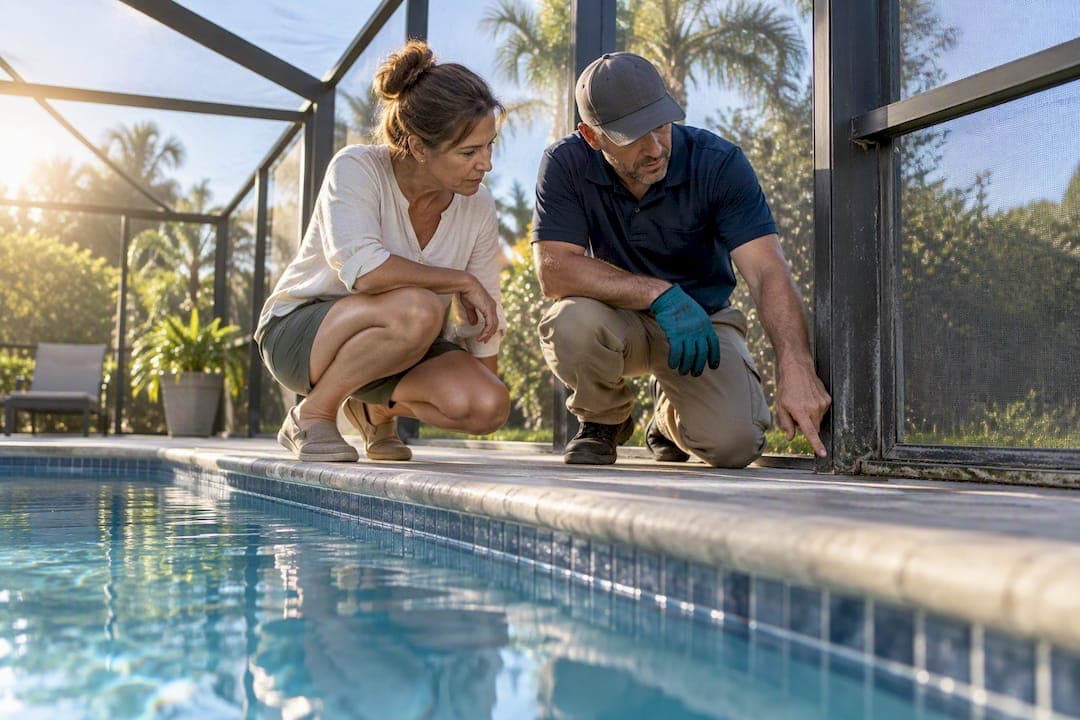
Professional restoration is usually the smarter move for a rusted, weathered, or sagging pool cage, and the right contractor can complete it for a fraction of what a full rebuild costs. Restoration can save homeowners a significant percentage compared to replacement. This guide covers the warning signs, the actual restoration process, cost drivers, permit rules, and how to vet a contractor before you sign anything.
TL;DR:
- A full restoration usually includes replacing rusted fasteners with stainless steel, cleaning and straightening the frame, and applying durable acrylic coatings, not just patching screens.
- Costs depend on enclosure size, material choices, and extent of frame damage, with full restorations typically costing less than complete rebuilds.
- Permits may be required depending on location and scope, especially in flood zones or when structural repairs are involved; always verify local rules before starting.
- Ask contractors specific questions about materials, fastener replacement, coatings, and warranties to distinguish experienced professionals from patch jobs.
- Regular maintenance, such as rinsing with a garden hose and tightening fasteners, can extend the life of a restored enclosure and prevent early deterioration.
Table of Contents
- Signs your pool screen enclosure needs restoration
- What a full restoration actually includes
- What restoration costs and what moves the price
- Permits and code rules you need to check first
- Choosing a contractor: questions to ask and warning signs
- Simple aftercare that protects your restored enclosure
- Why we treat restoration as the default recommendation
- Getting an estimate from Mr. Pool Screen
- Where to verify codes and service details
- Sources
- FAQ
Signs your pool screen enclosure needs restoration
A pool cage rarely fails all at once. It usually gives you warning signs for months, sometimes years, before it becomes a real problem.
Rust streaks on the frame, especially near screws and joints, mean corrosion has already started eating into the aluminum. Peeling or chalky, flaking paint signals the factory finish has broken down under sun and pool chemicals. Screen mesh with holes, large tears, or fraying at the edges lets in bugs and debris and stops doing its job as a barrier. Loose or missing spline, the rubber cord that holds screen into the frame track, is often the first thing to go and the easiest to miss.
Some issues are cosmetic and can wait a season. Others are not.
- Sagging or visibly bowed roof panels suggest structural stress, not just surface wear.
- Rails that flex or wobble when pushed indicate weakened fasteners or frame fatigue.
- Gaps around the pool barrier itself are a safety issue, not just an eyesore.
When wear is only skin deep, a homeowner might get by with a patch. Once you see structural movement or barrier gaps, it's time to call a professional rather than a hardware store fix.
What a full restoration actually includes
A real restoration is more than a coat of paint and a few screen patches. Here's the sequence a thorough contractor should follow.
- Inspection and written estimate. The contractor measures panels, checks every fastener, and documents frame condition before quoting anything.
- Screen selection. Options typically include 18x14 fiberglass for everyday use, 20x20 no-see-um mesh for stronger insect control, and pet-resistant or super screen for households with dogs or high foot traffic.
- Hardware replacement. Rusted screws and clips get swapped for stainless steel or Nylotech fasteners that resist corrosion far longer than standard hardware.
- Frame cleaning and straightening. Aluminum gets cleaned and minor bends or misalignments corrected before any coating goes on.
- Surface prep and coating. Water-based acrylic coatings go on after masking off the pool deck, plants, and nearby surfaces to prevent overspray.
- Deck work, if requested. Some homeowners bundle in deck staining for concrete, wood, masonry, or stone surfaces at the same time.
- Final walkthrough and warranty paperwork. The contractor should show you finished work, clean the site, and hand over written warranty terms.
Pro Tip: Ask upfront whether the quoted price includes fastener replacement, not just screen and paint. That single line item is where a lot of “restorations” quietly become patch jobs.
Skipping steps here doesn't just look worse over time, it shortens the life of the entire enclosure.
What restoration costs and what moves the price
Ranges vary by region, enclosure size, and how much frame damage has already set in, so treat any number as a starting point for comparing quotes rather than a fixed price. Basic re-screening without coating or fastener work sits at the low end of most quotes. A full restoration with stainless fasteners, frame cleaning, and acrylic coating costs more but addresses the root causes of rust and peeling instead of just the symptoms.

Restoration typically runs well below the cost of a full enclosure rebuild, which is why most contractors, including Mr. Pool Screen, position it as the default recommendation for structurally sound cages.
A few factors push a quote higher:
- Structural repairs to bent or corroded frame sections beyond simple straightening.
- Specialty mesh like pet-resistant or super screen instead of standard fiberglass.
- Difficult access, such as second-story pools or cages with tall roof panels.
- Hurricane clips, bracing, or reinforcement work required by local wind codes.
- Disposal fees for old screen and hardware removed during the job.
Ask every contractor for an itemized quote separating materials, labor, and permit fees, and get their change-order policy in writing before work starts. That's the only way to compare bids that look similar on the surface but cover very different scopes of work.
Permits and code rules you need to check first
Permit requirements depend on where you live and how much work is being done, so never assume your project falls under an exemption without confirming it locally. Florida's Code Administration committee, for example, notes a permit exemption for single-family dwelling work valued under $7,500, but excludes properties in flood hazard areas and certain structural repairs from that exemption.
Florida also has rule 61G20-1.002, an alternative design method for aluminum screen enclosures. It requires removable screen panels to be cut loose or retracted when wind speeds exceed 75 mph and obligates contractors to notify owners and local code enforcement about that requirement. It's a useful example of how detailed state-level screen enclosure rules can get, even if your own state's code reads differently.
Before hiring anyone, take these steps:
- Ask directly whether your specific project requires a permit.
- Request a copy of the permit once it's pulled, don't just take a verbal confirmation.
- Call or check your local building department's website for enclosure-specific rules.
Choosing a contractor: questions to ask and warning signs
The estimate call is where you separate a real restoration company from someone who repaints frames and calls it a day.
- Which mesh and hardware do you use? A contractor who can name specific mesh types and fastener materials without hesitation has done this before.
- Will rusted fasteners be replaced with stainless steel? If the answer is vague, the quote probably doesn't include it.
- What coating do you apply, and is it water-based acrylic? This affects both durability and how much masking and prep the job requires.
- What warranty comes with the work? Get the term and what it covers in writing, not just a verbal promise.
Pro Tip: Ask to see before-and-after photos from a past job that matches your enclosure's size and condition. A contractor with a real track record will have them ready.
Beyond the questions, verify the basics: active license and insurance, a handful of references you can actually call, and warranty terms spelled out on paper before any deposit changes hands.
Watch for red flags: no written scope of work, demands for full payment in cash upfront, or a bid dramatically lower than everyone else's with no explanation of materials used. Cheap quotes on vague materials tend to turn into expensive callbacks.
Simple aftercare that protects your restored enclosure
A restoration is an investment, and a few basic habits keep it looking and performing like new for years.
- Rinse frames and screen with a garden hose rather than a pressure washer, which can loosen spline and strip coatings.
- Check hardware for early rust spots each season and after any major storm.
- Tighten loose fasteners as soon as you notice movement, rather than waiting for a full panel to sag.
- Book any warranty inspections your contractor offers, and call for touch-ups at the first sign of peeling or corrosion rather than letting it spread.
None of this takes more than an hour a few times a year, and it's far cheaper than another full restoration a decade early.
Why we treat restoration as the default recommendation
Most enclosures we see have good bones and bad hardware. The aluminum frame is often perfectly serviceable, but the fasteners have rusted through and the screen has aged out, which makes a full rebuild feel necessary when it usually isn't. Restoration addresses the actual failure points instead of replacing an entire structure that still has years of life left in it.
The process often leans on industrial-grade water-based acrylic coatings and stainless steel fasteners because they hold up better against Florida's sun, humidity, and pool chemicals than standard hardware store materials. Completed work may be backed with a three-year warranty. If you want to see how a past job compares to your own enclosure's condition, ask any contractor you're considering for references or case studies before you commit.
— Michel
Getting an estimate from Mr. Pool Screen
If your pool cage is showing rust, peeling paint, or torn screen, Pool Screen Restoration addresses the frame, fasteners, and mesh in one job rather than a piecemeal patch. Many homeowners pair it with Pool Deck Staining to refresh the surrounding concrete or pavers at the same time.
Before a site visit, have a few photos of problem areas, rough enclosure dimensions, and a list of specific trouble spots ready. From there, the process runs through a site visit, a written estimate, scheduling, and a warranty on completed work. Visit Mrpoolscreen to request an estimate and get a firm timeline for your project.
Where to verify codes and service details
For permit thresholds, see Florida's Code Administration excerpt on the $7,500 exemption. For screen enclosure design rules, see rule 61G20-1.002. For service details and process, see Pool Screen Restoration and the Pool Enclosure Rescreening Cost guide.
FAQ
How do I know if my pool cage needs restoration or replacement?
If the frame is still straight and sound but shows rust, peeling paint, or torn screen, restoration is usually enough. Structural sagging, bowed rails, or widespread frame corrosion are signs a full rebuild may be needed instead.
Do I need a permit to restore a pool screen enclosure?
It depends on your location and the scope of work. In Florida, single-family dwelling work under $7,500 may be exempt from permitting, though flood zones and certain structural work are excluded, so check with your local building department before starting.
What mesh type is best for a pool enclosure?
It depends on your priorities: 18x14 fiberglass is a common budget-friendly choice, 20x20 no-see-um mesh offers tighter insect control, and pet-resistant or super screen mesh holds up better against dogs and heavy traffic.
How long does a professional restoration take?
Timelines vary with enclosure size and the scope of frame and fastener repairs, but most restoration projects move through inspection, screen and hardware replacement, coating, and final inspection within a defined project window set at the estimate stage. Ask your contractor for a specific timeline before work begins.
What warranty should I expect after restoration?
Warranty terms vary by contractor, so always get them in writing before the job starts. Restoration work is sometimes backed with a warranty covering the completed job.