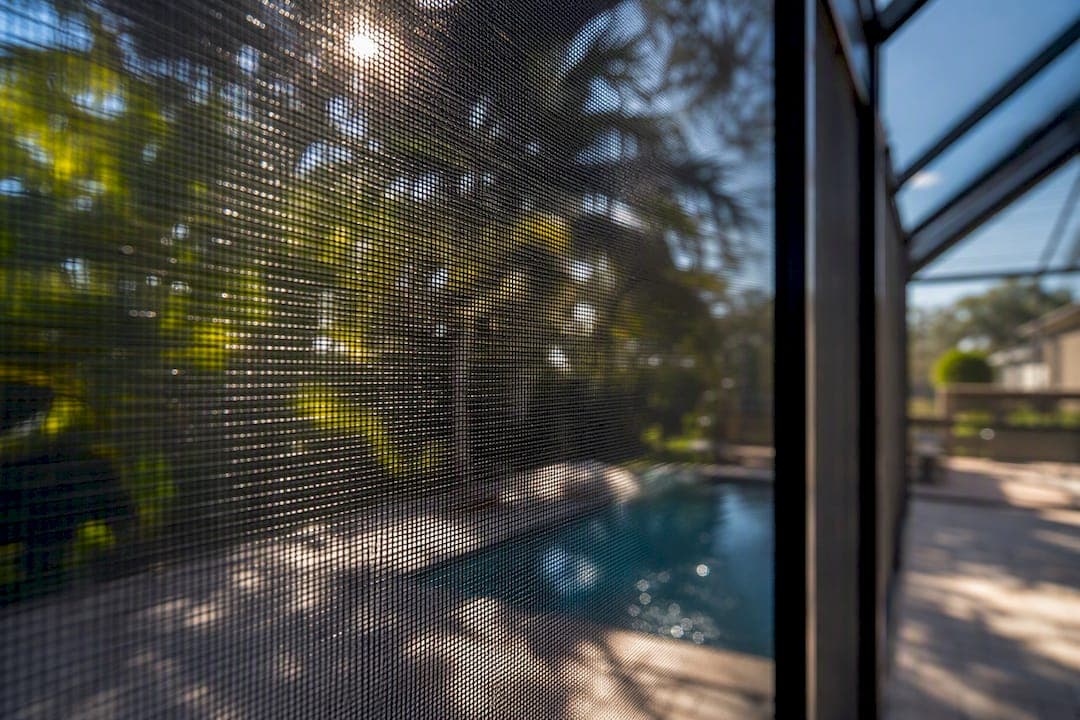
A no-see-um screen is a fine 20x20 mesh built to stop the tiny biting gnats that slip right through regular window and porch screens, while still letting air and light move through. That 20x20 count, meaning 20 strands per inch running each direction, is the spec you want written on the roll or the product listing before you buy anything. For a single window, this is a weekend project with the right tools. For a full pool cage or a frame that's rusted, bent, or sagging, you're better off calling a professional re-screening crew.
- Mesh spec to look for: 20x20 (sometimes labeled "no-see-um" outright)
- Best for: porches, pool enclosures, doors, and windows in gnat-heavy or coastal regions
- DIY-friendly? Yes for small panels; no for large pool cages or damaged frames
The single number that matters most on any no-see-um product page is the mesh count. If it doesn't say 20x20, it's not a true no-see-um screen. It's just marketing.
Key Takeaways
The 20x20 mesh count is the single spec that separates a true no-see-um screen from standard insect screening, and restoration typically costs far less than a full pool cage rebuild.
| Point | Details |
|---|---|
| Confirm the spec | Look for "20x20" explicitly listed on any product page before buying. |
| Match material to exposure | Standard fiberglass works for windows; TuffScreen-style mesh suits pool cages and patios. |
| Know your DIY limit | Small panels are doable at home; damaged frames or full cages need a professional. |
| Handle it gently | Use sharp blades and cut oversized to avoid distorting the delicate weave. |
| Consider restoration first | Mrpoolscreen's re-screening and coating service can save up to 60% versus a full rebuild. |
Table of Contents
- What Does "No-See-Um" Actually Mean?
- Materials, Colors, and Roll Sizes to Know
- Is No-See-Um Mesh Worth the Trade-Offs?
- Where to Buy No-See-Um Screen Material
- DIY or Call a Pro? How to Decide
- Keeping No-See-Um Screen Looking Good for Years
- What Restoration Looks Like on an Aging Pool Cage
- Get Your Pool Enclosure Re-Screened the Right Way
- Sources
What Does "No-See-Um" Actually Mean?
Standard insect screen usually runs 18x16, meaning 18 vertical strands and 16 horizontal strands per inch. No-see-um mesh tightens that grid to 20x20, and Phifer's own product description confirms the tighter weave is engineered specifically to keep out the smallest flying insects while still preserving airflow and visibility. Buyer guides put it plainly too: the denser 20x20 weave blocks pests that regular 18x16 screen typically lets through.
That extra tightness matters because no-see-ums, biting gnats, sand flies, and thrips are small enough to squeeze through openings that keep out mosquitoes and houseflies just fine. If you've ever sat on a screened porch at dusk near water or marsh grass and still gotten bitten, your screen was likely a standard weave, not a 20x20.
Three places this shows up most in real homes:
- Pool enclosures, where a single gap in the weave near a low deck or landscaped border invites gnats in
- Windows, especially in bedrooms where a swarm at night is more than an annoyance
- Entry doors, where the mesh gets the most daily contact and needs to hold its shape
Materials, Colors, and Roll Sizes to Know
Most residential no-see-um mesh comes in one of three material types: standard fiberglass, vinyl-coated polyester, and heavier-duty options built for exposed structures. Fiberglass is the most common and the most affordable, and it's what you'll find in most retail 20x20 rolls. Vinyl-coated polyester holds up better against pets and rough handling. For pool cages and patios that face years of sun and storms, Phifer's TuffScreen No-See-Um is a heavier, purpose-built option designed for exactly that kind of exposure.
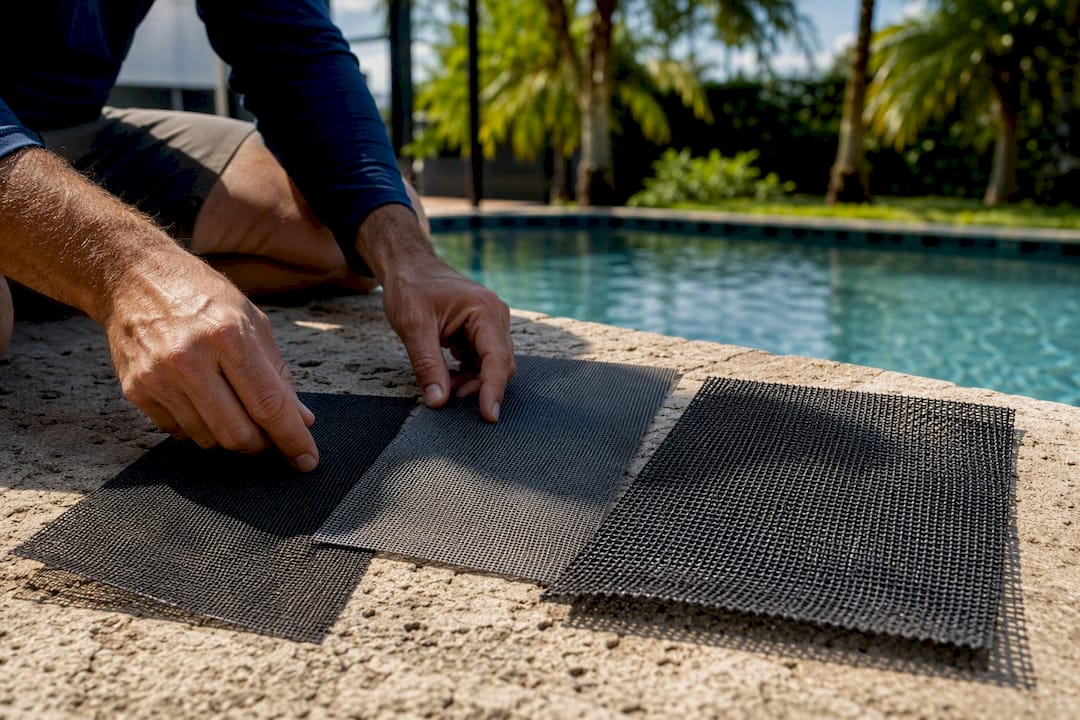
Charcoal and black are the dominant colors, not by accident. Darker mesh cuts glare and improves outward visibility while adding a layer of daytime privacy that lighter-colored screen can't match.
Some product lines carry GREENGUARD certification, and premium options like TuffScreen are marketed with durability and warranty language worth asking about before you order material for a large project.
Is No-See-Um Mesh Worth the Trade-Offs?
Here's the honest trade-off: 20x20 mesh blocks more bugs, but it costs you a little in airflow and a touch of visual clarity compared to standard screen. Whether that trade is worth it depends entirely on where you live and what's biting you at dusk.
What you gain:
- Real protection against no-see-ums and other tiny biting insects standard screen simply can't stop
- Daytime privacy from the tighter weave and darker coloring
- Availability in wide rolls, so large pool enclosures don't need seams every few feet
What you give up:
- A modest reduction in airflow compared to 18x16 screen, since the openings are smaller
- Typically a higher price per roll than standard mesh
- More delicate handling during installation, and sometimes the need for a sturdier spline or magnetic closure system on retractable screens, according to installer guidance on mesh handling differences
If you live somewhere with a real no-see-um season, coastal Florida, the Gulf Coast, marsh-adjacent neighborhoods, the airflow trade-off is worth it almost every time. In drier inland climates with fewer biting gnats, standard screen may serve you just fine at a lower cost.
Pro Tip: Cut 20x20 mesh with sharp scissors or a fresh utility blade, and always cut it slightly oversized. The finer weave distorts and puckers easily if you stretch it while cutting to exact size.
Where to Buy No-See-Um Screen Material
You don't need a specialty supplier to find legitimate 20x20 mesh, but you do need to check the label carefully. Phifer's 20x20 fiberglass rolls are sold directly through Home Depot in consumer-friendly sizes, and Home Depot's broader Phifer replacement screen category carries pre-cut options for windows and doors as well.
Before you check out on any listing, confirm:
- Mesh count states 20x20 explicitly, not just "fine mesh" or "premium"
- Material type (fiberglass vs. vinyl-coated polyester vs. TuffScreen-style heavy duty)
- Roll width matches your opening, especially for pool cage panels that often run wider than standard window stock
- Roll length and color match your project
- Any manufacturer warranty terms listed on the page
Large-width rolls for full pool enclosures aren't always stocked at every store location, so it's worth checking online availability before making a trip.
DIY or Call a Pro? How to Decide
A single window screen is a two-hour project with a spline roller, a roll of spline, and a sharp blade. A full pool cage is a different animal entirely, and the decision usually comes down to four questions.
- How big is the opening? Small fixed panels are DIY-friendly. Large pool cage panels, especially anything above eye level, get harder to handle without help.
- What condition is the frame in? Rust, bent aluminum, or loose fasteners mean the frame needs attention before new mesh goes on, which is a job for a restoration crew.
- Do you have the right tools? A spline roller and the correct spline gauge matter more than people expect. Using the wrong size tears the delicate 20x20 weave.
- Do you want a warranty on the work? DIY material comes with a manufacturer warranty on the mesh itself, but not on the installation.
If you're leaning toward hiring someone, ask direct questions: What mesh spec do they install, and can you get 20x20 as an option? Do they offer a written warranty? Can they show before-and-after photos from similar jobs, like the kind found in a screen enclosure upgrade gallery? Is frame repair included, or billed separately? Treat vague answers to any of those as a red flag, along with a refusal to provide a written estimate or a mesh sample swatch. For homeowners weighing the cost of rescreening a full pool enclosure, a restoration approach that replaces mesh and repairs the frame often costs meaningfully less than tearing out and rebuilding the whole structure.
Keeping No-See-Um Screen Looking Good for Years
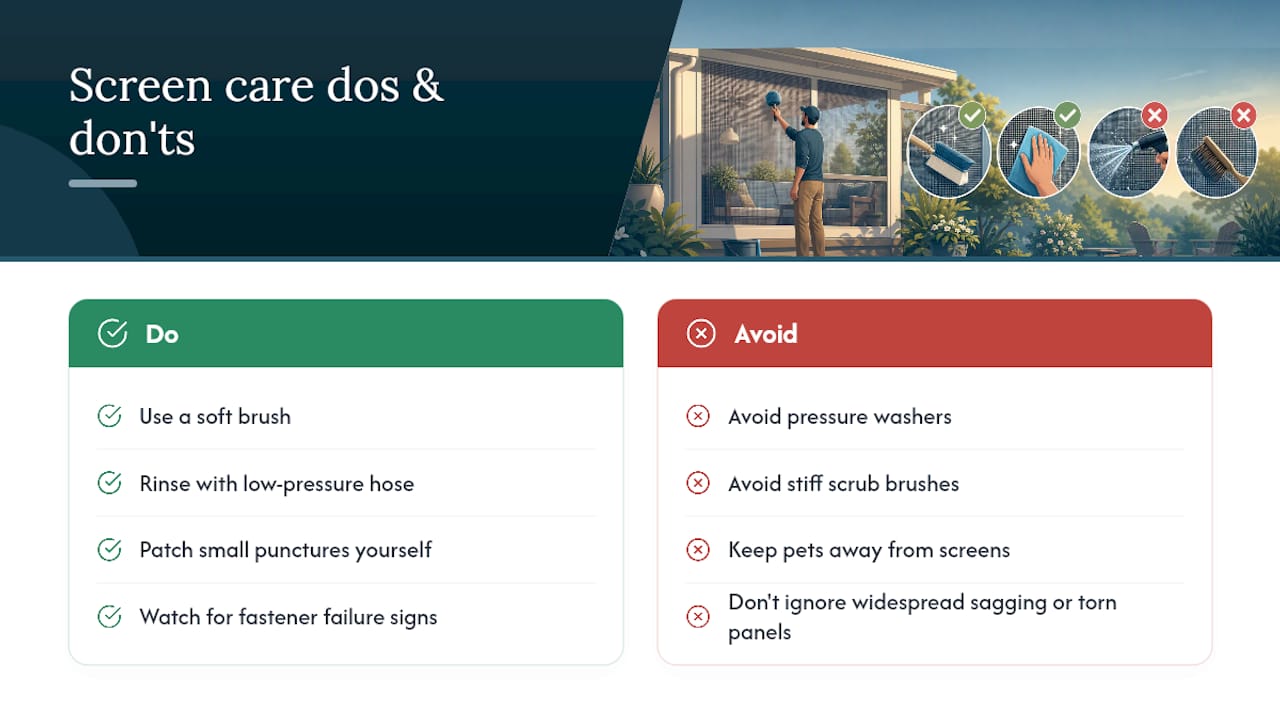
Fine mesh needs gentler care than standard screen, but the routine is simple. A soft brush and a low-pressure hose rinse handle most dirt and pollen buildup without stretching the weave. Skip pressure washers and stiff scrub brushes entirely, since both can distort the 20x20 grid permanently.
Lifespan varies by material and exposure. Standard fiberglass 20x20 mesh in a sun-exposed pool cage typically holds up for several years before it starts to sag or discolor, while heavier options like TuffScreen are built to outlast that in the same conditions. Pets are the biggest wildcard. A determined cat or dog can put a hole in even the sturdiest screen in seconds.
Small punctures and a single loose spline section are reasonable DIY repairs. Widespread sagging, multiple torn panels, or a frame that's visibly pulling away from its track means the damage has outgrown a patch job, and it's worth watching for the early fastener failure signs that usually show up before things get that bad.
What Restoration Looks Like on an Aging Pool Cage
A typical restoration job starts with a cage showing the usual signs of age: torn or sagging screen panels, rusted fasteners streaking down the frame, and a coating that's chalked or faded from years of Florida sun. The fix isn't a teardown. It's a systematic rebuild of what's failing.
- Old mesh comes out and new screen goes in, with 20x20 no-see-um available where bug protection matters most
- Rusted fasteners get replaced with stainless steel or Nylotech hardware that won't repeat the problem
- Frames get recoated with a water-based acrylic finish that restores the original look
Homeowners choosing restoration over a full rebuild can save a significant portion of the total project cost, since the structural frame stays in place and only the failing components get replaced.
When 20x20 Makes Sense and When It Doesn't
I'd put 20x20 mesh on any porch or pool cage in a region where biting gnats are a real seasonal problem. The airflow trade-off is small, and the difference in evening comfort is not. Where I'd pump the brakes is a badly rusted frame. No mesh, however fine, fixes structural rot, so get the frame assessed by a professional before you spend money on premium screen material.
*— Michel
Get Your Pool Enclosure Re-Screened the Right Way
Choosing between a DIY roll of mesh and a full re-screening job gets a lot easier once you know what a professional crew actually replaces. Mrpoolscreen restores aging pool enclosures in Central Florida by pulling out failing screen, swapping corroded fasteners for stainless steel or Nylotech hardware, and recoating frames with water-based acrylic finishes that hold up to years of sun and storms.

Every job can include 20x20 no-see-um mesh where bug protection matters most, along with wider-width options sized for full pool cage panels rather than patchwork sections. Warranty terms and material samples are available before you commit to anything. If your enclosure is showing rust streaks, sagging panels, or a chalky finish, request a restoration estimate and find out what it would take to fix it without a full rebuild.
Sources
- Phifer 36 in. x 25 ft. Charcoal Fiberglass Screen- 20 x 20 No-See-Um Mesh
- Standard vs No-See-Um Mesh: Choose Your Perfect Bug Protection