A pool screen maintenance checklist is a structured set of inspection and cleaning tasks designed to preserve the safety, appearance, and lifespan of your pool enclosure. Every homeowner with a screened pool enclosure needs one. Without a consistent routine, algae, mold, oxidation, and physical damage accumulate faster than most people expect. This guide walks you through what the checklist includes, how often to follow it, and when to call a professional like Mrpoolscreen to handle what DIY methods cannot.
What is a pool screen maintenance checklist?
A pool screen maintenance checklist is a repeating routine that covers four core areas: cleaning mesh screens, inspecting for physical damage, maintaining aluminum frames, and scheduling professional services. Think of it as a seasonal health check for your outdoor structure. Each task on the list targets a specific failure point that, left unaddressed, shortens the life of your enclosure and raises repair costs.
The checklist matters most in humid climates like Central Florida, where algae, mold, and grime build up faster than in dry regions and actively degrade both screens and frames. Waiting until damage is visible is already too late. Visible mold or oxidation signals that material degradation has already begun, cutting the expected 5–7 year lifespan of screening material in half. A checklist prevents that by catching problems early.
Mrpoolscreen recommends treating the checklist as a living document. Your environment, tree coverage, and pool usage all affect how often each task needs to happen. A homeowner near a wetland needs a different schedule than one in an open, sunny yard.
Key components of a pool screen maintenance checklist
Every solid checklist covers the same core categories, even if the frequency varies by location.
Screen inspection
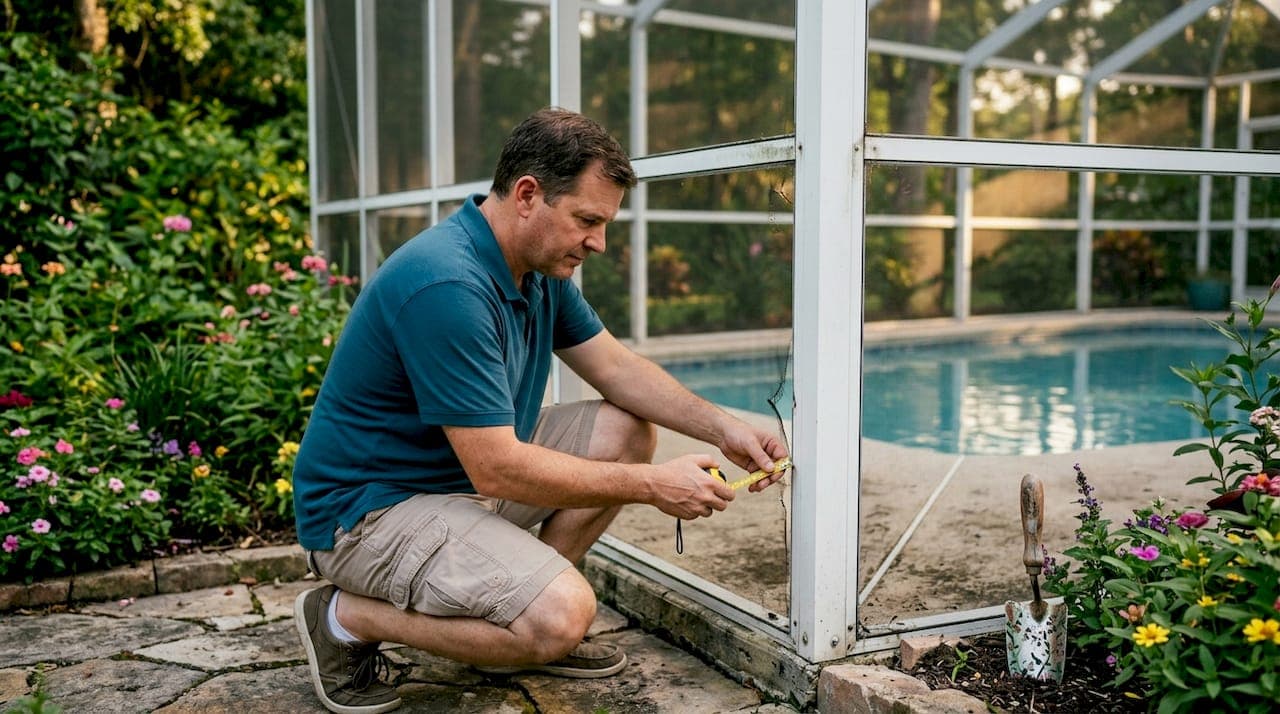
- Check every panel for tears, holes, and loose or missing fasteners
- Look for sagging sections where the mesh has stretched or pulled away from the frame
- Inspect corner joints and door hinges for signs of stress or separation
- Note any panels with reduced transparency, which signals heavy buildup or UV degradation
Frame care
Aluminum frames oxidize over time, especially in humid, salt-air environments. Oxidation shows up as a chalky white or gray coating on the metal. Left untreated, it pits the surface and weakens the frame's structural integrity. Wipe frames down with a mild detergent solution and rinse thoroughly after every cleaning session.
Cleaning the mesh
Soft washing is the correct method for pool screen mesh. Pressure above 100 PSI tears or warps screen mesh, making standard pressure washing unsuitable for pool enclosures. Use a low-pressure rinse with an eco-friendly detergent, scrub gently with a soft brush, and rinse from top to bottom to push debris downward and out.
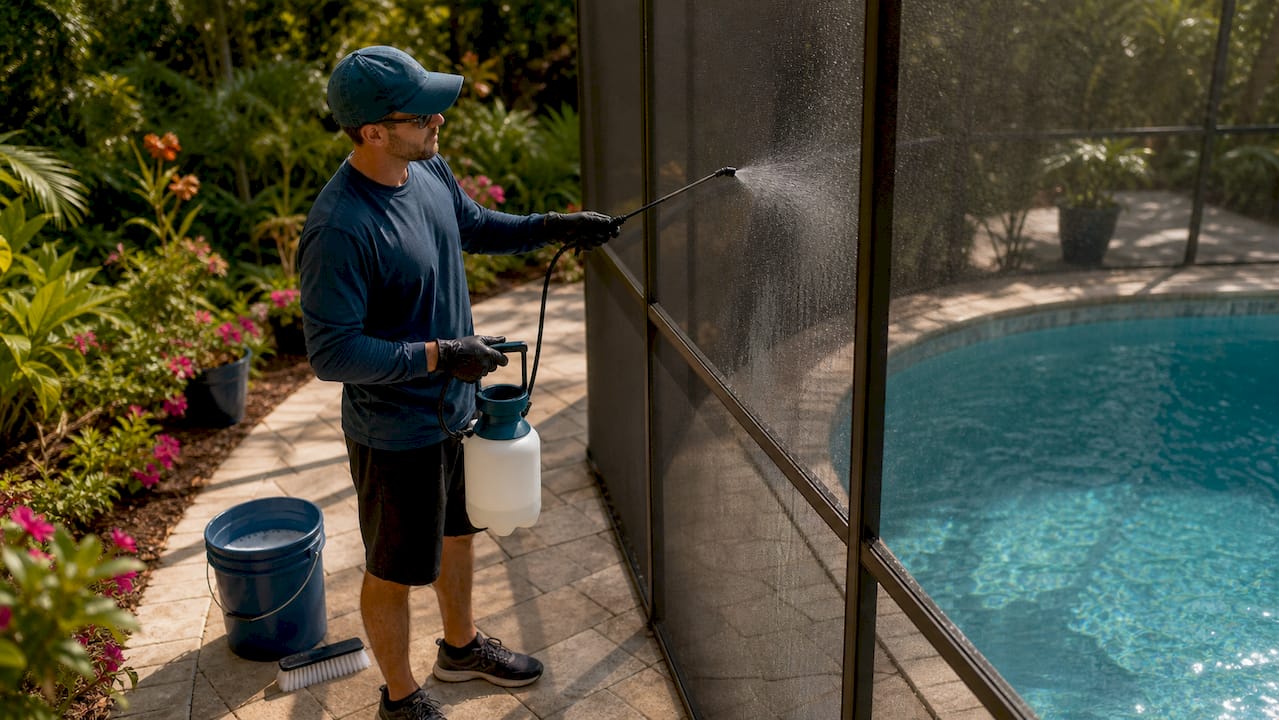
Pro Tip: Always clean both the interior and exterior surfaces of your screens. Interior surfaces collect sunscreen residue, splash water, and dust that exterior rinsing never reaches.
Rinsing and chemical safety
Proper rinsing after applying any cleaning solution protects mesh fibers, aluminum frames, and surrounding landscaping. Undiluted bleach corrodes aluminum and harms plants, pets, and children if not fully rinsed away. Always dilute cleaning agents and rinse every surface twice.
What does a pool screen maintenance schedule look like?
Cleaning frequency depends directly on your yard's environment. A one-size-fits-all schedule does not work for pool enclosures.
| Environment | Recommended cleaning interval |
|---|---|
| Near wetlands or standing water | Every 2–3 months |
| Heavy tree or pollen coverage | Every 3–4 months |
| Open yard, full sun exposure | Every 6 months |
Industry experts recommend cleaning Florida pool enclosures at least twice per year, with intervals as short as every 2 months in wetland or heavily wooded areas. That frequency gap between environments is significant. A homeowner near a cypress pond who cleans only twice a year will see green film and frame corrosion well before a homeowner in an open suburban yard on the same schedule.
Here is a step-by-step annual maintenance schedule to follow:
- Monthly: Rinse screens with a garden hose to slow buildup between deep cleans. Focus on the roof panels where debris collects most.
- Every 2–6 months (based on environment): Perform a full soft wash of all screen panels and frames. Clean the pool deck at the same time.
- Twice per year: Conduct a thorough physical inspection of every panel, fastener, door hinge, and frame joint. Document any damage.
- Annually: Schedule a professional inspection and treatment. Professionals address oxidation, algae, mold, and minor repairs in one visit.
- After major storms: Inspect immediately for torn panels, bent frames, and debris lodged in joints.
Pro Tip: Set calendar reminders on your phone for each maintenance interval. Homeowners who rely on memory alone almost always let schedules slip by 4–6 weeks, which is long enough for mold to take hold in Florida's humidity.
Signs that cleaning is overdue include green or black film on screens, chalky white oxidation on frames, slippery pool decks, reduced screen transparency, and musty odors near the enclosure. Any one of these signals means the schedule has already fallen behind.
Common mistakes to avoid in pool screen maintenance
Most enclosure damage comes from a short list of repeated errors. Knowing them helps you avoid the repair bills that follow.
- Using a high-pressure washer on screens. Pressure above 100 PSI tears mesh and voids most manufacturer warranties. Soft washing is the only safe method.
- Ignoring the aluminum frame. Frames corrode silently. By the time oxidation is obvious, the metal has already lost structural strength.
- Skipping interior surfaces. Interior panels collect residue from pool chemicals, sunscreen, and splash water. Cleaning only the outside leaves half the problem untouched.
- Using harsh chemicals without thorough rinsing. Undiluted bleach or acidic cleaners corrode mesh fibers and aluminum. Always dilute and always rinse twice.
- Cleaning only once per year. Many homeowners clean only annually, but experts warn this is insufficient in humid climates where algae and mold accumulate within weeks.
- Skipping the pool deck. Cleaning the deck separately from the enclosure allows mold spores and dirt to splash back onto freshly cleaned screens within days. Always clean both at the same time.
- Waiting until damage is visible. By the time you see a problem, the repair cost is already higher than prevention would have been.
For a deeper look at when maintenance crosses into repair territory, the pool cage maintenance vs repair guide from Mrpoolscreen covers that decision clearly.
DIY routines versus professional pool screen maintenance services
Homeowners can handle routine upkeep. Professionals handle everything else.
| Task | DIY | Professional service |
|---|---|---|
| Monthly garden hose rinse | Yes | Not needed |
| Soft wash with mild detergent | Yes, with care | Recommended for best results |
| Frame oxidation treatment | Limited | Yes, with specialized coatings |
| Algae and mold removal | Partial | Full treatment with eco-friendly agents |
| Structural inspection | Visual only | Detailed, documented assessment |
| Minor screen repairs | Basic patching | Full panel replacement if needed |
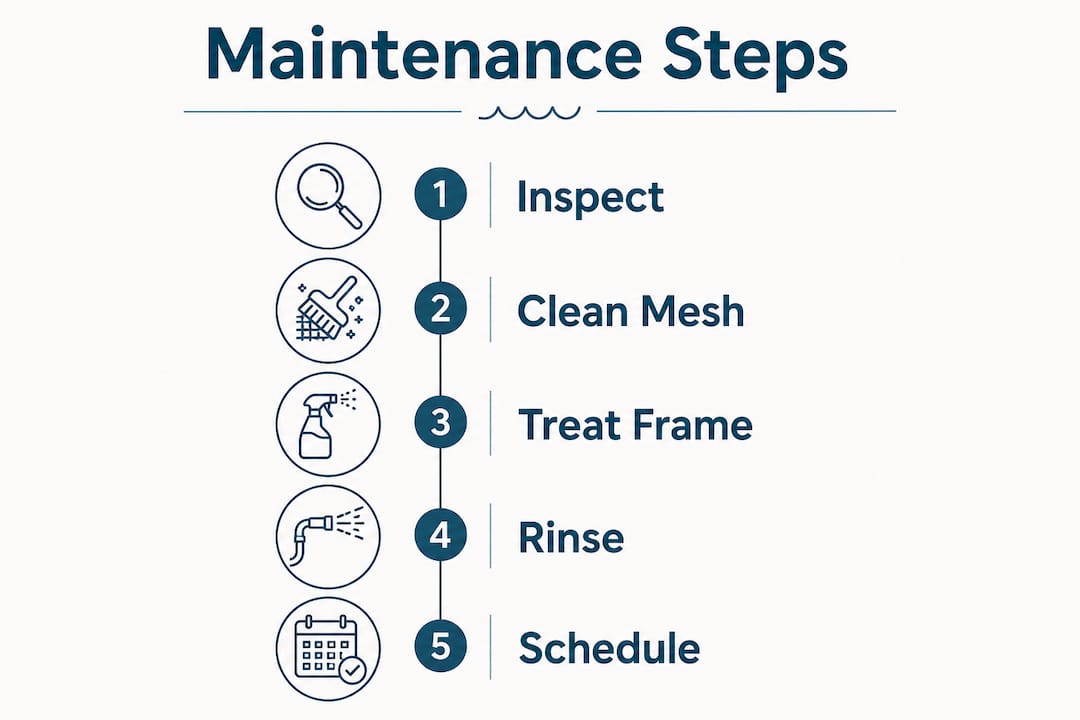
DIY maintenance works well for monthly rinsing and light cleaning between professional visits. The limits appear when dealing with oxidation, embedded algae, or structural issues. A proper professional cleaning includes pre-inspection, eco-friendly detergent application, low-pressure soft washing, frame treatment, and a final inspection. That process addresses problems a garden hose and dish soap cannot reach.
Professionals also spot early structural damage that homeowners miss during a visual walkthrough. A loose fastener caught during a professional inspection costs a few dollars to fix. The same fastener ignored for six months can allow a panel to separate during a storm, turning a minor repair into a full panel replacement.
Pro Tip: Schedule your professional cleaning to coincide with your twice-yearly pool inspection. You get both done in one visit and avoid letting either task slip.
For guidance on weather damage prevention, Mrpoolscreen's blog covers region-specific risks that affect your maintenance frequency.
How to build your personalized pool screen maintenance checklist
A personalized checklist takes your specific yard, climate, and usage into account. Here is how to build one from scratch.
- Assess your environment. Note your proximity to wetlands, tree coverage, and average pool use. These three factors determine your cleaning frequency.
- Set your cleaning intervals. Use the environment table above to assign a cleaning schedule. Write it down with specific months, not just "every few months."
- List every inspection point. Include screen panels, fasteners, door hinges, frame joints, and roof panels. A pool screen safety inspection checklist from Mrpoolscreen provides a ready-made starting point.
- Add your pool deck. Schedule deck cleaning on the same day as every enclosure cleaning to prevent recontamination.
- Log repairs and issues. Keep a simple notes file or paper log. Record the date, location, and nature of every problem you find. This history helps professionals diagnose recurring issues faster.
- Schedule one professional visit per year minimum. Mark it on your calendar at the start of each year. Homeowners near wetlands should book two.
- Review and adjust annually. Your yard changes. Trees grow, usage patterns shift, and enclosures age. Revisit your checklist each january and update it.
Key takeaways
A consistent pool screen maintenance checklist is the single most effective tool for extending enclosure lifespan, preventing costly repairs, and keeping your outdoor space safe and clean.
| Point | Details |
|---|---|
| Clean based on environment | Wetland and tree-heavy yards need cleaning every 2–4 months, not just twice a year. |
| Soft washing only | Pressure above 100 PSI tears screen mesh; always use low-pressure methods with eco-friendly detergent. |
| Clean deck and screens together | Cleaning the deck separately allows mold spores to recontaminate freshly washed screens within days. |
| Catch damage early | Visible mold or oxidation means degradation has already started; early inspection prevents larger repair costs. |
| Combine DIY and professional care | Monthly rinsing is a homeowner task; oxidation treatment, algae removal, and structural checks need a professional. |
What I've learned from years of watching enclosures age
The most common mistake I see is not neglect. It is inconsistency. Homeowners clean their enclosures once, feel good about it, and then let 14 months pass before doing it again. In Central Florida's humidity, that gap is long enough for algae to stain mesh permanently and for oxidation to pit aluminum frames past the point where a simple treatment fixes them.
The second thing I have noticed is that homeowners underestimate the frame. Everyone focuses on the screens because tears are visible. Frames corrode quietly. By the time the chalky white coating is obvious, the aluminum has already weakened. Treating frames with a water-based acrylic coating during professional restoration, the way Mrpoolscreen does it, adds years to a structure that most people assume just needs new screens.
My honest recommendation: do not wait for something to look wrong. Set a calendar reminder right now for your next cleaning. If you are near trees or water, make it three months from today. If your enclosure is more than five years old and has never been professionally restored, that is the first call to make. The cost of restoration is a fraction of a full rebuild, and the difference in lifespan is measurable.
The homeowners I see get the most out of their enclosures are the ones who treat maintenance like a utility bill. It is not exciting. It is not optional. It just happens on schedule, every time.
— Michel
Mrpoolscreen's professional restoration and maintenance services
Pool screen enclosures in Central Florida face constant pressure from humidity, algae, UV exposure, and storm debris. Mrpoolscreen specializes in restoring aging enclosures using industrial-grade water-based acrylic coatings and stainless steel fasteners, delivering results that last without the cost of a full rebuild.
Mrpoolscreen's pool screen restoration services cover soft washing, frame treatment, oxidation removal, and structural inspection in a single visit. Homeowners who restore rather than rebuild save up to 60% compared to full replacement costs. Browse the completed project gallery to see real results from Central Florida enclosures, and schedule your inspection before the next storm season arrives.
FAQ
What is included in a pool screen maintenance checklist?
A pool screen maintenance checklist includes screen inspection for tears and loose fasteners, soft washing of mesh panels and frames, aluminum frame treatment, pool deck cleaning, and scheduling of professional services at regular intervals.
How often should you clean a pool screen enclosure?
Cleaning frequency depends on your environment. Homes near wetlands need cleaning every 2–3 months, heavily wooded yards every 3–4 months, and open sunny yards every 6 months.
Can you pressure wash a pool screen enclosure?
Pressure washing above 100 PSI tears and warps screen mesh. Soft washing with low pressure and an eco-friendly detergent is the correct and safe method for all pool screen surfaces.
What are the signs that a pool screen needs cleaning?
Green or black film on screens, chalky white oxidation on frames, slippery pool decks, reduced screen transparency, and musty odors near the enclosure all indicate that cleaning is overdue.
When should a homeowner hire a professional for pool screen maintenance?
Hire a professional at least once per year for a full soft wash, frame treatment, oxidation removal, and structural inspection. Homeowners near wetlands or with enclosures older than five years benefit from two professional visits annually.