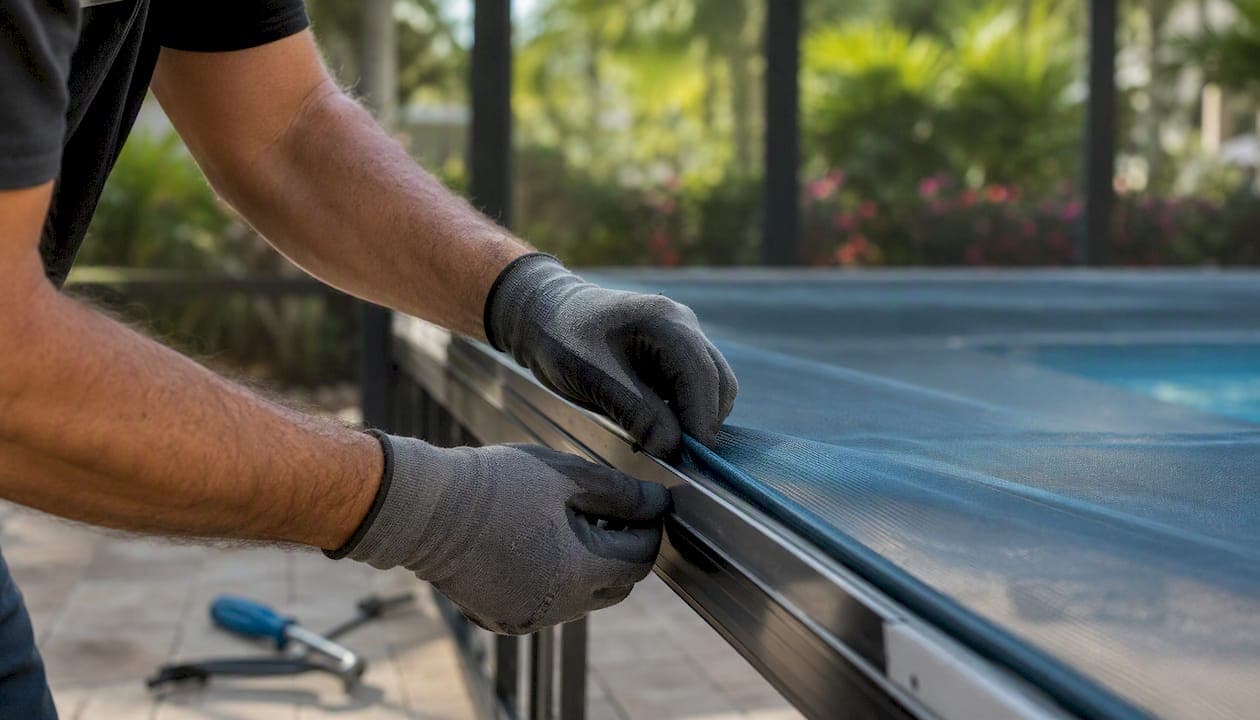
Polyester wins on durability. Fiberglass wins on price and DIY ease. That's the short version, and for most homeowners, those two sentences already narrow the choice considerably.
- Polyester screen lasts longer under UV exposure, resists tears and pet damage better, and holds up in coastal or high-wind environments. The trade-off: it costs more and needs careful stretching during installation.
- Fiberglass screen costs less upfront, installs easily enough for a weekend DIY project, and handles standard residential use well. The trade-off: it becomes brittle faster under intense sun and tears more easily.
Phifer is the most recognized manufacturer for both materials, and Mrpoolscreen is a Central Florida restoration specialist that can assess your existing screens and re-screen with either material based on your specific conditions.
Key Takeaways
Polyester outlasts fiberglass in high-UV and high-wear conditions, making it the better long-term investment for pool enclosures and pet households despite its higher upfront cost.
| Point | Details |
|---|---|
| Polyester for durability | Polyester lasts 10–15 years in high-sun climates; fiberglass typically reaches 5–10 years. |
| Fiberglass for budget DIY | Fiberglass costs less and installs more easily, making it the right pick for low-wear windows and quick rescreens. |
| Pets and coastal exposure | Polyester pet-screen grades and UV-stabilized coatings are the only practical choice for pet households or coastal properties. |
| Repair before you replace | Localized damage and fastener failure are repair jobs; widespread brittleness or structural corrosion signals a full restoration. |
| Mrpoolscreen restoration | Mrpoolscreen re-screens Central Florida enclosures with fiberglass or polyester and restores frames, saving significant costs vs. a full rebuild. |
Table of Contents
- Fiberglass vs. polyester screen: what each material actually is
- Side-by-side pros and cons across key dimensions
- Durability and lifespan: what actually shortens screen life
- Visibility, airflow, and insect protection
- Cost ranges and where to buy
- How installation differs and when to call a pro
- How to clean and maintain screens to extend their life
- Decision checklist: pick the right material for your situation
- When to repair, when to replace, and how restoration saves money
- What I've seen homeowners get wrong about screen material
- Mrpoolscreen restores and rescreens pool enclosures across Central Florida
- Sources
Fiberglass vs. polyester screen: what each material actually is
Both materials look similar on a roll and install with the same basic spline-and-frame method. The difference is in the yarn itself.
Fiberglass screen is woven from glass yarns coated with PVC or vinyl. That vinyl coating gives it flexibility and a smooth, consistent surface that resists corrosion. Standard residential fiberglass comes in mesh counts like 18x16 (18 strands per inch horizontally, 16 vertically) and 20x20 for tighter insect protection. The yarn is relatively stiff, which is actually helpful during a DIY install because it holds its shape without much tension. Colors are typically charcoal or gray, with charcoal offering slightly better outward visibility.
Polyester screen starts with woven polyester yarns, then gets coated with vinyl or a polymer compound. The coating process matters: heavier-duty polyester products often use a thicker extrusion coating rather than a simple liquid dip, which adds tear resistance and makes the mesh more dimensionally stable under load. Pet-screen polyester is noticeably thicker and stiffer than standard fiberglass. Polyester is the base material for most heavy-duty, pet-resistant, and solar-control screen products.
- Fiberglass: glass yarn with a vinyl/PVC coating, flexible, affordable, available in common mesh counts like 18x16 and 20x20, typically charcoal or gray
- Polyester: polyester yarn + vinyl/polymer coating (often extrusion-coated for heavy-duty), thicker, stronger, available in pet-resistant and solar-control variants
- Coating quality directly affects UV resistance and how long the mesh stays flexible before cracking
Side-by-side pros and cons across key dimensions
| Dimension | Fiberglass | Polyester |
|---|---|---|
| Durability / lifespan | 5–10 years typical; brittleness accelerates in high-UV climates | 10–15 years in comparable conditions; holds strength longer |
| UV & weather resistance | Vinyl coating degrades under intense sun; embrittlement is the primary failure mode | UV-stabilized coatings retain flexibility longer; better in coastal and high-sun settings |
| Tear / pet resistance | Low; tears easily under pet claws or impact | High; pet-resistant polyester is specifically engineered for claw and impact loads |
| Visibility / clarity | Good; charcoal mesh reduces glare and allows clear outward view | Comparable; heavier yarns in pet-screen grades can slightly reduce visibility |
| Airflow / insect protection | Standard 18x16 allows good airflow; 20x20 adds no-see-um protection | Same mesh counts available; finer yarns in some grades allow tighter weave without blocking airflow as much |
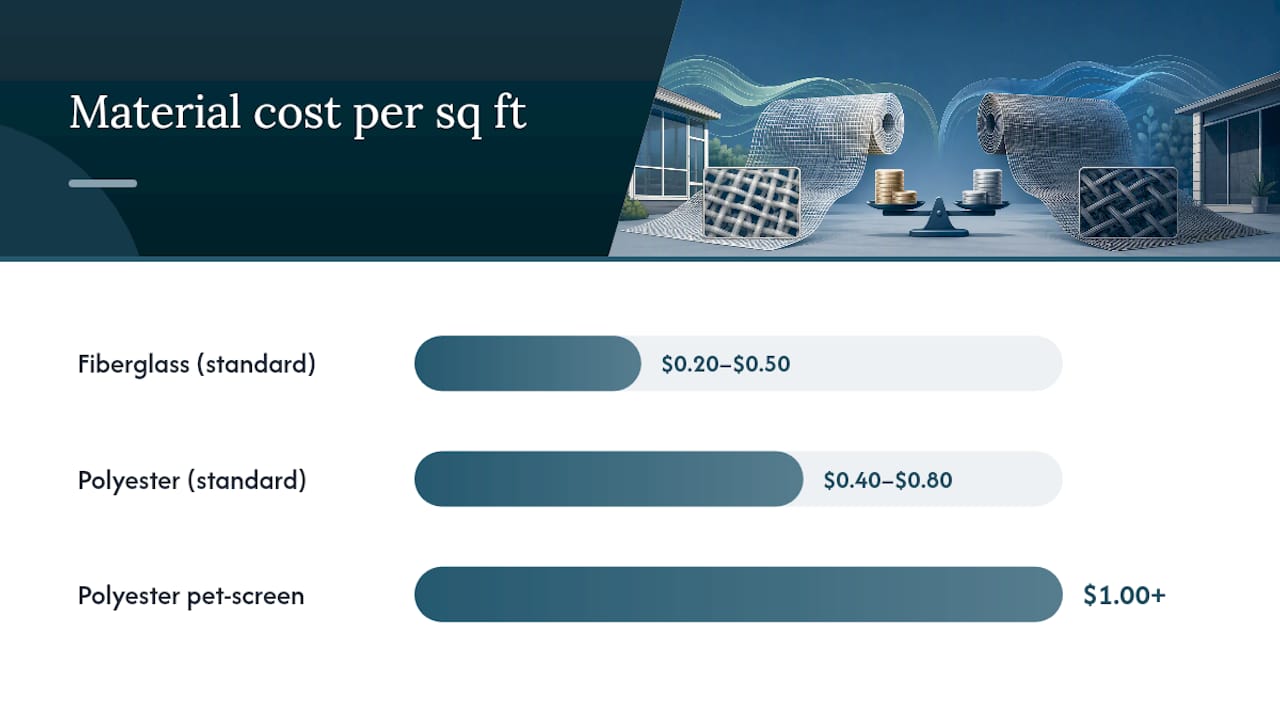
| Cost (material) | Lower; roughly $0.20–$0.50 per sq ft for standard rolls | Higher; standard polyester runs $0.40–$0.80, pet-screen grades $1.00+ per sq ft |
| Installation ease | Easier; forgiving during rolling and spline-setting | Requires careful, even stretching; sagging is common when tension is uneven |
| Color / aesthetics | Charcoal, gray, black; limited specialty options | Wider range including solar-control tints and privacy mesh options |
| Manufacturer claims | Phiferglass® passed 1,200 hours of QUV accelerated weathering | Polyester products with UV-stabilized coatings show stronger field performance in high-sun climates |
Fiberglass pros: lower cost, easy DIY install, good visibility, widely available, corrosion-resistant.
Fiberglass cons: tears under pet claws, becomes brittle in intense UV, shorter lifespan in Florida-style climates, limited specialty options.
Polyester pros: significantly higher tear and impact resistance, longer lifespan in high-UV or coastal conditions, better for pets, available in solar-control and privacy grades.
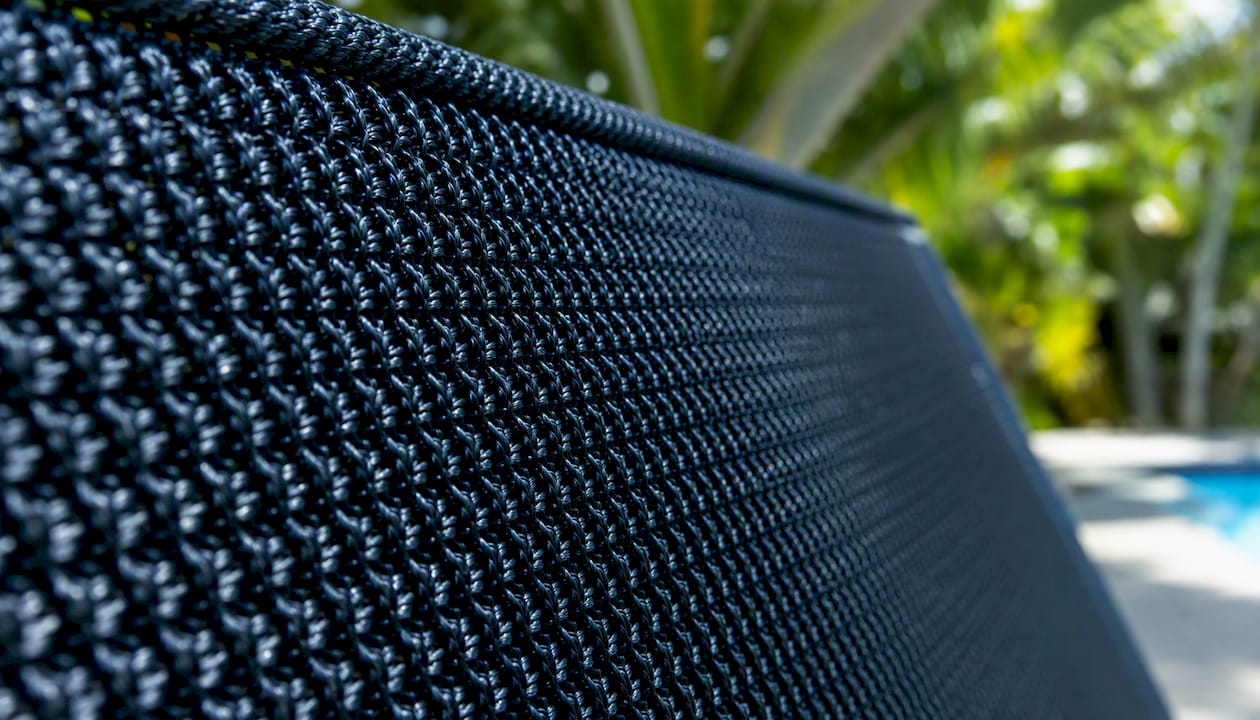
Polyester cons: higher upfront cost, installation requires more skill to avoid sagging, heavier mesh can reduce airflow slightly in thicker pet-screen grades.
Durability and lifespan: what actually shortens screen life
Fiberglass typically lasts 5–10 years in standard residential conditions. Polyester, particularly grades with UV-stabilized coatings, commonly reaches 10–15 years in comparable environments. In Central Florida and similar high-sun, high-humidity climates, local rescreeners report polyester consistently outlasting fiberglass in pool enclosures and porch applications.
Lifespan note: Phiferglass® has passed 1,200 hours of QUV accelerated weathering testing, which is a meaningful benchmark. QUV testing cycles UV light and moisture to simulate years of outdoor exposure in a controlled chamber. What it cannot replicate is the combination of salt air, daily thermal cycling, and physical impact that a pool enclosure screen faces in a coastal Florida setting. Lab results and field life are related, but not the same number.
The four factors that shorten screen life fastest:
- UV exposure: Breaks down vinyl coatings, leaving the underlying yarn brittle. Fiberglass becomes fragile and tears at the slightest touch once the coating fails.
- Salt air: Accelerates coating breakdown on both materials; coastal properties see faster degradation regardless of material choice.
- Wind and impact: Repeated flexing from wind loads fatigues fiberglass yarns faster than polyester, which has 15–25% elongation versus fiberglass's 2–5%, meaning polyester absorbs impact and snaps back rather than cracking.
- Pets: A single determined dog or cat can tear through standard fiberglass in minutes. Polyester pet-screen grades are engineered specifically for this.
Common failure signs to watch for: fiberglass that crumbles or tears at the edges when touched, visible sagging in the middle of a panel, yarn separation at the spline channel, or a chalky, faded appearance on the mesh surface. Any of these signals it's time to rescreen, not patch.
Visibility, airflow, and insect protection
Mesh count is what actually controls visibility and insect protection, and both materials come in the same standard counts. An 18x16 mesh (18 horizontal strands per inch, 16 vertical) is the residential standard. It blocks most flying insects while allowing good airflow. A 20x20 mesh tightens the weave enough to stop no-see-ums, the tiny biting midges common near Florida water.
Phifer's fiberglass line includes both 18x16 and 20x20 options, and no-see-um meshes are typically fiberglass because the fine glass yarn can be drawn thin enough to create a tight weave without adding significant weight. Polyester no-see-um options exist but are less common at retail.
Where polyester has a practical edge: its stronger yarn allows a tighter weave without the mesh going limp or sagging between frame members. In a large pool enclosure panel, that structural integrity matters more than in a small window screen.
- Bedroom windows: Standard 18x16 fiberglass works well; upgrade to 20x20 if no-see-ums are a problem in your area.
- Covered porches: 18x16 fiberglass or polyester depending on pet and wind exposure; solar-control polyester if afternoon sun is a comfort issue.
- Pool enclosures: Polyester in 18x16 or 20x20 depending on insect pressure; the larger panels and constant sun exposure favor polyester's longer lifespan.
- Areas with tiny biting insects: 20x20 no-see-um mesh in fiberglass or polyester; the tighter weave is the key variable, not the base material.
Cost ranges and where to buy
Standard fiberglass screen rolls run roughly $0.20–$0.50 per square foot for material. Standard polyester starts around $0.40–$0.80 per square foot, and pet-resistant or solar-control polyester grades often exceed $1.00 per square foot. Those are material-only figures. Installed cost depends heavily on panel size, frame condition, and whether you hire a contractor.
A DIY rescreen of a standard window costs mostly your time and a few dollars in spline and material. A professional rescreen of a full pool enclosure, where panels can run 4 feet by 8 feet or larger, adds labor that typically runs $1–$3 per square foot depending on the contractor and region. For a detailed breakdown of rescreening pool enclosure costs in Florida, the numbers vary significantly by enclosure size and material grade.
Where to buy:
- Manufacturers: Phifer sells direct and through distributors; their website lists product specs and authorized dealers.
- National retailers: Lowe's and Home Depot carry standard fiberglass and some polyester grades in rolls; selection is limited compared to specialty suppliers.
- Online rolls: Specialty screen suppliers carry a wider range of mesh counts and polyester grades; buying in bulk rolls reduces per-square-foot cost significantly.
- Local rescreening contractors: Often the most practical source for homeowners doing a full enclosure, since contractors buy material wholesale and include it in the job price.
Pro Tip: Buy from a supplier who can provide the manufacturer's product spec sheet. Warranty support and quality consistency are much easier to verify when you know exactly which product is on your enclosure.
How installation differs and when to call a pro
Fiberglass is genuinely forgiving. You can roll it into a frame channel, set the spline, and if the tension is slightly uneven, the mesh will still look acceptable. That's why it's the default recommendation for first-time DIY rescreens. The vinyl-coated glass yarn has enough body to resist wrinkling during installation without requiring precise, even tension across the whole panel.
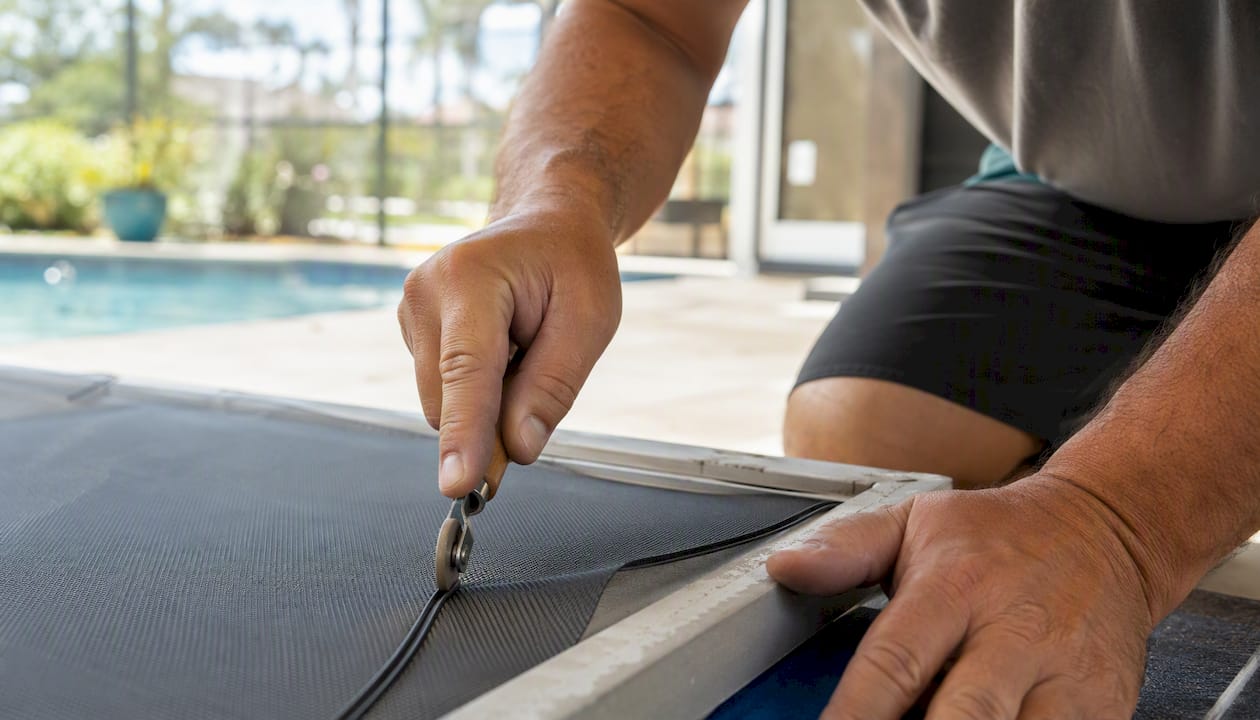
Polyester is less forgiving. The stronger yarn holds tension well once set, but if you pull one side tighter than the other during installation, the finished panel will show a visible sag or diagonal pucker. Getting it right requires working from the center outward and checking tension frequently. Phifer's installation guidance specifically recommends professional stretching for polyester in larger panels.
When DIY makes sense:
- Single window or door replacement with standard fiberglass
- Small panels under 3 feet in any dimension
- You have a spline roller, utility knife, and a flat work surface
When to hire a pro:
- Pool enclosure panels (large spans where sag is visible and structurally problematic)
- High-wind exposure areas where proper tension affects performance
- Polyester pet-screen or solar-control mesh in any panel larger than a standard window
- Frame corrosion or bent channels that need repair before rescreening
For small tears, a screen repair patch kit works as a temporary fix. But a patch on a brittle, UV-degraded mesh is just delaying the inevitable. If the mesh crumbles when you press it, the whole panel needs replacing, not patching.
Pro Tip: When installing polyester, use a slightly wider spline than you would for fiberglass. The thicker yarn compresses differently, and the right spline diameter is what keeps the mesh locked in the channel under tension.
How to clean and maintain screens to extend their life
Both materials clean the same way under normal conditions. The difference shows up with pet-screen polyester, which tolerates more aggressive cleaning.
- Remove loose debris with a soft brush or low-pressure air before wetting the screen.
- Mix a small amount of mild dish soap with warm water.
- Apply with a soft-bristle brush or sponge, working gently in the direction of the weave.
- Rinse thoroughly with a garden hose on a low-pressure setting.
- Let the screen air-dry completely before closing windows or doors against it.
For pet-resistant polyester grades, a low-pressure rinse is generally safe and more effective at clearing embedded pet hair and debris than hand-washing alone. Standard fiberglass should never be pressure-washed; the force separates the vinyl coating from the glass yarn and accelerates the exact degradation you're trying to prevent.
Routine maintenance checklist:
- Check fasteners and spline channels every season for loosening or corrosion
- Inspect frame corners and welds for rust, particularly on aluminum frames near salt air
- Look for sagging panels after major wind events; re-tension or replace before the next storm season
- Clean screens at least twice a year in high-pollen or coastal environments
Pro Tip: Never use bleach or ammonia-based cleaners on vinyl-coated mesh. Both break down the coating faster than UV exposure does, and the damage isn't visible until the mesh starts tearing at the edges months later.
For a full pool cage upkeep routine, the frame and hardware need as much attention as the mesh itself.
Decision checklist: pick the right material for your situation
The right choice usually comes down to three questions: How much sun does the screen face? Are there pets? And how long do you want the screen to last before the next rescreen?
- Budget rescreen, standard windows, no pets: Fiberglass. Lower cost, easy DIY, adequate lifespan for low-wear use.
- Pool enclosure in a sunny climate: Polyester. The longer lifespan reduces how often you rescreen, and the total lifecycle cost often comes out lower even though the material costs more upfront.
- Household with dogs or cats: Polyester pet-screen grade, full stop. Standard fiberglass won't survive a determined animal.
- Coastal property: Polyester with UV-stabilized coating. Salt air shortens fiberglass life noticeably faster.
- Selling the home soon: Fiberglass is fine for a quick, presentable rescreen that passes inspection. Polyester is the better investment if you're staying.
- Retractable or specialty screens: Check the manufacturer's spec; some retractable systems require specific mesh weights that limit material choice.
- No-see-um protection needed: Either material in 20x20 mesh; fiberglass is more widely available in this count at retail.
Total lifecycle cost matters more than sticker price. A polyester rescreen that lasts 12 years costs less over time than two fiberglass rescreens in the same period, even after accounting for the higher material cost.
When to repair, when to replace, and how restoration saves money
Not every failing screen means a full rebuild. Knowing the difference between a repair job and a replacement job saves real money.
Signs that favor repair:
- One or two panels with localized holes or tears while surrounding panels are intact
- Fastener failure (popped screws, corroded clips) without widespread mesh damage
- Minor surface rust on frame members that hasn't compromised structural integrity
- Spline that has dried out and pulled away from the channel in isolated sections
Signs that point to full replacement or professional restoration:
- Widespread brittleness across multiple panels (mesh crumbles when touched)
- Structural frame corrosion that has bent or weakened the frame members themselves
- Multiple panels failing simultaneously, which usually signals the whole enclosure has reached end of life
- Coating breakdown visible as chalky white residue across most of the mesh surface
Restoration, rather than a full rebuild, is often the smarter financial move when the frame structure is still sound. Repainting with a water-based acrylic coating, replacing corroded fasteners with stainless steel or Nylotech hardware, and re-screening with fresh polyester or fiberglass can return an enclosure to near-new condition at a fraction of the cost of tearing it down and starting over. When coastal UV and salt air have degraded the surface but left the frame intact, restoration is almost always the right call.
If you're seeing structural corrosion in multiple frame members, or if more than half the panels show advanced mesh failure, get a professional assessment before committing to either repair or rebuild. The cost difference between those two paths is significant, and the right answer depends on what the frame inspection reveals. A screen enclosure restoration and upgrade can address surface deterioration, hardware failure, and mesh replacement in a single visit.
What I've seen homeowners get wrong about screen material
The most common mistake is treating the fiberglass vs. polyester decision as purely a cost question. Homeowners buy fiberglass because it's cheaper, install it in a pool enclosure that faces full afternoon sun, and then call for a rescreen two years later when the mesh starts crumbling at the edges. The "savings" evaporate quickly.
In Central Florida conditions, specifically the combination of intense UV, afternoon thunderstorms, and salt-influenced air near the coasts, polyester isn't a premium upgrade. It's the baseline choice for any enclosure that's expected to last. Fiberglass makes sense for interior windows, shaded porches, and situations where you genuinely need a low-cost, quick fix. For anything facing the Florida sun directly, the lifespan difference between the two materials is too large to ignore.
Mrpoolscreen's restoration work consistently shows that the frame outlasts the mesh by years when the structure is maintained. The enclosures that end up needing full rebuilds are almost always ones where the mesh was left past its service life, water got behind the frame members, and rust did the structural damage. Catching that earlier, with the right material choice from the start, changes the trajectory entirely.
Mrpoolscreen restores and rescreens pool enclosures across Central Florida
Choosing the right screen material is only half the decision. The other half is whether the frame, fasteners, and coating underneath are in good enough shape to support a new screen for another decade.
Mrpoolscreen specializes in full pool enclosure restoration: re-screening with fiberglass or polyester based on your specific exposure conditions, replacing corroded fasteners with stainless steel or Nylotech hardware, and repainting frame surfaces with water-based acrylic coatings that resist UV and salt. See completed projects in the project gallery to get a sense of what's possible. To find out whether your enclosure is a restoration candidate or needs something more, request a professional assessment and get a clear answer before committing to either path.
Sources
- How to Choose Screening Material - Phifer
- Fiberglass vs Polyester Mesh for Bulk Screen Orders - Flyzzz/Weiziran