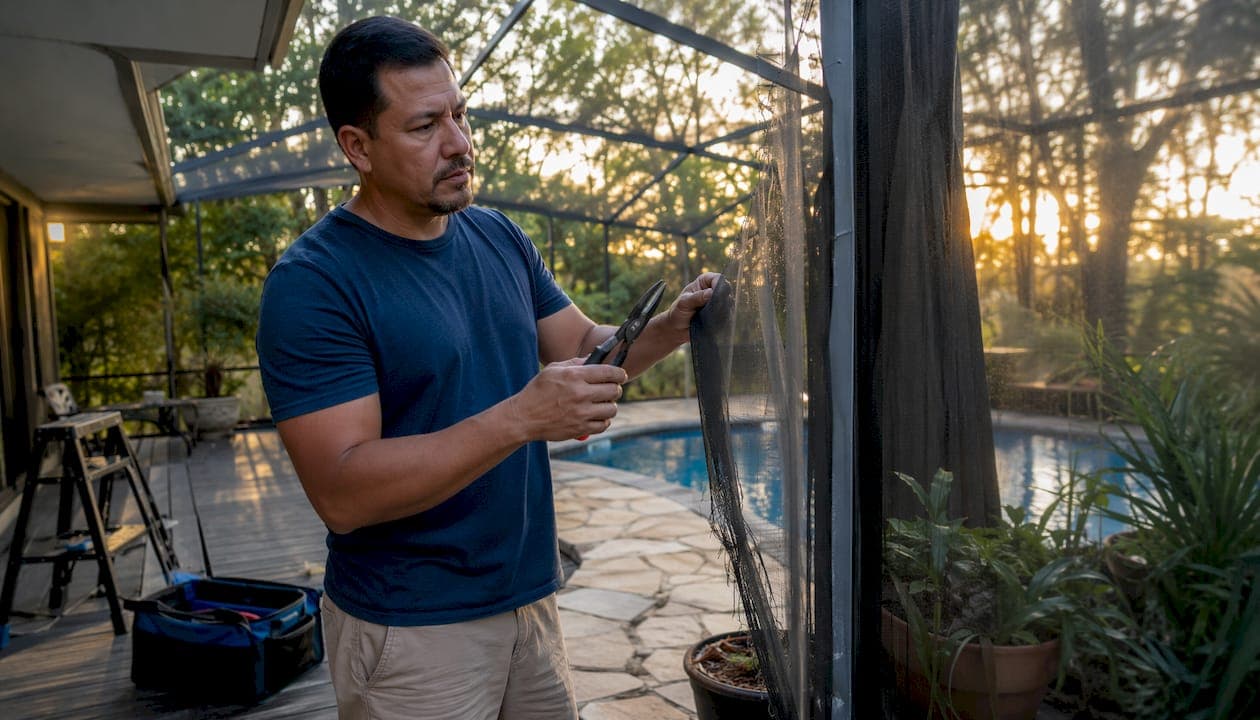
What causes pool screen mesh breakdown?
Pool screen mesh breaks down primarily because of UV radiation, storm stress, and physical damage from pets or debris. These forces work together, and once one weakness develops, the others accelerate it. Most mesh reaches a tipping point after several years of exposure, though Florida's climate can push that timeline shorter.
Here are the main culprits:
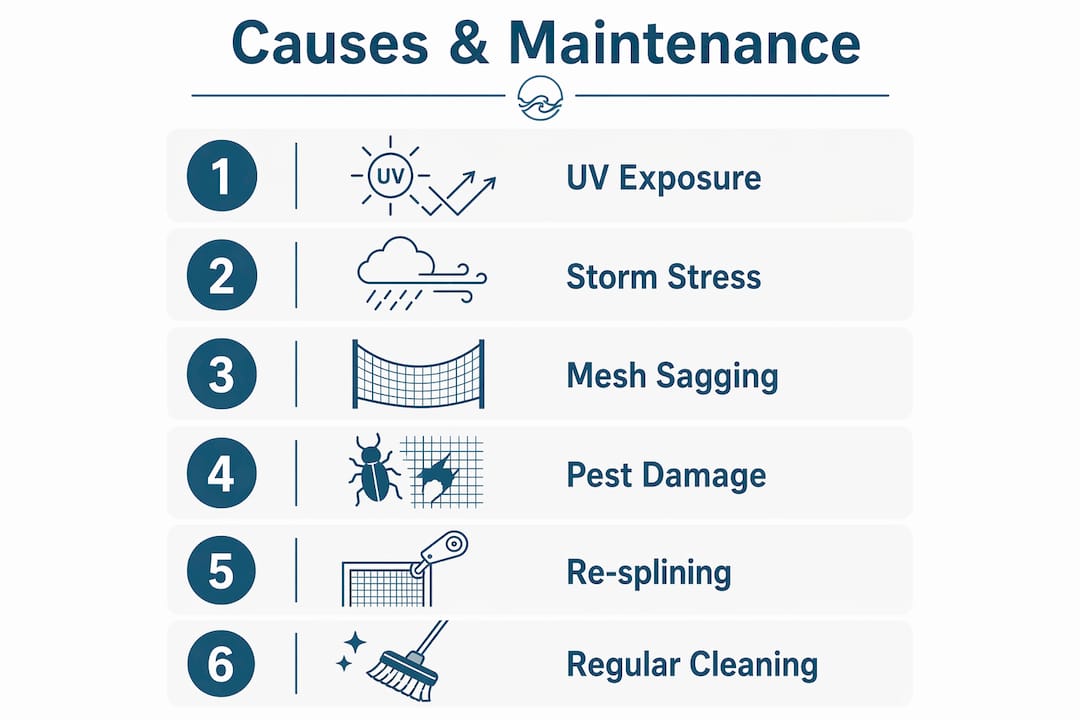
- UV radiation: Prolonged sun exposure dries out mesh fibers, causing brittleness and loss of elasticity. Once the UV-protective coating breaks down, the mesh degrades rapidly.
- Wind and storm pressure: High winds force screens to flex, pull, and vibrate. Structural stress from storms tears or weakens panels, especially those already loosened by age.
- Pets and wildlife: Cats, dogs, squirrels, and raccoons scratch and push through mesh, creating localized tears that spread quickly.
- Debris impact: Falling branches, palm fronds, and storm-thrown objects puncture panels instantly or wear them down through repeated contact.
- Spline failure: The rubber or vinyl cord holding mesh in the frame dries out and shrinks over time, causing sagging and stress points that lead to tearing.
- Corrosion: Humidity and saltwater air trigger galvanic corrosion at metal connections, weakening the fasteners that hold everything together.
- Material aging: Even without any single dramatic event, mesh quality degrades after years of combined exposure. Budget-grade mesh fails earlier; industrial-grade mesh lasts longer but still has a finite life.
Understanding these causes is the first step. Catching them early is what keeps a repair bill manageable.
Table of Contents
- Common signs your pool screen mesh is failing
- How weather and environment accelerate mesh deterioration
- Pool screen maintenance tips that actually extend mesh life
- When to repair, re-spline, or replace your pool screen mesh
- What Mrpoolscreen's restoration approach gets right
- Key Takeaways
Common signs your pool screen mesh is failing
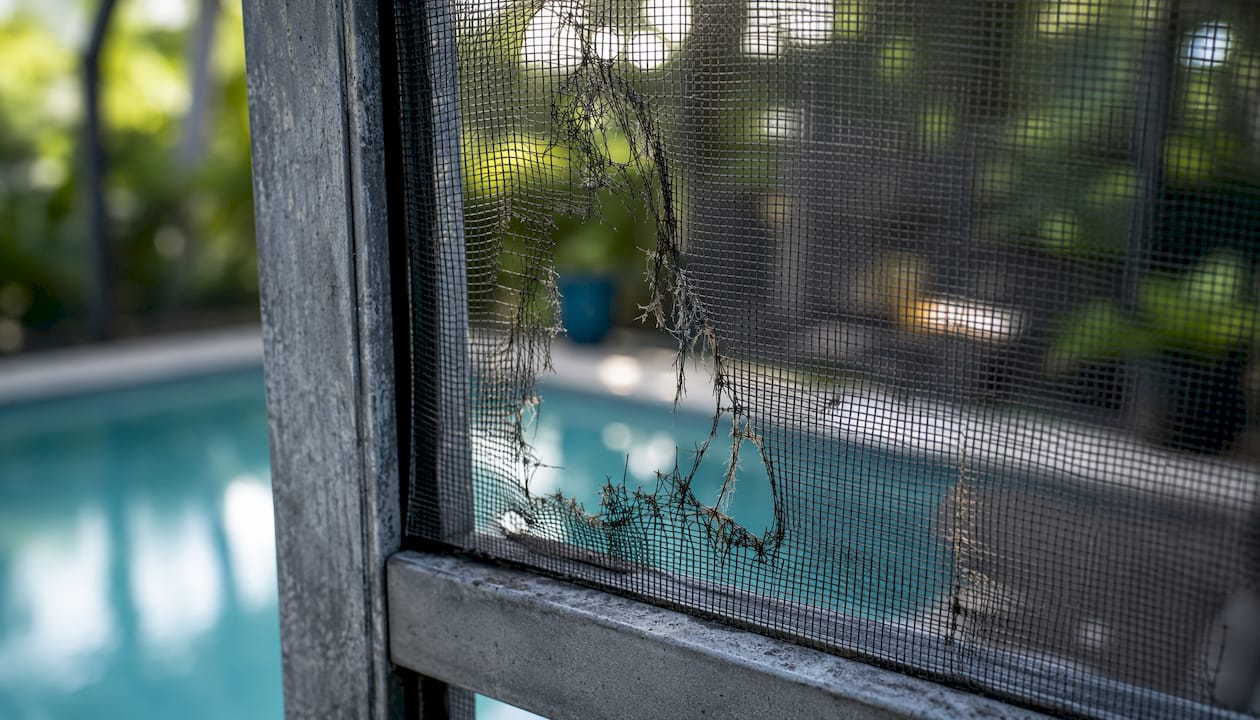
Fading is usually the first thing homeowners notice. When mesh shifts from deep black to a chalky gray, that color change signals UV coating failure and near end-of-life material. The mesh looks tired because it is.
Beyond color, watch for these warning signs:
- Sagging panels: Mesh that droops or billows instead of sitting taut has lost tension, usually because the spline has dried and shrunk.
- Brittleness and cracking: Healthy mesh bends without breaking. Brittle mesh snaps when you press it lightly, a sign the fibers have lost all flexibility.
- Visible tears and holes: Even small punctures matter. Insects, lizards, and small animals push through weak spots and turn a pinhole into a noticeable gap within weeks.
- Stiff or rigid texture: Mesh that feels hard and inflexible rather than slightly pliable is past its prime.
- Rust stains or discoloration around fasteners: These indicate corroding hardware that is already compromising the frame's grip on the mesh.
Homeowners often overlook these early signals, letting small issues escalate into major tears that require full panel replacement. A quick monthly visual scan takes less than five minutes and can save hundreds of dollars.
Pro Tip: Run your hand lightly across a panel. If the mesh crumbles, flakes, or feels like dry paper, it needs replacing now, not next season.
How weather and environment accelerate mesh deterioration
Florida's climate is genuinely one of the harshest environments for pool screen enclosures in the country. The combination of factors is what makes it so destructive, not any single one in isolation.
- Intense UV radiation: Florida experiences high UV index for much of the year, causing fiberglass mesh to lose tensile strength steadily. No screen material is immune; the question is only how fast.
- Humidity and saltwater air: Constant moisture accelerates corrosion at frame joints and fastener connections. Saltwater chlorination systems make this worse, particularly at deck anchor points where aluminum meets concrete.
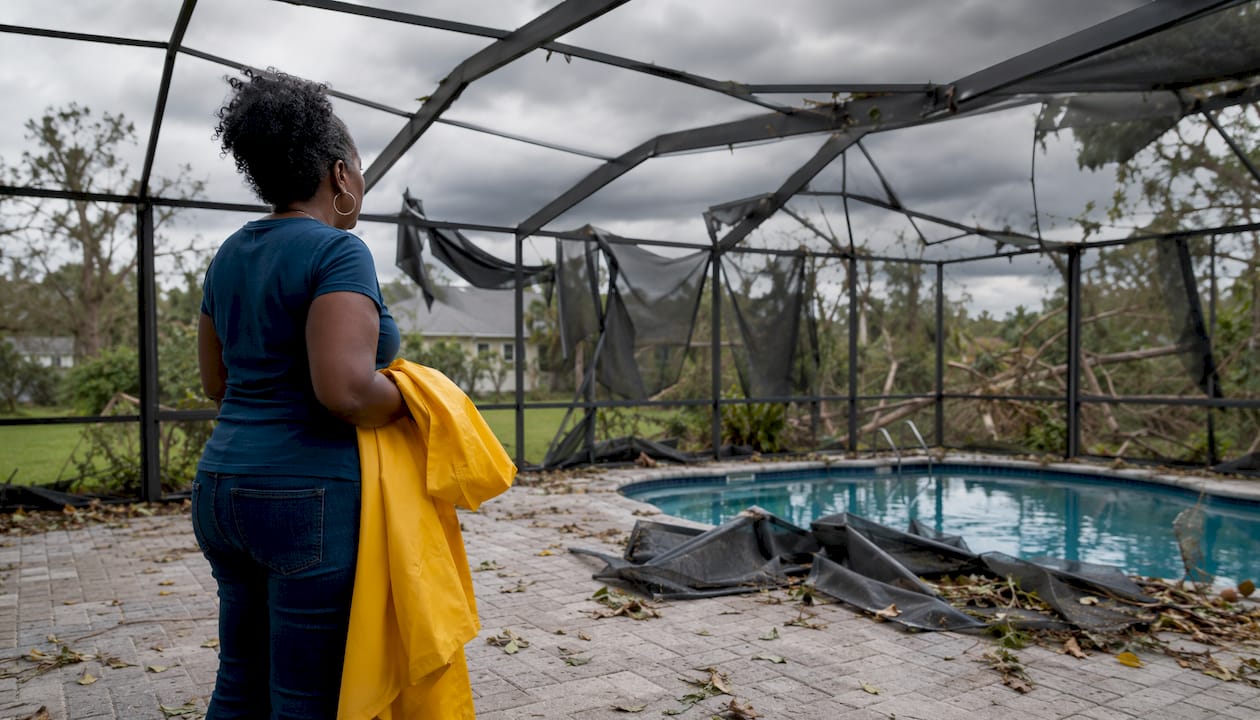
- Storm winds: Wind pressure causes screens to flex repeatedly, and older or loose panels tear under that stress. Removing panels or spline on the windward side before a hurricane reduces structural load and can prevent full enclosure collapse.
- Temperature swings: Even in South Florida, daily and seasonal temperature changes cause materials to expand and contract. Over years, that repeated movement creates weak points around corners and edges where tension concentrates.
- Algae, mold, and mildew: Moisture and shade create perfect conditions for biological growth. When algae or mold sits on mesh fibers for extended periods, it weakens the material from the outside in.
Mesh density also plays a role that most homeowners never consider. Denser mesh catches more wind, and an enclosure engineered for standard mesh can be overstressed if retrofitted with a tighter weave without upgrading the frame. Screen mesh density directly affects wind load design pressure on the entire structure, which is why any mesh upgrade should involve a professional assessment.
Pool screen maintenance tips that actually extend mesh life
Routine care is the single most effective way to slow mesh deterioration. The goal is removing the materials that accelerate breakdown before they have time to do damage.
- Inspect every 3–4 months: Walk the perimeter and check each panel for sagging, tears, discoloration, and loose fasteners. A safety inspection checklist makes this faster and more consistent.
- Rinse regularly with a garden hose: A gentle rinse removes salt residue, dirt, and organic debris that would otherwise sit on the mesh and accelerate fiber breakdown. This is especially critical in coastal or saltwater pool environments.
- Deep clean 2–4 times per year: Use a mild soap solution or a diluted white vinegar mix to break down mold, algae, and mineral deposits. Regular deep cleaning prevents the biological buildup that degrades mesh fibers over time.
- Never pressure wash: High-pressure water loosens fasteners, damages mesh weave, and forces water into frame channels where it accelerates corrosion. The short-term clean is not worth the long-term damage.
- Check and tighten fasteners: Loose screws and bolts create movement in the frame that transfers stress directly to the mesh. Stainless steel fasteners resist corrosion far better than standard hardware. For more on what to look for, the fastener failure signs guide covers the specifics.
- Trim nearby trees and shrubs: Branches rubbing against panels wear down mesh gradually. Falling debris during storms is one of the fastest ways to destroy a panel that was otherwise in good shape.
- Keep the area around the base clean: Debris piled against the lower panels traps moisture and attracts pests, both of which accelerate localized damage at the most vulnerable part of the enclosure.
Pro Tip: If a panel sags but has no visible tears, try re-splining before replacing the whole panel. A new spline cord restores tension and can add years to a panel's life at a fraction of the replacement cost.
Keeping mosquitoes and other pests away from the enclosure also reduces the pressure animals put on the mesh. Combining screen maintenance with mosquito prevention strategies around your yard cuts down on the wildlife activity that leads to punctures.
When to repair, re-spline, or replace your pool screen mesh
Not every damaged screen needs a full replacement. The right call depends on the extent of the damage, the age of the mesh, and whether the frame itself is compromised.
- Re-splining: When mesh sags but the material itself is intact, re-splining restores tension without replacing the panel. A contractor removes the old spline cord, re-tensions the mesh, and installs a new cord. This is the most cost-effective repair for loose but undamaged panels.
- Single panel replacement: A clean tear in one panel with surrounding panels in good condition is a straightforward spot repair. Patch repairs work for very small holes, but any tear larger than a few inches typically warrants a full panel swap.
- Full re-screening: When multiple panels are failing, the mesh is brittle across the whole enclosure, or the material is past the 7–12 year mark, replacing all panels at once is more economical than repeated individual repairs. It also gives you a uniform appearance and consistent tension throughout.
- Frame assessment: If you see bent aluminum, significant corrosion at joints, or anchor bolt issues at the deck, mesh replacement alone will not solve the problem. Frame damage requires professional evaluation before any re-screening work begins. The aging enclosure repair checklist helps identify whether the frame needs attention alongside the mesh.
Cost considerations vary by enclosure size, mesh grade, and whether frame repairs are needed. A professional assessment before committing to a repair scope prevents the common mistake of re-screening over a frame that will fail in the next storm.
What Mrpoolscreen's restoration approach gets right
Mrpoolscreen has spent years restoring pool enclosures across Central Florida, a region where UV intensity, hurricane seasons, and saltwater air combine to age structures faster than almost anywhere else in the country. Their work focuses on restoration rather than full rebuilds, which typically saves homeowners up to 60% compared to tearing down and starting over.
What sets their methodology apart is the material selection. Mrpoolscreen uses water-based acrylic coatings on aluminum frames and stainless steel fasteners throughout. Stainless steel resists the galvanic corrosion that destroys standard hardware in humid, saltwater-adjacent environments. The acrylic coatings protect oxidized aluminum from further pitting, extending frame life without requiring full structural replacement.
Their process follows a clear sequence:
- Inspect the full enclosure, cataloguing mesh condition, frame integrity, spline status, and fastener corrosion
- Clean and treat aluminum frames before any coating or re-screening work begins
- Replace spline cords and re-tension panels where the mesh is still serviceable
- Install new mesh panels using industrial-grade materials where replacement is warranted
- Apply protective coatings to restore frame appearance and add a barrier against future oxidation
The project gallery shows the before-and-after results across a range of enclosure conditions, from surface oxidation to post-storm structural repairs.
Pro Tip: Ask any restoration contractor whether their fasteners are stainless steel or galvanized. Galvanized hardware corrodes within a few years in Florida's climate. Stainless steel costs more upfront but lasts the life of the enclosure.
Key Takeaways
Pool screen mesh breaks down fastest when UV exposure, storm stress, and deferred maintenance compound each other over time. Catching the early signs and acting on them is what separates a minor repair from a full enclosure replacement.
| Point | Details |
|---|---|
| UV is the primary driver | Fibers become brittle and lose elasticity after 7–12 years of UV exposure, depending on mesh grade. |
| Early signs prevent major costs | Fading, sagging, and brittleness signal coating failure; address them before small tears spread. |
| Maintenance extends mesh life | Inspect every 3–4 months, rinse regularly, and deep clean 2–4 times per year to slow fiber degradation. |
| Re-splining beats replacement | Loose but intact mesh can often be restored with a new spline cord, avoiding full panel replacement costs. |
| Frame and mesh fail together | Corroded fasteners and bent aluminum transfer stress to the mesh; always assess the frame before re-screening. |