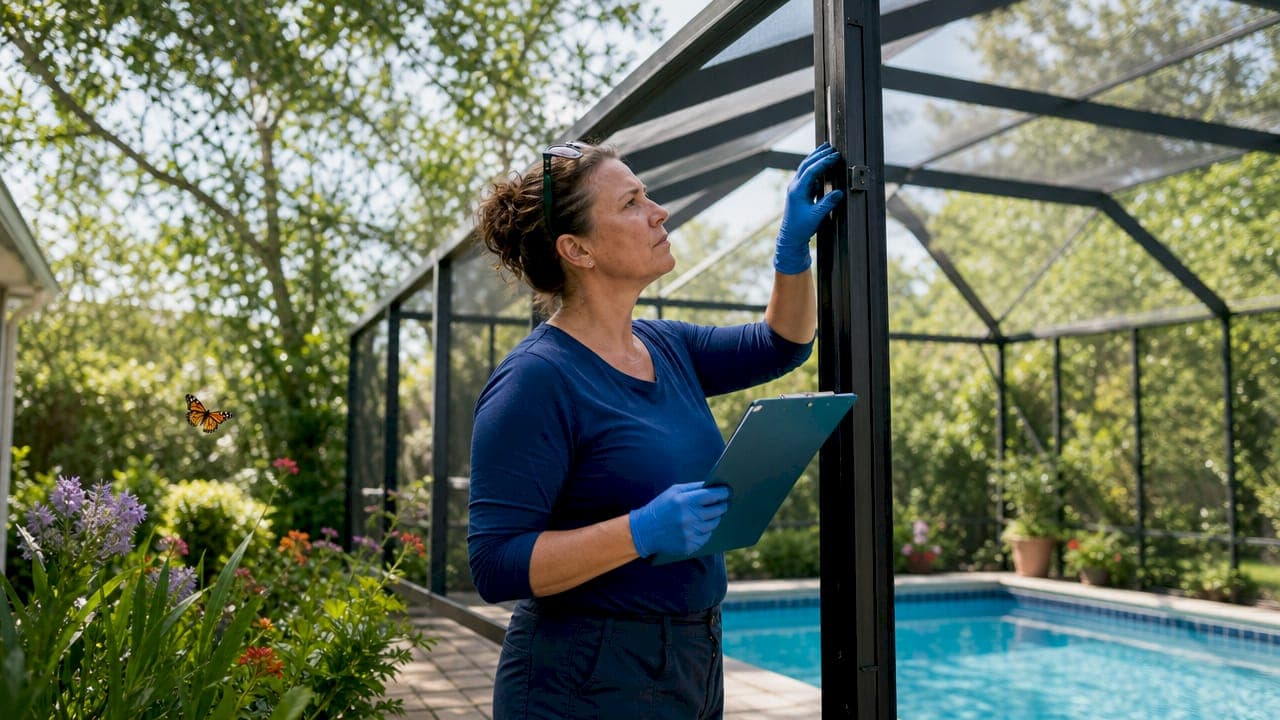
An aging pool enclosure repair checklist is the most reliable way to catch structural problems, screen damage, and hardware failures before they become expensive emergencies. Pool enclosures, also called pool cages or screen rooms, face constant exposure to UV rays, rain, humidity, and wind. Without a systematic inspection routine, small issues like a corroded screw or a loose joint quietly grow into structural failures. This guide walks you through every critical inspection point, from the aluminum frame to the door latch, so you can make informed repair decisions and protect your investment.
1. Aging pool enclosure repair checklist: start with the frame
The aluminum frame is the skeleton of your pool enclosure, and its condition determines everything else. Aluminum does not rust, but fasteners corrode first, making screws, hinges, and anchor bolts the weakest points in any aging structure. That means you can have a frame that looks fine from a distance while the hardware holding it together is quietly failing.
Walk the full perimeter of your enclosure and look at every connection point. Bent or bowed vertical posts, loose corner joints, and visible gaps between the frame and the concrete slab are all red flags. Press lightly on joints to test for movement. Any flex where there should be none signals a fastener or anchor problem.
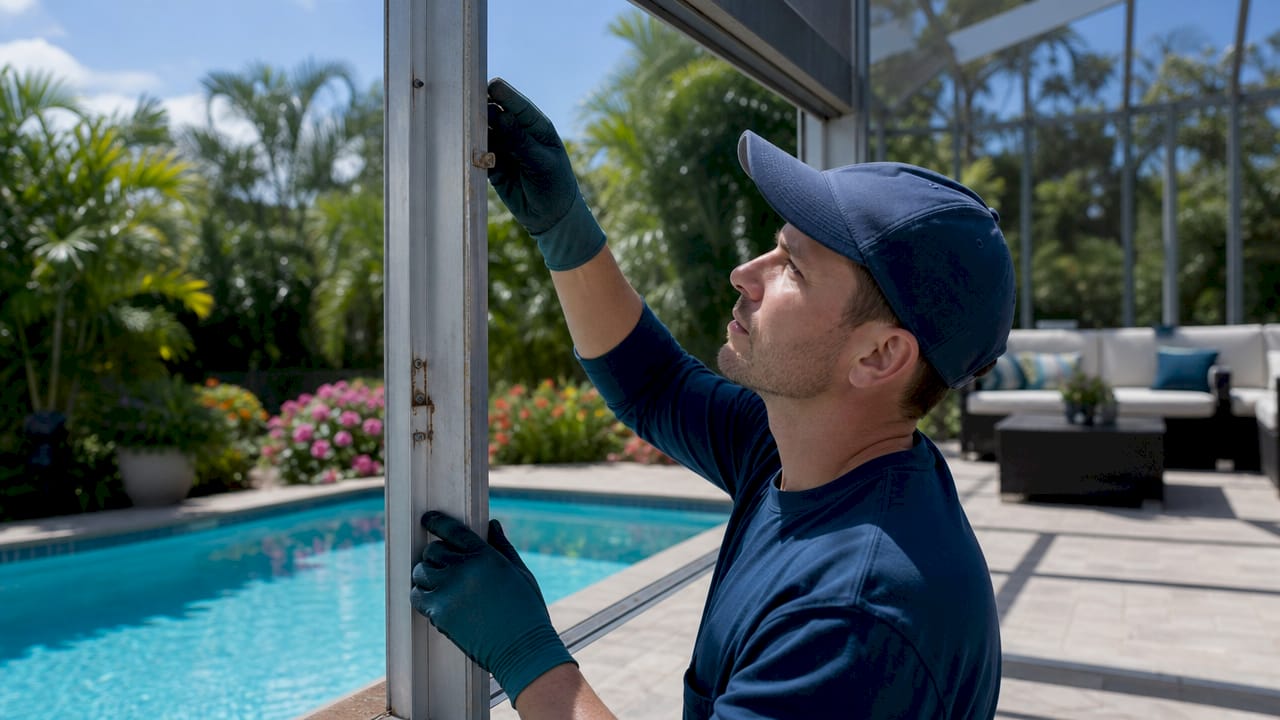
Pro Tip: Inspect fasteners in september or october, before hurricane season peaks. Replacing a handful of corroded screws costs far less than repairing a frame that shifted during a storm.
The table below summarizes the most common corrosion signs and the right response for each.
| Corrosion sign | Recommended action |
|---|---|
| Surface rust on screws or hinges | Clean, treat with rust inhibitor, replace if pitted |
| White powder on aluminum frame | Wipe with mild cleaner; monitor for structural softening |
| Loose or spinning anchor bolts | Re-anchor immediately; do not wait for storm season |
| Bent or bowed vertical post | Consult a professional for structural assessment |
| Cracked or crumbling concrete anchor points | Requires professional repair before further use |
2. Screen mesh condition: when to patch and when to rescreen
Screen mesh is the most visible and most frequently damaged part of any pool enclosure. Small tears grow quickly, and sagging mesh signals that the material has aged past its useful life. UV exposure and repeated rain cycles break down fiberglass and aluminum mesh fibers, making them brittle and prone to tearing under minimal stress.
Patching works for a single small tear in otherwise firm, taut mesh. If the surrounding screen is discolored, stiff, or crumbles when you pinch it, patching that panel wastes money. A patch on brittle mesh will fail within weeks. Full panel replacement is the right call when more than one section shows brittleness or significant sagging.
Pro Tip: Run your hand lightly across the screen surface. Healthy mesh feels flexible and springs back. Brittle mesh crackles or flakes. That five-second test tells you more than a visual inspection alone.
Common causes of screen mesh degradation include:
- Prolonged UV exposure without any protective coating on the frame
- Wind-driven debris puncturing or abrading the mesh surface
- Loose tension allowing the screen to flap and stress the spline groove
- Mold and mildew buildup weakening mesh fibers over time
- Improper installation that left the screen undertensioned from the start
If multiple panels across your enclosure show any combination of these issues, a full rescreen is more cost-effective than patching panel by panel. You can learn more about screen restoration options to understand when a full restoration makes financial sense.
3. Door, latch, and hardware functionality
A door that does not close or latch properly is more than an inconvenience. Door misalignment signals frame shifting or distorted supports, which means the problem is structural, not just a worn latch. Replacing the latch without addressing the underlying frame issue is a temporary fix that will fail again.
Open and close every door on your enclosure. The door should swing freely, align flush with the frame, and latch without force. A door that drags, gaps at the top or bottom, or requires lifting to close is telling you the frame around it has moved.
Hardware maintenance and replacement tips:
- Lubricate hinges with a silicone-based spray twice a year to prevent sticking
- Replace any latch that requires more than light finger pressure to engage
- Check self-closing mechanisms on pool safety gates; Florida pool barrier codes require self-latching gates that open away from the pool
- Inspect hinge screws for corrosion and replace with stainless steel fasteners when repairing
- Test gate latches at child height to confirm they meet pool safety barrier standards
Sticking hinges and failing latches are often the first sign of broader hardware corrosion. Catching them early keeps your enclosure weather-tight and secure. You can review detailed fastener failure signs to know exactly what to look for before a small problem becomes a structural one.
4. Post-storm and seasonal maintenance checklist
After any hurricane, tropical storm, or strong wind event, post-storm inspections should prioritize frame movement, loose corners, screen tears, and hardware corrosion. A single loose corner or bent beam left unaddressed can widen into major structural damage within weeks. Speed matters after a storm.
Salt air and frequent rain accelerate corrosion and fastener failures in Florida enclosures. Regular cleaning, rust treatment, and hardware tightening slow that decay significantly. Preventive maintenance is always cheaper than reactive repair.
Pro Tip: Schedule a professional inspection every year, ideally in the spring before summer storm season begins. Annual inspections catch developing problems while they are still inexpensive to fix.
Immediate action steps after a storm:
- Walk the full perimeter and photograph any visible damage before touching anything.
- Check all four corners for frame separation or movement from the concrete slab.
- Test every door for alignment and latch function.
- Inspect screen panels for new tears, especially along the bottom and windward sides.
- Look for bent or displaced horizontal beams across the roof section.
- Tighten any loose fasteners you can safely reach from the ground.
- Contact a professional if you find frame movement, bent structural members, or more than two damaged panels.
For a deeper look at post-storm repair strategies, the storm damage repair guide covers assessment steps that can help you avoid unnecessary costs.
5. When to paint versus when to replace
Minor rust spots and faded finishes are cosmetic issues. Cleaning, light sanding, primer, and a fresh coat of paint address them effectively. The mistake most homeowners make is applying paint to a structure that has already crossed into structural failure territory.
The decision point is clear: surface wear gets paint, structural damage gets replacement. More than two repairs to joints or structural members often signal that the entire cage's integrity is compromised. Repeated spot repairs on a failing structure create patchwork fatigue, where each new fix stresses the surrounding connections until the whole system weakens.
| Damage scenario | Best response |
|---|---|
| Faded or chalky paint finish | Clean, prime, and repaint with exterior-grade coating |
| Surface rust on one or two fasteners | Treat with rust inhibitor, replace fasteners, repaint |
| Widespread corrosion on multiple joints | Professional assessment required before any cosmetic work |
| Two or more structural repairs already made | Evaluate full replacement vs. professional restoration |
| Frame movement or shifting posts | Replace; painting will not restore structural integrity |
| Screen damage only, frame sound | Rescreen panels or full enclosure rescreen |
Repainting a structurally sound enclosure with water-based acrylic coatings extends its life and restores curb appeal at a fraction of replacement cost. Mrpoolscreen uses industrial-grade water-based acrylic coatings and stainless steel fasteners specifically because those materials hold up against Florida's humidity and UV load far better than standard hardware-store products. When the frame is sound, restoration can save homeowners up to 60% compared to a full rebuild.
For a full breakdown of what a pool safety inspection covers, that resource walks through the criteria professionals use to separate cosmetic wear from structural failure.
Key takeaways
A systematic pool enclosure inspection, done annually and after every major storm, is the single most effective way to prevent small problems from becoming costly structural failures.
| Point | Details |
|---|---|
| Fasteners fail before frames | Inspect screws, hinges, and anchors first; replace corroded hardware with stainless steel. |
| Patch only firm, taut mesh | Brittle or sagging screen requires full panel replacement, not patching. |
| Door misalignment means structural shift | A door that drags or gaps signals frame movement, not just a worn latch. |
| Two or more joint repairs signal replacement | Patchwork fatigue weakens the whole structure; evaluate full restoration or rebuild. |
| Annual inspections save money | Spring inspections catch developing issues before summer storm season escalates them. |
What I've learned from watching homeowners delay the obvious
Most homeowners I talk to wait too long. They notice a loose screw or a small screen tear and tell themselves they will get to it next month. By the time next month arrives, that loose screw has let the joint shift, and now they are looking at a structural repair instead of a five-minute hardware fix.
The single biggest mistake I see is treating fastener corrosion as a cosmetic problem. It is not. Fasteners are the load-bearing connectors in your enclosure. When they corrode and fail, the frame loses its rigidity. The frame itself may look fine, but it is no longer held together the way it was designed to be.
The second mistake is over-investing in paint on a structure that needs replacement. I have seen homeowners spend money on a fresh coat of paint on an enclosure with three repaired joints, only to watch it fail in the next storm season. Paint cannot fix structural fatigue. Knowing the difference between a cosmetic problem and a structural one is the most valuable thing this checklist can give you.
My honest advice: do the annual inspection yourself using this checklist, but bring in a professional the moment you find frame movement, more than one joint repair, or any door that will not align. The cost of a professional assessment is always less than the cost of ignoring what it would have found.
— Michel
Mrpoolscreen: professional pool enclosure restoration in Central Florida
Mrpoolscreen works with homeowners across Central Florida who want to restore their aging pool enclosures without paying full replacement prices.
Their restoration process addresses frame corrosion, screen damage, and hardware failures using industrial-grade water-based acrylic coatings and stainless steel fasteners built for Florida's climate. Clients save up to 60% compared to a full rebuild, with results that hold up through storm seasons. Whether your enclosure needs a full rescreen, rust treatment, or structural hardware replacement, Mrpoolscreen provides an honest assessment before any work begins. Visit the pool screen restoration page to see completed projects and request a quote for your enclosure.
FAQ
How often should I inspect my pool enclosure?
Inspect your pool enclosure at least once a year and after every major storm. Spring inspections before hurricane season are the most practical timing for Florida homeowners.
Can I patch a torn pool screen myself?
You can patch a single small tear if the surrounding mesh is firm and taut. If the mesh feels brittle, crumbles, or sags, patching will not hold and full panel replacement is the right call.
What causes pool enclosure doors to stop latching?
Doors that fail to latch usually indicate frame shifting or distorted supports rather than a worn latch alone. Replacing only the latch without addressing the frame will not solve the problem.
When does repainting make sense versus full replacement?
Repainting makes sense when the frame is structurally sound and damage is limited to surface rust or faded finish. If the enclosure has had more than two structural joint repairs, replacement or professional restoration is the wiser investment.
What are the first signs that fasteners are failing?
Look for rust staining on the frame below screw heads, screws that spin without gripping, and hinges that stick or creak under light pressure. These are early warnings that the hardware is corroding and needs replacement before it causes frame movement.