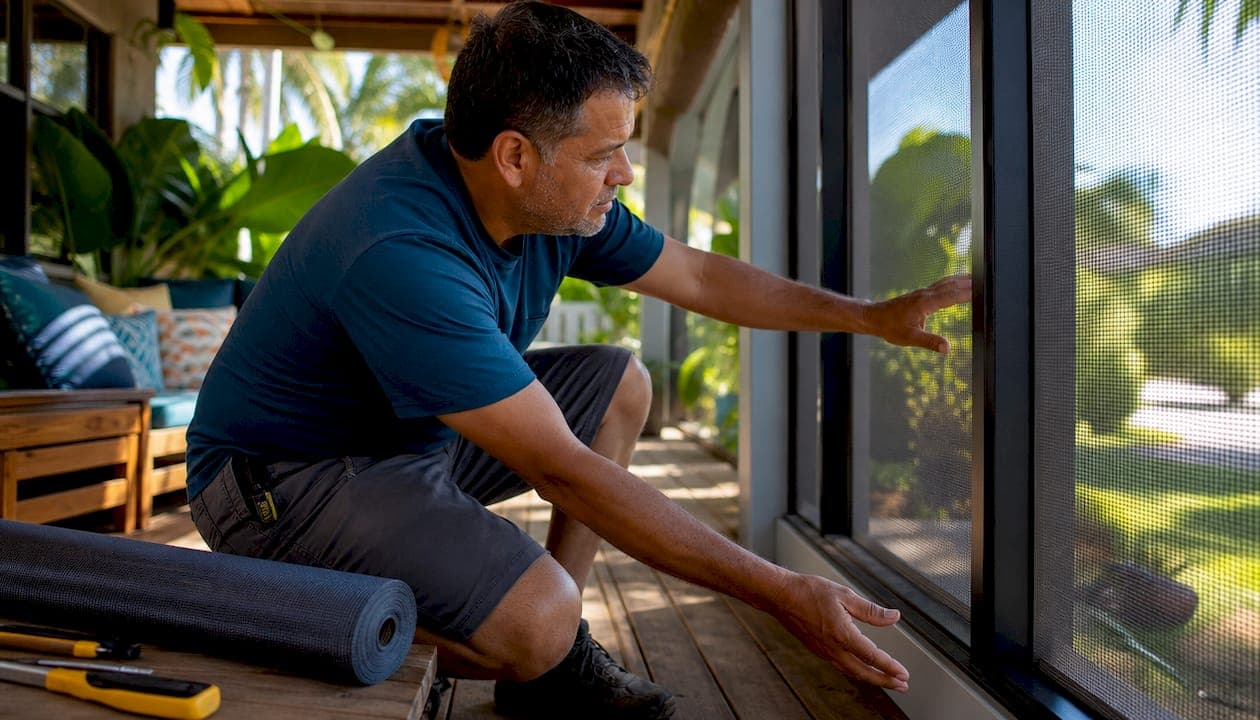
Florida glass is a vinyl-laminated fiberglass mesh screening material designed to block visibility, debris, and moisture while still letting natural light into outdoor enclosures. Unlike standard fiberglass screen, it carries an opaque, frosted appearance that creates a visual barrier without sealing off your space entirely. Homeowners across Central Florida use it in pool enclosures, lanais, and patio cages to keep pools cleaner and add a layer of privacy. If you have ever wondered what is Florida glass and whether it belongs in your outdoor space, this guide covers everything you need to make a confident decision.
What is Florida glass and how is it made?
Florida glass is defined by its two-layer construction: a fiberglass mesh base bonded with a vinyl laminate on top. The vinyl lamination adds opacity and strength that standard fiberglass mesh simply cannot match. That frosted finish is what gives Florida glass its name. It looks similar to frosted window glass from the outside, which is where the informal term originated.
The lamination process bonds the vinyl layer directly to the woven fiberglass strands. This creates a unified panel that resists tearing, sagging, and UV degradation better than plain mesh. Standard fiberglass screen is woven but left uncoated, which means it stays transparent and offers no visual barrier. Florida glass, by contrast, limits outside visibility while still transmitting diffused light into the enclosure.
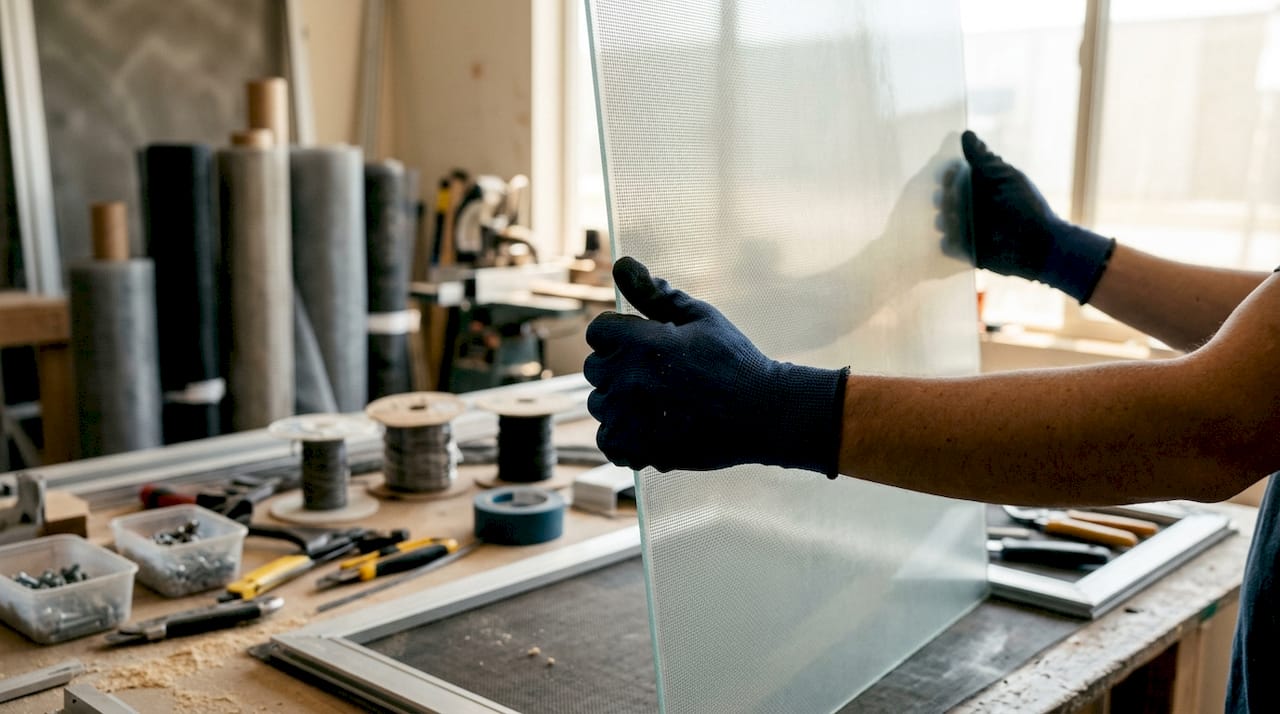
The vinyl layer also makes the surface easier to wipe clean. Dirt, mold, and algae have fewer places to grip compared to open-weave mesh. That matters in Florida's humid climate, where organic growth on screen panels is a common maintenance headache.
Pro Tip: When shopping for Florida glass panels, confirm the vinyl lamination covers both sides of the mesh, not just one. Single-sided lamination wears faster under direct sun exposure.
Key Florida glass features include:
- Frosted, opaque appearance that limits outside sightlines
- Fiberglass mesh base for structural stability and flexibility
- Vinyl laminate layer that blocks wind-driven debris and moisture
- Light transmission that keeps the enclosed space bright
- Low-maintenance surface that resists mold and cleans easily
- Durability suited to Florida's heat and humidity
Where is Florida glass used in home enclosures?
Florida glass works best as a partial wall barrier rather than a full enclosure covering. The most common application is the lower 3–4 feet of pool enclosure screen walls. At that height, it blocks grass clippings, dirt, pool water splashes, and wind-driven debris before they enter the enclosure. Traditional fiberglass screen continues above that point to maintain airflow at eye level and higher.
Homeowners use Florida glass in several specific situations:
- Pool enclosure lower panels. The bottom section of a pool cage takes the most abuse from lawn equipment, sprinkler overspray, and foot traffic. Florida glass panels in this zone keep the pool water cleaner and reduce how often you need to skim the surface.
- Lanai privacy screens. A lanai facing a neighbor's yard or a busy street benefits from the frosted barrier at seated height. Guests inside the lanai retain their view outward, but passersby cannot see in clearly.
- Patio enclosures near landscaping. Mulch beds, flower borders, and lawn areas adjacent to a screen cage push debris against the lower panels constantly. Florida glass stops that debris at the screen rather than letting it pile up inside.
- Pool equipment areas. Some homeowners run Florida glass panels along the section of the enclosure nearest to pool pumps or filter equipment, reducing the visual clutter visible from inside the cage.
- Side panels facing roads or walkways. Street-facing panels benefit from the added privacy layer, especially in neighborhoods where homes sit close together.
The debris-blocking performance of Florida glass is one of its most practical advantages. Grass clippings and dirt that blow through standard screen mesh can cloud pool water and clog filters. Florida glass stops that material at the wall.
Installation best practice calls for mixing Florida glass with traditional screen in the same enclosure. Florida glass handles the lower zone; standard screen handles the upper zone. That combination gives you privacy and debris control at ground level while preserving the ventilation that makes a pool enclosure comfortable in Florida's heat.
What are the benefits and limitations of Florida glass?
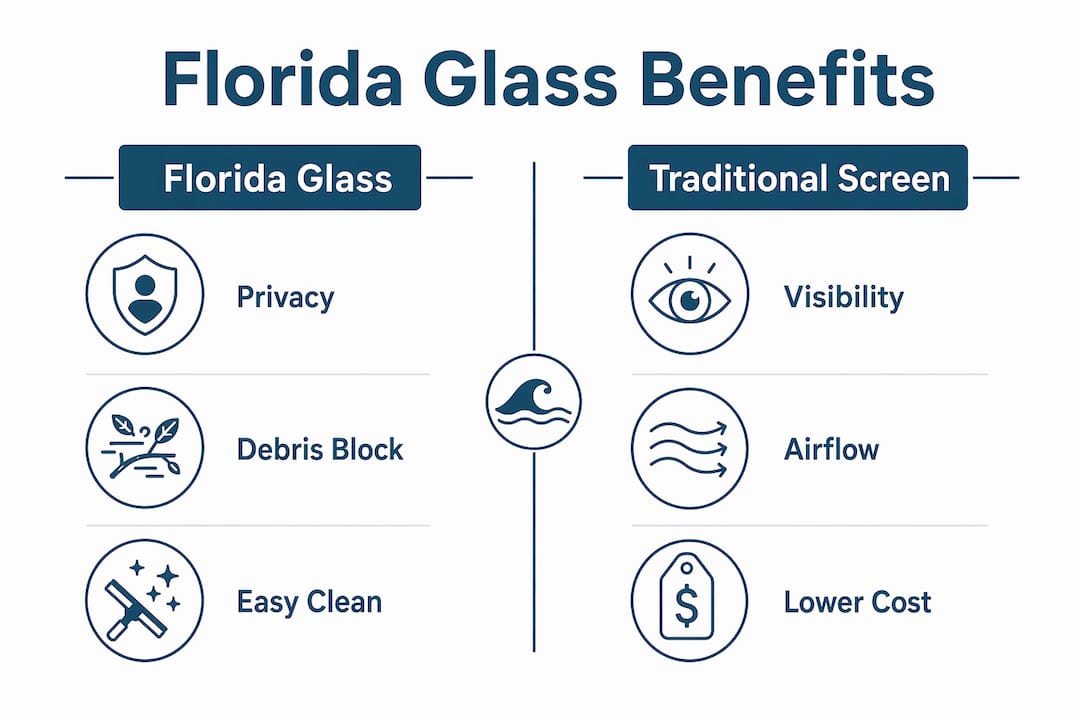
Florida glass delivers clear advantages for privacy and cleanliness. The opaque vinyl surface limits visibility from outside the enclosure, which standard screen cannot do. It also blocks moisture, wind-driven debris, and fine particles that pass straight through open mesh. The laminated surface holds up well against Florida's combination of intense UV exposure, high humidity, and afternoon rain.
Maintenance is straightforward. A garden hose and a soft brush remove most surface buildup. The vinyl layer does not absorb stains the way bare fiberglass mesh can, so cleaning takes less time and effort.
The main limitation is airflow. Full-wall Florida glass coverage blocks ventilation completely, which creates uncomfortable heat buildup inside the enclosure during summer months. That is why industry experts consistently recommend limiting Florida glass to the lower portion of the wall. Covering an entire enclosure wall with laminated screen turns a breezy outdoor space into a stuffy box.
| Feature | Florida glass | Traditional fiberglass screen |
|---|---|---|
| Privacy | High (frosted, opaque) | None (fully transparent) |
| Debris blocking | Excellent at lower panels | Moderate (open weave allows fine debris) |
| Airflow | Blocked where installed | Full airflow maintained |
| Light transmission | Diffused light passes through | Full light and visibility |
| Maintenance | Easy wipe-down surface | Requires more frequent cleaning |
| Best use zone | Lower 3–4 feet of wall | Upper wall and roof panels |
Pro Tip: Never install Florida glass above seated eye level on all four walls of an enclosure. Reserve it for the lower panels and let traditional screen handle the upper sections to keep air moving.
How to choose and install Florida glass for best results
Choosing Florida glass starts with assessing your specific needs. Homeowners near active landscaping or with pools that collect debris quickly get the most benefit. Those whose primary goal is privacy from a neighboring yard or street also see strong results. If your enclosure already has good airflow and you only want to reduce debris, partial Florida glass coverage on the most exposed wall may be enough.
Key factors to weigh before installation:
- Privacy needs. Identify which walls face neighbors, roads, or public areas. Those walls are the best candidates for Florida glass lower panels.
- Debris sources. Note where grass, mulch, or dirt most often enters the enclosure. Target Florida glass panels at those entry points.
- Airflow requirements. Measure how much of each wall you plan to cover. Keep Florida glass below 3–4 feet to preserve ventilation above.
- Existing screen condition. If your upper panels are worn or torn, address those repairs at the same time. A pool screen safety inspection before installation helps you catch issues early.
- Frame condition. Florida glass panels are heavier than standard screen. Confirm your frame is in good condition before adding the extra weight. Frame corrosion is a common issue in older Central Florida enclosures.
Maintenance after installation is minimal but consistent. Rinse panels monthly with a garden hose to remove surface dust and pollen. Inspect the spline (the rubber cord that holds the screen in the frame channel) annually. A loose or cracked spline lets panels sag and allows debris to sneak past the edges. Catching that early prevents a full panel replacement.
Florida glass is also a common addition during pool screen restoration projects, where worn lower panels get replaced with laminated screen at the same time the rest of the enclosure is refreshed.
Key Takeaways
Florida glass is a vinyl-laminated fiberglass screen that blocks debris, limits outside visibility, and holds up in Florida's climate when installed correctly on the lower 3–4 feet of enclosure walls.
| Point | Details |
|---|---|
| Construction matters | Florida glass bonds vinyl to fiberglass mesh, creating opacity and durability standard screen lacks. |
| Install at lower panels only | Cover the bottom 3–4 feet of walls to block debris while keeping airflow above. |
| Privacy without darkness | The frosted surface limits outside sightlines while still letting diffused light into the enclosure. |
| Avoid full-wall coverage | Covering entire walls blocks ventilation and creates heat buildup in Florida's climate. |
| Pair with frame maintenance | Check frame and spline condition before installation to avoid sagging or premature wear. |
Why I think Florida glass is underused in most pool enclosures
Most homeowners I talk to have never heard of Florida glass until they are already frustrated. They are skimming the pool every other day, or they feel like their lanai is on display for the whole neighborhood. Then someone mentions Florida glass and it clicks immediately.
What surprises people is how simple the concept is. It is not a high-tech product. It is a laminated screen panel. But the placement strategy, covering only the lower section and pairing it with traditional screen above, is where most DIY installations go wrong. I have seen enclosures where someone covered every wall from floor to ceiling with Florida glass and then wondered why the space felt like a greenhouse in july. The material itself was not the problem. The installation decision was.
The other thing I notice is that homeowners underestimate how much debris enters through the lower panels specifically. The upper screen panels rarely collect grass clippings or mulch. The lower 3–4 feet take almost all of it. Targeting Florida glass exactly there gives you the most benefit with the least tradeoff on ventilation.
My honest recommendation: if you have a pool enclosure in Central Florida and you are not using Florida glass on at least one wall's lower panels, you are cleaning your pool more than you need to. It is one of the most practical upgrades available, and it costs far less than most homeowners expect.
— Michel
Mrpoolscreen can handle your Florida glass upgrade
Florida glass installation is straightforward when the frame is in good shape and the right panels go in the right places. When the frame has rust, worn spline, or damaged sections, the installation gets more complicated fast.
Mrpoolscreen specializes in pool screen restoration across Central Florida, including Florida glass panel upgrades during full enclosure refreshes. Their team uses industrial-grade materials and stainless steel fasteners to make sure new panels hold up long after installation. Restoration services from Mrpoolscreen can save homeowners up to 60% compared to a full rebuild. You can view completed projects in the restoration gallery or request a free estimate to see what a Florida glass upgrade would cost for your specific enclosure.
FAQ
What is Florida glass made of?
Florida glass is a fiberglass mesh screen bonded with a vinyl laminate layer. The lamination creates an opaque, frosted surface that blocks visibility and debris while allowing diffused light to pass through.
How high should Florida glass be installed on a pool enclosure?
Industry guidance recommends covering the lower 3–4 feet of enclosure walls with Florida glass. Installing it higher than that reduces airflow and can cause heat buildup inside the enclosure.
Does Florida glass block all airflow?
Yes, Florida glass blocks airflow completely where it is installed. That is why experts recommend pairing it with traditional fiberglass screen on the upper portion of each wall to maintain ventilation.
Can Florida glass be added to an existing pool enclosure?
Florida glass panels can be added during a restoration or repair project without rebuilding the entire enclosure. A contractor replaces the lower screen panels with laminated Florida glass while leaving the upper panels in place.
Is Florida glass hard to maintain?
Florida glass is low maintenance. The vinyl surface resists mold and staining, and monthly rinsing with a garden hose keeps panels clean. Annual spline inspection prevents sagging and extends panel life.