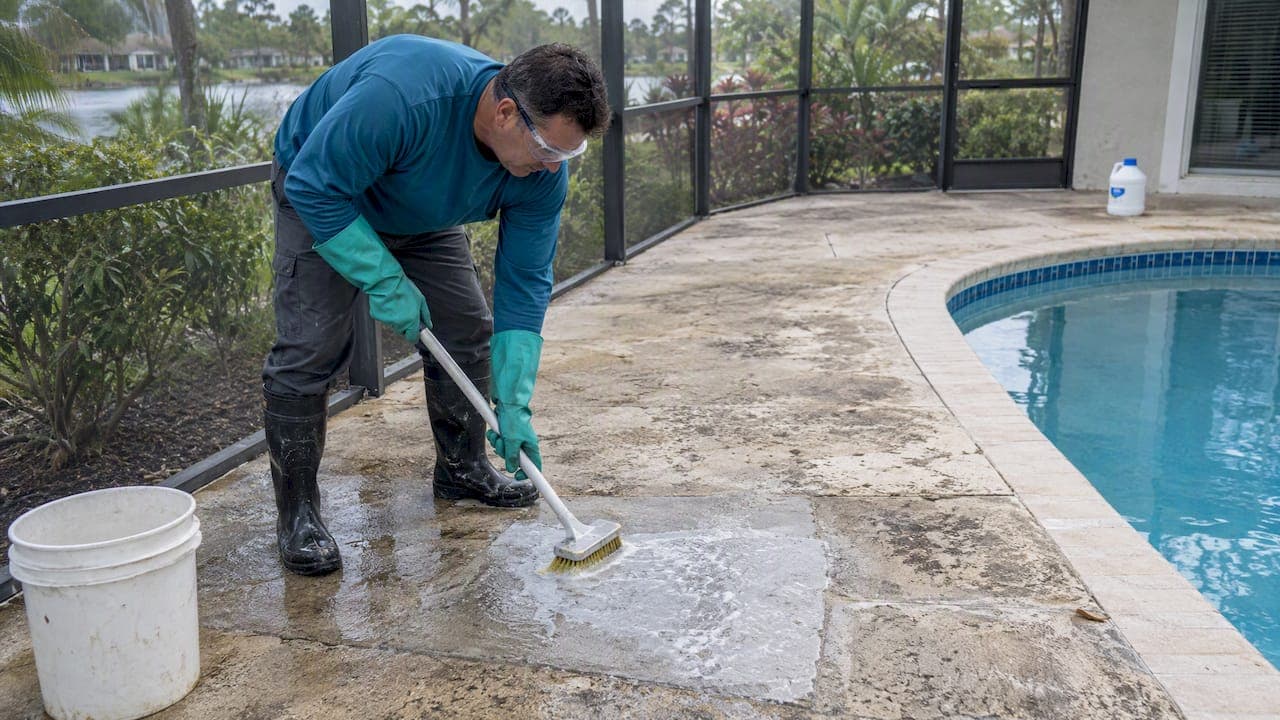
Acid etching a pool deck works only on bare, unsealed concrete that will take a water-based stain or coating, and it fails on cure-and-seal slabs or when a stronger mechanical profile is needed. The one rule that overrides everything else: never let acid touch pool chlorine or other pool chemicals, because mixing them releases toxic gas.
TL;DR:
- Because slab age and porosity affect acid strength, treat a one part acid to four parts water mixture only as a test patch starting point.
- For thicker modern coatings, diamond grinding or shot blasting creates a deeper profile more consistently; acid can over etch and delay moisture sensitive coatings.
- Keep chlorine products separate, wear splash goggles, boots, and gloves rated for acid, and always pour acid into water, never water into acid.
- After scrubbing, neutralize until fizzing stops, pressure rinse away milky residue, then allow generous drying time and follow the coating maker’s moisture guidance.
- Hire a professional for a large deck, unknown prior coatings, exposed metal, heavy scale, or work near pool water or a screen enclosure.
Table of Contents
- What does acid etching actually do to concrete?
- Should you grind or blast the deck instead of etching?
- How do you acid etch a pool deck safely, step by step?
- How do you neutralize the deck and know it is ready to coat?
- What can go wrong with acid etching, and when should you call a pro?
- Our view: where DIY ends and a pro earns the fee
- Pool deck staining and restoration from our team
- FAQ
- Sources
What does acid etching actually do to concrete?
Acid etching prepares the concrete surface for some coatings. It is effective on non-hardened, non-cure-and-seal concrete and suits non-reactive, water-based coatings, but it reduces the ability of reactive acid stains to take and cannot get through many protective sealers.
Two acids come up most often. Muriatic (hydrochloric) acid is the aggressive option. Phosphoric and citric acids are milder, though every acid still demands careful application, neutralization and a high-pressure rinse so the pH is balanced before anything goes on top.
We do not give one universal dilution, because the right strength depends on your slab's porosity and age. Some DIY guidance suggests a ratio of one part acid to four parts water, but treat that as a starting point for a test patch, not a recipe. Etch a small, hidden corner first and watch the fizzing, the texture and how water beads afterward. A bad result in a small test patch is easier to address than damage across the whole deck.

Should you grind or blast the deck instead of etching?
Often, yes. Many coating manufacturers have moved on: acid etching tends to produce a low surface profile suited to thin systems, can over-etch, and can introduce excess water into the slab. Thicker modern coatings need a deeper profile, which diamond grinding or shot-blasting delivers more consistently.
Acid still earns a place on very tight, hard-troweled finishes and small decorative jobs where a grinder cannot reach or would leave marks.
Before you reach for any of it, look at what is actually on the deck:
- Light mineral scale or white deposits may lift with diluted vinegar or a commercial cleaner.
- Heavy scale usually calls for professional treatment.
- A deck coated years ago with an unknown product is a poor candidate for guesswork.
The tradeoffs are control, safety, drying time and moisture. Mechanical prep creates dust but adds no water. Acid is quieter and cheaper but wets the slab, which can delay moisture-sensitive coatings. If mineral salts are the real problem, brush off the efflorescence first before deciding anything else.
How do you acid etch a pool deck safely, step by step?
Do this only on bare concrete that passed your test patch, on a calm, dry day with no rain forecast.
- Protect the pool. Cover the water with tarps, move furniture and plants, and plan where the runoff will go. Keep acid out of the pool.
- Suit up. Wear splash goggles, acid-resistant gloves and boots, and work with good ventilation. Keep children and pets away. Chemical burns from improper handling have been serious enough to require skin grafts.
- Degrease and wet the slab. Clean off oils, then dampen the surface so the acid works evenly.
- Mix correctly. Always pour acid into water, never water into acid, using the manufacturer's guidance and what your test patch proved.
- Apply in sections. Use a watering can or sprayer on a small area at a time.
- Scrub. Work a stiff broom over the area until the fizzing subsides.
- Neutralize and rinse. Move straight to the next section of this guide before the acid dries.
Pro Tip: Never store or open pool chlorine near your etching setup. Open one container at a time and keep chlorine products in a separate area, since mixing chlorine with acid is the classic way these accidents happen.
Work in sections no larger than you can scrub, neutralize and rinse before the acid dries on the surface. Dried acid residue is how streaks, blotches and later coating failures begin. If your slab was previously stained, you may also want our comparison of acid and water-based stains for Florida decks before choosing what goes on next.
How do you neutralize the deck and know it is ready to coat?
Neutralizing helps prepare the surface for further treatment. Mix baking soda and water, or use a manufacturer's neutralizer, and flush the surface until no fizz remains.
Then rinse hard. A weak garden-hose rinse leaves salts and residue behind. Use a high-flow pressure washer with enough PSI to pull the milky residue out of the pores, and keep the runoff away from the pool and planting beds. Dispose of rinse water according to your local rules rather than sending it down storm drains.

Drying is the part people rush. Concrete that looks dry on top can still hold moisture below, and etching adds water to the slab. Give it generous drying time, check the coating manufacturer's moisture guidance, and consider a surface pH test before applying anything moisture-sensitive. Installer guidance also stresses moisture and alkalinity testing where required. Patience here is cheaper than redoing the deck. If peeling is already a worry, our guide on why pool deck paint peels covers the usual causes.
What can go wrong with acid etching, and when should you call a pro?
The biggest danger is gas. Mixing chlorine products with acid can generate toxic chlorine gas, and improper handling of pool chemicals has caused inhalation injuries and burns that required hospitalization. Goggles, rubber gloves and proper footwear are mandatory, not optional.
The slab is at risk too. Over-etching raises porosity, and concrete can suffer chemical attack from acids, so a deck left under-rinsed or un-neutralized stays vulnerable. A more porous slab also tends to absorb more water and salts afterward.
Call a professional when:
- The area is large.
- You do not know what was applied to the deck before.
- Rebar or other metal is exposed.
- Scale is heavy.
- The work sits close to pool water or a screen enclosure that needs masking.
If any one of those fits, the savings from DIY rarely cover the repair bill.
Our view: where DIY ends and a pro earns the fee
Etching a small, bare, unsealed patio corner is a reasonable weekend task for a careful homeowner. A full pool deck is a different job, because over-etching, stray acid and poor masking all have consequences that show up a season later. A professional can help choose a suitable surface profile and protect the pool water and enclosure. For most decks we see, the smart move is to treat etching as a tool, not a goal, and let the coating system decide the prep.
— Michel
Pool deck staining and restoration from our team
If you would rather skip the acid, our pool deck staining service handles the whole job.

Here is what you get:
- An inspection of your slab and its existing coatings
- Surface prep, mechanical or chemical, matched to what your deck needs
- Careful masking that keeps product out of your pool water
- A durable finish backed by our warranty
You skip the chemical risk and the guesswork about drying and pH. See our project gallery and request an estimate today.
FAQ
How long does a concrete pool deck last?
A well-maintained concrete deck can last for decades, but the coating or stain on top wears out much sooner. Sun, pool chemicals and foot traffic mean most decks need refinishing on a cycle, and a quality masonry coating can run roughly seven to ten years when the joints are checked first.
What are the downsides of staining concrete?
Stain can fade, peel or blotch if the surface was poorly prepared, and reactive acid stains do not bond well to a slab that was acid washed. Water-based stains usually need resealing sooner, so plan on maintenance.
What do professionals use to clean concrete?
Professionals match the method to the problem. That can mean pressure washing and degreasers for dirt, mechanical grinding or shot-blasting for coating prep, and carefully controlled acid only where it fits the job.
What kind of acid do you use to acid wash a pool deck?
Muriatic (hydrochloric) acid is the common aggressive choice, and phosphoric or citric acid are milder options. Whichever you pick, test a small patch first, neutralize afterward and rinse thoroughly.