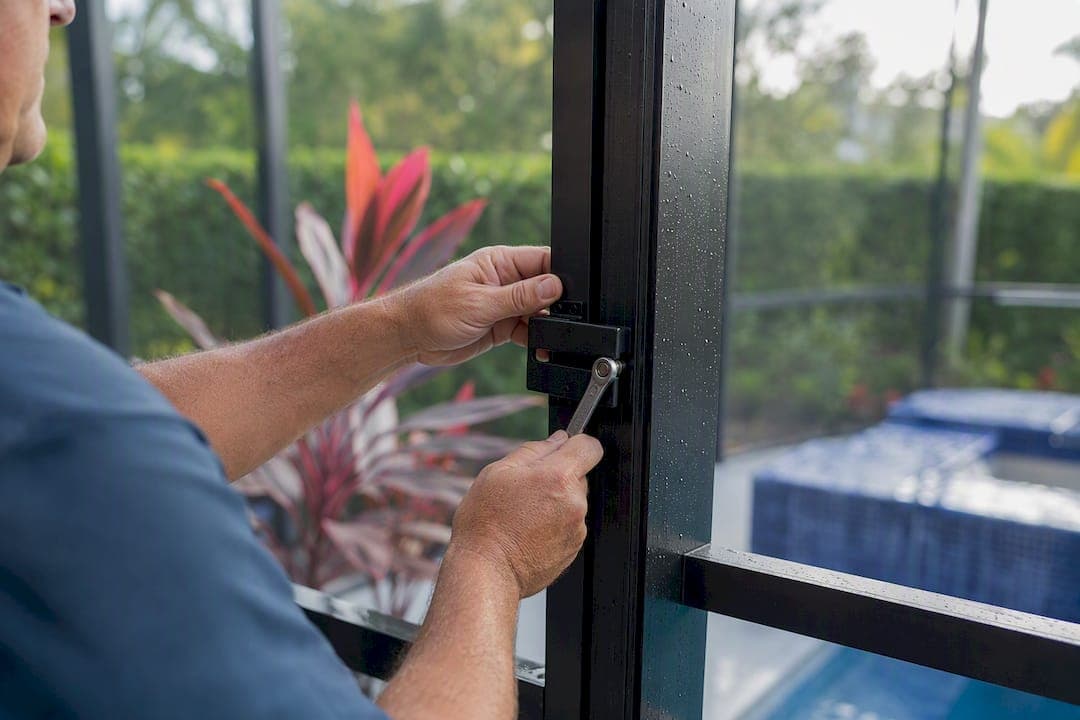
For most homeowners retrofitting an existing pool enclosure, a magnetic top-pull latch like the D&D MagnaLatch Series 3 or a push-to-close Quick Lock Latch gives you the best mix of child resistance and easy installation. If your gate frame or posts show real corrosion, a lockable stainless steel latch buys you more holding strength while you plan a bigger fix.
Before you buy anything, run three checks:
- Does the gate close and latch on its own from a full swing, every time?
- Is the gap between gate and post consistent, or does it widen and narrow as the gate moves?
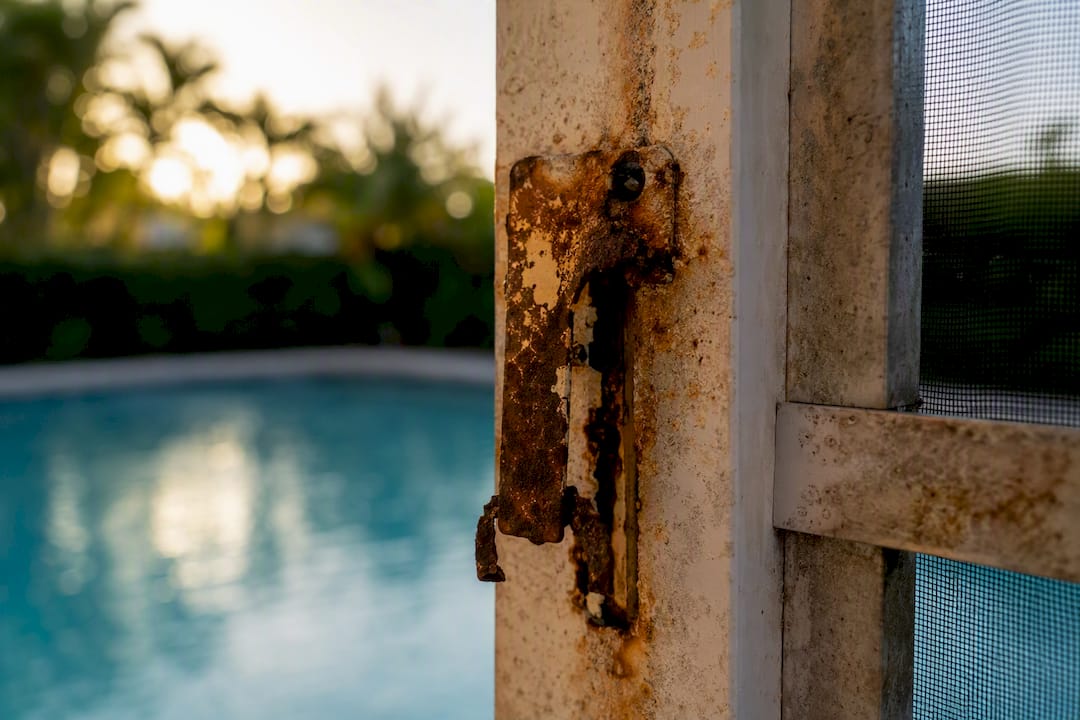
- Is the post, hinge, or frame rusted, cracked, or loose at the mounting points?
Pro Tip: If hinges sag or the post feels spongy when you push on it, stop. A new latch bolted to a failing frame will fail too, usually within a season.
Key Takeaways
Reliable pool gate security depends on matching latch hardware to gate condition, and no latch performs to spec on a corroded or misaligned frame.
| Point | Details |
|---|---|
| Match latch to gate condition | Magnetic top-pull latches need solid frames; damaged posts need restoration first. |
| Check gap tolerance before buying | Manufacturer gap specs determine whether a magnetic latch fully engages every time. |
| Confirm hinge tension separately | Hinge sag is the most common cause of repeat latch failure, not the latch itself. |
| Latches are one safety layer | Supervision, alarms, and barrier compliance still matter alongside hardware upgrades. |
| Restore before you re-latch | Mrpoolscreen repairs rusted fasteners and frame alignment so new latches hold long-term. |
Table of Contents
- Pool Enclosure Safety Latch Upgrades: Comparing the Top Options
- How Do You Choose the Right Latch for Your Gate?
- Installing and Testing Your New Latch Without Callbacks
- When Latch Hardware Alone Won't Fix the Problem
- Common Mistakes When Upgrading Pool Safety Latches
- What Do Current Pool Enclosure Safety Standards Require?
- What Homeowners Get Wrong About Latch Upgrades
- Considering a Repair Instead of Another Hardware Swap?
- Frequently Asked Questions
- Sources
Pool Enclosure Safety Latch Upgrades: Comparing the Top Options
Three latch styles dominate the retrofit market right now: magnetic top-pull, push-to-close clip systems, and lockable stainless designs. Each solves a slightly different problem, and picking the wrong one for your gate's condition is the single most common upgrade mistake homeowners make.
The D&D MagnaLatch Series 3 uses a lift-and-press magnetic mechanism that a toddler can't easily replicate, and it comes with a rekeyable lock cylinder for households that want a keyed option without buying new hardware later. It's rated for multi-million-cycle durability, meaning the internal spring and magnet assembly are built to outlast most gate frames themselves. All-Safe Pool Fence packages the MagnaLatch S3 with TruClose self-closing hinges as a matched kit, which solves the alignment problem before it starts, since hinge tension and latch height are calibrated together.
The Quick Lock Latch (sold as the All-Safe style kit) takes a different approach: a push/clip mechanism designed for fast retrofits on section fencing, with adjustable tension so you're not fighting a gate that swings too loose or too tight. It asks less of your tools and your patience. You won't get the same magnetic child-resistant action as the MagnaLatch, but for a straightforward gate in good shape, it closes the deal in under an hour.
For gates with sturdier frames or where you specifically want keyed lockability at a lower price point, a nylon/stainless steel locking pool safety latch sold through major retailers is worth a look. These retailer listings typically pair a nylon housing with stainless internals, giving you decent corrosion resistance without the price tag of a full MagnaLatch setup.
| Latch Option | Child-Safety Action | Install Difficulty | Materials / Corrosion Resistance | Lockable (Keyed) | Durability Claim | Compatibility / Adjustability |
|---|---|---|---|---|---|---|
| D&D MagnaLatch Series 3 | Magnetic lift-and-press | Moderate (bracket alignment matters) | Reinforced polymer, stainless hardware | Yes, rekeyable | 2M+ cycle tested | Best with matched self-closing hinges |
| Quick Lock Latch (All-Safe kit) | Push-to-close clip | Low, minimal tools | Nylon/composite body | No (standard kit) | Not independently published | Adjustable tension, fits most section fences |
| Nylon/Stainless locking latch (retailer) | Push-button with key lock | Low to moderate | Nylon housing, stainless internals | Yes | Not independently published | Fits standard gate widths, some adjustability |
| Quick Lock Latch Kit | Push-to-close clip | Low | Nylon/composite body | No | Not independently published | Includes mounting hardware for quick fit |
A few things worth flagging before you check out: warranty terms on the retailer-listed stainless latches vary by seller, so read the actual product page rather than assuming a standard term. D&D backs the MagnaLatch line with published cycle-testing data, which is more than most competitors disclose. If a listing doesn't mention testing standards or warranty length at all, treat that silence as information.
How Do You Choose the Right Latch for Your Gate?
Matching hardware to your actual gate condition matters more than chasing the highest-rated product online. Here's the sequence that keeps homeowners from buying twice.
- Measure your gate gap first. Manufacturer instructions for magnetic latches specify tight gap tolerances, and a gap outside spec is the top reason installations fail on the first try.
- Check mounting height against your local code. Most guides put the release mechanism roughly waist-high on an adult, out of easy reach for small children, but requirements vary by jurisdiction, so confirm with your local building department before drilling.
- Match materials to your climate. If you're near the coast or live somewhere humid, stainless steel fasteners and hardware resist pitting corrosion far longer than standard zinc-plated parts.
- Confirm self-closing hinge presence. A latch is only half the safety system. Without a hinge that reliably swings the gate shut, even the best latch never engages.
- Decide kit versus individual parts. A packaged kit typically bundles the latch, matched hinges, screws, and keys, while a standalone retailer listing gets you the latch alone, sometimes cheaper but requiring you to source compatible hinges separately.
Before ordering, walk your gate through Mrpoolscreen's pool enclosure safety inspection steps to catch frame or fastener issues that no latch swap will fix.
Pro Tip: Buy the kit, not just the latch, if your existing hinges are more than five years old. Mismatched tension between an old hinge and a new latch is a quiet, common cause of "it worked in the store" failures.
Installing and Testing Your New Latch Without Callbacks
Get the sequence right and most installation headaches disappear before they start.
- Confirm the self-closing hinge swings the gate fully shut from a 90-degree open position, unloaded, before you touch the latch.
- Mark your latch height and mounting points using the manufacturer's template rather than eyeballing it.
- Fit the strike plate or magnet bracket first, then the latch body, checking the gap against the printed tolerance.
- Test closure from at least three starting positions: fully open, half open, and a light push from a few inches out.
- Re-tighten every fastener after the first week; new hardware settles and screws can back out slightly under repeated use.
Watch for these failure signs during testing:
- Gate stops short of latching and swings back open, usually a hinge tension problem, not a latch defect.
- Latch clicks but doesn't fully seat, often a gap or bracket alignment issue.
- Visible rust streaks around screw heads within the first few months, a sign the fasteners weren't stainless to begin with.
If you've adjusted hinges twice and the gate still won't self-latch reliably, that's your signal to call a professional rather than keep swapping hardware. The self-closing hinge troubleshooting guidance from Waterson USA confirms hinge tension is the most frequent root cause of repeat latch failures, not the latch itself. For a broader hardware diagnosis approach, Window Hardware Store's guide to fixing latches that won't lock walks through the same alignment logic that applies to pool gates.
When Latch Hardware Alone Won't Fix the Problem
Some gates fail no matter which latch you install, and the tell is almost always in the frame, not the hardware. Rusted posts that flex under hand pressure, hinges that won't hold adjustment for more than a few weeks, or a screen enclosure frame that's visibly bowed all point to a structural issue a $60 latch can't solve.
Mrpoolscreen sees this pattern often on aging Central Florida enclosures:
- Fastener corrosion that's loosened the frame at multiple mounting points
- Posts weakened by years of sun and moisture exposure
- Screen panels and framing deteriorating alongside the hardware, not separately from it
Replacing corroded fasteners with stainless steel hardware and realigning the frame before installing new latch hardware addresses the actual cause of repeat failures, rather than treating the symptom over and over.
Mrpoolscreen's restoration work uses industrial-grade materials, including stainless steel fasteners, and typically costs meaningfully less than a full enclosure rebuild. When the frame is solid again, that same MagnaLatch or Quick Lock hardware holds its adjustment the way it's supposed to.
Common Mistakes When Upgrading Pool Safety Latches
The most expensive mistake is buying a premium latch for a gate that can't hold it properly. A $70 magnetic latch bolted to a warped or corroded frame will loosen within months, and you'll blame the hardware instead of the mounting surface.
The second mistake is skipping the gap measurement. Manufacturers publish specific tolerances for a reason. Install outside that range and the magnet or strike plate never fully engages, even though the latch feels like it's working when you test it by hand.
Homeowners also frequently mismatch hinges and latches, keeping decade-old hinges under a brand-new self-closing latch. The hinge tension was never designed for the new hardware's closing force, and it shows up as a gate that swings shut but doesn't latch.
Finally, plenty of people install once and never test again. Screws back out, mesh and frames shift seasonally, and a latch that worked perfectly at installation can drift out of alignment within a year. Mrpoolscreen's pool screen safety inspection checklist gives you a repeatable way to catch that drift before it becomes a real safety gap.
What Do Current Pool Enclosure Safety Standards Require?
Building codes for pool barriers generally require self-closing, self-latching gates with the release mechanism positioned out of easy reach for young children, though exact height requirements and gap tolerances vary by state and municipality. Florida's pool safety statutes, along with most model codes nationwide, treat the gate and latch as part of a required barrier system rather than optional hardware.
Manufacturer installation documents for magnetic latches specify their own gap and bracket tolerances that go beyond what code requires, because a latch that technically meets code height but sits outside the manufacturer's gap spec simply won't function reliably. Always confirm your local building department's current requirements before finalizing mounting height. Public safety guidance from poolSafely also stresses that hardware compliance is only one layer. Alarms, supervision, and general water-safety practices still matter regardless of how good your latch is.
What Homeowners Get Wrong About Latch Upgrades
Most advice on this topic treats the latch as the whole solution, and that's backwards. A latch is a small mechanical part bolted to a much larger structure, and the structure's condition decides whether that latch performs for one season or ten.
The conventional wisdom says "buy the best-rated latch." The better question is whether your gate frame and hinges can actually support that latch's rated performance. A MagnaLatch tested to millions of cycles means nothing if the post it's mounted to is rusting from the inside out.
What I'd prioritize first: walk the entire gate assembly before shopping for hardware. Push on the post. Check the hinges for play. If everything's solid, buy the magnetic top-pull latch and move on with confidence. If it isn't, spend the money on restoration first. A new latch on a failing frame is money spent twice.
Considering a Repair Instead of Another Hardware Swap?
If you've already replaced a latch once and the gate still won't hold, the problem probably isn't the hardware sitting in the box. Mrpoolscreen restores the frame, fasteners, and screen structure underneath so whatever latch you install actually stays adjusted.

Our restoration work replaces corroded fasteners with stainless steel hardware, straightens misaligned frames, adjusts hinge tension, and re-screens panels that have worn thin from sun exposure, all at a fraction of what a full enclosure rebuild costs. If you're seeing rust streaks around your gate posts, a frame that flexes when pushed, or a latch that won't hold adjustment past a few weeks, that's a structural signal worth addressing before you buy another piece of hardware.
Browse our project gallery to see real restoration results, or visit our pool screen restoration page to request a quote for your enclosure.
Frequently Asked Questions
Is the D&D MagnaLatch Series 3 worth the extra cost over a basic latch?
For most gates in good structural condition, yes. Its magnetic child-resistant action and multi-million-cycle testing mean it outlasts cheaper mechanical latches, and the rekeyable cylinder saves you from replacing hardware if you need a new key later.
How high should a pool gate latch be mounted?
Most guidance puts the release mechanism out of easy reach of small children, generally in the mid-to-upper range of an adult's reach, but exact height requirements vary by local code. Confirm the specific figure with your building department before installing.
Can I install a Quick Lock Latch myself?
Yes, it's designed as a low-tool retrofit for section fences with adjustable tension settings, making it one of the more approachable DIY options if your gate frame and hinges are already in good shape.
What's the most common reason a new latch stops working after a few months?
Hinge tension loss or gate misalignment, not the latch itself. Verifying and adjusting your self-closing hinge before or during a latch upgrade prevents most repeat failures.
When should I call a professional instead of replacing the latch myself?
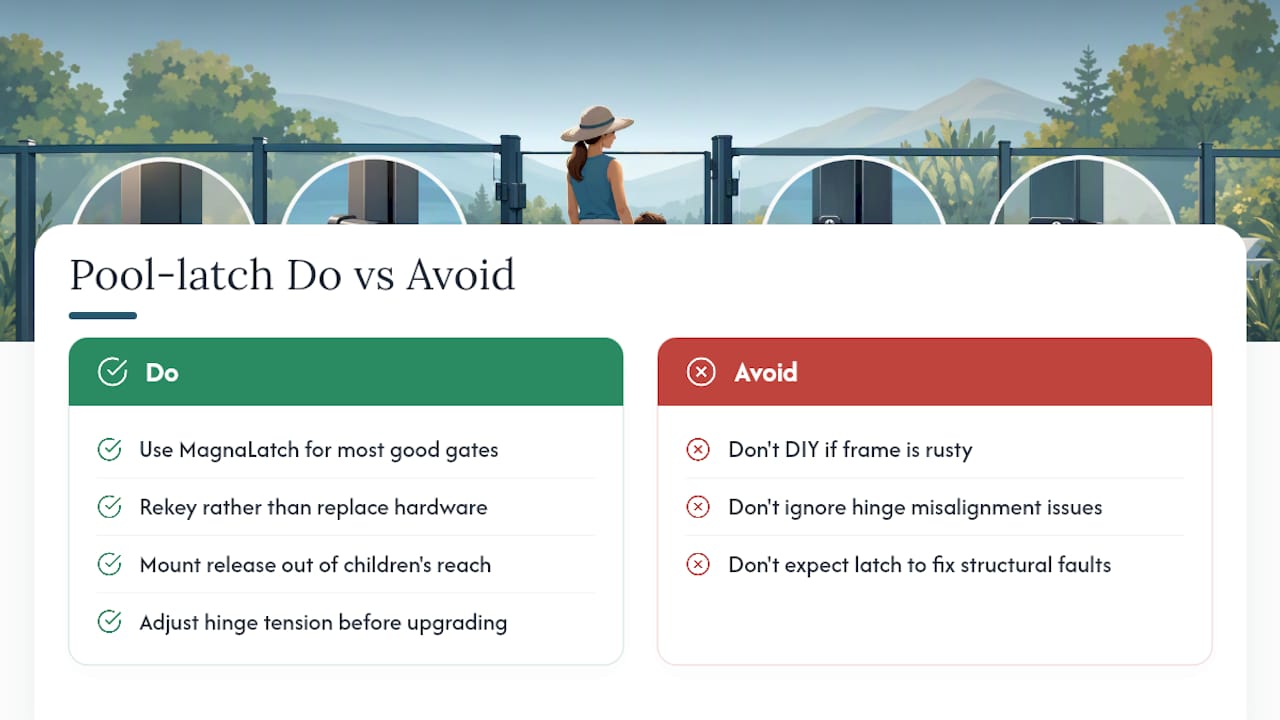
If you've adjusted the hinge and confirmed the gap is within spec but the gate still won't self-latch, or if you see rust, cracking, or looseness at the frame or posts, that points to a structural issue a new latch can't fix on its own.
Sources
- D&D Technologies — MagnaLatch Series 3 (Locksmith Ledger product page)
- How to install a D&D MagnaLatch Series 3 top pull - All-Safe Pool Fence
- Self-closing hinge solutions (Waterson USA)
- poolSafely (U.S. pool safety public resource)