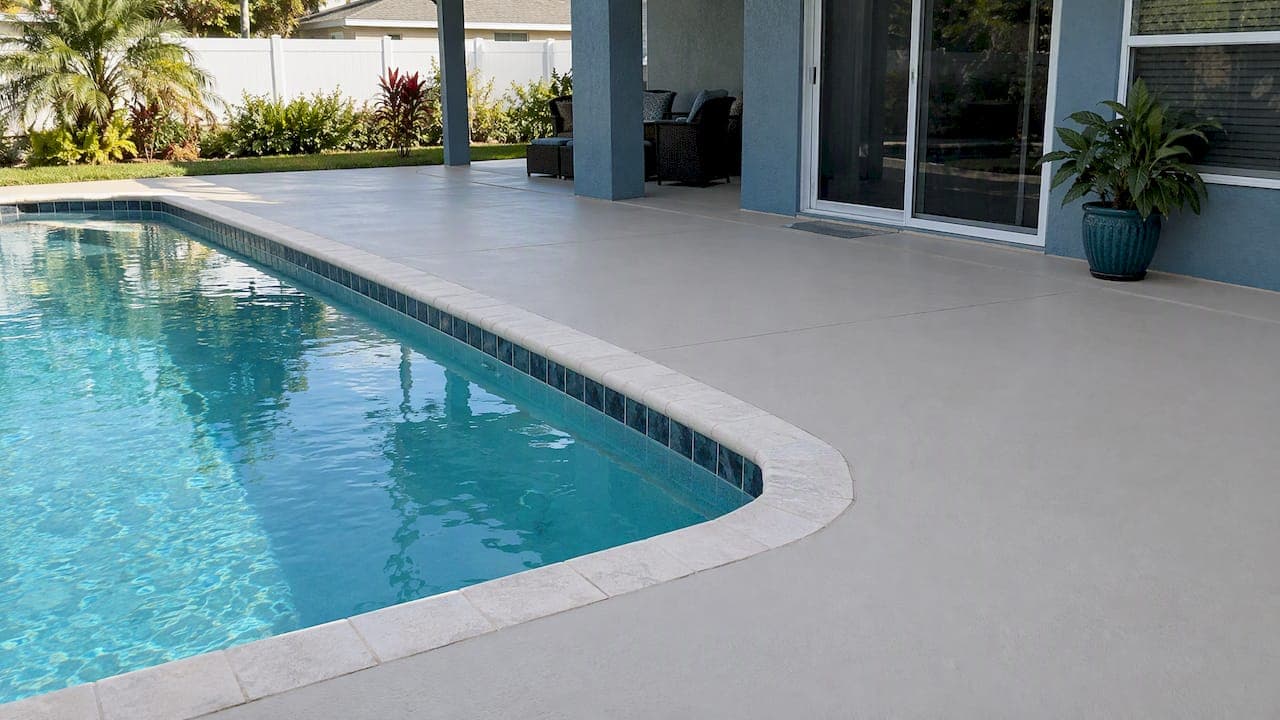
Plan your repaint for late spring or early fall, when air temperatures sit between 50°F and 85°F and humidity stays moderate. Expect to wait at least 24 to 48 hours before light foot traffic, longer before furniture returns, and several days for a full cure, depending on the coating. Read the product label first, and test the slab for moisture before any paint goes on.
TL;DR:
- Paint in the morning or late afternoon, avoid midday sun and wind, and require at least 48 rain free hours after the final coat.
- Measure the slab, not just the air: pause near 90°F surface temperature or above 80% to 85% humidity, and follow the product label when limits differ.
- Tape clear plastic to several slab areas for two hours; condensation means wait, while some overlay systems require moisture readings of 5.0% or less.
- Typical jobs take five to ten days; a three to five day schedule suits only small, sound decks with fast drying coatings and steady weather.
- Keep furniture off for 48 to 72 hours or longer, lift rather than drag it, and wait for the label’s full cure time before constant water exposure.
Table of Contents
- When are the best seasons and days to repaint a pool deck?
- What temperature and humidity limits should you check before starting?
- How do you prepare the surface, and how long does it take?
- Which coating types dry fastest, and which cure longest?
- What does a realistic pool deck painting timeline look like?
- When can you walk on it, move furniture back, or refill the pool?
- How often should you repaint, and what maintenance helps in between?
- Why does scheduling matter more than the paint brand?
- How can we handle the timing, prep, and curing for you?
- FAQ
- Sources
When are the best seasons and days to repaint a pool deck?
Late spring and early fall tend to win because the weather is milder, humidity is lower, and forecasts hold up for several days in a row. Summer heat can push a concrete slab past the temperature limit on the can, and winter nights can drop low enough to stall curing.
Within those seasons, pick your days carefully:
- Start in the morning or late afternoon, and avoid painting in direct midday sun.
- Skip windy days, which blow dust into wet paint and make coatings dry unevenly.
- Avoid any night forecast under 50°F in the first day or two after you paint.
- Look for no rain forecast for at least 48 hours after your final coat. Some products need longer, so check the label.
- Build a multi-day window rather than hunting for one perfect day, because prep, painting, and curing each need their own dry stretch.
Pro Tip: Check forecasts from multiple sources the evening before you start. If they show rain or a cold night inside your window, move the job to a more suitable day.
If you are also weighing an enclosure project, our guide on weather for painting a pool cage uses the same logic and can help you line up both jobs.
What temperature and humidity limits should you check before starting?
Manufacturers commonly recommend applying pool deck coatings in an ambient range of about 50°F to 85°F. The surface itself can run hotter than the air, and many manufacturers set a maximum substrate temperature around 85°F to 90°F.
You do not need special training to check these numbers. Use these measurements before every coat:
- Air temperature: a simple outdoor thermometer in the shade near the deck.
- Surface temperature: an infrared thermometer pointed at the slab, taken in the sun and again in the shade. Pause if the surface is near or above 90°F.
- Humidity: a basic hygrometer reading, or your weather app's local humidity. Over 80% to 85%, wait.
- Overnight low: check that the night after painting stays at or above 50°F.
Technical sheets for coatings often list application temperatures from about 40°F to 85°F, and they warn that low temperatures or high humidity stretch out drying times. When your label and a general guide disagree, the label wins.
If the readings sit right at a limit, treat that as a no. A coat that cures badly can peel within a season, and our write-up on why pool deck paint peels shows how often poor conditions are the root cause.
How do you prepare the surface, and how long does it take?

Prep is the longest and most important phase of the whole job. Practitioner timelines put surface preparation at one to three days, coating application at one to two days, and curing at one to seven days, for a typical total of five to ten days depending on the coating.
Work through the steps in this order:
- Clear and sweep. Remove furniture, planters, and loose debris, then blow or sweep the slab clean.
- Wash and degrease. Pressure-wash the deck, using a degreaser or deck cleaner on oil, sunscreen, and algae stains. Let the slab dry fully, often about 24 hours.
- Strip loose material. Scrape or sand away peeling paint and chalky residue. Allow extra time for this step on a large or badly worn deck.
- Repair cracks. Fill cracks and chips with a patching product suited to your coating, and respect its cure time before painting. We cover the waiting period in our guide to fixing deck cracks before painting.
- Test for moisture. Tape a clear plastic sheet to the slab and check it after two hours. Condensation underneath means the concrete is still too damp. Industry references describe this plastic-sheet method, ASTM D4263, and moisture meters; some overlay systems call for substrate moisture of 5.0% or less. Delay painting if the test fails.
- Mask and protect. Cover pool tile, coping, drains, and nearby landscaping so overspray and drips stay off them.
Pro Tip: Run the plastic-sheet test in more than one spot, including a shaded corner and a low spot near a drain. Damp areas often hide where the sun rarely reaches.
Which coating types dry fastest, and which cure longest?
The coating you pick sets your downtime. Several coating families are used on pool decks, and each involves trade-offs between speed and durability.
- Water-based acrylic: Often the most forgiving to apply. Light foot traffic is commonly possible in about 24 to 48 hours, though high heat and humidity can slow it. It suits homeowners who want a shorter wait and an easier recoat later.
- Epoxy: Builds a tough, durable film, but it can take several days to reach full cure. It is less forgiving if the weather turns, since a bad day can compromise a coat you cannot easily redo.
- Polyurethane: Frequently used as a protective topcoat over other systems. Cure windows vary by product, so check the label before allowing heavy use.
Sheet-level numbers vary by product. One set of technical notes lists drying in one to two hours, recoat after 4 to 24 hours, and foot traffic after 4 to 6 hours, with wheel traffic after 24 to 48 hours. Treat those as an example of how much products differ, not as a promise for yours.
Coverage rate, film thickness, and how porous your concrete is all shift cure and recoat timing. A thick coat on a cool, damp slab can stay soft long after the label's stated time. For masonry surfaces with joints, read our guide to masonry pool deck coatings before choosing a product, and always follow the instructions printed on your can.
What does a realistic pool deck painting timeline look like?
Here are two schedules you can copy. Both assume fair weather and a slab that passes the moisture test.
Standard plan, with timing dependent on conditions
- Day 1: Clear, wash, degrease, and let the slab dry.
- Day 2: Strip loose paint, repair cracks, and apply patching compound.
- Day 3: Let patches cure, run the moisture test, and mask the tile and coping.
- Day 4: Apply primer or the first coat in the morning window.
- Day 5: Apply the second coat once the label's recoat window opens.
- Days 6 to 8: Keep everyone off the deck while the coating cures, then inspect for missed spots.
- Days 9 to 10: Return furniture only if the product's cure guidance allows it.
This lines up with the five to ten day total that practitioners report, and cracks usually deserve a wait of several days before paint.
Accelerated plan, about 3 to 5 days
- Day 1: Wash, degrease, and repair in the same day on a small deck in good shape.
- Day 2: Mask, test moisture, and apply the first coat.
- Day 3: Apply the second coat once the recoat window opens.
- Days 4 to 5: Let it cure before any foot traffic.
This works only for small jobs, a sound slab, a fast-drying coating, and steady weather. Never shorten the dry times printed on the label.
When to pause
- Rain in the forecast inside the cure window: stop and reschedule the coat.
- Overnight low under 50°F: hold the next coat until temperatures recover.
- Surface hotter than the label allows: wait for the shade or a cooler day.
- Humidity above 80% to 85%: delay, since curing can stall.
- A coat that is still tacky: wait, then check again before recoating.
If a storm hits mid-job, do not rush to cover the damage with extra paint. Let the surface dry, inspect it, and recoat only what the label allows.
When can you walk on it, move furniture back, or refill the pool?
Treat these as typical minimums and let your product label overrule them:
- Light foot traffic: about 24 to 48 hours.
- Furniture and heavy traffic: 48 to 72 hours or more.
- Wheeled traffic: often longer, since carts and loaded chairs press hard on a young film. Some technical notes list 24 to 48 hours as a starting point.
- Constant water exposure and splash zones: wait for the full cure the manufacturer states, which for some products runs several days.
Furniture timing matters more than most people expect. Heavy metal legs on a coating that feels dry can leave marks you only notice weeks later.
Pro Tip: Lift furniture straight onto the deck instead of dragging it, and put protective pads under metal legs. Practitioners warn that dragging causes micro-tears, which later show up as localized peeling.

If you have a screen enclosure around the pool, the same patience applies to it. Our guide on pool cage paint drying times explains the difference between dry and cured.
How often should you repaint, and what maintenance helps in between?
Plan on a full repaint about every three to five years, sooner on decks with heavy foot traffic, strong sun exposure, or frequent chemical splash. A simple routine helps you stretch that interval:
- Inspect the deck each season for chips, fading, and early peeling.
- Touch up small chips right away, before water gets under the film.
- Rinse sunscreen, oils, and pool chemicals off the surface regularly.
- Keep furniture pads in place and avoid dragging anything heavy.
- Call a pro when peeling spreads, cracks keep returning, or large areas look chalky, since patching rarely fixes those.
Catching a small flaw early usually costs a weekend. Ignoring it can mean stripping the whole slab.
Why does scheduling matter more than the paint brand?
After years around pool decks, my view is plain: the weather window and the prep decide how long a paint job lasts far more than the name on the can. A premium coating applied to a damp, dirty slab will fail before a basic one applied to a clean, dry surface. Most homeowners underestimate the waiting. Be conservative, give every coat its full-time, and read the label before you trust any general schedule, including this one. Pros earn their fee mostly by refusing to rush.
— Michel
How can we handle the timing, prep, and curing for you?

If you would rather not juggle forecasts and recoat windows, we handle it. Our pool deck staining service covers careful prep, masking, industrial-grade coatings, and cure-sensitive timing, and our work is backed by a warranty. Check the warranty terms for details. We also restore the enclosure around your pool through our pool screen restoration work, so deck and cage can be sequenced together. Browse our project gallery to see finished decks, then reach out through our site to book an estimate.
FAQ
What is the best time of year to repaint a pool deck?
Late spring and early fall are usually best, thanks to milder temperatures and lower humidity. Aim for ambient temperatures between 50°F and 85°F, as manufacturers commonly recommend.
How long does pool deck paint have to dry before you can use it?
Plan on at least 24 to 48 hours for light foot traffic, and 48 to 72 hours or more for furniture. Full cure can take several days, so follow your product label.
How long does a pool deck repainting project take?
A typical project takes about five to ten days when you count prep, coating, and cure. Small jobs in ideal weather can be shorter, but you should never skip the label's dry times.
How often should you repaint a pool deck?
Many homeowners repaint about every three to five years. High-use or heavily exposed decks may need touch-ups sooner.
Sources
- A Guide to Painting Pools and Decks | AQUA Magazine
- APPENDIX C VAPOR BARRIER TECHNICAL SHEETS
- Craftingwithconcrete
- How To Paint A Pool Deck: Step-by-Step for Lasting Results