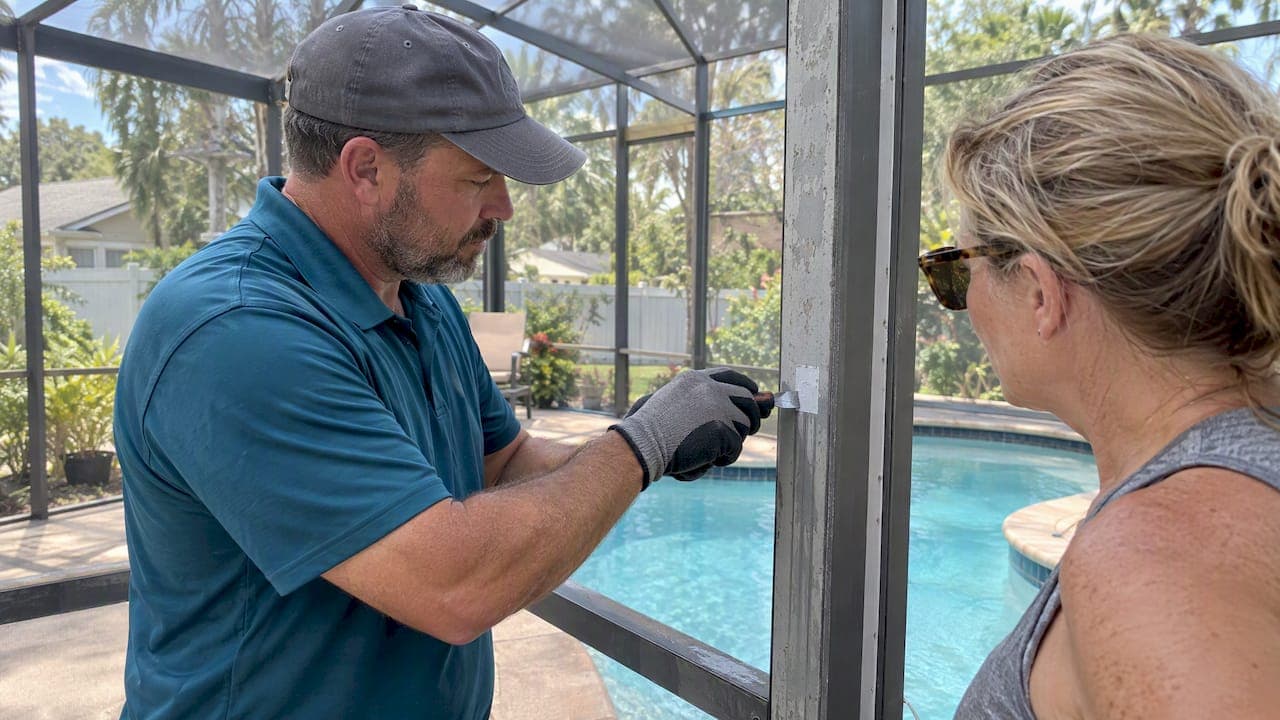
Yes, in most cases a faded aluminum pool cage can be restored. Proper surface preparation, fastener replacement, and a tested coating system will renew the appearance and extend the structure's service life. Restoration is typically the cost-effective choice when the frame is straight and sound. Full replacement makes more sense only when the frame is bent, heavily corroded, or fails current wind-code requirements.
TL;DR:
- Restoration is cost-effective when the frame is straight, sound, and only surface-faded, whereas replacement is necessary for bent or heavily corroded frames.
- Proper surface prep, a thorough adhesion test patch, and compatible topcoats are crucial to prevent early paint failure on aluminum enclosures.
- Re-screening costs range from $1,200 to $3,800 for a typical 1,200-square-foot cage, while full replacement can exceed $14,000, depending on repairs needed.
- Protecting pool chemicals and surrounding surfaces during restoration is essential to prevent corrosion and chemical reactions that could damage the enclosure.
- Regular maintenance, like rinsing residue and replacing rusted fasteners, can extend the lifespan of a restored cage well beyond 7 to 12 years for the mesh.
Table of Contents
- Quick decision checklist: repair vs rescreen vs restore vs replace
- Contractor-grade step-by-step restoration process
- Coating choices, compatibility, and what to require in a specification
- Realistic cost ranges and timeline to compare quotes
- Safety, contamination, and pool-chemical handling during restoration
- Practical maintenance to extend the life of a restored finish
- Client case studies and contractor question checklist
- What actually matters when you restore a faded cage
- Mr. Pool Screen: how we approach restoration and how to get a quote
- Sources
- FAQ
Quick decision checklist: repair vs rescreen vs restore vs replace
Before calling anyone, walk the enclosure and check four things: frame straightness, pitting or powdery corrosion on the aluminum, hub and joint corrosion, and whether the doors still align and latch properly. These checks tell you which category your project falls into.
- Repair when the issue is isolated, like a bent screen door or a single damaged panel.
- Rescreen when the mesh has torn or clouded but the frame itself is straight and solid.
- Restore when fading, chalking, or surface rust cover the frame but the structure is sound.
- Replace when you find structural bending, deep pitting through the metal, or code noncompliance on wind load.
Pro Tip: Press a thumb against a chalky or pitted spot. If it leaves white residue or crumbles, that section needs more than a quick wash before anything gets painted.
Contractor-grade step-by-step restoration process
A good restoration follows a sequence, and skipping steps is why repainted cages fail early. Surface-prep gaps, not the aluminum itself, are the most common reason a fresh coat peels within a season or two.
- Document the existing condition with photos, then remove screen panels if the project includes a full repaint, and cover the pool and deck to protect them from drips and overspray.
- Clean the aluminum with solvent cleaning following SSPC-SP1, then pressure wash with a mild detergent to lift chalky oxidation off the surface.
- Strip any loose or unsound existing coating. If the cage was painted before a certain era, treat sanding and scraping as a potential lead-dust hazard and contain the work with plastic sheeting and a respirator.
- Scuff the surface abrasively, or use controlled blasting where the substrate allows it, then run a 2 to 3 square foot adhesion test patch before committing to the whole structure.
- Swap out corroded screws and hardware for stainless steel or Nylotech fasteners, and straighten or replace any bent framing members.
- Mask adjacent surfaces, then apply primer and topcoats according to the product's own datasheet, respecting recoat and full-cure times rather than a calendar guess.
That adhesion test patch is the step most homeowners skip and most contractors should insist on. It tells you in a day or two whether the new coating will bond, instead of finding out in six months when it starts flaking.
Pro Tip: Ask for photos of the test patch before and after a scrape test. A contractor who skips this step is guessing, not testing.
Readers dealing with peeling or bubbling paint on an older cage can find more detail on why paint fails on aluminum enclosures and the repaint sequence in full in this repaint walkthrough.
Coating choices, compatibility, and what to require in a specification
Most residential cages get a waterborne acrylic topcoat, which balances cost, flexibility, and ease of recoating. Polyurethane and epoxy-polyurethane systems show up on jobs facing heavier exposure, like coastal properties or screens near a constantly chlorinated pool.
- Compatibility matters more than brand: an incompatible topcoat over old paint can lift the whole system, so a test patch and a compatibility check against the existing finish come first.
- If the old coating is badly weathered or unknown, complete removal is often safer than trying to layer something new over it.
- Exposure drives the choice: salt air, pool chemical splash, and UV load all push toward a tougher undercoat and topcoat pairing.
- Ask any contractor for the product's data sheet and the specific prep standard they are following, whether that is SSPC-SP1 solvent cleaning or an ASTM adhesion method.
Specialized ceramer and ceramic-polymer coatings have shown promise in accelerated corrosion testing on aluminum alloys, but these remain niche products that still depend on correct prep underneath them.
Realistic cost ranges and timeline to compare quotes
Pricing depends heavily on what the frame actually needs, not just square footage. For a roughly 1,200 square foot cage, re-screening alone typically runs $1,200 to $3,800, while full replacement runs $14,000 to $35,000 or more.
- Full replacement starts to compete with restoration when a frame needs extensive structural repair on top of a repaint and rescreen.
- Timelines stretch when wind-code documentation or permit review is required, so ask for a written schedule before signing.
- Get an itemized quote that separates prep, fastener replacement, coating, and screen costs so you can see exactly what you're paying for.
More on how coating lifespan factors into these numbers is covered in this breakdown of pool cage paint longevity.
Safety, contamination, and pool-chemical handling during restoration
Sanding or scraping an older painted frame can raise lead-dust concerns, and that risk calls for containment, HEPA vacuum cleanup, and a properly fitted respirator rather than an open hose-down.
Pool chemicals are oxidizers and corrosives. The EPA's guidance on swimming pool chemical storage warns against washing concentrated chemicals onto metal, since wetting stored chemicals can trigger dangerous reactions and chlorine residue accelerates corrosion on aluminum.
- Keep pool chemicals dry and stored away from the frame during any restoration work.
- Ask the contractor for a written containment and disposal plan before sanding starts.
- Require protection for pool equipment, screens, and decking from paint overspray and chemical runoff.
- Insist on the adhesion test patch before the crew touches the rest of the structure.
For more on how chemical and metal interactions cause long-term damage, see this guide to galvanic corrosion on pool enclosures, and for broader sanitation choices that affect corrosion risk, this overview of pool sanitation systems is worth a look.
Practical maintenance to extend the life of a restored finish
A restored cage still needs upkeep, and most of it takes minutes a few times a year.
- Rinse chemical residue off the frame periodically and check fasteners annually, replacing any screws showing early rust right away.
- Watch for sprinkler heads or salt spray hitting the frame directly, since constant wetting speeds up corrosion in that one spot.
- Spot-clean chalking with mild soap rather than harsh solvents, which can dull or strip the topcoat.
- Plan on replacing worn screen material roughly every 7 to 12 years, even if the frame coating still looks good.
Pro Tip: Keep photos and dates of every maintenance task. That record is what a contractor will ask for if you ever need to make a warranty claim.
Outdoor stone and stainless accents near the pool deck face similar exposure, and protecting those surfaces follows the same logic as protecting the cage frame.
Client case studies and contractor question checklist
A reliable restoration process builds around industrial-grade water-based acrylic coatings, stainless steel fasteners, and careful masking to prevent overspray or staining on decks and pool surfaces. Its project gallery shows before-and-after results from completed jobs.
Whoever you hire, bring a short list of questions to the estimate:
- What surface-prep standard are you following, and will you document the adhesion test patch result?
- What fastener material are you using, and is it stainless steel or Nylotech?
- Can you provide the coating's product data sheet and expected recoat times?
- What warranty do you offer on the finished work, and what does it cover?
What actually matters when you restore a faded cage
The paint brand gets most of the attention in homeowner conversations, and it deserves the least. A premium topcoat over a poorly cleaned, poorly scuffed frame will fail just as fast as a cheap one, because adhesion is a system outcome built from cleaning, oxidation removal, and test patches, not a property of the can.

The adhesion test patch is the detail most quotes leave out, and it is the cheapest insurance in the entire project. A contractor willing to spend a day testing a 2 to 3 square foot section before committing to the whole cage is telling you something about how they'll handle the rest of the job.
Replacement gets oversold too. Full rebuilds make sense when a frame is bent or badly pitted, but a sound frame with chalky paint and a few rusted screws is a restoration candidate, not a demolition candidate. The homeowners who get the best results are the ones who ask for documentation, not brand names: what prep standard, what test result, what fastener, what warranty.
— Michel
Mr. Pool Screen: how we approach restoration and how to get a quote
If your cage is faded but structurally sound, restoring it costs a fraction of tearing it down and rebuilding. Mr. Pool Screen restores pool enclosures using industrial-grade water-based acrylic coatings and stainless steel fasteners, with masking and prep designed to keep overspray and stains off the surrounding pool and deck.
Our pool screen restoration service covers repainting, fastener replacement, and rescreening in one project, backed by a three-year warranty. We also handle pool deck staining for concrete, wood, masonry, and stone surfaces around the enclosure.
- Pool screen restoration: coating, fastener replacement, and rescreening
- Pool deck staining: refinishing for concrete, wood, masonry, and stone
| What you get | Why it matters |
|---|---|
| Industrial-grade acrylic coatings | Built for outdoor exposure around pools |
| Stainless steel or Nylotech fasteners | Resists the corrosion that loosens screens |
| Careful masking and prep | Protects decks and pool surfaces from overspray |
| Three-year warranty | Covers the finished restoration work |
Request an estimate, ask us for the adhesion test documentation on your project, and browse our project gallery to see completed jobs before you decide.
Sources
- Pre-Finished Metal Building Repaint Surface Prep (paint specification)
- Chemical Safety Alert: Safe Storage and Handling of Swimming Pool Chemicals (March 2001)
- Florida pool cage replacement cost (2026): guide
FAQ
How to clean pool cage aluminum?
Start with a pressure wash using a mild detergent to remove dirt and chalky oxidation, then follow with a solvent cleaning pass per SSPC-SP1 guidance before any painting. Avoid harsh abrasives on finished coatings, and rinse off any chemical residue promptly to limit corrosion.
How much does it cost to restore a pool cage?
Costs depend on scope, with re-screening alone typically running $1,200 to $3,800 for a roughly 1,200 square foot cage, and frame repairs adding several thousand dollars when needed. A full restoration that combines repainting, fastener replacement, and rescreening costs more than rescreening alone but considerably less than a full rebuild. Mr. Pool Screen provides estimates after assessing the specific frame, since pricing is not published upfront.
How long do pool screen enclosures last?
Screen mesh commonly needs replacement every 7 to 12 years depending on sun and weather exposure, while a well-maintained aluminum frame can last much longer with periodic recoating. Coastal exposure and heavy pool chemical splash tend to shorten that window.
What can I use to clean my pool cage?
A mild detergent and water with a pressure washer handles routine dirt and chalking, and solvent cleaning per SSPC-SP1 is the right step before repainting. Avoid letting concentrated pool chemicals splash or drip onto the frame, since chlorine residue accelerates metal corrosion.