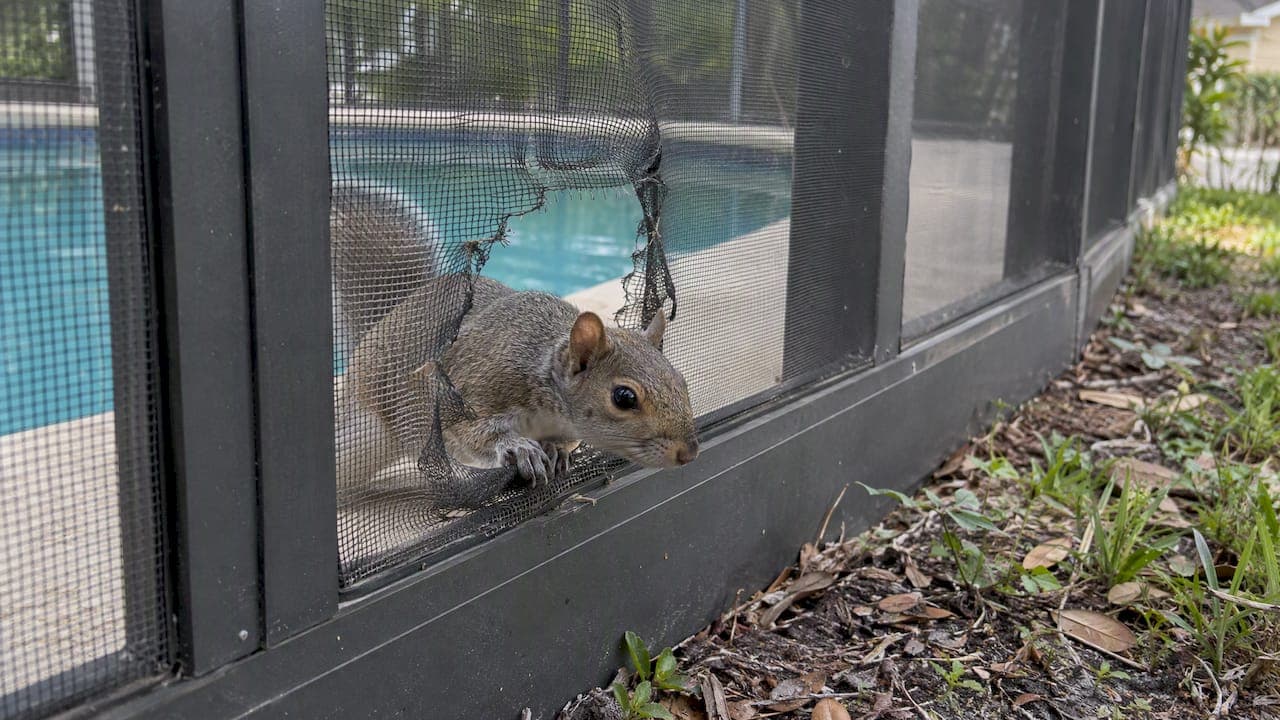
Squirrels chew pool screens mainly to file down their incisors, which grow continuously, and to reach food or nesting spots behind the mesh. The immediate fix is simple: check for active animals, avoid sealing anything shut if babies might be inside, then block the access point and patch visible holes. For a fix that lasts, replace weak mesh with galvanized hardware cloth, stainless steel mesh, or professional restoration.
TL;DR:
- Squirrels can enter through tiny openings and enlarge them within days, so inspect seams, corners, door edges, and screen to frame joints first.
- Choose galvanized hardware cloth or stainless steel mesh with quarter inch to half inch openings, overlapping the frame by at least an inch and using washered screws.
- Ultrasonic devices and most chemical repellents lack strong evidence for lasting results; motion activated sprinklers may supplement physical barriers but should not replace them.
- Call a professional when breaches recur, rust affects several fasteners, multiple panels sag, or the frame weakens; isolated holes in sound frames suit do it yourself patches.
- Recheck repairs after 30 days, then inspect the perimeter every 4–6 weeks and after major storms to catch loosened fasteners or fresh chew marks.
Table of Contents
- Why squirrels gnaw on pool screens
- How squirrels get in and make the hole bigger
- Day-one prevention checklist that actually works
- Picking screen material that actually holds up
- When to patch it yourself and when to call a pro
- How professional restoration breaks the repeat-chewing cycle
- What repair and restoration typically cost in time and money
- Maintenance habits that keep squirrels from coming back
- Keeping squirrels out for good after a repair
- A practical, humane take on protecting your enclosure
- If you'd rather hand this off: restoration that holds up
- FAQ
- Sources
Why squirrels gnaw on pool screens
Squirrels chew wood, plastic, and screen mesh because their incisors grow continuously throughout their lives, and gnawing is how they keep them worn down to a manageable length, according to the Alabama Cooperative Extension System. That drive exists whether or not there's anything worth eating nearby, which is why a pool screen with no food source attached can still take damage.
Food and shelter add a second layer of motivation. A bird feeder near the enclosure, fruit trees dropping ripe fruit onto the deck, or a dry, sheltered gap under the eaves all pull squirrels closer to the screen and give them a reason to keep coming back. Once a squirrel finds a weak spot, it tends to reuse that same route, following scent cues left by its own prior visits, which can cause repeated damage.
A few patterns show up again and again in backyards dealing with this problem:
- Chewing often clusters near seams, corners, and anywhere the screen meets the frame.
- Activity tends to pick up in spring and fall, when squirrels are nesting or stocking up for winter.
- Areas with higher squirrel populations see more repeat visits to the same structure.
Pro Tip: If you've spotted a bird feeder or fruit tree within a few yards of your enclosure, moving it farther away often cuts down on visits before you even touch the screen.
How squirrels get in and make the hole bigger
Squirrels rarely need a large gap to start a problem. According to UC IPM, a squirrel can work its way through a very small opening and then widen it through repeated gnawing, turning a small flaw into a much larger hole within days.
The weak points worth checking first, in order of how often they fail:
- Seams and overlaps, where two pieces of screen meet and the edge isn't fully secured.
- Door edges and corners, where foot traffic and weather stress the frame over time.
- Roof and gable attachments, especially on older enclosures where fasteners have loosened or corroded.
- Spots where the screen meets the frame, which is the single most common entry zone because the mesh has less support there.
Before you seal any hole for good, confirm nothing is living inside. Push a loose wad of newspaper into the opening. If it gets pushed back out from the inside, an animal is still in there, and you should hold off on a permanent repair, per UC IPM's guidance. This is also why reinforcing the whole perimeter of a weak spot matters more than slapping a patch over the visible hole: squirrels return to familiar breach sites, and a patch with no reinforced edge gives them something to grab and restart.
Day-one prevention checklist that actually works
You don't need to wait for a full repair to start reducing chewing activity. A few changes made the same day can cut down on visits significantly.
Start with the landscaping. Squirrels use overhanging branches and utility lines as launch points onto a pool cage, according to Maryland's Department of Natural Resources, so trimming back branches that come within a few feet of the enclosure roof removes an easy jump line. Clear away fallen fruit, secure compost bins, and move bird feeders well away from the structure.

Next, reinforce the vulnerable spots directly. Where airflow allows it, install galvanized hardware cloth or stainless steel mesh with openings between about a quarter inch and half an inch, which resists chewing far better than standard screen material, according to Cornell's Integrated Pest Management program. This matters most at corners, seams, and any spot that's already shown chew marks.
Skip the gadgets that promise quick fixes. Ultrasonic devices and most chemical repellents lack solid evidence of working over the long term, according to UC IPM, so they're not worth relying on by themselves. Motion-activated sprinklers can help as a supplement to exclusion work, but they work best paired with physical barriers rather than replacing them, per the Missouri Department of Conservation.
- Trim tree limbs and remove anything touching the enclosure roof.
- Secure food sources: feeders, fallen fruit, open compost.
- Reinforce known weak points with galvanized or stainless mesh.
- Skip ultrasonic repellents as a standalone fix.
Pro Tip: Walk the full perimeter of your enclosure every 4 to 6 weeks and again after any major storm. Catching a fresh chew mark early means a five-minute fix instead of a full panel replacement.
Picking screen material that actually holds up
Not all screen material resists a determined squirrel equally, and the difference shows up fast once chewing starts. Thin fiberglass screen and lightweight aluminum mesh, the most common materials on older or budget enclosures, offer almost no resistance to gnawing. A squirrel can work through either in minutes.
The more durable options:
- Galvanized hardware cloth (¼ to ½ inch openings) resists chewing well and holds up against weather, though smaller openings can reduce airflow in humid climates.
- Stainless steel woven mesh offers similar chew resistance to galvanized hardware cloth with better long-term corrosion resistance near pools, where chlorine and moisture speed up rust on standard metal.
- Heavy, pet-resistant vinyl-coated screens add some durability over standard screen but don't match metal mesh against a squirrel's incisors.
Installation details matter as much as the material itself. A good perimeter installation overlaps the frame by at least an inch and uses outdoor-rated, washered screws rather than staples or adhesive alone, according to the Building America Solution Center. Any cut edges or wire burrs should be ground down or covered with trim, both to prevent injury and to remove a loose edge a squirrel could grab and pull.
For recurring breach sites, a rigid patch plate with mesh routed underneath the frame lip holds up far longer than mesh glued directly over a hole, since it removes the loose edge that gives a squirrel something to grip. For a quick fix, overlapping metal strips or a mesh patch secured with washered screws can buy time, but neither replaces a full re-screen or a properly framed hardware cloth section when the damage is extensive. Our guide on screen enclosure restoration and upgrade options walks through what a full upgrade typically involves.
Pro Tip: If you've already had one breach repaired and it failed again within a few months, that's usually a sign the original patch wasn't mechanically fastened, not that the squirrel is especially persistent.
When to patch it yourself and when to call a pro
A single small hole, caught early, with no signs of nesting or frame damage, is usually a fine DIY job: clean the edges, fasten a mesh patch with washered screws, and recheck it within a week.
Call in professional help when:
- The same spot has been breached more than once despite a patch.
- You notice rust or corrosion on the frame or fasteners around the damaged area.
- Damage covers a large section of screen rather than one isolated hole.
- The frame itself shows signs of structural weakness, not just a torn screen.
Before any permanent repair, confirm no squirrels or young are sealed inside using the paper test described earlier. Professional restoration typically replaces weak points with stainless fasteners and reinforced mesh across the whole structure rather than one section, which is worth the added cost when you're dealing with an aging enclosure rather than an isolated hole. Our pool screen safety inspection checklist is a good starting point if you're not sure which category your enclosure falls into.
How professional restoration breaks the repeat-chewing cycle
Patching the same spot over and over usually means the underlying weakness, not the squirrel, is the real problem. A full restoration addresses that weakness at the structural level instead of chasing individual holes.
Our restoration work at Mr. Pool Screen typically includes:
- Re-screening the enclosure with durable mesh options suited to the property.
- Replacing corroded or failing fasteners with stainless steel hardware.
- Applying industrial-grade coatings to the frame to slow future rust and weathering.
Replacing corroded fasteners and applying protective coatings extends the life of an enclosure and reduces the recurring damage that comes from working around already-weakened hardware. Removing rusted screws and loose frame sections also removes the loose, grabbable edges squirrels use to start a new breach, which is often why the same corner keeps failing no matter how many times it's patched. If your enclosure has multiple weak points rather than one isolated hole, that pattern usually points to a structural issue worth addressing all at once. More on what that process typically looks like is in our breakdown of what causes pool screen mesh breakdown.
What repair and restoration typically cost in time and money
A single patch job is usually the fastest and cheapest option: an afternoon's work and a modest materials cost, assuming the damage is limited to one or two small holes with no frame issues. That math changes quickly once damage spreads. Re-screening a full panel or section takes longer and costs more upfront than a patch, but it resets the clock on that section rather than leaving weakened mesh next to new patches.
Full restoration sits at the other end of the spectrum: more time on site, since it typically involves stripping old screen, treating or replacing fasteners, and recoating the frame, but it addresses the whole structure rather than one weak point at a time. Spot-patching a frame that's already rusting in multiple places tends to mean paying for repeat visits as new weak spots show up in sequence.
The decision point is usually how much of the structure shows wear rather than how old the enclosure is. An otherwise solid frame with one chewed corner is a patch job. A frame with rust at several fastener points, sagging screen in more than one panel, or repeated breaches at different spots is a restoration candidate, since the cost of chasing individual repairs over a year or two often adds up to more than a single, more thorough fix. Getting a specific quote for your situation is the only reliable way to compare those costs directly, since enclosure size, screen type, and the extent of existing damage all shift the number.

Maintenance habits that keep squirrels from coming back
The enclosures that stay squirrel-free long term usually share a maintenance routine, not just a one-time repair. Walking the full perimeter on a set schedule catches small problems while they're still small.
A few habits worth building into your routine:
- Inspect the full screen perimeter regularly, paying particular attention to corners and seams.
- Check after any significant storm, since wind and debris can loosen fasteners or create new gaps.
- Keep branches trimmed back from the roofline on an ongoing basis.
- Re-secure any loose trim or fasteners promptly before they become an entry point.
- Keep food sources, including feeders and fallen fruit, consistently cleared away.
Homeowners who stick to a regular inspection rhythm tend to catch fresh chew attempts early, which keeps repairs small and manageable rather than letting damage spread across a whole panel before it's noticed. The same logic applies to fasteners and coatings: a frame that's recoated and refastened with stainless hardware holds up to routine wear far longer than one left with its original, aging hardware.
Keeping squirrels out for good after a repair
A repair is only as good as what happens afterward. Squirrels that found a way in once will test the same area again if anything about it changes, loose trim, a new gap from settling, or a branch that's grown back within jumping distance.
Set a recheck date for 30 days after any repair, then fold that enclosure into your regular 4 to 6 week inspection cycle going forward. Pay specific attention to the repaired spot itself for the first few months, since that's where a failed patch would show up first. If you've added hardware cloth or stainless mesh at a former breach site, confirm the edges are still flush and the fasteners haven't loosened from heat and humidity cycling.
Keep an eye on the landscaping changes you made too. Branches grow back, feeders get replaced, and fruit trees keep dropping fruit on a schedule. Revisiting those adjustments once or twice a year keeps the original prevention work from quietly losing effectiveness.
A practical, humane take on protecting your enclosure
Exclusion and durable repair work better together than either one alone. The goal isn't to punish the squirrel, it's to remove the opportunity and the reason it keeps coming back.
Document what you find during an inspection, prioritize metal-based barriers at the weak points, and treat a repair as finished only once you've confirmed nothing is still living behind it.
— Michel
If you'd rather hand this off: restoration that holds up
If chasing patches has gotten old, a full restoration can take the repeat-repair cycle off your plate for good. The process typically includes re-screening with durable mesh suited to the enclosure, swapping out corroded fasteners for stainless steel hardware, and finishing the frame with industrial-grade acrylic coatings, often backed by a warranty and completed faster and for less than a full rebuild.

For homeowners dealing with an aging cage that's taken more than its share of squirrel damage, restoration resets the structure instead of leaving you to patch the same corners every season. You can see examples of completed work in our project gallery or request an estimate through our pool screen restoration page to get a number specific to your enclosure.
FAQ
Why are squirrels chewing on my porch or enclosure?
Squirrels gnaw on screens and porch structures mainly to wear down their incisors, which grow continuously throughout their lives, according to the Alabama Cooperative Extension System. Nearby food sources or sheltered nesting spots can add to the activity, but the gnawing itself happens even without those attractants present.
What is a squirrel's biggest natural threat?
Squirrels face a range of natural predators, including hawks, owls, and larger mammals, depending on the region. For pool enclosure owners, the more relevant concern isn't a predator but exclusion: physical barriers like galvanized hardware cloth do more to keep squirrels away from a structure than any natural deterrent.
How do I keep squirrels off my pool screen?
Trim back branches and utility lines that give squirrels a jump path onto the enclosure, and secure food sources like bird feeders and fallen fruit nearby, according to Maryland DNR. For lasting protection, reinforce weak points with ¼ to ½ inch galvanized hardware cloth or stainless steel mesh rather than relying on repellents or standard screen material.
Why do squirrels chew or lick window and pool screens?
Squirrels are drawn to screens partly because the mesh gives their teeth something to gnaw against, which helps wear down their continuously growing incisors. Licking or investigating a screen can also relate to scent cues left by previous visits or interest in whatever is on the other side, such as food smells from inside an enclosure.
How often should I inspect my pool screen for squirrel damage?
Checking the full perimeter every 4 to 6 weeks, and again after any major storm, catches fresh chew marks while they're still small and easy to fix. Waiting longer between checks tends to let a small gap turn into a larger repair before you notice it.
Sources
- Controlling Eastern Gray Squirrel Damage — Alabama Cooperative Extension System
- Tree squirrels — UC IPM
- Screens and other deterrents for birds, rodents, and other pests — Building America Solution Center (PNNL)
- Pest exclusion recommendations — Cornell CALS IPM