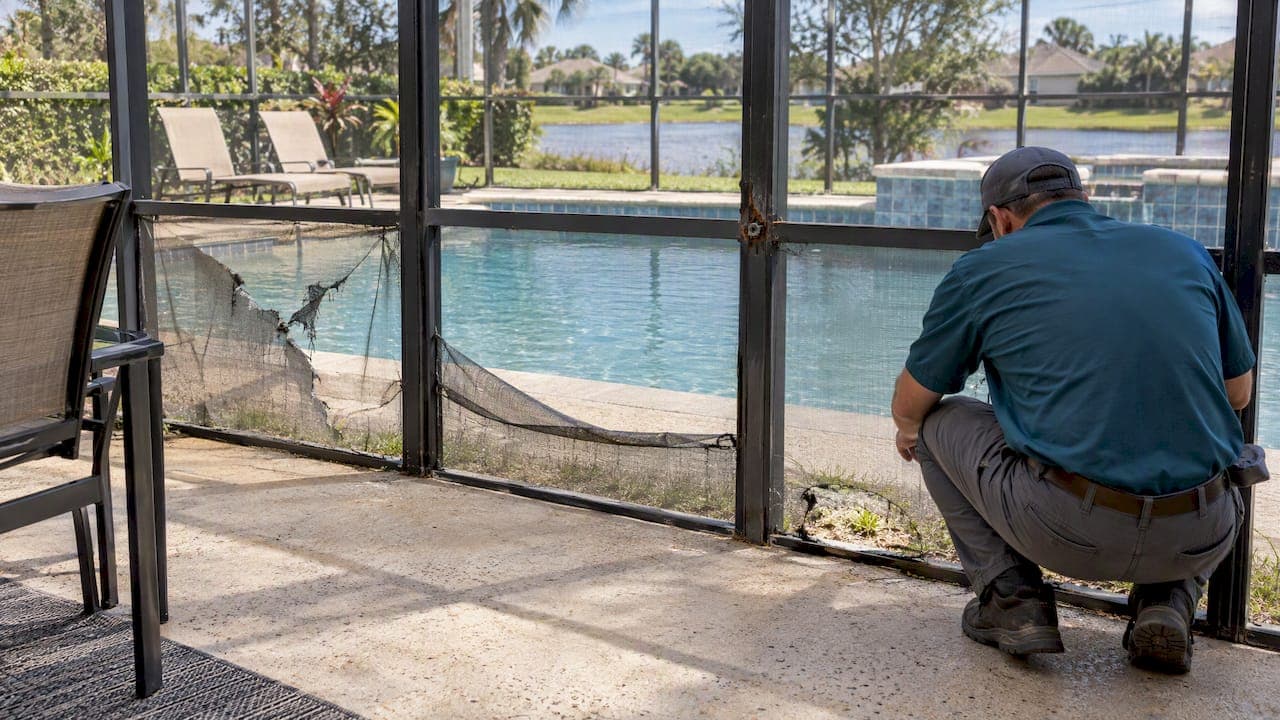
The fastest fix for a pet damage pool screen is to patch small tears right away and upgrade the lower panels pets actually reach to a tear-resistant mesh like Phifer PetScreen. When damage spreads across multiple panels or the frame shows rust, a professional rescreen or restoration costs less than a full rebuild and lasts far longer than another round of patches.
TL;DR:
- Using pet-resistant mesh like Phifer PetScreen on lower panels significantly reduces pet-induced tears and punctures compared to standard fiberglass mesh.
- Small tears under 2 inches can often be patched DIY, but multiple or larger damages require professional restoration to prevent further frame and mesh deterioration.
- A full rescreening typically involves pet-resistant panels, rust-resistant fasteners, and protective coatings, costing less than a full rebuild and providing a three-year warranty.
- Regular inspection and cleaning, including replacing fasteners and adding pet guards, help slow pet damage buildup and extend the enclosure’s lifespan.
- Upgrading high-traffic lower panels proactively to pet-resistant screen is recommended, while upper panels can generally remain standard mesh to control costs.
Table of Contents
- Which screen materials resist pets and how they compare
- How to inspect your pool screen before deciding on repairs
- DIY fixes you can do today, and when DIY stops being smart
- What professional restoration or rescreening includes
- Routine care that reduces pet damage over time
- Practical tradeoffs for pet-owning homeowners
- Restoration that costs less than a full rebuild
- FAQ
- Manufacturer and service pages to read next
- Sources
Which screen materials resist pets and how they compare
Standard fiberglass screen looks good and keeps bugs out, but a determined cat or a bored Labrador goes through it in seconds. Phifer PetScreen was built specifically for that problem. It uses a heavier vinyl-coated polyester weave that resists tearing and puncturing far better than standard mesh, and it holds up well in doors, lower panels, and other spots where pets spend the most time.
The tradeoff is visibility and airflow. PetScreen's thicker strands block slightly more light and view than standard 18x14 fiberglass mesh, and it costs more per linear foot. For most homes, that tradeoff only matters on the panels pets actually touch.
- Standard fiberglass mesh: lightweight, affordable, good visibility, but tears easily under claws or teeth.
- Phifer PetScreen: heavier weave, strong puncture resistance, slightly reduced visibility, higher cost per panel.
- No-see-um mesh: fine weave for keeping out tiny insects, but thin strands make it a poor match for pet-prone areas.
Hardware matters as much as mesh. A screen held in with a thin spline or rusted staples will pull loose even if the mesh itself survives. Stainless steel fasteners and a reinforced spline channel keep tension even in pet zones where paws push against the frame repeatedly.
A practical rule: put pet-resistant mesh on kick panels, doors, and any section within a few feet of the ground. Upper panels, which pets rarely reach, can stay standard mesh to control cost. For a deeper breakdown of mesh weights and uses, our guide to pool screen mesh types walks through each option panel by panel.

How to inspect your pool screen before deciding on repairs
Before grabbing a patch kit, walk the enclosure and classify what you see. The type and spread of damage determines whether this is a weekend DIY job or a call to a contractor.
- Single small puncture (under 2 inches): usually patchable in minutes with a self-adhesive screen patch.
- Linear tear: often repairable with a patch kit, but check whether the surrounding mesh is brittle first.
- Clustered punctures on one panel: this usually means the panel itself needs replacing, not just patching.
- Damaged frame or corroded fasteners: this is a structural issue, not a screen issue, and it needs professional attention.
Ask yourself a few questions as you inspect. Is the frame showing rust streaks or pitting? Are the tears concentrated low, right where a dog or cat pushes through? Are three or more panels failing at once rather than just one? How old is the mesh, since screen older than about a decade tends to turn brittle and tear along stress lines rather than holding a clean patch.
Multiple failing panels, a corroded frame, or mesh that crumbles when you press it are all signs that patching will just delay a bigger job. Our rescreening cost guide breaks down what typically pushes a project from a simple patch into a full rescreen.
DIY fixes you can do today, and when DIY stops being smart
Small, isolated damage is genuinely a fair weekend project. A basic patch kit, a spline roller, replacement spline, and a cut piece of matching mesh cover most single-panel repairs.
- Patch a small tear: clean the area, apply a self-adhesive mesh patch slightly larger than the hole, and press out air bubbles.
- Replace one damaged panel: pull the old spline with a flathead tool, lay new mesh over the frame, and roll fresh spline into the channel to lock it in place.
- Match your mesh: if the rest of the enclosure uses standard screen, consider swapping just the pet-exposed panel to PetScreen so future damage stays contained to a tougher material.
The pitfalls show up fast if you rush. Mismatched mesh color or weave stands out visibly against older panels. Improper spline tension leaves mesh sagging within weeks, which pets then push through even more easily. Worrying about corrosion but ignoring it lets rust spread from one fastener to the whole frame section, and DIY work on an enclosure under a builder's warranty can void that coverage entirely.
Pro Tip: If more than two adjacent panels are damaged or you see any frame rust, stop patching and get a professional estimate instead of chasing the damage panel by panel.
What professional restoration or rescreening includes
Once damage spreads past a panel or two, or the frame itself is corroding, restoration work addresses the whole structure rather than one hole at a time. A typical project includes selective rescreening with pet-resistant mesh in the panels that need it, replacement of rusted fasteners with stainless steel or Nylotech hardware, frame cleaning, and a water-based acrylic coating to stop further corrosion.
The advantage over a full rebuild is straightforward: restoration repairs and recoats the existing frame instead of tearing it out, which keeps both cost and project time down while still giving pet owners a mesh upgrade exactly where it is needed.
Before hiring anyone, ask a few direct questions:
- Which mesh brand do you install, and is PetScreen or an equivalent pet-resistant option available?
- What fastener material do you use, and is it rust-resistant?
- What warranty comes with the work?
- What is the expected project timeline?
- Can you show past project results or references?
Our restore, upgrade, and protect guide covers this scope in more depth if you want to see what a full restoration project typically involves.
Routine care that reduces pet damage over time
Most pet damage builds up because a screen is already weakened by sun, moisture, or dirt before a paw ever touches it. A simple cleaning routine, mild soap and water with a soft brush, keeps mesh flexible and visible. Avoid harsh solvents and skip the pressure washer entirely, since high-pressure water tears mesh fibers and forces water behind frame seals.
- Rinse panels every few months to clear dust and pollen buildup that stiffens mesh over time.
- Add a low door guard or kick plate on doors pets use most, which takes the direct impact instead of the mesh.
- Inspect fasteners each season and swap any showing rust before it spreads to the frame.
- Train pets away from pawing at screens near doors, since repeated pressure in one spot is what causes most tears.
Pro Tip: Treat the lower three feet of your enclosure as a separate zone. Upgrade it to pet mesh proactively instead of waiting for the first tear.
For broader seasonal upkeep, our weather damage prevention tips cover the sun and moisture side of enclosure wear that often compounds pet damage.
Practical tradeoffs for pet-owning homeowners
Patching every hole a pet makes in standard mesh is a losing game. The mesh was never built to take that kind of repeated stress, so you end up re-patching the same spot every few months. Upgrading the panels pets actually reach to a tear-resistant mesh solves the root problem instead of the symptom.
My rule of thumb after years around these projects: patch small isolated holes yourself, upgrade the lower zones proactively, and call a professional the moment you see frame rust or more than one panel failing. That combination keeps repair costs down and avoids a full rebuild years earlier than necessary.
— Michel
Restoration that costs less than a full rebuild
When pet damage spreads across panels or the frame is showing its age, we restore the whole enclosure instead of patching around the problem. Our process at Mr. Pool Screen includes selective rescreening with pet-resistant mesh where you need it, stainless steel fastener replacement, and a water-based acrylic coating that protects the frame for years, all backed by a three-year warranty.

| What's included | Why it matters |
|---|---|
| Selective rescreening with pet-resistant mesh | Targets the panels pets actually damage |
| Stainless steel or Nylotech fasteners | Stops the rust that spreads to healthy panels |
| Water-based acrylic frame coating | Protects against further weathering |
| Three-year warranty | Covers the work without the cost of a full rebuild |
Request an estimate through our Pool Screen Restoration page and we will walk your enclosure with you before any work starts.
FAQ
How long do pool cage screens last?
Screen lifespan depends heavily on sun exposure, local climate, and whether pets have access to lower panels, with brittleness and tearing becoming more common as mesh ages past a decade. Panels exposed to pets or direct sun tend to need patching or replacement well before the rest of the enclosure.
Can you get a tan through a Lanai screen?
Standard pool enclosure screens block a meaningful amount of direct UV, so tanning through one is slow and uneven compared to open sun exposure. Mesh type and weave density both affect how much light and UV actually pass through.
What is the best screen material for a pool enclosure?
For panels exposed to pets, Phifer PetScreen is built specifically to resist tearing and puncturing from dogs and cats. For panels pets do not reach, standard fiberglass mesh offers better visibility and airflow at a lower cost.
What to use to clean a pool screen enclosure?
Mild soap, water, and a soft brush remove dirt and buildup without damaging the mesh fibers. Skip harsh solvents and pressure washers, since both weaken the weave and shorten the screen's usable life.
Manufacturer and service pages to read next
- Phifer PetScreen product page
- Pool Screen Restoration services