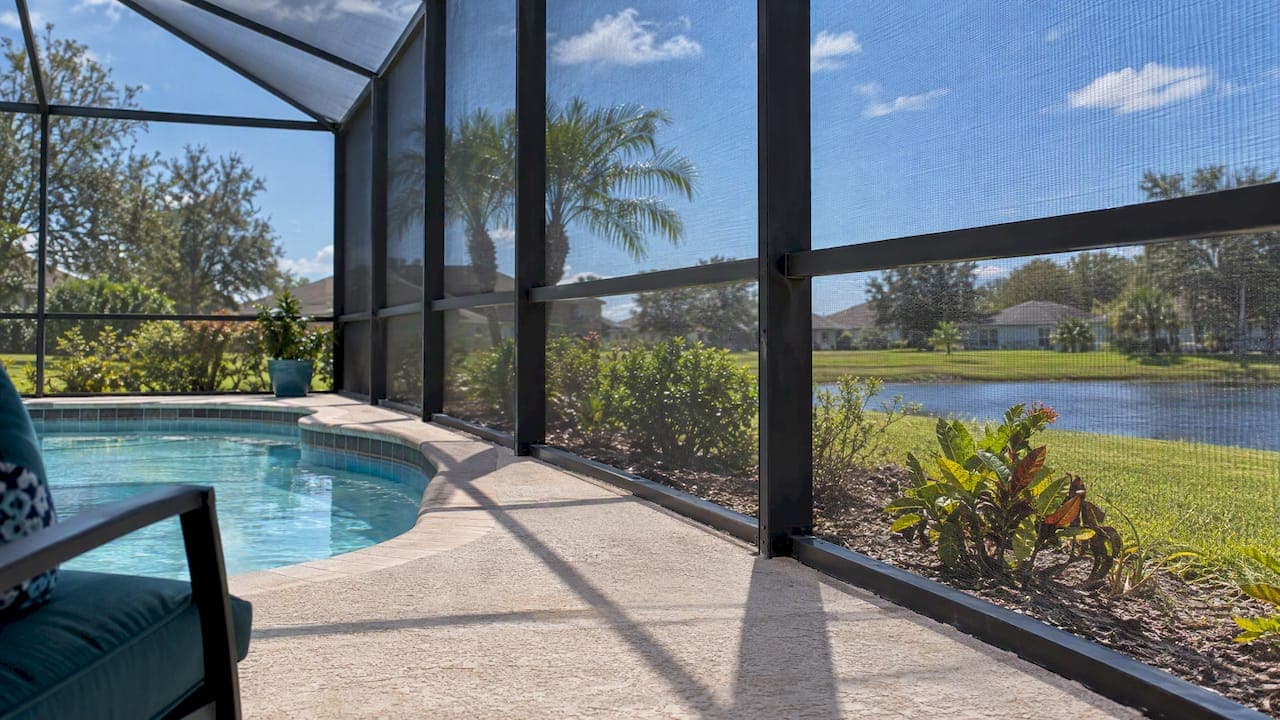
A typical pool screen blocks roughly 30% to 80% of UV radiation depending on mesh type and whether it includes solar coatings, according to technical breakdowns of screen enclosures. That means tanning and sunburn are both still possible under most screens, though the process is slower than in open sun. Sunscreen and UV index awareness still matter. If your screen is faded, torn, or rusted at the fasteners, its protection is likely lower than the specs promise, and it's worth a closer look.
TL;DR:
- Standard 18 by 16 fiberglass blocks 30% to 40% of UV, while 20 by 20 solar mesh blocks 50% to 60%; coated fabrics block 70% or more.
- Most mesh lasts 7 to 15 years, but UV protection can decline before visible wear; inspect fading, brittle fibers, holes, sagging, and rusty fasteners.
- Wash screens every three months with mild soap, water, and a soft brush; avoid pressure washers, and patch holes smaller than a quarter inch.
- Apply broad spectrum SPF 30 or higher 20 minutes before swimming, then reapply according to the label, often every 80 minutes in water.
- Tighter, coated solar fabrics block more UV than standard fiberglass, but they cost more and reduce airflow; choose coatings rated for salt exposure near coasts.
Table of Contents
- How pool screens filter sunlight and UV
- Material, color, and design choices that change sun exposure
- Signs your screen is losing UV protection as it ages
- Cleaning, patching, and restoring sun-damaged screens
- Sun safety steps that still matter under a screen
- What a professional screen restoration actually involves
- Balancing protection, comfort, and enclosure longevity
- Get your pool screen's UV protection back without a full rebuild
- FAQ
- Sources
How pool screens filter sunlight and UV
A screen's protection comes down to weave density and openness factor, the percentage of open space between fibers. An 18x16 weave (18 strands per inch one way, 16 the other) has more open space than a 20x20 weave, so it lets more light and UV through. Tighter weaves and solar-rated fabrics close that gap.

Coatings matter too. Aluminum-coated polyester and specialty solar fabrics reflect more radiation than plain fiberglass or standard polyester screening, which is why manufacturer spec sheets separate "insect screen" products from "sun control" lines.
Rough UV-block ranges by screen type, based on aggregated technical data:
- Standard 18x16 fiberglass mesh: around 30% to 40% UV block
- Denser 20x20 solar mesh: around 50% to 60% UV block
- Aluminum-coated or specialty solar fabrics: often 70% to 85% or higher
The sun's angle and reflection off water and decking also change real exposure. Midday sun passes through the screen at a steeper angle, while low morning or afternoon sun can sneak in sideways, and bright decking bounces extra UV back up at swimmers.
Material, color, and design choices that change sun exposure
Fiberglass screening is the most common and affordable option, but it typically sits at the lower end of UV blocking. Polyester (PET) screens hold up a bit better under tension and sun, while aluminum-coated polyester and dedicated solar fabrics push UV block considerably higher, often at a higher material cost.
Color plays a real role too. Charcoal and black screens cut glare and preserve a clearer view outward, but they absorb more heat. Lighter gray screens stay cooler to the touch and keep the enclosure feeling brighter, though they can wash out visibility in direct glare.
A few trade-offs worth weighing before choosing a screen:
- Tighter weaves and solar fabrics raise UV block but reduce airflow through the enclosure.
- Denser, coated screens generally cost more per panel than standard fiberglass mesh.
- Darker colors reduce glare but run hotter in direct sun.
- Coastal properties benefit from coatings rated for salt exposure, since salt air accelerates both corrosion and UV breakdown.
Phifer's product guidance recommends checking a fabric's UV-stabilization rating directly rather than assuming darker or denser automatically means longer-lasting.
Signs your screen is losing UV protection as it ages
Sun exposure breaks down screen fibers steadily, and most mesh lasts somewhere between 7 and 15 years depending on material, climate, and sun exposure. As that clock runs, UV blocking drops well before a screen looks obviously worn.
Watch for these signs during a walk-around inspection:
- Fading or chalky discoloration on the mesh surface
- Brittleness, where fibers snap easily when flexed
- Small holes or fraying, especially along panel edges
- Sagging panels that have pulled away from the frame
- Rust streaks at fasteners or screws
- Frame warping or bowing at the corners
A degraded screen blocks less UV, lets in more leaves and debris, and can change how quickly pool water heats up or loses chemical balance from added sun exposure. Spring is a good time for a quick check: walk the perimeter, press gently on a few panels, and note any rust or sag for a contractor, details covered in more depth in our pool screen maintenance checklist.
Cleaning, patching, and restoring sun-damaged screens
Routine cleaning keeps mesh performing closer to its rated UV block. A wash every three months with mild soap, water, and a soft brush removes the dirt and buildup that otherwise reduce filtration, and it's worth skipping the pressure washer since high-pressure spray frays fibers and shortens screen life, a point echoed in technical maintenance guidance.
Small issues are often DIY-friendly:
- Patch kits handle holes smaller than about a quarter inch.
- A single corroded fastener can be swapped out without touching the rest of the panel.
- Loose panels sometimes just need re-tensioning at the spline.
Once holes multiply, fasteners rust throughout the frame, or panels sag broadly, full re-screening or a structured restoration (new coatings, stainless fasteners, re-tensioned panels) usually makes more sense than patch after patch. More on this trade-off in our guide to what causes pool screen mesh breakdown.
Pro Tip: Cleaning on a regular schedule and swapping corroded fasteners before they fail prevents the kind of accelerated UV degradation that turns a cheap fix into a full re-screen.
Sun safety steps that still matter under a screen
Even with 70% UV block, swimmers under a screen should treat the shade like any partial shade outdoors, not full protection.
- Apply broad-spectrum SPF 30 or higher about 20 minutes before getting in the water.
- Reapply per the product label, often every 80 minutes while swimming, per sunscreen label guidance.
- Check the UV index before pool days. A screen lowers exposure, but on moderate or high UV days that reduction may not be enough on its own.
- Choose lighter, less reflective deck and seating surfaces near the pool, since glare bouncing off bright concrete or tile adds to UV exposure under the screen.
Tanning under most screens is possible, just slower, so pace expectations the way you would in open shade rather than direct sun.
What a professional screen restoration actually involves
When the frame is sound but the mesh has aged and fasteners have started rusting, restoration is usually the more cost-effective path. A typical restoration addresses the sun and weather damage directly:
- Surface prep and masking to protect surrounding areas
- Water-based acrylic coating applied to the frame
- Rusted fasteners replaced with stainless steel or Nylotech hardware
- Re-screening or targeted patching of worn mesh panels
This combination restores both appearance and UV performance without the cost of a full enclosure rebuild, as shown in past restoration project examples.
Balancing protection, comfort, and enclosure longevity
Every pool owner ends up weighing the same three things: how much shade they actually need, how much airflow they're willing to trade for it, and how long the screen in front of them will keep doing its job. Denser, coated mesh buys more UV block, but it comes with a cost and airflow trade-off that not every household wants.
What's easy to underestimate is how much a worn screen quietly gives up. A rusted fastener or a faded panel isn't just cosmetic, it's a real drop in the filtering the screen was built to provide. Acting on that early, through cleaning, fastener replacement, or a full restoration, tends to cost less than waiting for a rebuild. For more on screen choices and upgrades, see our homeowner's guide to pool and screen enclosures.
— Michel
Get your pool screen's UV protection back without a full rebuild
When a screen has faded, sagged, or started rusting at the fasteners, we restore it rather than tear it out. Our process covers surface prep, water-based acrylic coating, stainless steel or Nylotech fastener replacement, and re-screening where panels have worn through, all backed by a three-year warranty.
For homeowners across Central Florida, this approach typically costs a fraction of a full enclosure rebuild while restoring both the look and the UV performance of an aging cage. If your screen is showing its age, request an estimate through our pool screen restoration page and see what restoring instead of replacing could save you.
FAQ
Can I still tan under a pool screen?
Yes, tanning is possible under most pool screens since standard mesh only blocks a portion of UV radiation, commonly in the 30% to 80% range depending on the material. Expect it to take longer than tanning in direct open sun, similar to sitting in partial outdoor shade.
Can I wear sunscreen in a swimming pool?
Yes, sunscreen is meant to be worn in the water, and broad-spectrum SPF 30 or higher applied before swimming is standard guidance on product labels. Reapplication is typically needed every 80 minutes in the water or per the specific product's directions.
What type of porch screen works best against UV rays?
Denser weaves and solar-rated fabrics, including aluminum-coated polyester, block more UV than standard fiberglass insect screen. Manufacturer solar screening lines are built specifically for higher sun control than general-purpose mesh.
What type of screen is used for pool enclosures?
Most pool enclosures use fiberglass or polyester mesh in weaves like 18x16, with solar or aluminum-coated options available for added UV and heat control. The right choice depends on how much airflow, glare reduction, and UV block a homeowner wants to balance.
How often should a pool screen be cleaned or inspected?
A wash every three months with mild soap, water, and a soft brush helps maintain UV performance, according to maintenance guidance for screened enclosures. A seasonal walk-around, especially in spring, helps catch fading, holes, or rusted fasteners before they spread.
Sources
- Do Screened-in Pools Block Sun? What You Need to Know - My Pool Calculator
- Phifer Super Solar Screening swatch card