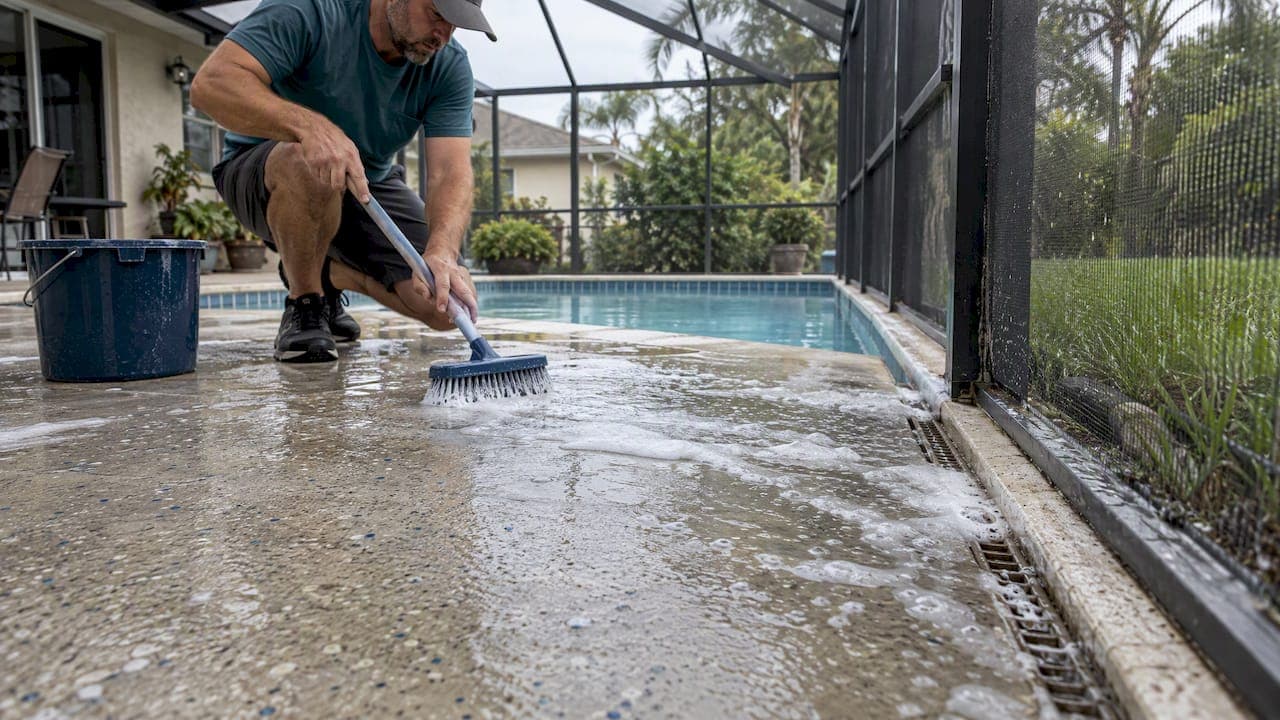
Prevent overspray by masking thoroughly and choosing a roller over a sprayer whenever the surface allows it. If overspray lands anyway, treat it fast: soap and water lift fresh paint before it bonds, while cured spots usually need pressure washing, a stripper matched to the paint type, or mechanical removal. When the deck material is delicate or the stain won't budge, calling a restoration pro protects the surface better than guessing.
TL;DR:
- Fresh overspray lifts most easily with water, mild detergent, and a soft brush; cured spots on sealed concrete may need 1,500 to 2,000 psi.
- Keep pressure below 1,000 psi on wood or composite, and use hand tools; delicate stone needs neutral pH cleaning, and bonded paint warrants professional restoration.
- Always match a paint stripper to both coating and deck material, since a product made for wood can discolor sealed concrete.
- Check wind before each coat, seal gaps around fixtures, and leave masking tape in place at least 24 hours after painting to prevent smearing.
Table of Contents
- Preventing Overspray: Masking, Weather, and Application Choices
- Choosing the Right Removal Method for Paint Age and Deck Material
- Tools, Products, and Safety Gear That Actually Work
- A Step-by-Step Masking Checklist Before You Paint Again
- How a Disciplined Process Prevents Overspray on Restoration Jobs
- Where Homeowners Usually Go Wrong with Overspray
- Let Us Handle the Prep, the Coating, and the Cleanup
- FAQ
- Sources
Preventing Overspray: Masking, Weather, and Application Choices
A roller or a brush puts paint exactly where you want it, which is why most painters reach for one on pool decks instead of a sprayer. Spraying still works for large, open areas, but it demands tighter control: lower pressure, a steady hand, and masking that leaves nothing exposed.
Before any paint goes down, build a full barrier around the work zone. Painter's tape holds plastic sheeting to edges and fixtures, rigid shields block paint from rails and equipment, and liquid masking agents coat delicate items like light fixtures or pool ladders that tape can't grip cleanly. Prepping a pool deck properly starts well before the first coat, with cleaning, crack repair, and sanding setting up the masking that follows.
- Tape all edges, copings, and transitions with painter's tape rated for outdoor use.
- Cover plants, pool rails, and equipment with plastic sheeting or canvas drop cloths.
- Use liquid masking on fixtures that tape can't seal, like light housings or skimmer lids.
- Check wind speed and forecast before starting; postpone if gusts exceed a light breeze.
- Lower the pool water a few inches or use a floatable cover to catch stray drips.
Wind is the detail that ruins otherwise careful prep. Even a mild breeze carries sprayed particles well past the masked zone, so check conditions before starting and again before each coat. Once the paint is on, run the pool's filtration system afterward to help clear any fine particles that settled on the water's surface. If you're staining or painting the structure itself rather than the deck, the cure window and the right humidity conditions deserve their own attention; timing a pool cage paint job around the weather prevents a lot of avoidable touch-up work.
Leftover paint is a prevention issue too, since an overfull or poorly sealed can is more likely to drip or spatter during storage and transport. PaintCare's guidance for contractors notes that many contractors deliberately buy extra paint for touch-ups and then rely on recycling programs to manage what's left over, which keeps job sites cleaner and reduces the temptation to shake or pour cans carelessly near a finished deck.
Pro Tip: Do a test spray on cardboard before touching the deck. It confirms your pressure setting and catches a clogged nozzle before it becomes overspray on concrete.

Choosing the Right Removal Method for Paint Age and Deck Material
Not every overspray spot needs the same fix, and using too aggressive a method on the wrong surface can do more damage than the paint itself. Start light and escalate only if the lighter method fails.
- Test an inconspicuous spot first with the mildest method you plan to use.
- Rinse fresh overspray immediately with water and a mild detergent.
- Scrub gently with a soft-bristle brush while the paint is still wet.
- Move to a pressure washer only after soap and water fail on cured spots.
- Reach for a chemical stripper matched to the paint type if pressure washing isn't enough.
- Use mechanical removal (sanding, scraping) only as a last resort on durable surfaces.
Fresh overspray comes off easiest. Paint that hasn't cured is still water-soluble enough that a hose, a bucket of soapy water, and a soft brush will lift most of it within minutes. Speed matters here: the longer wet paint sits in the sun, the faster it cures and the harder it becomes to remove without scrubbing damage.
Cured overspray on concrete usually responds well to pressure washing, provided the nozzle and pressure are matched to the surface. Pool deck cleaning guidance recommends pH-appropriate cleaners over harsh chlorine for most jobs, since chlorine can bleach or etch certain sealers. If pressure washing alone doesn't clear cured spots, a concrete-safe paint stripper or a light etching solution can finish the job, though etching changes the surface texture slightly and should be a last option on decorative concrete.
Cured overspray on wood or composite decking calls for a gentler hand. High-pressure water forces its way into wood grain and composite seams, raising fibers and voiding some composite warranties. Sanding small spots or using a wood-safe stripper formulated for the coating type removes overspray without that risk. Composite decking in particular should avoid high psi settings entirely; manufacturers generally recommend fan-tip nozzles under light pressure for routine cleaning, let alone paint removal.
Delicate stone and travertine are the surfaces most likely to end up scarred by an overly aggressive removal attempt. These materials etch easily under acidic cleaners and chip under abrasive pressure washing. A pH-neutral cleaner applied with a soft cloth is the safer starting point, and when overspray has bonded into the stone's texture, a restoration professional with experience on natural stone is worth the call rather than risking a visible blemish that's hard to reverse.
- Soap and water: best for fresh latex or acrylic overspray on any surface.
- Pressure washing: effective for cured overspray on sealed concrete, tuned to surface type.
- Chemical stripper: necessary for cured oil-based or epoxy overspray that water resists.
- Sanding or scraping: reserved for wood and composite where chemicals or pressure risk damage.
- Professional restoration: the right call for natural stone, travertine, or stubborn stains.
Across every method, the same rule applies: whichever approach removes the least material while still lifting the paint is the right one to try first.
Tools, Products, and Safety Gear That Actually Work
Getting the removal method right is only half the job. The specific tool settings and product chemistry you choose to determine whether you clear the overspray cleanly or create a new problem.
For spraying paint in the first place, a lower pressure setting and a wider fan tip reduce the amount of airborne particulate that becomes tomorrow's overspray. Step-by-step guidance on deck spray painting recommends testing nozzle and pressure settings before starting and spraying vertical surfaces like railings before the deck itself, since that sequencing limits how much paint drifts onto a surface you've already finished. When in doubt, a roller remains the lower-risk choice for anyone without spray experience.
Stripper chemistry needs to match the paint. Water-based strippers work on latex and most acrylic pool paints without damaging the substrate underneath. Older coatings, including oil-based or epoxy pool paints, often require solvent-based or acetone strippers, and some heavily cured industrial coatings respond better to an oxidizing stripper. Always check the product label against both the paint type and the deck material before applying anything, since a stripper formulated for wood can discolor sealed concrete and vice versa.
- Pressure washer settings: 1,500 to 2,000 psi with a 25 to 40 degree nozzle for sealed concrete.
- Avoid rotary ("zero degree") nozzles on any deck surface; they concentrate pressure enough to gouge concrete and shred wood fibers.
- Wood and composite: keep pressure under 1,000 psi or skip the washer entirely in favor of hand tools.
- Non-chemical backup options: plastic scrapers, nylon scrub pads, and fine-grit sanding blocks for stubborn spots.
- PPE for any stripping job: nitrile gloves, a respirator rated for the chemical in use, and eye protection.
Pro Tip: Keep the pressure washer moving in overlapping passes rather than holding it in one spot. A stationary stream is what etches concrete or carves a groove into wood decking.
A Step-by-Step Masking Checklist Before You Paint Again
A little organization before the first coat prevents most of the cleanup described above. Follow this sequence on the next job and overspray stops being a recurring expense.
- Gather materials first: outdoor-rated painter's tape, plastic sheeting in deck-sized rolls, rigid spray shields, and a liquid masking agent for fixtures.
- Clean the deck surface thoroughly, then repair cracks and sand or etch as needed so the coating adheres evenly.
- Mask the pool itself: cover the water with a floatable cover or lower the water level a few inches below the coping.
- Set up barriers around landscaping, equipment, and structures, taping sheeting down at every seam.
- Run a short test spray on cardboard or scrap material to confirm pressure and spray pattern.
- Check wind conditions immediately before starting, and again before each additional coat.
- Inspect all masking for gaps or loose tape once more before the first stroke of paint.
Timing matters on the back end too. Most painters recommend leaving masking in place for at least 24 hours after the final coat, and longer for the surrounding enclosure during its cure window, since pulling tape too early can smear paint that looks dry but hasn't fully cured underneath. If overspray does land on a screen panel despite the prep work, a quick fix for pool screen overspray can usually clear minor spots in under 15 minutes.
How a Disciplined Process Prevents Overspray on Restoration Jobs
On every enclosure restoration, we rely on dual-layer masking, physical barriers combined with liquid masking on anything tape can't seal, to keep industrial-grade coatings exactly where they belong. That discipline matters more on restoration work than on a typical paint job, since the coatings and stainless steel fasteners we use are built to last for years and a stray overspray mark is far harder to blend into an older, weathered surface.
- We mask glass, screen mesh, and metal fixtures with both tape and liquid masking before any coating goes on.
- Our containment setup accounts for wind exposure specific to screened enclosures, which trap and redirect gusts differently than open decks.
- Jobs that involve rust removal, fastener replacement, and full re-coating are generally more cost-effective through a single restoration visit than piecemeal DIY fixes over several seasons.
For deeper detail on what causes paint failure over time, our guide on pool deck paint peeling covers the maintenance side of keeping a finish intact long after the overspray question is settled.
Where Homeowners Usually Go Wrong with Overspray

The biggest mistake I see is treating masking as optional on a calm day. Wind shifts fast near a pool, and a five-minute gap in coverage is enough to speckle a deck that took hours to prep. The second mistake is reaching for a pressure washer at full force before trying soap and water first.
Follow the checklist, test before you commit, and bring in a professional when the surface is delicate or the stain won't lift. It costs less than redoing a finish twice.
— Michel
Let Us Handle the Prep, the Coating, and the Cleanup
If the masking checklist above sounds like more than you want to manage on a ladder in the Florida heat, that's exactly the gap our pool deck staining service fills. Professional restoration services bring containment discipline, including physical barriers plus liquid masking on every fixture, to each job, so overspray does not become your problem to clean up.

Our process includes:
- Full surface prep: cleaning, crack repair, and sanding or etching before any coating goes down.
- Use of high-quality water-based acrylic coatings applied for a clean, even finish.
- Replacement of rusted fasteners where needed.
- Warranty coverage on completed restoration work.
Expect a clear timeline from the first site visit: prep and masking first, then coating application, then a defined cure window before normal pool use resumes. If your deck or enclosure is showing its age, visit our pool screen restoration page or reach out through Mr. Pool Screen to get a project scoped out.
FAQ
How to get paint off a pool deck?
Rinse fresh overspray with water and mild detergent while it's still soft, scrubbing gently with a soft brush. For cured overspray on sealed concrete, pressure washing with a wide-angle nozzle usually works, while wood and natural stone need gentler, lower-pressure methods or a chemical stripper matched to the paint type.
How much does it cost to repaint a pool deck?
Cost depends on deck size, the paint product chosen, and how much prep work the surface needs beforehand. Our pool deck painting cost guide breaks down the factors that drive the budget for a typical project.
How long does it take pool deck paint to dry?
Most pool deck paints are dry to the touch within a few hours but need a longer cure window, often a full day or more, before foot traffic or pool use resumes safely. Leaving masking in place until the coating has fully cured prevents smearing that isn't visible while the surface still feels dry.
Is painting a pool deck a good idea?
Painting refreshes a worn deck's appearance and can protect concrete or wood from further weathering when the right product and prep are used. The outcome depends heavily on proper surface preparation and masking, since skipping those steps is what leads to peeling, uneven coverage, or overspray problems down the line.
Sources
- Leftover Paint Is Taking Up Valuable Space. Here's What Smart Contractors Are Doing About It. — PaintCare
- Essential Steps To Prep Your Pool Deck For A Fresh Paint Job | CyPaint
- How to clean pool deck
- Step-By-Step Deck Spray Painting