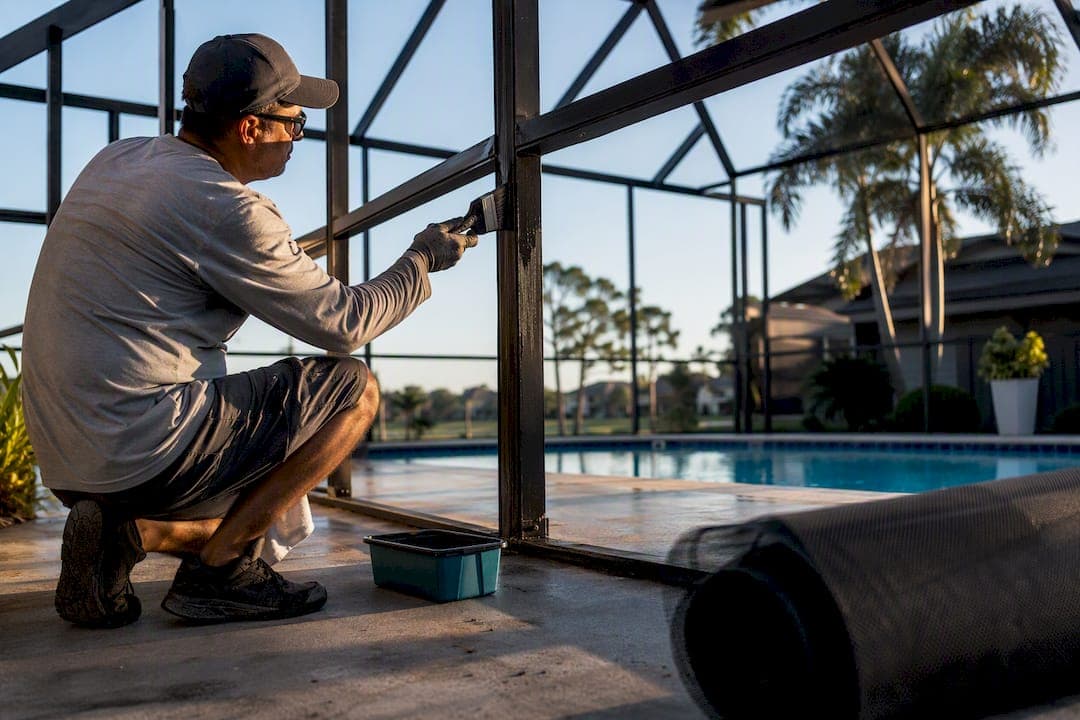
For a structurally sound pool cage, paint first and let the coating cure completely before anyone installs new screens. The exception is a frame with active corrosion, loose fasteners, or posts that shift when pushed. Those problems need structural repair before paint ever touches the aluminum, and definitely before new mesh goes in. If you see rust bubbling under the paint or a panel that wobbles, get a contractor to inspect the frame before booking painting and rescreening as one job.
TL;DR:
- If the frame shows active corrosion or loose fasteners, repairs must precede painting and rescreening to ensure structural integrity.
- Most restoration projects follow the sequence of painting first, curing fully, then installing new screens, unless weather or material issues suggest otherwise.
- Proper prep work, including power-washing, sanding, and masking, is crucial for a durable finish, with removal of panels often simplifying the process.
- Full cure of the paint, typically longer in Florida's humidity, is essential before rescreening to avoid damage or adhesion problems.
- Fastener replacement with rust-resistant hardware is a standard part of a thorough restoration that prevents early staining and deterioration.
Table of Contents
- Why re-screening after painting is the standard sequence
- Quick decision checklist: how to pick the right sequence
- What proper prep and masking look like when painting before rescreening
- Edge cases that change the sequence
- How long does painting and rescreening actually take?
- Why this sequence holds up in real restoration work
- What actually matters most in this decision
- How Mrpoolscreen coordinates painting and rescreening for you
- Where to read more
- Sources
- FAQ
Why re-screening after painting is the standard sequence
The logic is simple once you think about it from the mesh side. New screen material is expensive, and it picks up overspray, sanding dust, and pressure-washer grit like a sponge if it's already installed when the crew starts prepping the frame. Painting first and rescreening after the coating cures keeps that mesh clean and undamaged through the messiest part of the job.
There's a second reason contractors default to this order: labor efficiency. Spraying or rolling a frame that still has old, torn screens attached means working around obstacles and masking awkward corners. Pull the old screens (or plan to), paint the clean frame, then install fresh mesh once the finish has fully set. It's the sequence that shows up across contractor guides in Florida's restoration trade.
None of that applies, though, if the frame itself is the problem. Painting over active corrosion just seals in the rust and buys you a year or two before it bubbles back through the finish.
Quick decision checklist: how to pick the right sequence
Before you call a contractor, walk your enclosure and answer a few questions. What you find determines whether you're looking at a straightforward paint-then-prescreen job or something that needs repairs first.
Step 1: Inspect the frame. Look and feel for:
- Rust stains bleeding from screws or joints
- Pitting or flaking on the aluminum itself
- Fasteners that spin freely or have rusted through
- Panels or posts that flex or shift when you push on them
- Soft, spongy spots at the base plates or footers
Step 2: If the frame is sound and any corrosion is surface-level, the standard order applies: paint, cure, rescreen. This is the majority of restoration jobs typically handled by contractors.
Step 3: If fasteners are failing or you feel movement under hand pressure, stop and schedule repairs before anything else. Take photos of the problem areas. A good structural repair assessment prevents the fix from being cosmetic instead of real. Painting can't fix a frame that's failing structurally.
Step 4: If the existing screens are shredded, brittle, or falling apart in your hands, plan on removing them or replacing them entirely as part of the repaint project. Trying to protect crumbling mesh during power-washing and sanding usually wastes more time than it saves.
What proper prep and masking look like when painting before rescreening
The quality of a pool cage repaint lives or dies in the prep work, not the paint itself. Most finish failures trace back to skipped steps here, not bad paint. Here's what a contractor should actually be doing before a sprayer or roller ever touches the frame:
- Power-wash the entire structure to strip dirt, mildew, and chalky oxidation, then let it dry fully before sanding
- Remove loose paint and oxidized aluminum, sanding down to a sound edge and feathering the transitions
- Spot-prime any bare aluminum with a bonding primer so the new coat adheres properly
- Mask carefully around tile, pool water, plants, and any screens staying in place during the spray
That last point comes with a real tradeoff. Leaving screens attached during painting means meticulous, time-consuming masking. Removing panels first gives a cleaner spray line and faster prep, but it adds labor for removal and reinstallation. Either approach works. What matters is which one your contractor is actually planning for, and whether the estimate reflects that choice.
Fastener replacement belongs in this phase too. Swapping corroded screws and clips for stainless steel or Nylotech hardware prevents the rust-streak staining that shows up within a year on cheaper fasteners, and it's a standard part of a real restoration rather than a quick repaint.
Cure time is where homeowners get impatient. Water-based acrylic coatings need to hit their manufacturer-recommended dry and cure windows before anyone installs mesh against that surface. Rushing this step is how you end up with fingerprints, adhesive marks, or screen spline pressed permanently into soft paint.
Pro Tip: Ask your painter exactly how they're controlling overspray before the job starts, especially if your cage sits close to tile, landscaping, or the pool itself. A contractor who can describe their containment method (tarps, spray shields, wind-dependent scheduling) has done this enough times to know where it goes wrong.
Edge cases that change the sequence
A few situations mean the standard paint first, rescreen after order isn't the right call, and pushing ahead with it anyway usually costs more in redone work.
Severe corrosion or moving posts. If pitting has eaten through structural members or a post shifts under hand pressure, you need repair or replacement parts before paint goes on. Painting a compromised frame is cosmetic, not corrective.
Mesh too far gone for prep. If the current screen tears when you touch it, it won't survive power-washing or sanding around it. Either remove the panels before painting starts or plan the full rescreen as part of the same visit, not an afterthought.
High overspray risk. Enclosures tight against expensive tile, natural stone, or mature landscaping need either screen removal or serious containment. If a contractor waves off this question, that's a red flag.
Weather windows. Florida humidity extends cure times, and a poorly timed rain event can ruin a fresh coat. Build buffer days into the schedule rather than rushing the rescreen crew back in on a fixed date. A rescreening safety inspection beforehand helps catch issues before weather becomes a factor too.
How long does painting and rescreening actually take?
Full restoration projects that combine both phases typically run about one to two weeks depending on cage size and how much repair work turns up along the way. Here's how that time usually breaks down:
- Inspection and minor repairs: 1 to 3 days, depending on what the crew finds once they're actually looking at the frame up close.
- Painting (prep, prime, finish): 2 to 5 days. Larger enclosures and multi-coat jobs run toward the longer end, and rain delays push it further.
- Cure time before handling or installing screens: Follow the paint manufacturer's stated windows. Surfaces are often dry to the touch in 48 to 72 hours, but full cure, the point where the coating can handle mesh installation and spline pressure, usually takes longer in Florida's humidity.
- Rescreening installation: 1 to 4 days based on enclosure size and panel complexity.
The scheduling tip that saves the most headaches: don't let the rescreen crew show up until the painter confirms the finish is fully cured on a sample panel, not just dry to the touch. Overlapping trades in a small pool cage footprint slows everyone down and raises the odds of damage to fresh paint.
Why this sequence holds up in real restoration work
The process is often built around the paint first, cure fully, rescreen after order because it protects both the finish and the new mesh from the messiest parts of the job. A rescreen job ruined by wet paint or overspray erases that savings fast.
The materials matter as much as the order. High-quality water-based acrylic coatings paired with stainless steel fasteners are chosen specifically because they resist the rust-streak staining that cheap hardware develops within a season. Masking is treated as its own skilled step, not an afterthought squeezed in before spraying starts.
Homeowners often assume paint quality is the biggest variable in how long a restoration lasts. In practice, prep and sequencing decide more of the outcome than the paint can on its own.
Chalky, faded paint on an older cage is usually a prep problem more than a product problem, and diagnosing it correctly before repainting saves a redo down the line.
What actually matters most in this decision
The conventional advice on pool cage restoration tends to focus entirely on paint brand and color, as if picking the right acrylic coating solves the whole problem. It doesn't. Sequencing and prep quality decide whether that paint job survives its first Florida summer intact.
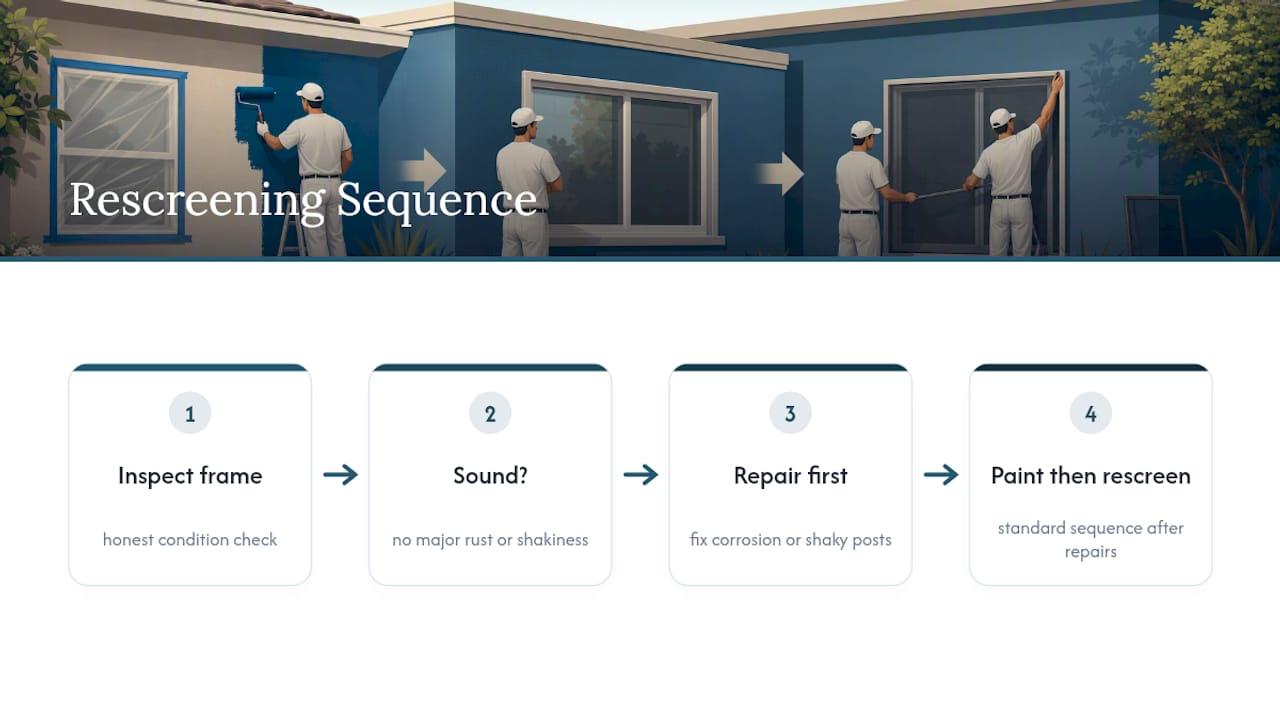
Here's what gets underestimated: the exception matters more than the rule. Most homeowners already sense the logical order, paint, then screen, without needing to be told. What trips people up is recognizing when their frame doesn't qualify for that standard sequence at all. A cage with visible rust streaks and one shaky post isn't a paint job with a rescreen tacked on. It's a repair job first, and skipping that step just means paying for the same work twice within a couple of years.
If you take one thing from this guide, make it this: get the frame inspected honestly before you get quotes on paint or mesh. The sequence question answers itself once you know what condition the aluminum is actually in.
— Michel
How Mrpoolscreen coordinates painting and rescreening for you
Getting the sequence right takes more coordination than most homeowners expect, which is exactly why this is a job for a contractor who handles both trades under one roof instead of juggling two separate crews with two separate schedules. Mrpoolscreen offers full pool screen restoration, including fastener replacement, water-based acrylic repainting, and mesh installation, plus pool deck staining for homeowners looking to refresh the whole pool area in one visit.

When you request an estimate, ask specifically about prep steps, the paint brand and its cure time, what fastener hardware they're using, and the warranty terms in writing. A contractor who answers those four questions clearly is one who's done this enough times to get the order right. Browse the project gallery to see finished restorations, then reach out through Mrpoolscreen to schedule an inspection and get a sequence plan specific to your enclosure.
Where to read more
For deeper detail on individual steps in this process, Mrpoolscreen's blog covers repainting an enclosure for longevity, a safety inspection checklist for spotting structural issues before you call a contractor, and a broader 2026 homeowner's guide to enclosure upkeep. On the contractor-guide side, the Screen Enclosure Painting Guide for Fort Myers and Naples Homes breaks down the prep sequence in more technical detail, useful if you want to compare notes against whatever your estimator proposes.
Sources
- Pool Rescreening or Pool Cage Painting First in SWFL
- Revitalize Your Pool Area: A Complete Guide to Pool Cage Restoration | Allstate Waterproofing, Painting & Restoration Inc.
- Pool Cage Painting Guide: Prep, Timing & Finish Options
FAQ
Should I paint or rescreen my pool cage first?
Paint first, then rescreen after the coating fully cures, unless the frame shows active corrosion, loose fasteners, or structural movement, in which case repairs come before either step.
How long does paint need to cure before rescreening?
Follow the coating manufacturer's cure schedule. Surfaces are often dry to the touch within 48 to 72 hours, but full cure in Florida's humidity typically takes longer before mesh installation should begin.
Can screens stay on during painting?
They can, but it requires careful, time-consuming masking to prevent overspray damage. Many contractors remove panels first for a cleaner finish and faster prep.
What fasteners should be used during restoration?
Stainless steel or Nylotech hardware is standard for restoration work because it resists the rust staining that ordinary screws and clips develop within a season.
How much does pool cage restoration cost through Mrpoolscreen?
Pricing depends on enclosure size and scope of work, so current estimates are available directly through Mrpoolscreen's restoration page.