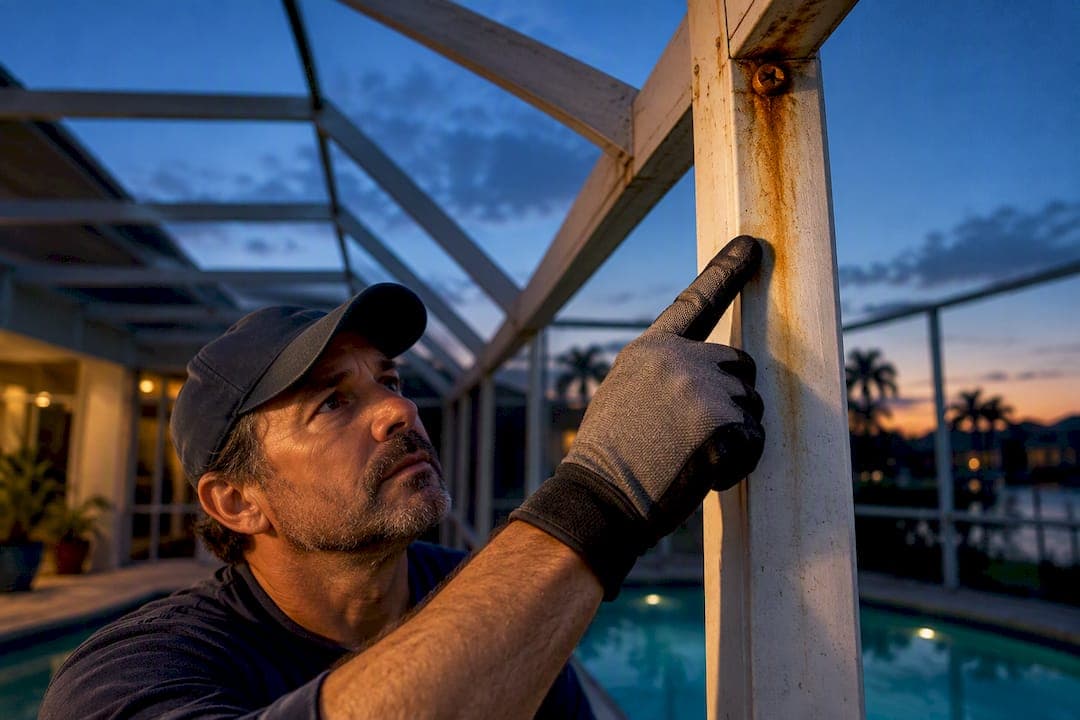
Rust bleed is the orange or brown streak left on a pool cage frame when corroding fasteners or hardware leach iron oxide onto the aluminum below. The first move is simple: rinse and clean the stain, then check every fastener it came from for looseness, pitting, or crumbling. If the metal underneath still feels solid, you can treat it yourself. If a screw head is gone or the frame moves when you push it, stop and call a professional.
TL;DR:
- Rust bleed indicates ongoing galvanic corrosion, especially near fasteners made of steel or lower-grade metals in contact with aluminum frames.
- Regular inspection of fasteners, anchor points, and stress areas can catch early signs of failure before structural damage occurs.
- Using stainless steel fasteners with isolation sleeves and applying high-grade coatings like AAMA 2605 significantly reduces long-term rust risk in coastal or humid environments.
- Treat rust stains with neutral, low-pH solutions such as sodium ascorbate to prevent further corrosion, and avoid aggressive grinding or improper repairs.
- Addressing corrosion early through proper fastener choice and coatings can save up to 60 percent compared to full rebuilds, emphasizing the importance of preventive maintenance.
Table of Contents
- What causes rust bleed on pool cages
- How to inspect and assess severity
- Cleaning and stain removal that won't damage aluminum or screen
- Durable fixes: fasteners, isolation, and coating standards
- Repair, rescreen, or rebuild: how to decide
- DIY quick fixes and mistakes to avoid
- What a professional restoration workflow actually looks like
- Step-by-step rust stain removal in detail
- Disassembling and reassembling a cage section for repair
- Safety gear and precautions for the job
- Choosing replacement materials for your climate
- A homeowner's honest take on rust bleed
- Get your pool cage evaluated before rust spreads further
- Sources
- FAQ
What causes rust bleed on pool cages
Rust bleed almost always starts with galvanic corrosion, a reaction that happens when two different metals sit in contact while wet. Most pool cages are built from aluminum, and many are held together with steel or lower-grade fasteners that are more "noble" on the galvanic scale. When rain, pool splash, or condensation bridges the two metals, it forms a tiny electrical cell, and the less noble metal, often the aluminum around the fastener hole, corrodes faster than it would alone. Research on aluminum coupled to other metals confirms this pattern: galvanic coupling accelerates localized corrosion, concentrating damage right at the fastener hole and scribe area rather than spreading it evenly across the frame.
Environmental conditions decide how fast this happens.
- Salt air near the coast speeds up the reaction by increasing the water film's ability to conduct electricity.
- High humidity keeps that conductive moisture film present on the metal longer, even without rain.
- Fertilizer overspray and lawn chemicals introduce nitrates and salts that land on the frame and act the same way.
- Splash zones and low spots that never fully dry give corrosion a constant head start over the rest of the structure.
This is why painting over a rust stain rarely works for long. A fresh coat of paint hides the discoloration, but it does nothing to separate the steel screw from the aluminum frame underneath. The two metals stay in electrical contact, moisture still finds its way in through the fastener hole, and the stain returns within a season or two. Lasting repair means breaking that electrical connection, not just covering it up.
How to inspect and assess severity
Before you clean anything, walk the cage and build a simple record of what you find. A consistent order keeps you from missing hidden problem areas.
- Check every screw and fastener head for rust bleed, pitting, or a head that spins loosely.
- Look at base plates and anchors where the frame meets the pool deck or concrete.
- Inspect hinge points on doors and access panels for stiffness or corrosion buildup.
- Run your hand along horizontal rails and vertical posts for soft spots or bubbling paint.
- Note any scribe marks or dark rings around fastener holes, a sign corrosion is active under the surface.
Most of what you find will be cosmetic. Some signs mean it is time to bring in a professional instead of reaching for a wire brush.
- The frame shifts, wobbles, or sways when you press on a post.
- An anchor bolts spins freely or pulls out with light pressure.
- Concrete around an anchor point is cracked or crumbling.
- Hardware is missing entirely or has sheared off flush with the frame.
Document what you see before you touch it. Photograph each fastener or section from a few feet away and up close, note the measurements of any cracked or moved sections, and keep a written log with dates. This record speeds up contractor quotes and gives you a paper trail if you ever need it for an insurance claim. A guide to fastener failure signs can help you tell the difference between a stain you can treat yourself and a fastener that has already failed structurally.
Cleaning and stain removal that won't damage aluminum or screen
Start with the gentlest option and only move to stronger chemicals if plain water and detergent leave stains behind. Rinse the affected area with fresh water first, then scrub lightly with a soft brush and a mild dish detergent. Avoid pressure washers on screen panels entirely: the force that lifts rust off aluminum can tear or stretch the mesh, and screen replacement costs far more than the stain ever did.
For stains that survive a basic wash, two closely related chemicals show up repeatedly in stain-removal guidance: ascorbic acid, better known as vitamin C, and sodium ascorbate.
- Ascorbic acid breaks down rust stains effectively but is mildly acidic, which can lower the pH of nearby water or surfaces if used in quantity.
- Sodium ascorbate does the same job while staying closer to neutral pH, making it the gentler choice around pool water and painted surfaces.
- Both should be applied to a small test patch first, since finishes and screen coatings vary.
- Keep any pool chemicals stored well away from your cleaning work area. Accidental mixing of chlorine products with acids can create hazardous fumes.
Sodium ascorbate is generally preferred over ascorbic acid when neutralizing stronger concentrations, since it does not push pH downward the way ascorbic acid can at higher doses, according to testing on ascorbic acid and sodium ascorbate for chlorine neutralization. That distinction matters here too: a milder, pH-neutral option is safer for repeated use on painted aluminum and screen frames than a more acidic one. Whichever you choose, rinse thoroughly afterward, and check a homeowner's guide to frame rust removal for technique details specific to painted versus bare aluminum.
Durable fixes: fasteners, isolation, and coating standards
Cleaning a stain buys you time, but stopping rust bleed for good means changing what caused it. That starts with fastener choice. Aluminum fasteners avoid galvanic mismatch entirely, but they are softer and can shear under stress. Stainless steel is stronger, but not all stainless is equal, and even a corrosion-resistant grade can accelerate aluminum corrosion if it sits in direct, unprotected contact with the frame. Testing on aluminum coupled to different metals found a consistent severity order, with galvanic current responsible for 5 to 35% of total corrosion in tested pairings, meaning the rest comes from environment and how well the joint is sealed. Material choice alone will not solve the problem.
That is where isolation comes in.
- Nylon sleeves and washers physically separate the fastener from the aluminum, breaking the electrical path.
- Plastic caps over exposed screw heads keep moisture from bridging the two metals at the surface.
- Anti-seize compounds made for mixed-metal joints add another layer of protection at the contact point.
Pro Tip: Ask any contractor whether they isolate fasteners from the frame, not just what metal the screws are made of. Isolation is what actually stops the galvanic cell from forming.
Coating quality matters just as much once the fasteners are sorted out. The American Architectural Manufacturers Association rates architectural coatings in tiers, and AAMA 2605 is the high-performance tier typically specified for coastal or high-UV exposure, with stricter gloss retention and salt-spray resistance requirements than the lower 2603 and 2604 tiers. When you get a repaint quote, ask which tier the coating meets, what film thickness it's applied at, and whether the contractor can show test reporting. A look at pool cage paint longevity explains what to expect from each tier over time. A paint name on an invoice tells you nothing about how long it will actually hold up.
Repair, rescreen, or rebuild: how to decide
The right fix depends entirely on how far the corrosion has spread. Staining alone, with fasteners still tight and the frame stable, calls for cleaning and fastener isolation only. Once fasteners start failing across multiple points, full rescreening paired with fastener replacement makes more sense than spot repairs. When base plates, anchors, or structural beams have failed, you are looking at a rebuild, not a repair.
A few signals point clearly to one path or another.
- Isolated rust bleed at two or three screws with a solid frame: clean, isolate, done.
- Multiple failed fasteners with intact anchors and beams: full rescreen and hardware replacement.
- Anchor pull-out, cracked footings, or a frame that visibly moves: rebuild territory.
Cost and timeline vary widely by region, cage size, and how much of the structure needs work, so a firm number only comes from a local, in-person quote. What is consistent is the direction of the trend: addressing rust bleed while it is still cosmetic almost always costs less than waiting until fasteners fail and the frame starts moving. Owners who caught anchor rust early and acted on it have reported savings of up to 60% compared to a full rebuild, simply because restoration work is far less involved than tearing out and replacing an entire structure.
DIY quick fixes and mistakes to avoid
A handful of repairs are safe for a capable homeowner to tackle in a weekend.
- Replace a single corroded fastener with a stainless or aluminum equivalent fitted with a nylon isolation sleeve.
- Clean and neutralize the stain around it once the new fastener is in place.
- Snug up loose hardware by hand rather than overtightening, which can strip the hole.
A few habits make the problem worse instead of better. Painting over active, flaking corrosion traps moisture underneath and speeds up the damage rather than stopping it. Mixing dissimilar metals without any isolation just recreates the same galvanic cell you're trying to fix. Grinding too aggressively near the frame edge can thin the aluminum enough to weaken it structurally, even if the rust disappears. If you find more than a few failed fasteners, any movement in the frame, or corrosion at a base plate, that is the point to stop and bring in a professional rather than keep working section by section. A step-by-step guide to fixing rusted screws walks through the swap in detail for anyone tackling it solo.
What a professional restoration workflow actually looks like
A proper restoration follows a set sequence rather than skipping straight to paint. Mr. Pool Screen's process starts with a full inspection to map every stained or failing fastener, then moves to hardware replacement and isolation so the new screws don't recreate the same galvanic problem. Surface prep, cleaning, stripping, and etching where needed, comes next, since coating adhesion depends on starting with a clean substrate. Only then is the coating applied, followed by reassembly and a final check of every fastener and panel.

The restoration process uses water-based acrylic coatings and stainless steel fasteners, and includes careful masking of screens and surrounding surfaces to avoid overspray or staining. The service is positioned as a way to preserve a cage's appearance and safety at a lower cost than a full rebuild.
Whoever you hire, ask for specifics in writing and consider consulting a screened porch contractor in Maryland to ensure proper installation and protection against rust bleed. A solid quote should name the coating's AAMA tier, the exact fastener type and grade, whether isolation sleeves or washers are included, the prep steps involved, and the warranty terms. That level of detail is the difference between a quote you can compare and one you're just guessing at.
Step-by-step rust stain removal in detail
Once you've inspected the frame and confirmed the damage is cosmetic, work through the stain in stages rather than reaching for the strongest cleaner first. Rinse the area with a garden hose to remove loose dirt and debris. Apply a mild dish detergent with a soft brush, working in the direction of the frame's finish rather than scrubbing in circles, which can dull the paint. Rinse again and let it dry before judging whether the stain remains.

For stains that persist, apply a sodium ascorbate solution directly to the mark and let it sit for the time recommended on the product, usually a few minutes rather than hours. Wipe with a soft cloth, never steel wool or abrasive pads, which can scratch aluminum and give future rust something to grip. Rinse thoroughly with fresh water to remove any residue. If a stain returns within weeks, it's a sign the fastener behind it is still corroding and needs isolation or replacement, not another round of cleaning.
Avoid bleach-based rust removers near screens or pool water, since they can react unpredictably with chlorine and damage mesh fibers over repeated use.
Disassembling and reassembling a cage section for repair
Working on a section of frame means removing enough hardware to access the damaged area without destabilizing the rest of the structure. Start by supporting the panel or rail you're working on so it doesn't shift once fasteners come out. Remove screws one at a time rather than all at once, especially on load-bearing rails, and set them aside in the order you removed them.
Once the section is loose, inspect the frame channel and screw holes for corrosion or debris. Clean out any rust flakes or old sealant before fitting new hardware, since leftover debris in the hole can trap moisture and restart the corrosion cycle. Fit new fasteners with isolation sleeves or washers before tightening, and snug them by hand first to confirm alignment before fully tightening with a driver.
Reassemble in the reverse order you disassembled, checking that screens sit evenly in their channels and that no panel is under uneven tension. A misaligned panel can stress a fastener enough to loosen it again within months. If a section feels resistant or won't seat properly, stop and check for a bent rail or misaligned base plate rather than forcing it.
Safety gear and precautions for the job
Wear safety glasses whenever you're cleaning, scrubbing, or handling corroded hardware, since rust flakes and cleaning solution splatter easily. Gloves rated for chemical handling protect your skin from both the cleaning agents and the sharp edges corroded screws often develop. A dust mask is worth wearing if you're brushing off heavy rust buildup, particularly in an enclosed lanai area with limited airflow.
Keep pool chemicals, especially chlorine products, stored well away from your work area, since accidental contact with acids used in rust removal can produce harmful fumes. If you're working near pool water, unplug or turn off any pump or automatic chemical feeder before starting, so nothing gets dosed while you're mid-project. Use a stable ladder or step stool for upper frame sections rather than standing on pool furniture or railings, and never work alone on ladder-height repairs if you can avoid it.
Choosing replacement materials for your climate
The right fastener and coating choice depends heavily on how much moisture and salt the cage is exposed to. In coastal areas or anywhere salt air is a regular presence, stainless steel fasteners paired with isolation sleeves hold up better than standard steel or lower-grade stainless, and a higher-tier coating like AAMA 2605 is worth the extra cost for its stronger resistance to salt spray and UV fading.
In humid but inland climates, the moisture exposure is more constant but less corrosive than salt air, so a mid-tier coating and correctly isolated stainless hardware are usually sufficient. Contractor guides on humid-climate maintenance recommend monthly rinses and twice-yearly deeper inspections as a baseline, along with upgrading to corrosion-resistant fasteners proactively rather than waiting for staining to appear.
Whatever your climate, match the fastener grade and coating tier to how much exposure the cage actually gets, not just what's cheapest at the hardware store. A cage a few hundred feet from the coast needs a different spec than one shielded by trees and distance from salt air, even within the same general region.
A homeowner's honest take on rust bleed
The stain itself is rarely the real problem. It's a warning that a fastener underneath is already corroding, and treating the discoloration without addressing the hardware just delays the same repair. Most homeowners I've seen deal with this focus entirely on the paint and skip the fastener check, then wonder why the stain comes back within a year.
The single habit that prevents most of this is simple: rinse the frame seasonally and check fasteners by hand twice a year. Catching a loose or rusting screw early costs you five minutes. Catching it late costs a rescreen.
— Michel
Get your pool cage evaluated before rust spreads further
Mr. When you request an estimate, ask for the inspection findings in writing, the fastener type and isolation method, the coating spec, and the warranty terms to ensure quality.
| What to check | Why it matters |
|---|---|
| Fastener type and isolation | Prevents the galvanic cell that causes rust bleed |
| Coating tier (such as AAMA 2605) | Determines how long the repaint resists fading and salt exposure |
| Warranty terms | Protects your investment if corrosion recurs |
See examples of completed work in the project gallery, or start with a Pool Screen Restoration estimate for your cage.
Sources
Technical papers on galvanic coupling and aluminum corrosion testing explain why dissimilar metals corrode faster together. The USDA Forest Service report supports the vitamin C and sodium ascorbate guidance, and the AAMA coating tier breakdown explains coating longevity standards. Check these directly before specifying materials for your own project.
- Using Vitamin C to Neutralize Chlorine in Water Systems (USDA/Forest Service)
- Analysis of galvanic coupling in fastener/panel configurations (Skelton‑Marshall / VSGC)
- Galvanic corrosion of 6061‑T6 Al coupled to noble, active, and passivating metals (DAU/technical paper)
FAQ
Will chlorine dissolve rust?
Chlorine does not dissolve rust and can sometimes worsen staining by reacting with existing corrosion byproducts in the water. Removing rust from a pool cage or pool surface requires a targeted rust remover such as ascorbic acid or sodium ascorbate rather than pool sanitizer.
What removes rust from a pool?
Ascorbic acid (vitamin C) and sodium ascorbate are commonly used to remove rust stains from pool surfaces and nearby aluminum framing. Sodium ascorbate is generally preferred because it stays closer to neutral pH than ascorbic acid, especially for stronger stains.
Can you swim in a pool with rust?
Swimming in a pool with surface rust stains is generally not a health hazard, but ignoring the rust source, usually a corroding fastener or ladder anchor, can allow it to become a structural problem. It's fine to keep swimming while you address the stain and inspect the hardware behind it.
Can vitamin C be used to remove rust stains from a pool?
Yes, vitamin C in the form of ascorbic acid is a common and effective option for removing rust stains from pool surfaces and frames. It is mildly acidic, so sodium ascorbate is often the better choice when you want a gentler, pH-neutral result on painted aluminum.