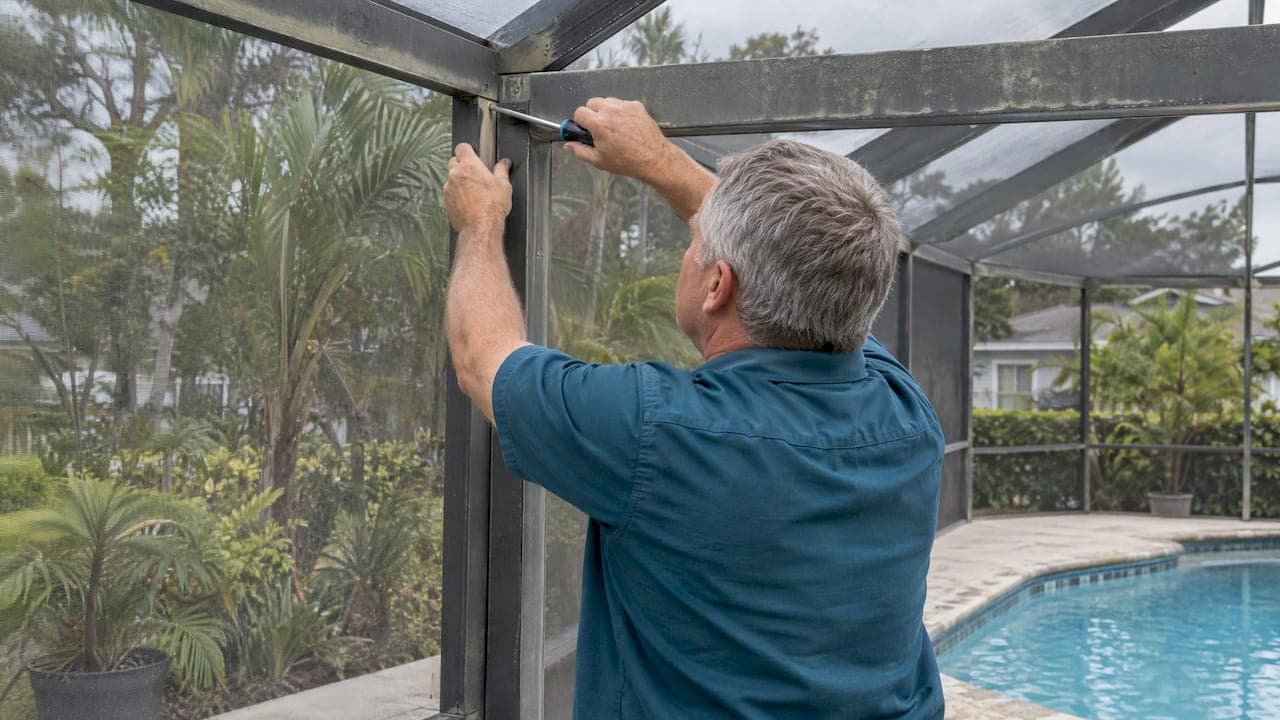
Most squeaky pool enclosures come from loose or corroded fasteners and aluminum members rubbing against each other, not from a failing structure. Start by inspecting and tightening fasteners, then swap out degraded hardware for stainless or Nylotech parts. Add lubricant or a shim at contact points and the noise usually stops within an afternoon.
TL;DR:
- Loose or corroded fasteners and metal-on-metal contact are the primary causes of noise, not structural failure.
- Regular inspection and replacing rusted fasteners with stainless steel or Nylotech parts prevents recurring squeaks and corrosion.
- Proper lubrication with silicone and the use of foam shims or grommets can quickly silence mechanical squeaks without full replacement.
- Full restoration, including fastener replacement and coating, offers a long-term fix and is often more cost-effective than repeated DIY repairs or total enclosure replacement.
- Professional restoration is recommended when multiple panels exhibit corrosion, signs of frame distortion, or DIY fixes fail after repeated attempts.
Table of Contents
- Inspection checklist to find the squeak's source
- Homeowner quick fixes that silence squeaks
- Parts and materials that prevent recurring noise and corrosion
- How rescreening works and DIY limits
- Seasonal and annual maintenance checklist to prevent squeaks
- Why restoration can beat replacement: what the process includes and expected outcomes
- A homeowner-minded view on quieting pool enclosures
- Hire a restoration pro: Mr. Pool Screen's service as an option
- FAQ
- Sources
Inspection checklist to find the squeak's source
Walk the enclosure on a windy day or tap different sections to reproduce the noise. A squeak that only shows up when the wind picks up usually means loose panel tension, while a creak under footstep vibration or heat often points to metal-on-metal contact or a loose post connection.
Check these spots in order:
- Fastener heads at frame joints, corner blocks, and post connections for rust or backing out.
- The spline channel around screen panels for gaps, cracks, or loose tension.
- Beam-to-post connections for play or movement when gently pushed.
- Any point where two aluminum pieces touch directly without a pad or gasket.
Classify what you find. A single loose screw or one rubbing spot is a minor fix. Multiple corroded fasteners, visibly bowed beams, or rust streaks across several panels point to a bigger problem. Never climb onto the enclosure beams to inspect them: aluminum cage framing is not designed to bear human weight, and standing on it can cause buckling that can convert a simple repair into a major restoration. Use a ladder or a walkboard set on solid ground instead.
Homeowner quick fixes that silence squeaks
Once you know where the noise is coming from, most mechanical squeaks respond to the same short sequence of fixes.
- Back out rusted screws slowly with penetrating oil and small turns to avoid stripping the pilot hole, then replace them with stainless steel or Nylotech fasteners sized to match for best corrosion resistance.
- Apply a silicone-based lubricant, never a petroleum product, to hinges, latch points, and any metal-to-metal contact. Petroleum products degrade vinyl spline over time.
- Insert foam shims, felt pads, or rubber grommets anywhere two metal parts touch directly, such as where a screen door frame meets a jamb.
- Re-test by tapping or waiting for wind to confirm the noise is gone before moving to the next spot.
A temporary clamp or wedge can quiet a squeak overnight, but if the same spot keeps loosening after a proper fastener swap, that usually signals frame movement or corrosion underneath that a quick fix won't solve.
Pro Tip: Keep a small bag of stainless screws in different lengths on hand. Replacing one as soon as you spot rust prevents the surrounding aluminum from pitting and loosening further.

Parts and materials that prevent recurring noise and corrosion
The parts you choose during a repair determine whether the squeak comes back in a season or stays gone for years.
- 304 or 316 stainless steel and Nylotech fasteners resist the corrosion that plain or galvanized steel develops quickly in outdoor, humid conditions.
- Fiberglass mesh holds tension well for general use, while pet-resistant mesh is worth the upgrade if claws or heavy contact loosen panels faster than normal wear.
- Water-based acrylic coatings on frames help prevent new corrosion and refresh the look of aging aluminum without the overspray risk of solvent-based paints.
- Matching the fastener and coating to the enclosure's original specs keeps load paths even, which is part of why correctly sized stainless hardware reduces long-term movement and noise compared to mismatched replacements.
For a deeper look at how coatings and mesh choices affect long-term durability, see our guide on screen enclosure visual upgrade options.
How rescreening works and DIY limits
Rescreening a single panel is a manageable weekend project for most homeowners with basic tools.
- Remove the old spline with a flathead screwdriver or spline tool.
- Lay the new mesh over the frame with a few inches of overlap on each side.
- Roll the spline back into the channel to seat the mesh, then trim the excess with a utility knife.
A single panel typically takes under an hour once you have the right spline roller and mesh on hand. But if multiple panels need rescreening, the spline channels themselves are corroded, or the frame has visibly shifted, that work belongs with a professional. Forcing new mesh into a warped or corroded channel can mask a fastener or frame failure underneath, and the panel may squeak again within weeks. Some rescreening projects also require a local permit, which is worth checking before you start; see our permit overview for Florida pool enclosures for more on when that applies.
Seasonal and annual maintenance checklist to prevent squeaks
A short, regular routine catches problems while they're still cheap to fix.
- Every three months: check fastener tightness, screen tension, and any spot where panels rub, and replace worn pads as you find them.
- Once a year: touch up frame coatings, swap out any fastener showing rust, and walk the full enclosure listening for new noise.
- Schedule a professional inspection periodically, especially after storm season, to catch frame issues before they grow into a full restoration need.
Staying on this schedule costs far less in time and materials than letting small fasteners corrode until an entire panel or section needs replacing. Our pool screen maintenance checklist walks through the full seasonal routine in more detail.
Why restoration can beat replacement: what the process includes and expected outcomes
A full restoration follows a consistent sequence: careful masking and surface preparation, removal of every corroded fastener, replacement with stainless steel or Nylotech hardware, a water-based acrylic coating applied to the frame, and re-screening where mesh has degraded.
Restoration using industrial-grade materials and stainless fasteners can save homeowners money compared to a full enclosure rebuild, while addressing the same rust, weathering, and aesthetic issues.
That combination of lower cost and faster turnaround makes restoration the right call for most aging cages. Full replacement only becomes unavoidable when beams are severely bent, the structure has sustained hurricane-level damage, or corrosion has compromised the frame beyond what new fasteners and coating can fix. For more on how to weigh restoration against a full rebuild, our guide on restoring, upgrading, and protecting screen enclosures covers the decision in more depth.
A homeowner-minded view on quieting pool enclosures
The repairs that go wrong usually start the same way: someone climbs onto a beam to get a closer look, or grabs whatever screw is in the garage instead of stainless hardware. Both turn a five-minute fix into a much bigger job. If you take one thing from this guide, replace fasteners with the right material first. It solves more squeaks than any amount of lubricant ever will.
— Michel
Hire a restoration pro: Mr. Pool Screen's service as an option
When fasteners have failed across multiple panels, the frame shows real corrosion, or you've already tried the quick fixes above without lasting results, a professional restoration is usually faster and cheaper than chasing the same squeak every few months. Our Pool Screen Restoration service replaces corroded hardware with stainless steel or Nylotech fasteners, applies a water-based acrylic coating to the frame, and re-screens panels as needed, backed by a three-year warranty on the work.
That combination addresses the noise and the corrosion causing it in one visit, rather than treating one symptom at a time. If you're ready to stop patching the same spot, request an estimate through our Pool Screen Restoration page and we'll walk your enclosure with you.
FAQ
How do you rescreen a pool enclosure?
Rescreening involves removing the old spline from the frame channel, laying new mesh over the opening, and rolling the spline back in to hold it in place before trimming the excess. A single panel is a manageable DIY task, but enclosures with corroded channels or several damaged panels are better handled by a professional.
Can you get sunburned through a screened-in porch?
Yes, standard screen mesh blocks some UV rays but not all of them, so sunburn is still possible during extended time under a screened enclosure. Pet-resistant and solar screen mesh options can reduce UV exposure further if sun protection is a priority.
What is the best screen material for a pool enclosure?
Fiberglass mesh is the standard choice for most pool enclosures because it holds tension well and resists general wear. Pet-resistant mesh is a stronger option worth the upgrade for households with dogs or cats that regularly contact the screen.
What is the best way to clean a pool screen enclosure?
Rinse panels with a garden hose and scrub gently with a soft-bristle brush and mild soap to remove dirt and algae without damaging the mesh. Avoid pressure washers directly on the screen, since the force can tear mesh or loosen spline.
When should I call a professional instead of fixing it myself?
Call a professional when you find widespread corrosion, bowed or bent frame members, or several failed fasteners rather than just one or two. Those signs usually mean the issue goes beyond a simple tighten-and-lubricate fix and risks worsening if handled with DIY patches alone.